Your search Val di Non gave 2329 results.
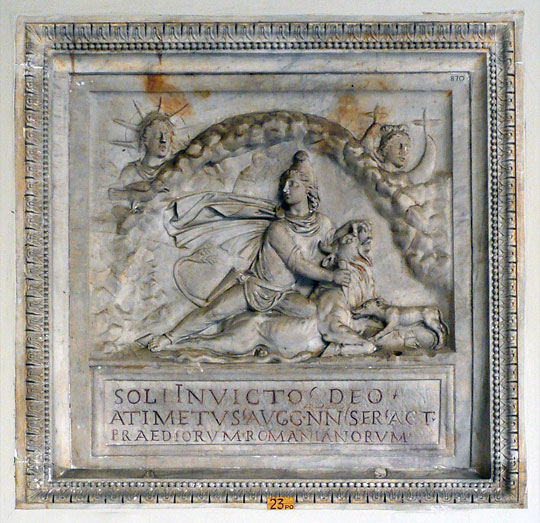
White marble relief depicting Mithras slaying the bull, dedicated by Atimetus.

This marble base found in Angera in 1868 bears the inscription of two people who reached the degree of Leo.
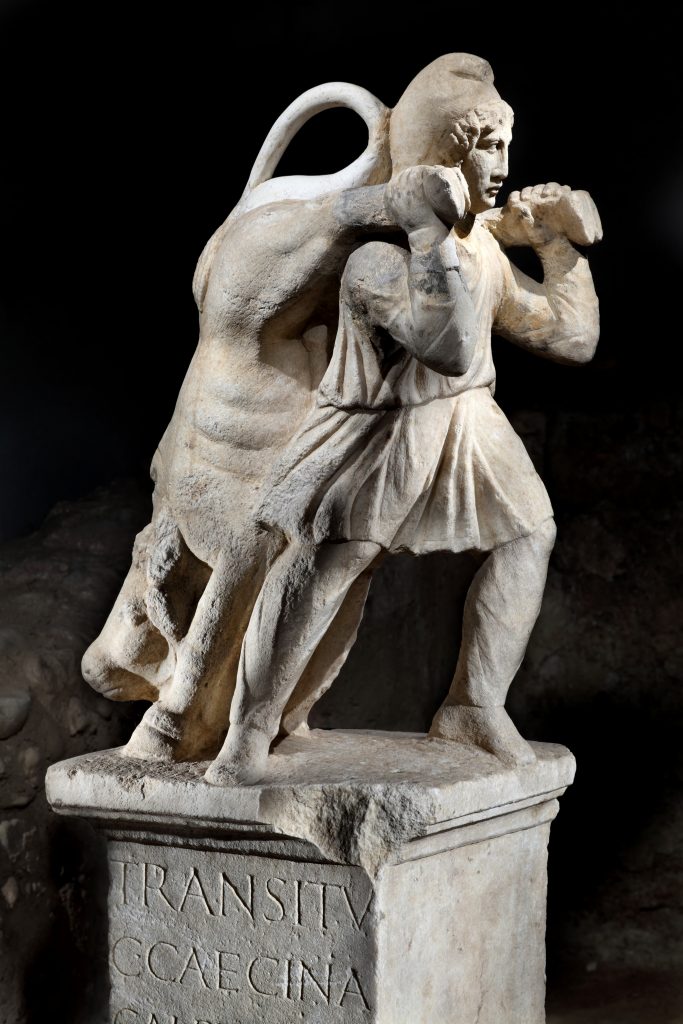
The sculpture of Mithras carrying the bull includes an inscription on its base.
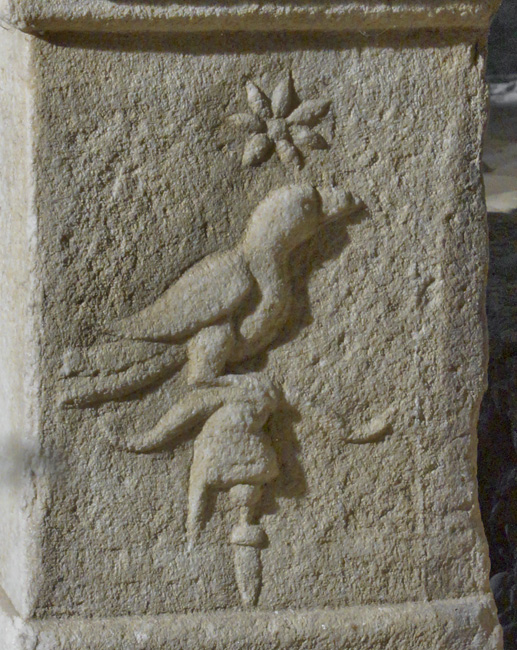
This altar from Ptuj, present-day Poetovio, is decorated with various Mithraic animals such as a tortoise, a cock and a crow and other objects.
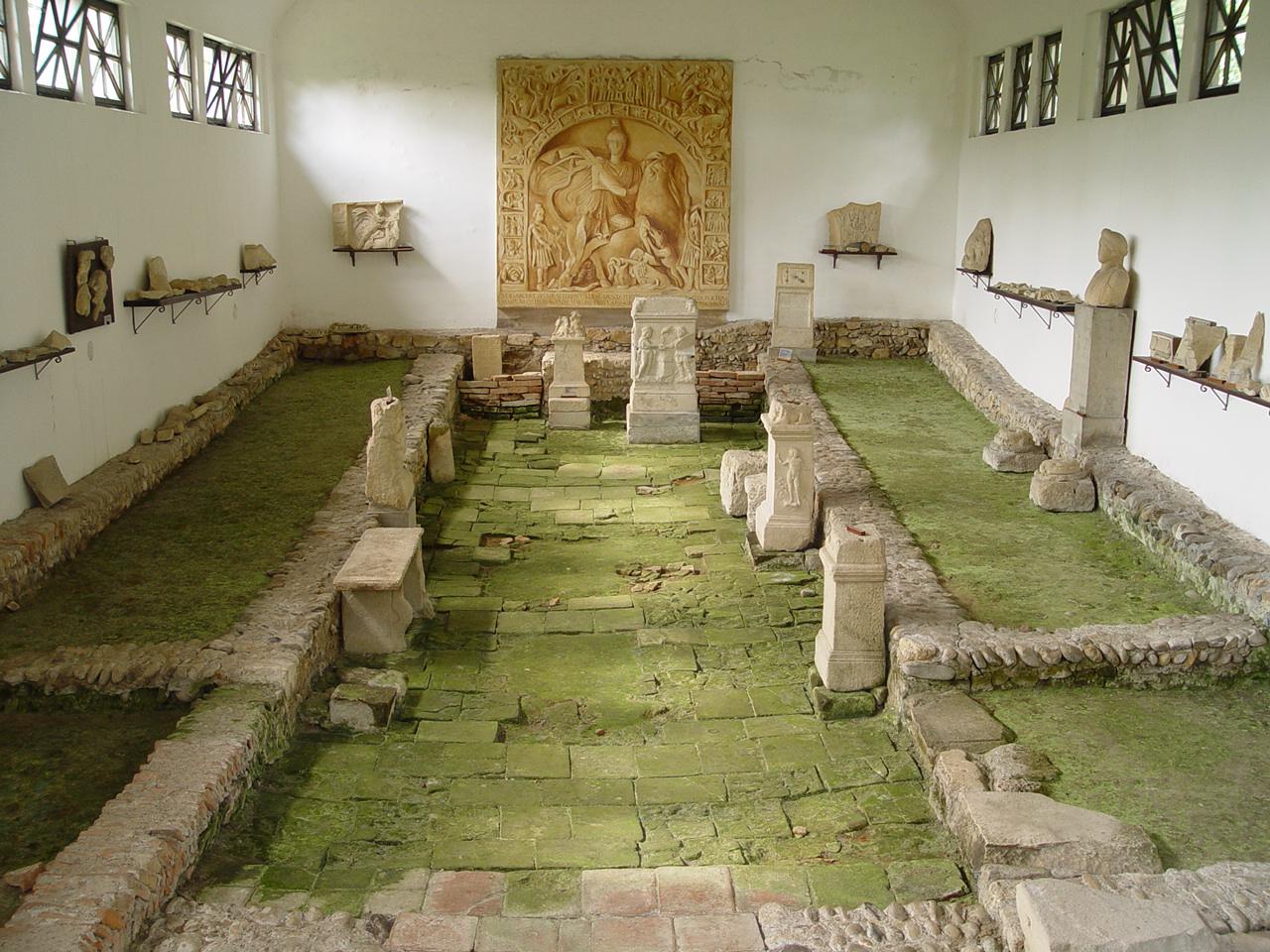
Mithraeum III in Ptuj was built in two periods: the original walls were made of pebbles, while the extension of a later period was made of brick.

Part of the finds from the fifth Mithraeum of Ptuj is kept in the Hotel Mitra in the modern city.
The inscription explains the transmission of the fourth Mithraic degree through the Paters of the Mitraeum of San Silvestro.
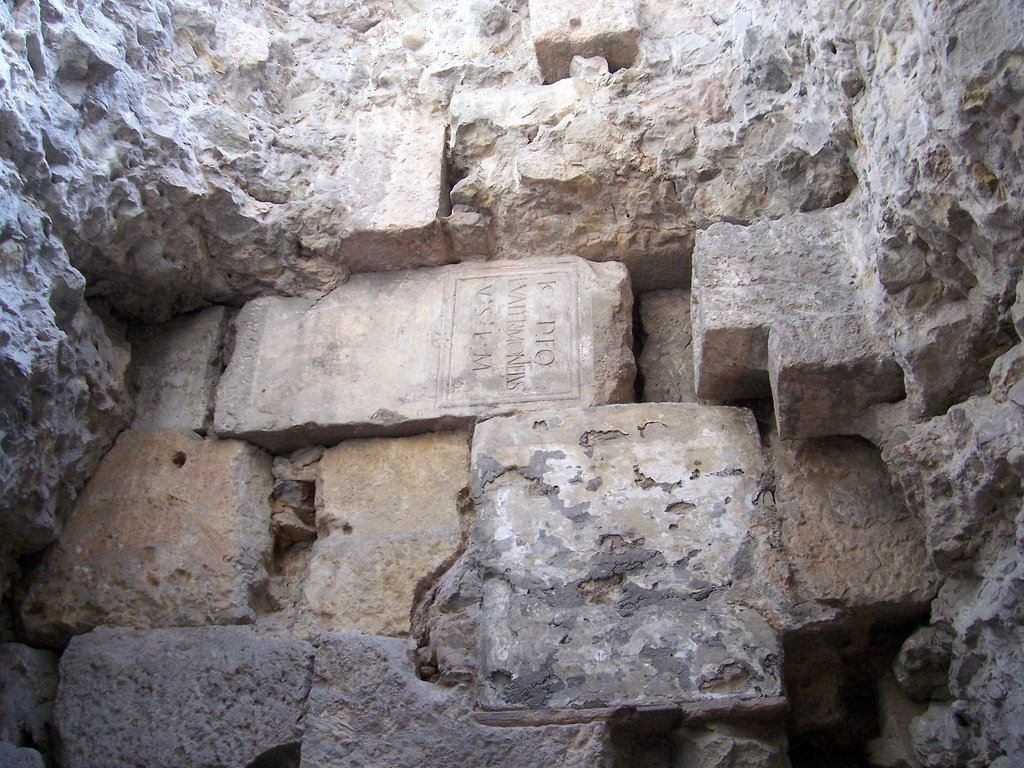
This altar was dedicated to Cautes by a certain Lucius in Baetulo (Badalona), near Barcino (Barcelona).
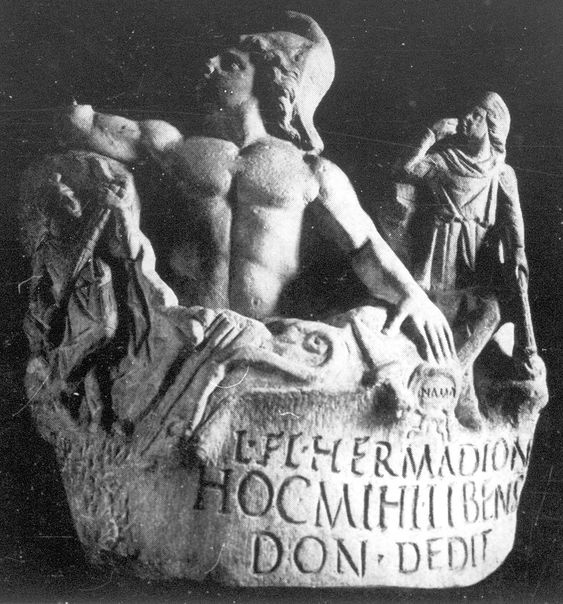
Mithras rock-born from Villa Giustiniani was holding a bunch of grapes in its raised right hand instead of a torch, probably due to a restoration.
The Mithraeum of Aquincum I existed in the potter's quarter of the ancient city of Budapest.
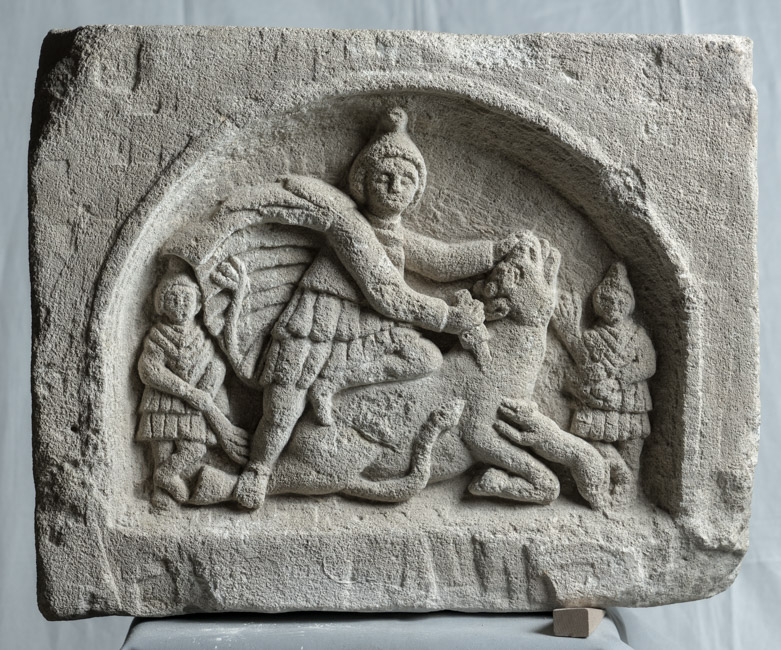
This relief found at Carnuntum represents Mithras slaughtering the bull, without the scorpion, in the sacred cave.
The fifth mithraeum from Aquincum has been found in the house of a military tribune.
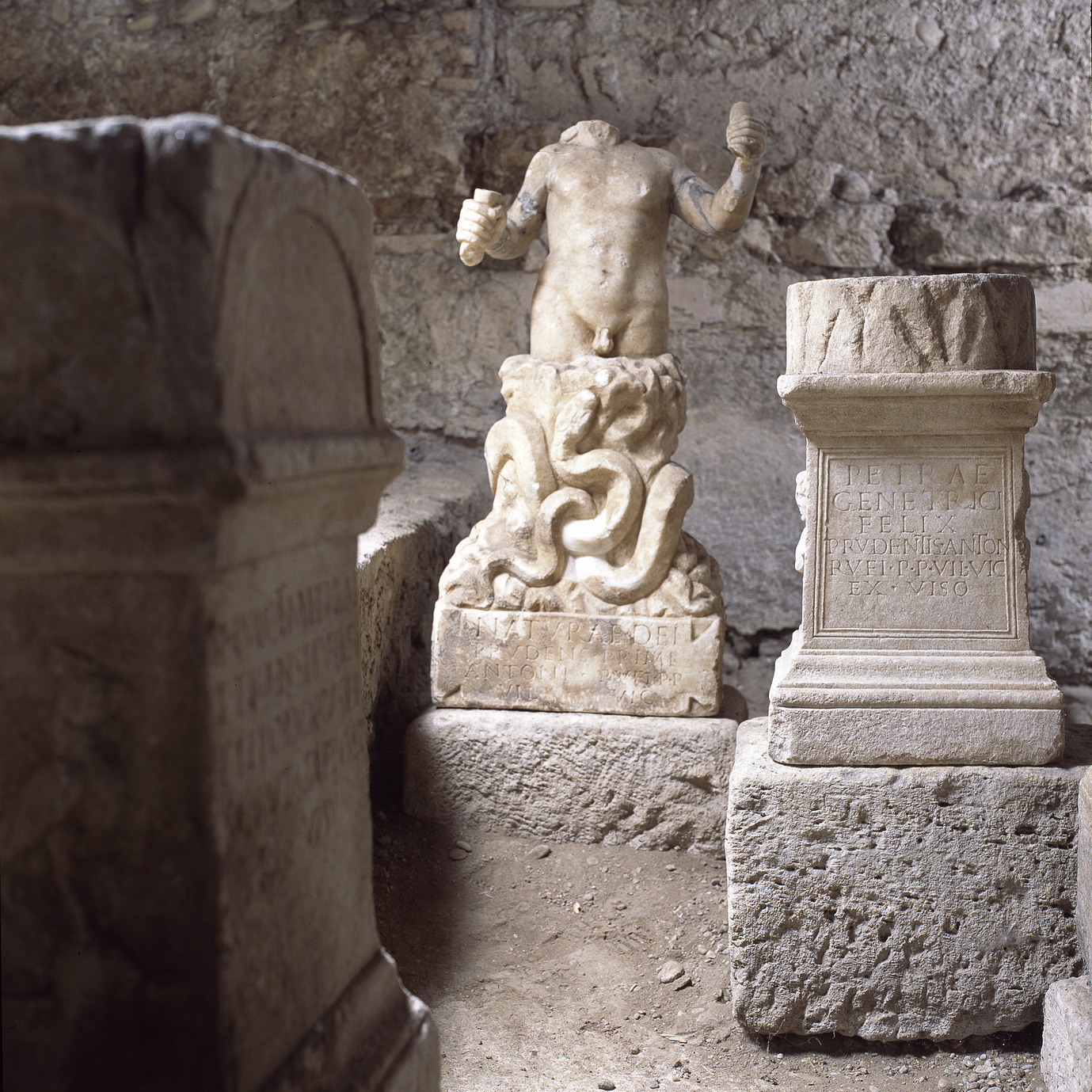
The sculpture includes a serpent climbing the rock from which Mithras is born.
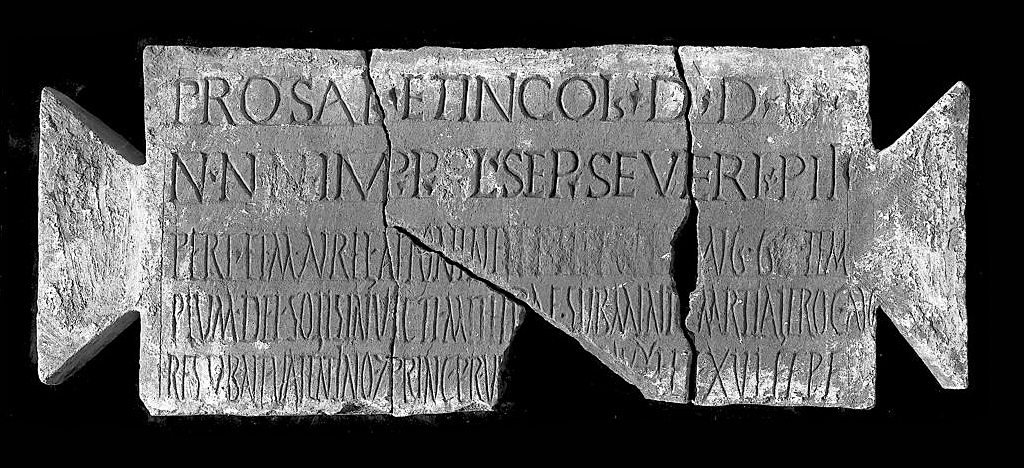
Antonius Valentinus, centurio, made this plaque for the salut des empereurs Septimus Severus and Marcus Aurelius.
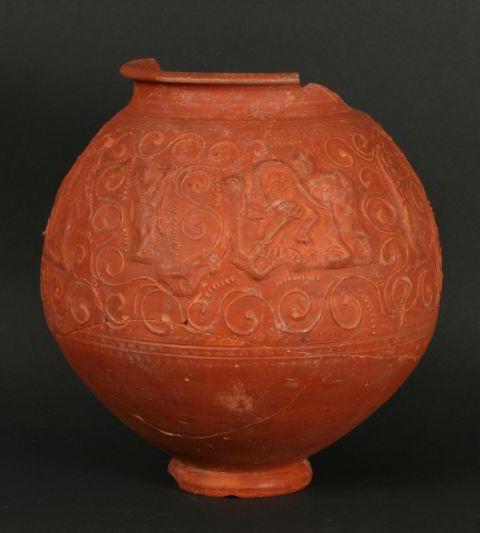
This terracotta vase features prolific decoration, including Mithras Tauroctonos, Fortuna, Cautes, a dog and Pan playing a syrinx.
The Mithraeum of Szony has the form of a grotto and the entrance is on the west side.
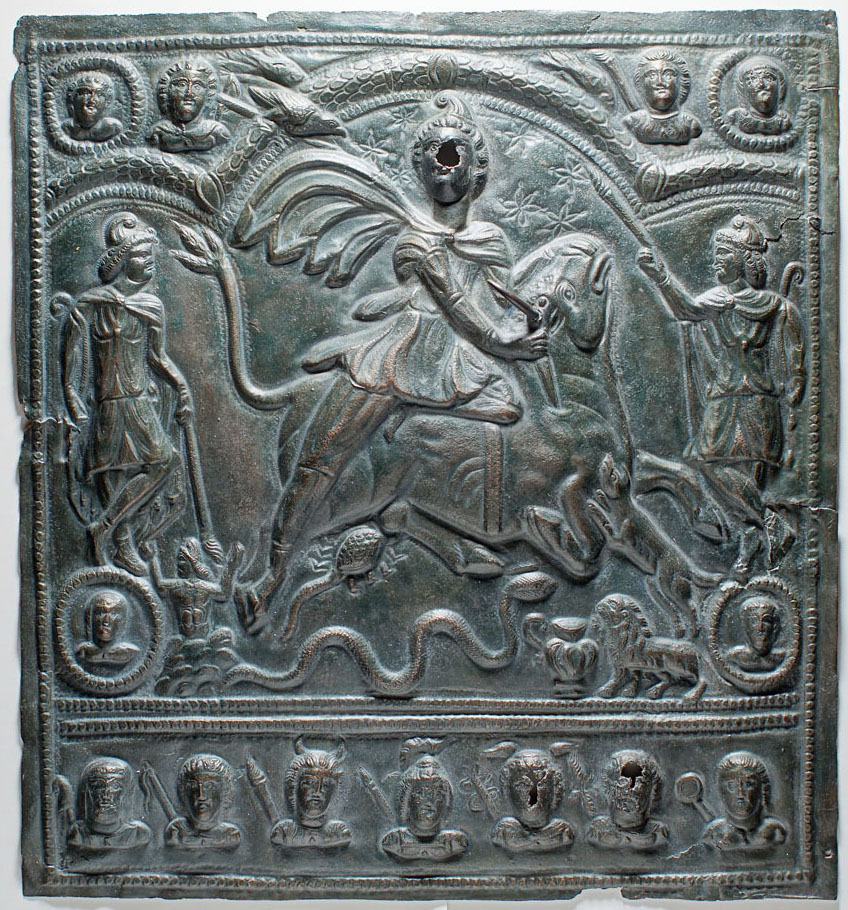
Szony's bronze plate shows Mithra slaying the bull and the seven planets with attributes at the bottom of the composition.

In Aquincum petrogenia, Mithras holds the usual dagger and torch as he emerges from the rock.
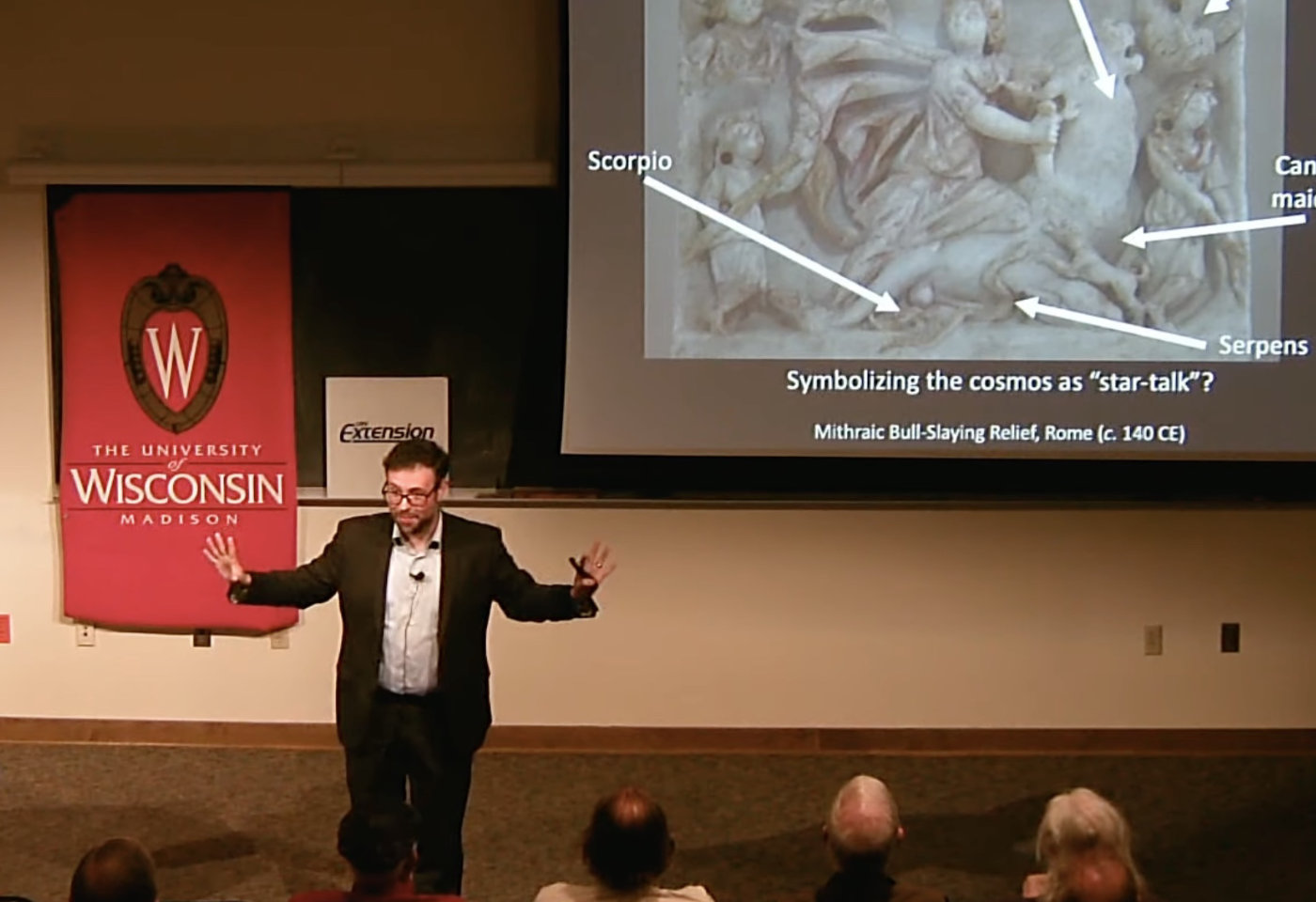
Our modern understanding of Mithraism, though, depends largely on a few short (and very problematic) literary mentions, mostly written by the cult’s Christian rivals.
