Your search Villa Romana de Fuente Álamo gave 186 results.

Pausilypum, modern Posillipo, overlooked the Bay of Naples and became renowned for its elite villas and coastal setting.

A small four-sided white marble relief of uncertain Mithraic attribution, found at Italica (modern Santiponce, near Seville), depicting a bull walking to the right on the front, a fig-tree on the back, five ears of wheat on the right side, and damaged vine tendrils with grapes on the left…
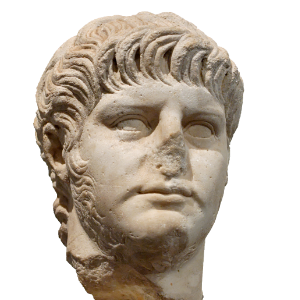
Roman emperor whose ceremonial reception of Tiridates I of Armenia established one of the earliest recorded links between Mithras and the Roman imperial court.
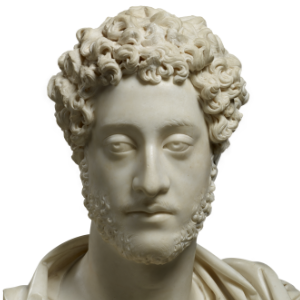
Roman emperor traditionally regarded as the first ruler initiated into the Mysteries of Mithras.
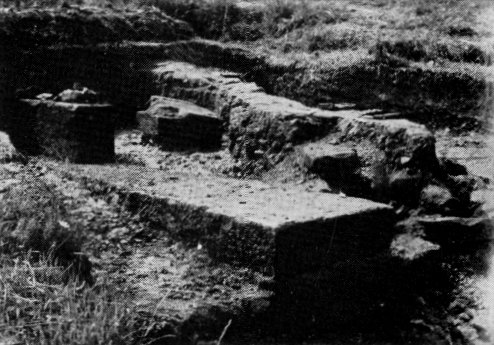
The Mackwiller Mithraeum was built in the middle of the 2nd century, during the reign of Antoninus the Pious, on the site of a spring already worshipped by the natives.
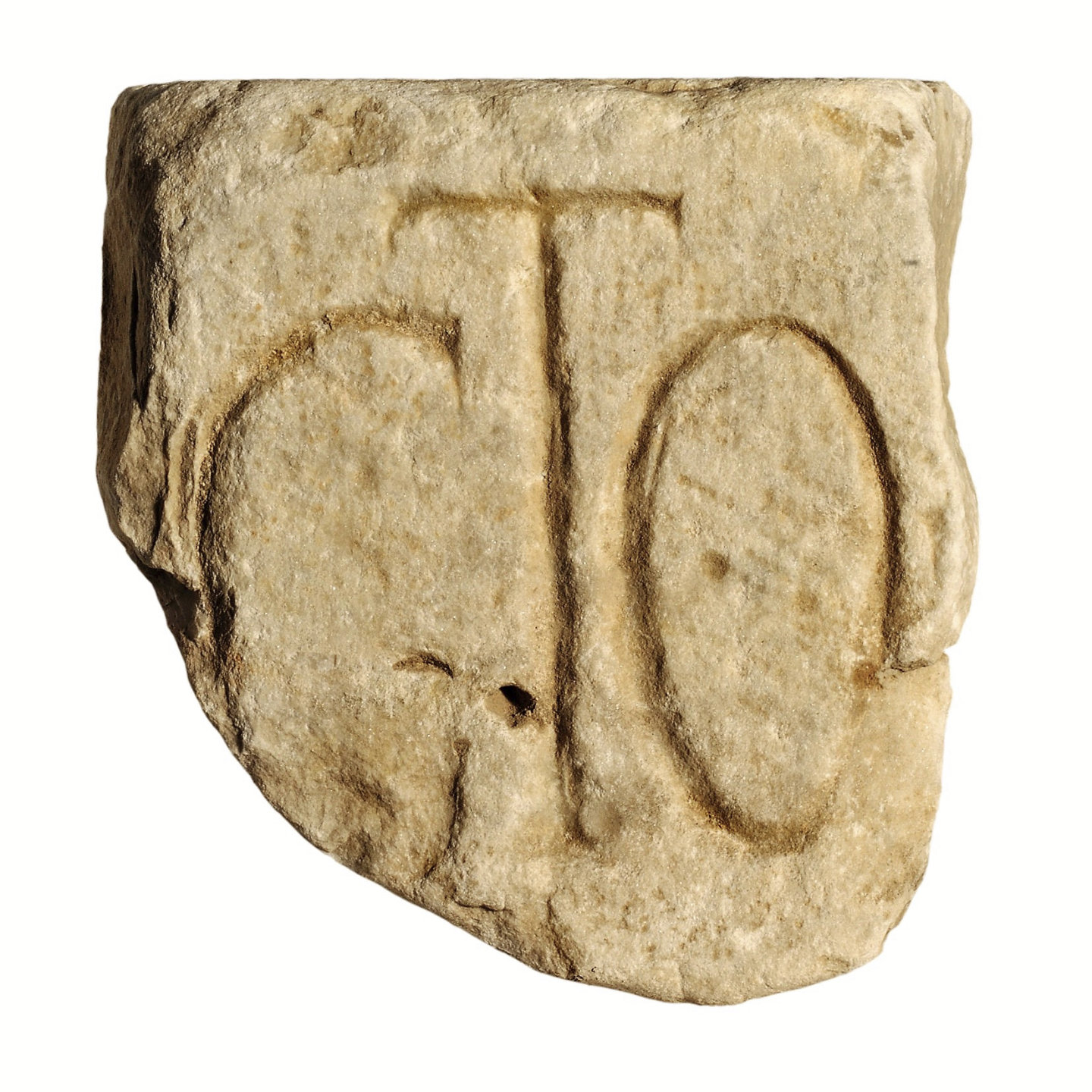
This fragment of the base of a statue from Tarragona, Spain, bears an inscription which appears to be dedicated to the invincible Mithras.
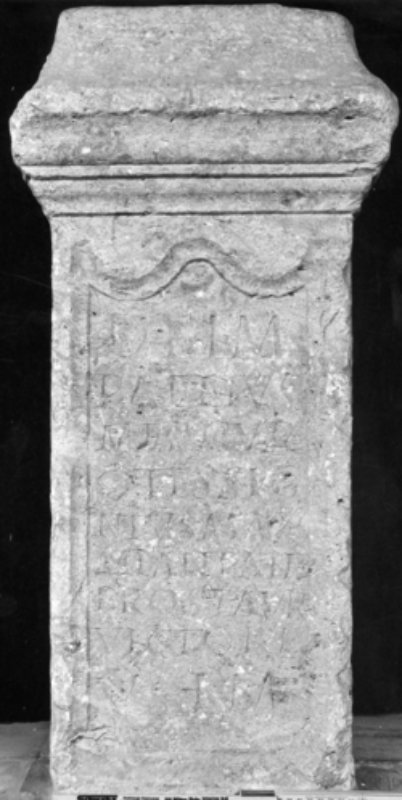
This altar to Mithras found in Aquilieia mentions several persons of a same community.
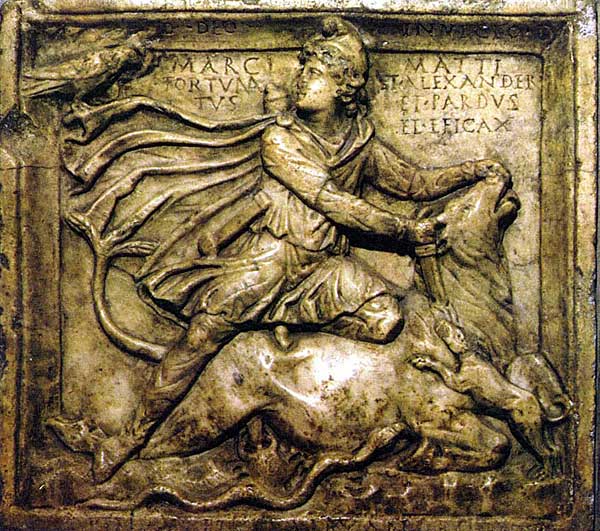
The relief marble of Mithras sacrifying the bull, exposed on the Hermitage Museum comes from Rome.
Marble tauroctony relief fragment from near Dolna-Malina, Thracia, depicting part of Mithras as bull-slayer together with Cautopates; no further details are available.
Small Mithraic sanctuary discovered in 1958 in the grotto called Adam near Tirgușor, Moesia Inferior, about 30 km from Constanța; the monuments are remarkable for their Greek inscriptions.
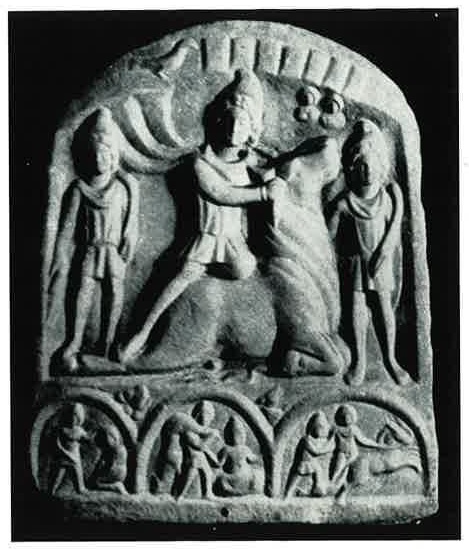
White marble tauroctony relief from the ruins of the Roman castle near Koniovo, Moesia Superior, depicting the standard bull-slaying scene.
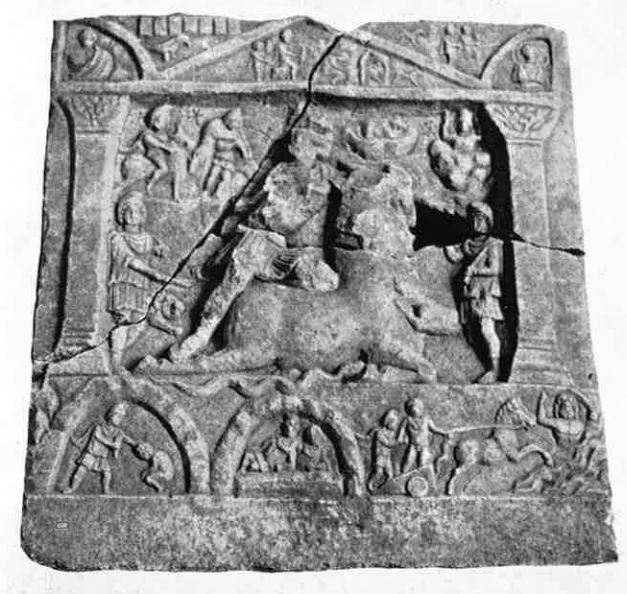
Large marble tauroctony relief from near Tavalicavo, Moesia Superior, with the shape of a temple façade: two columns supporting a pediment, the capital decorated with a head of Medusa, and the tauroctony in the central field.
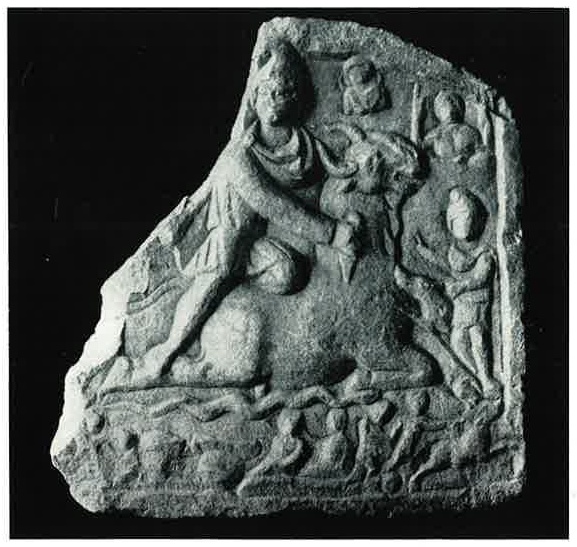
White marble tauroctony relief from Radeša near Pirot, Moesia Superior, depicting the standard bull-slaying scene.
Marble altar from near Osmakovo, Moesia Superior, now in the Niš museum, dedicated to Soli invicto by Valerius Iucundus.
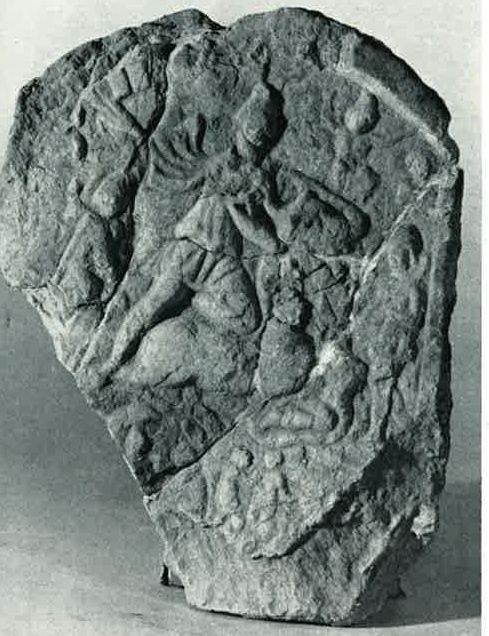
Marble tauroctony relief from the Roman camp at Sucidava, Dacia, found near tower C, depicting the standard bull-slaying with the full iconographic programme.
Small bronze statuette in Phrygian cap from Catunele de Motru, Dacia, possibly a torchbearer; the Mithraic attribution is not certain as no torch survives.
Rocky pass about twenty minutes south of Prozor, Dalmatia, containing a rock niche with a carved Mithraic scene; probably a secondary cult place related to the Vitalj sanctuary.
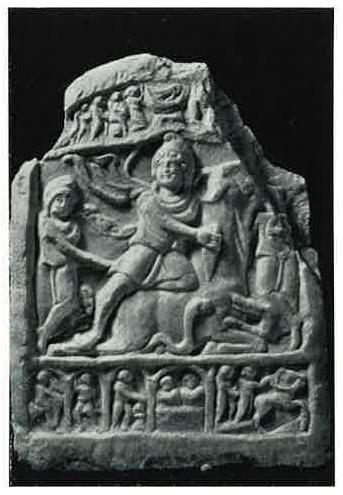
Small limestone tauroctony relief from Enns, ancient Lauriacum in Noricum, found about 100 metres east of the north-east corner of the castra, depicting Mithras killing the bull with dog and serpent and flanking torchbearers.
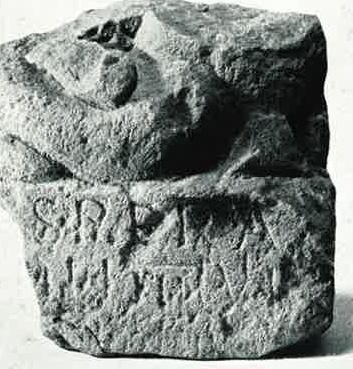
Fragment of a sandstone statue found during cellar excavations at Gross-Krotzenburg in 1848, possibly belonging to the Mithraeum
Poorly preserved subterranean Mithraic sanctuary discovered beneath a medieval convent.
