
Large marble slab found in 1648 near S. Silvestro in Capite, inscribed with a Latin dedicatory poem forming a cypher-acrostic for TAMESIUS and AUGENTIUS, with records of leontica and chrysos initiations, dated to 362 A.D.
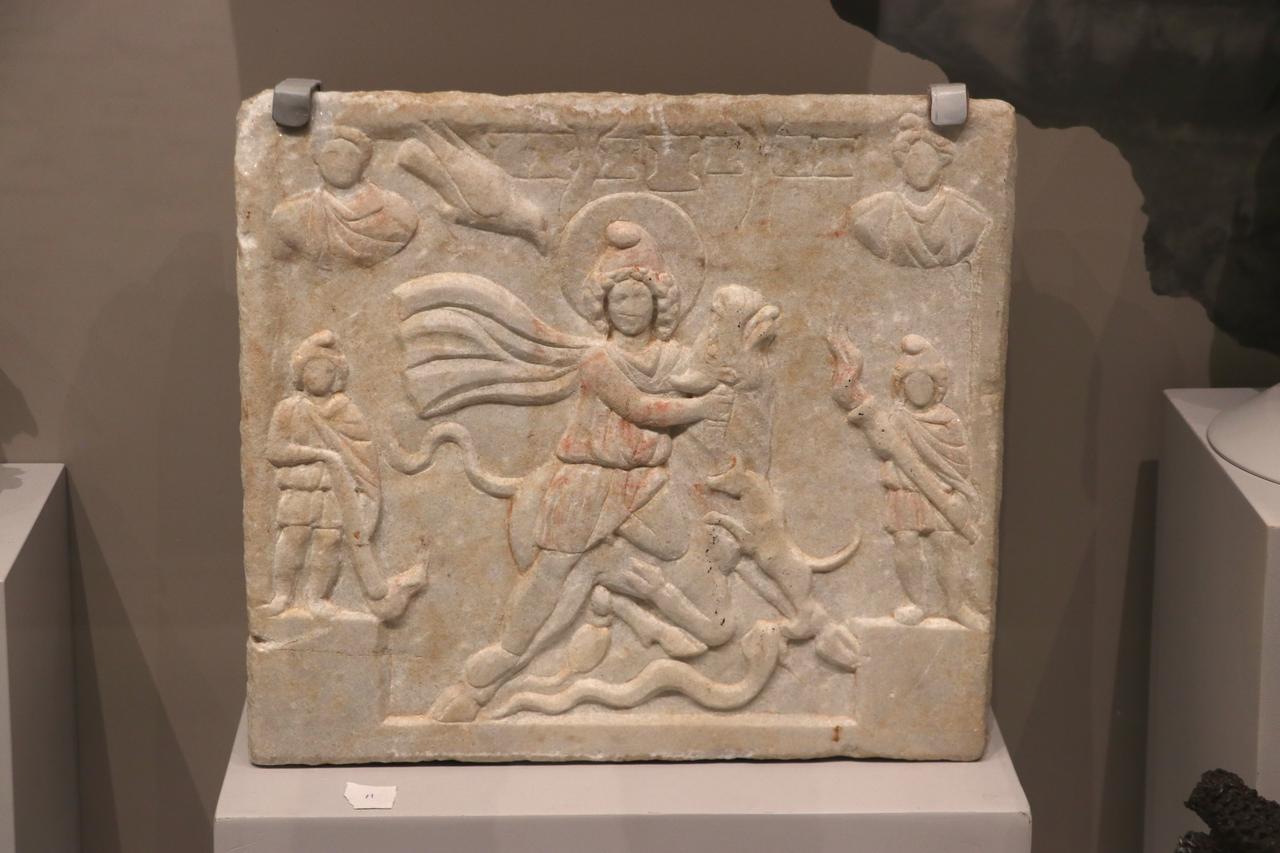
New evidence for the cult of Mithras and the religious practices of Legio IV Scythica at the Roman frontier city of Zeugma on the Euphrates.
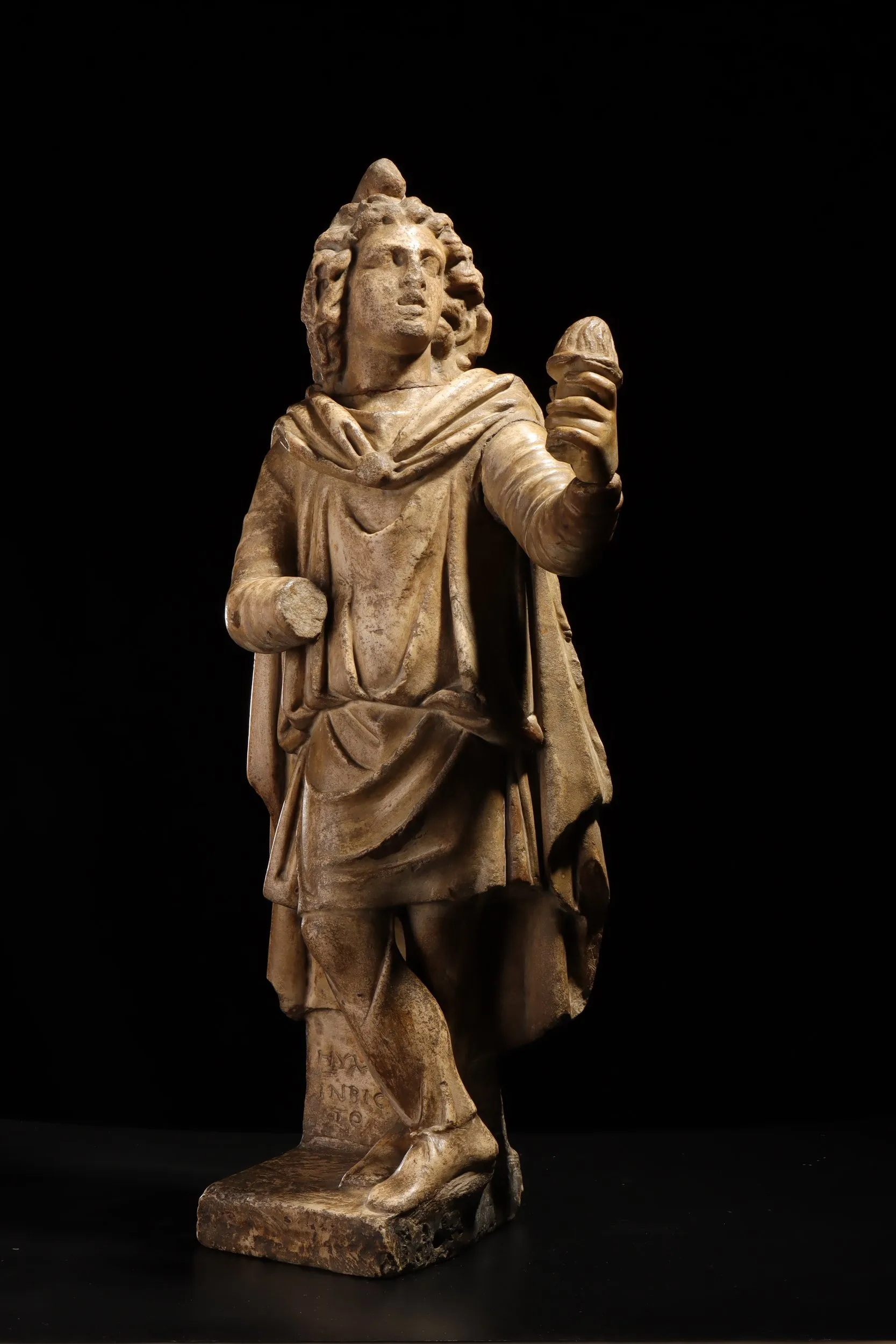
Marble statuette of the torchbearer Cautes bearing the votive inscription HYMNUS INBICTO, probably produced during the second or third century CE and preserved in an old European collection.
Small marble relief from the Aventine showing a primitive representation of Mithras slaying the bull, without torchbearers or Sol and Luna.
An inscription from Asturica (modern Astorga) recording a dedication to Jupiter Optimus Maximus, Sol Invictus and Liber Pater by Q. Mamilius Capitolinus, juridical legate and later prefect of the Treasury of Saturn, for the welfare of himself and his family…
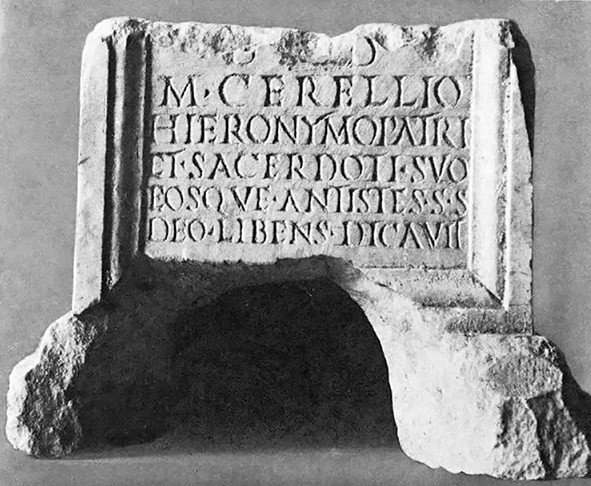
Small marble base recording a donation to M. Cerellio Hieronymo, pater and sacerdos, on behalf of an antistes who dedicated objects to the god, from the Mitreo degli Animali at Ostia.

Small marble base dedicated by C. Atilius Bassus, freedman and apparator of a priest of the Great Mother, to Silvanus dendrophoris, from the Mitreo degli Animali at Ostia.
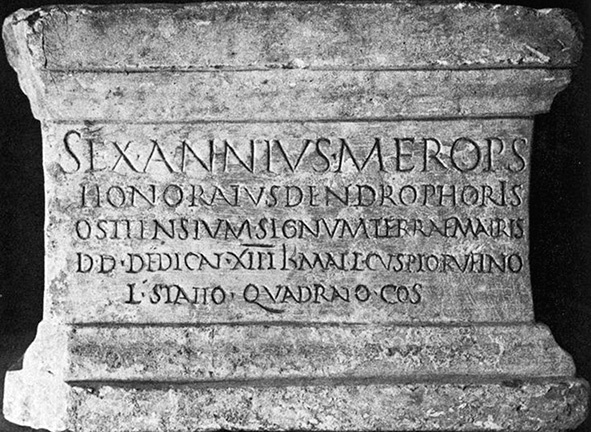
Small marble base dedicated by Sex. Annius Merops, honoured Dendrophoros, to the image of Terrae Matris, from the Mitreo degli Animali at Ostia, dated to 142 A.D.
Marble cap mentioned by Visconti, subsequently identified as certainly belonging to the finds of the Mitreo degli Animali rather than the Mitreo del Palazzo Imperiale, Ostia.
Marble slab with a fragmentary Latin inscription, walled into the right-hand side of the cult-niche in the Mitreo delle Pareti Dipinte at Ostia.
This small white marble cippus bears an inscription of a certain Pater Antoninus to Cautes.
The dedicator of this marble basin could be the same person who offered the sculpture of Mithras slaying the bull in the Mitreo delle Terme di Mitra.
This inscription, found in the Mitreo della Planta Pedis, among some other monuments in Ostia, suggests a link between Mithras and Silvanus.
Small marble column dedicated by Iunia Zosime, mater, to Virtus Dendrophori from silver weighing two pounds, from the Mitreo degli Animali at Ostia.
Marble head of Helios-Mithras with curly hair and seven holes for fastening rays, from the Mitreo degli Animali at Ostia, Lateran Museum.
Marble altar found near the entrance of the Mitreo delle Sette Porte at Ostia, dedicated by Sextus Fusinius Felix.

Marble torso found at Ostia in 1912 between the Decumanus and the Via dei Molini, dedicated to Mithras by a certain Atilius Glyco.
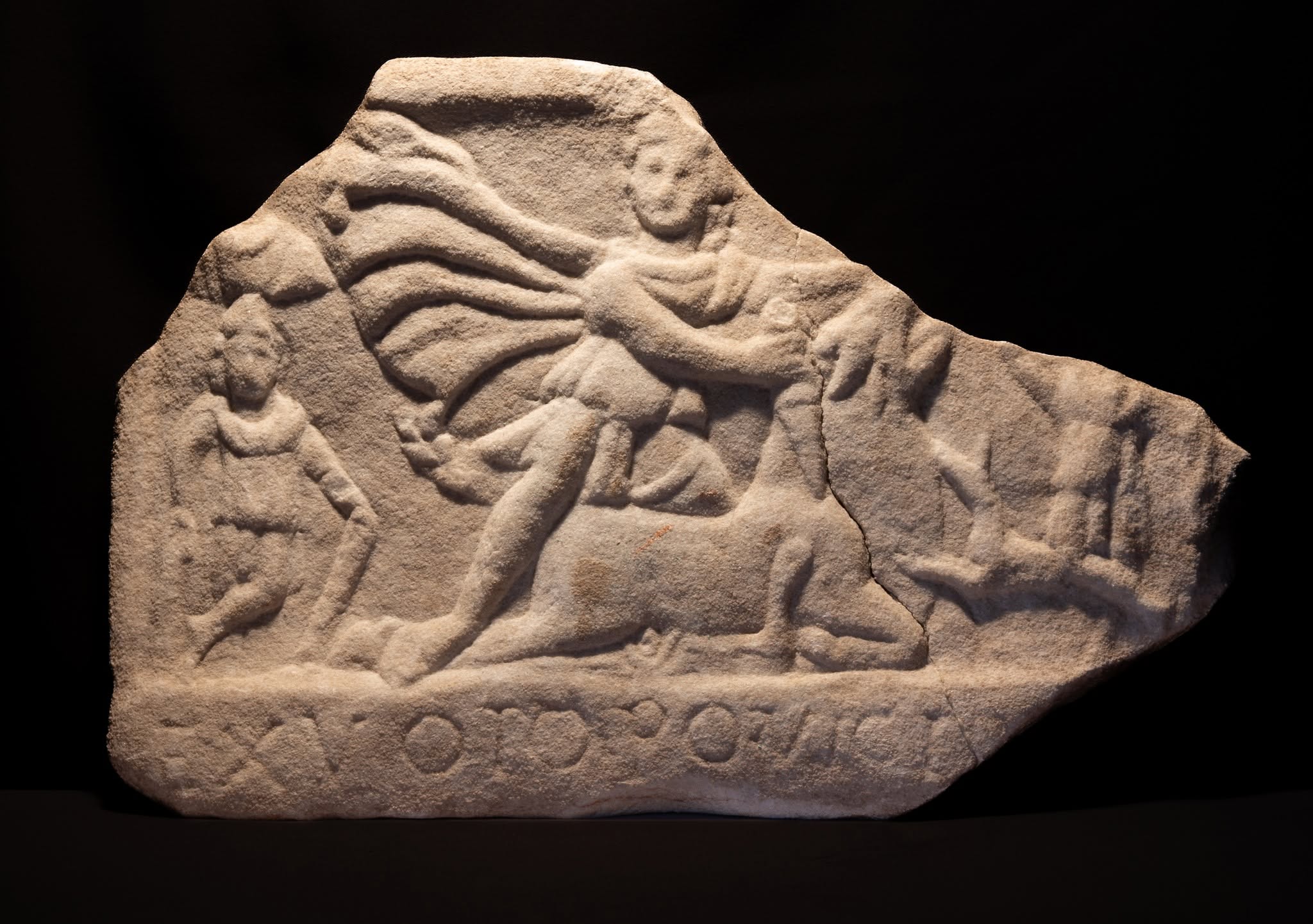
Marble tauroctony relief from Ozd (Magyarózd), attesting a rural Mithraic presence in the interior of Roman Dacia Superior.
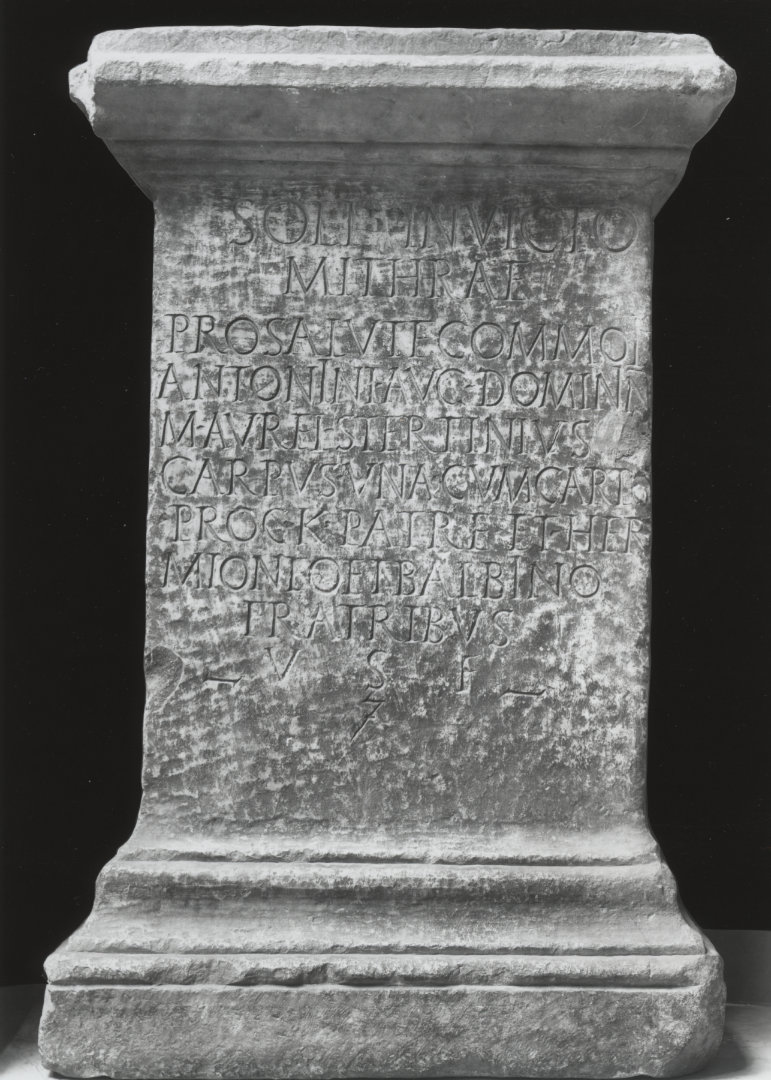
This altar bears an inscription to the health of the emperor Commodus by a certain Marcus Aurelius, his father and two other fellows.
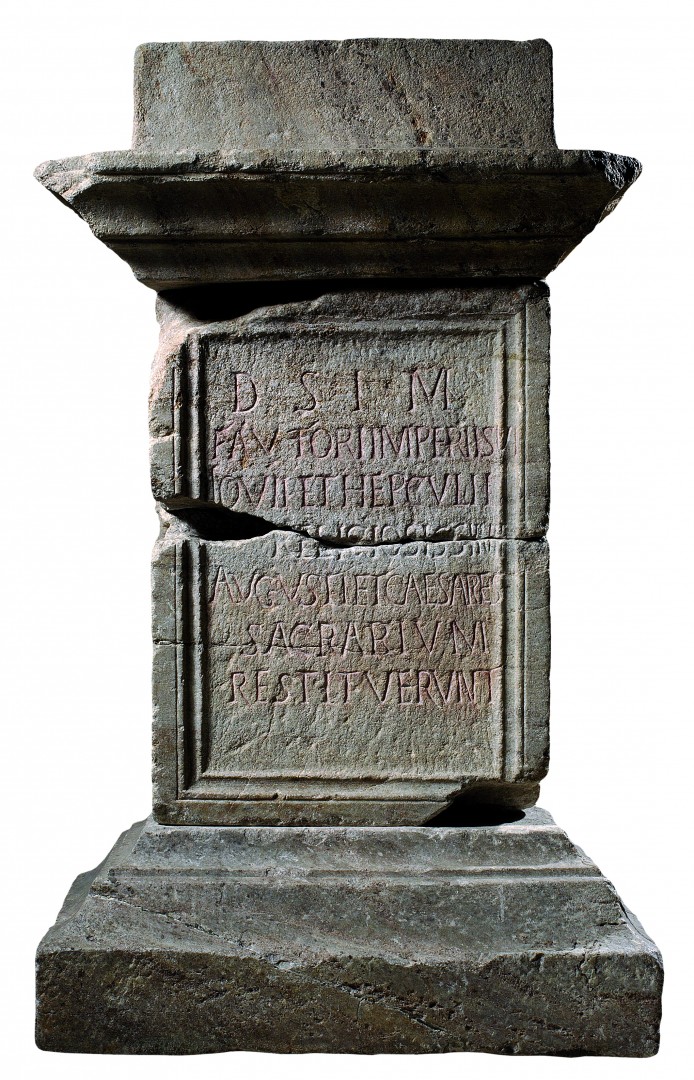
Altar with Cautes and Cautopates dedicated to Sol Invictus Mithras as protector of the Tetrarchy in 3rd-century Carnuntum.
