Your selection in monuments gave 263 results.
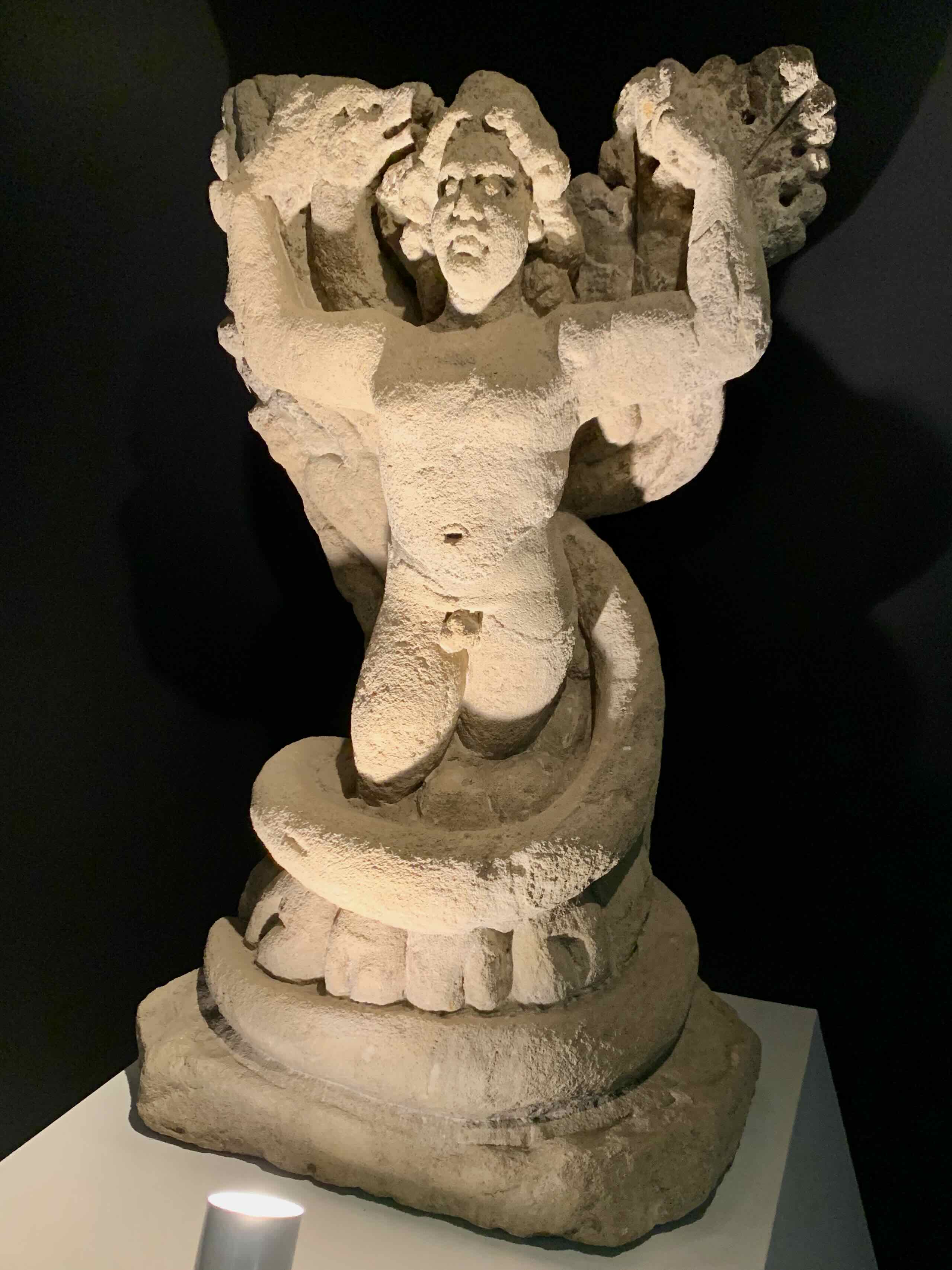
Mithras Petrogenitus, born from the rock, from the Mithraeum of Carnuntum III.
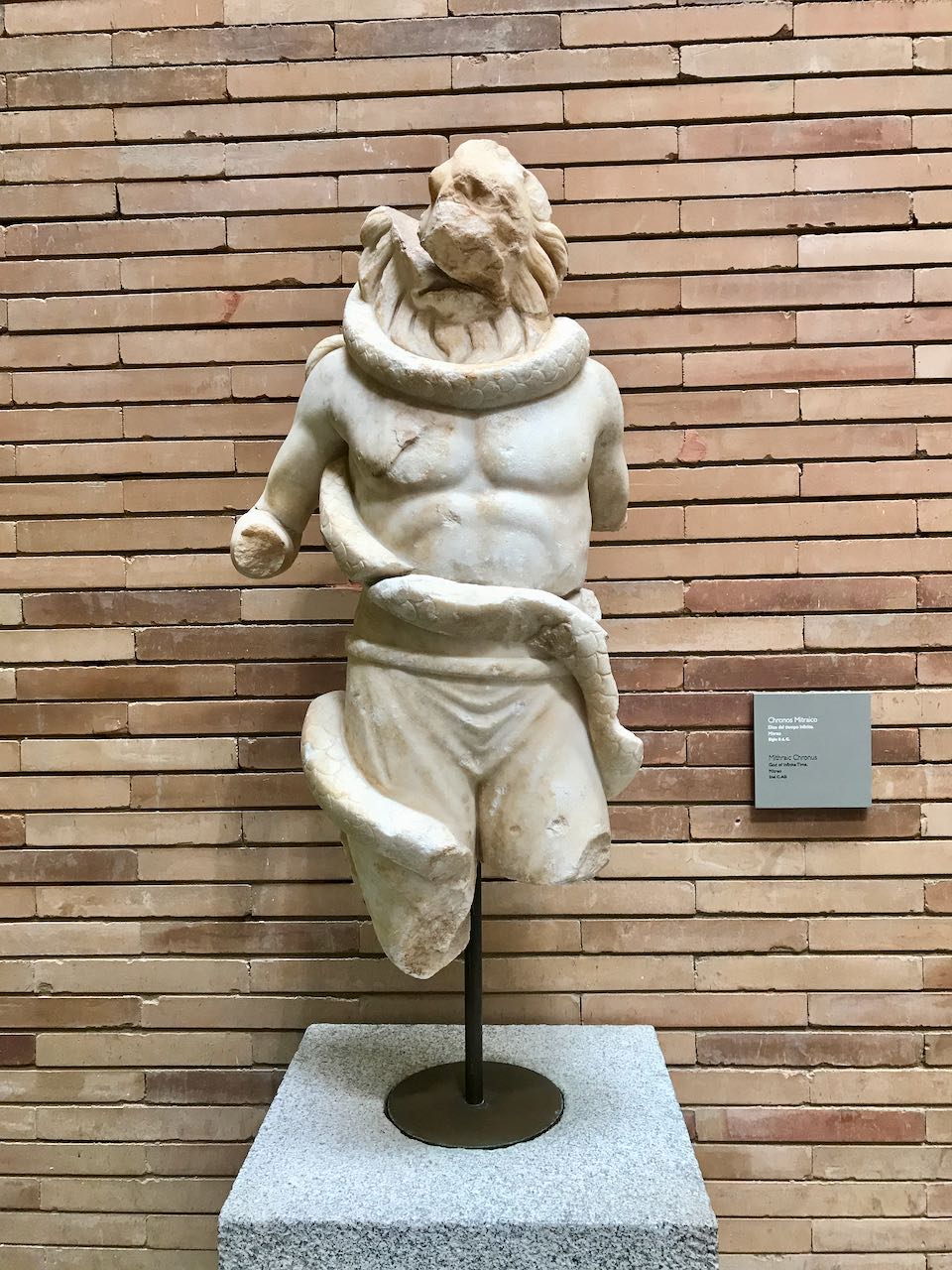
The lion-headed figure, Aion, from Mérida, wears oriental knickers fastened at the waist by a cinch strap.
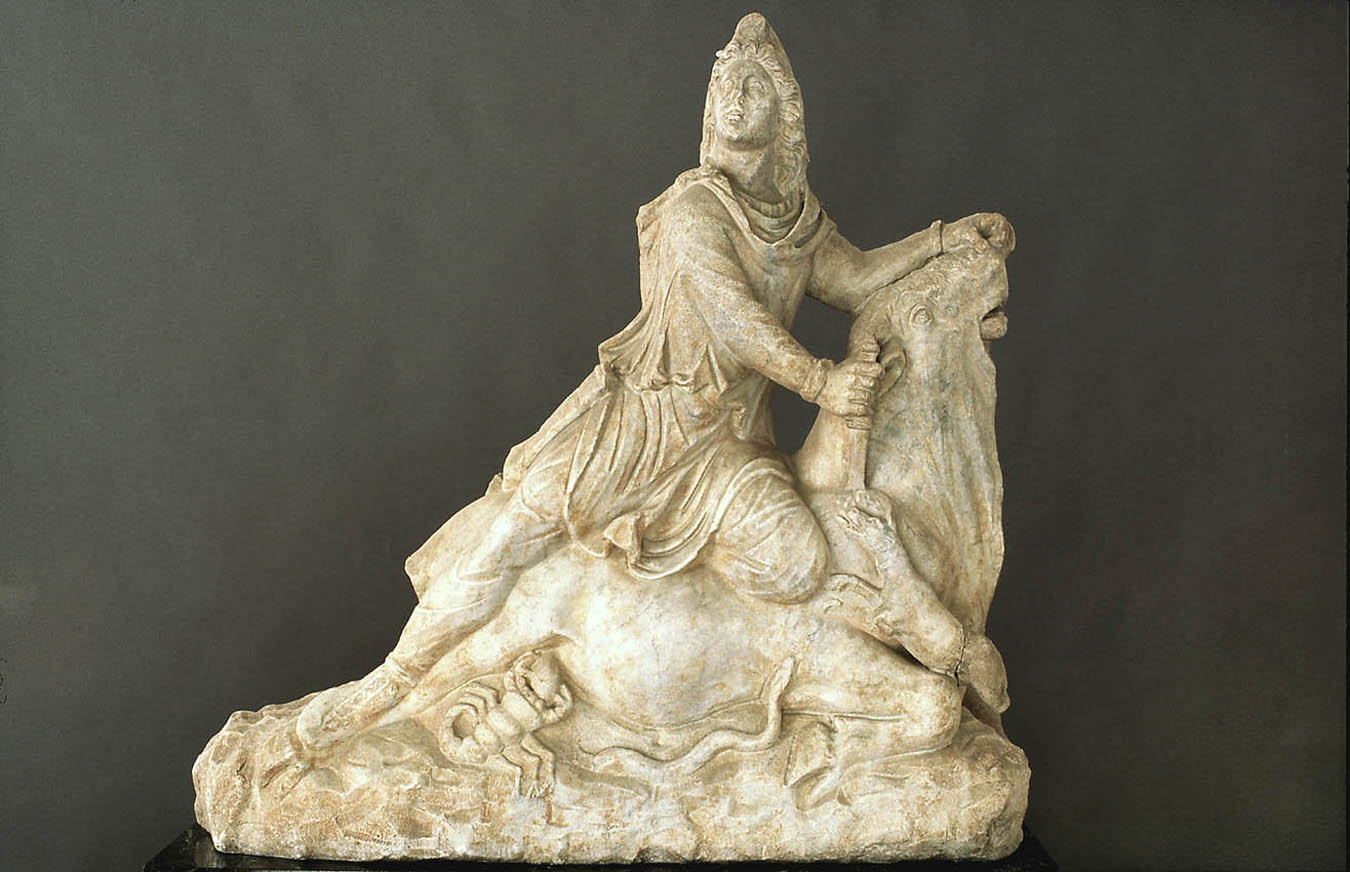
The Mithras of Cabra is the only full preserved Tauroctony sculpture found in Spain yet.
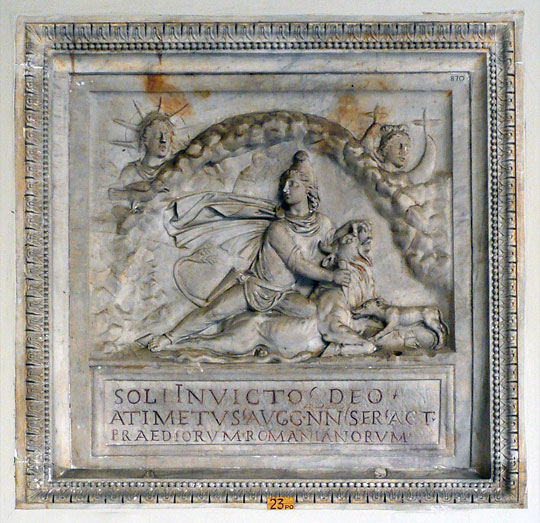
White marble relief depicting Mithras slaying the bull, dedicated by Atimetus.
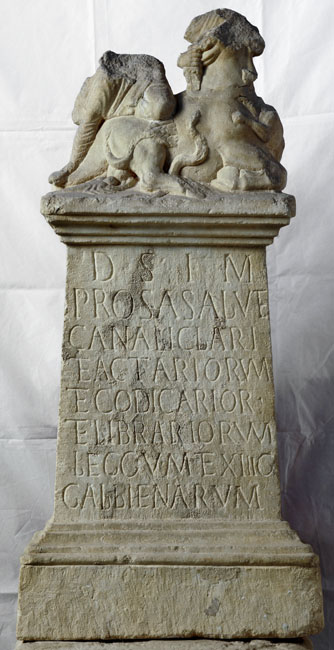
Remarkable fragmentary sculpture of Mithras slaying the bull on an inscribed altar found in Mithraeum III at Ptuj.
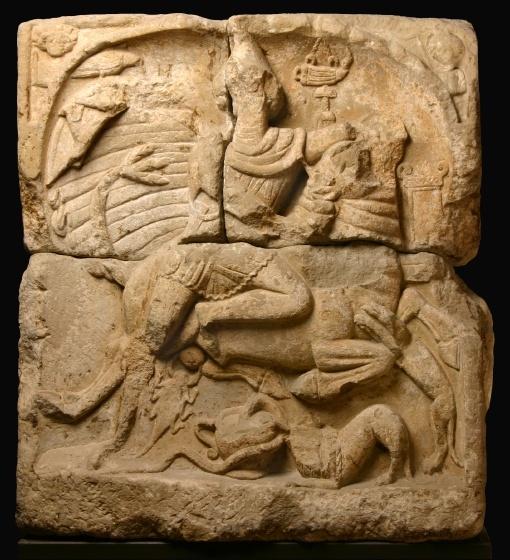
This relief of Mithras killing the bull, now on display in Stuttgart, includes a small altar with a sacrificial knife and an oil lamp.
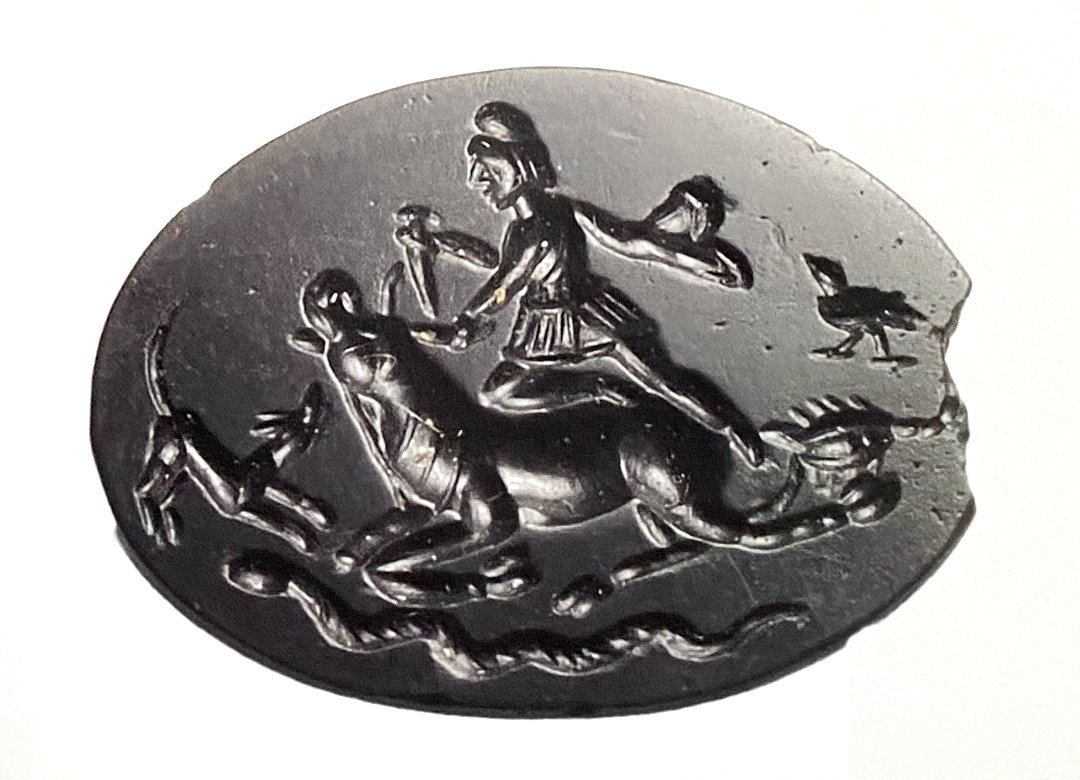
This intaglio with Mithras killing the bull on one side and Kabiros on the other was probably used as a magical amulet.
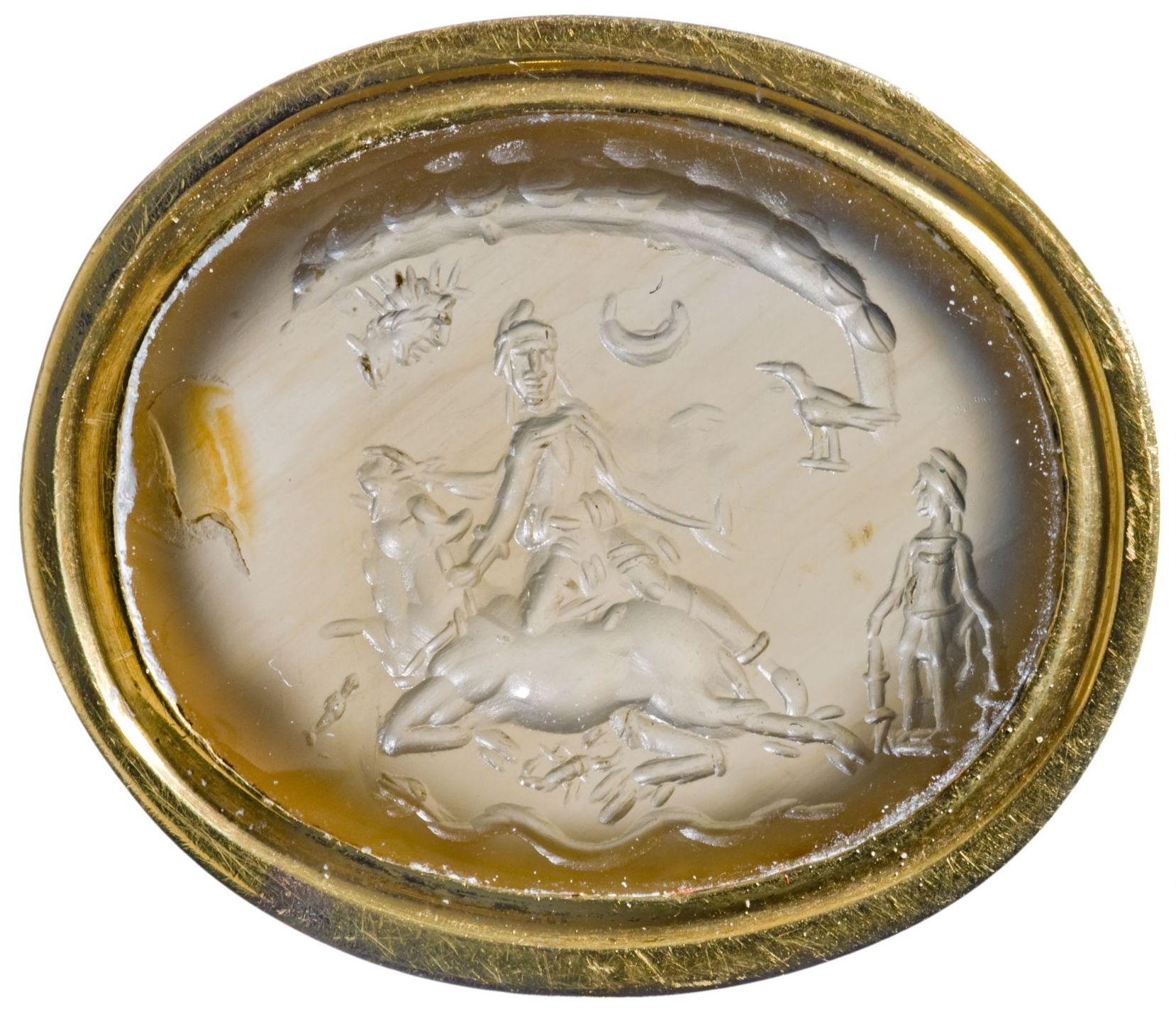
This intaglio depicting Mithras killing the bull is preserved at the Bibliothèque national de France.
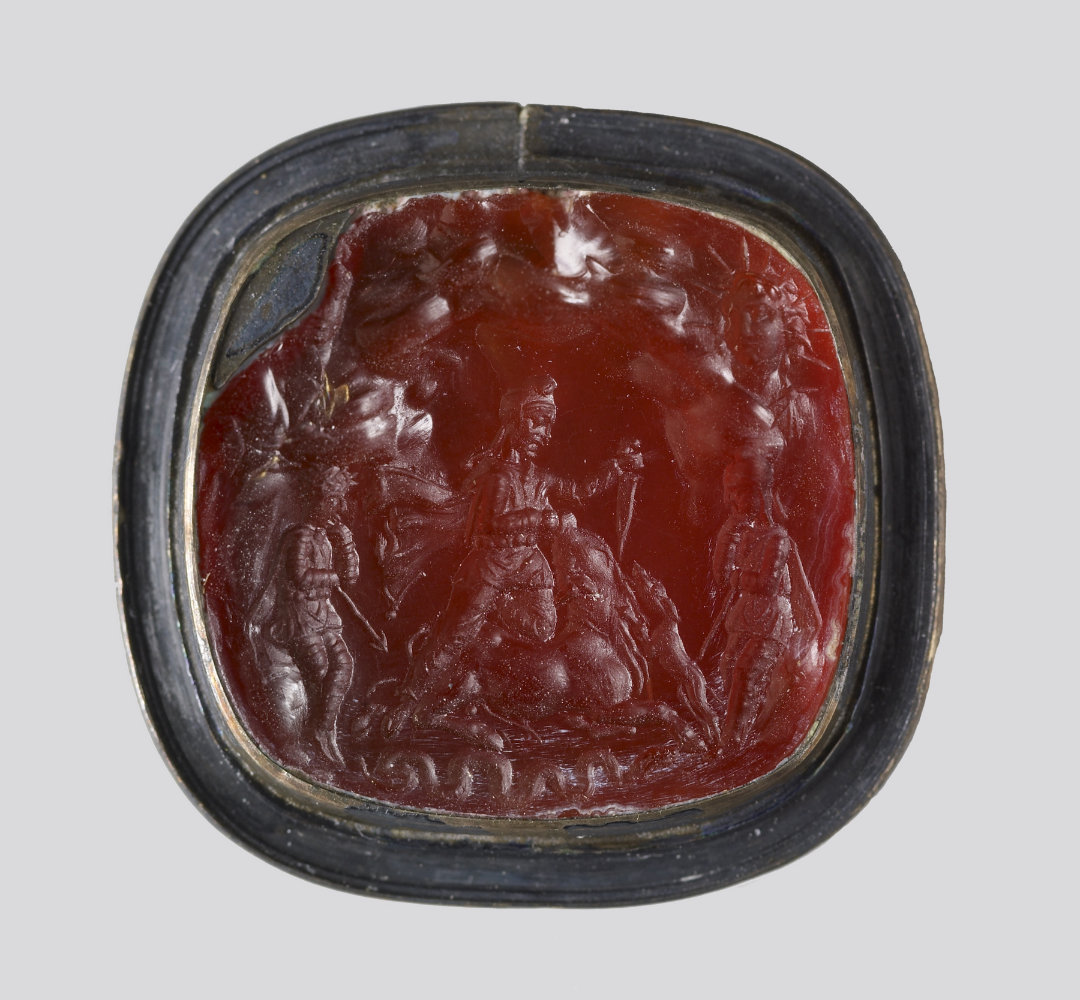
This ancient carnelian intaglio mounted in gold depicts Mithras slaying the bull surrounded by his companions Cautes and Cautopates.
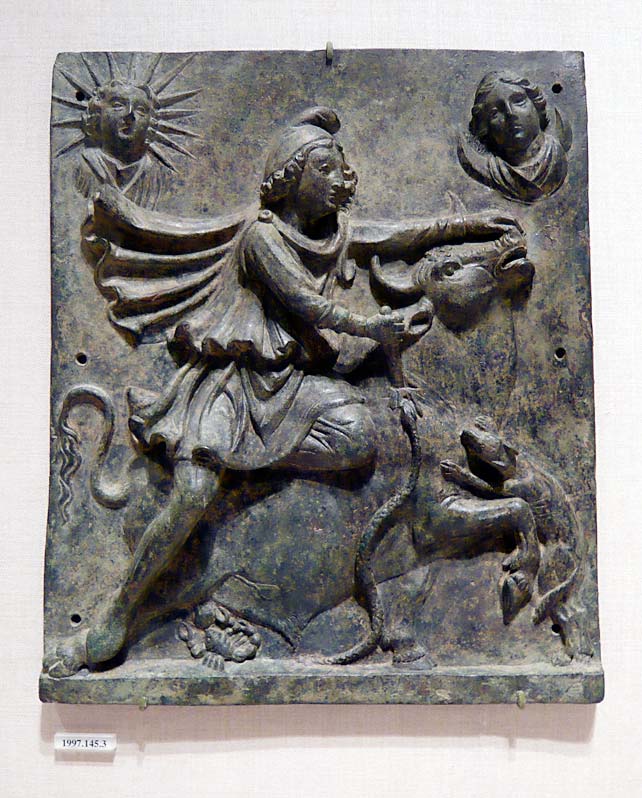
Mithras Tauroctony on bronze exposed at the Metropolitan Museum of New York.
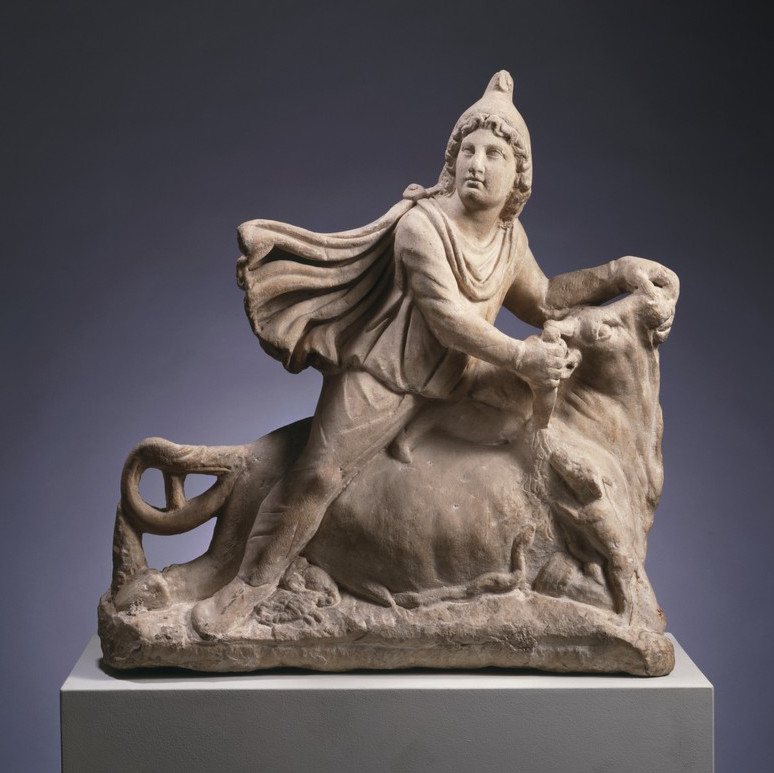
This sculpture of Mithras killing the bull may come from Rome, probably found in 1919.
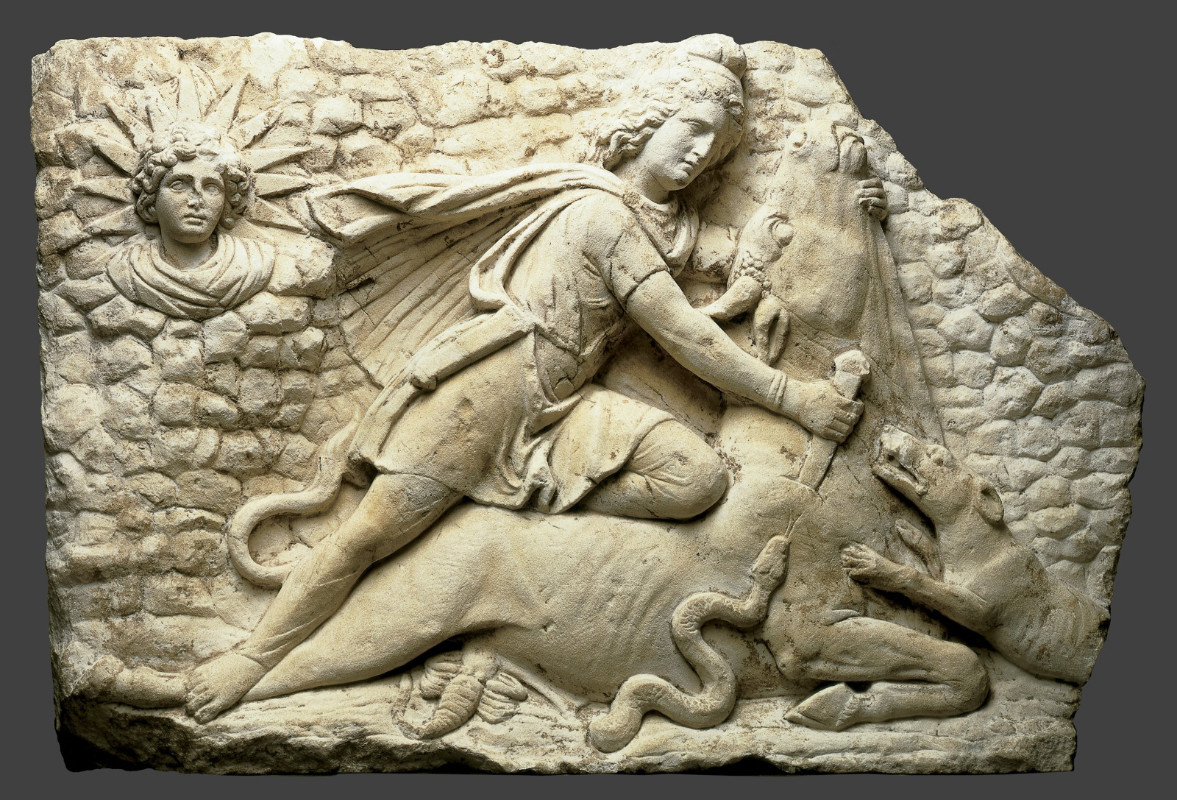
In the tauroctonic relief on display at the Cincinnati Art Museum, Mithras slaughters the bull over a rocky background.
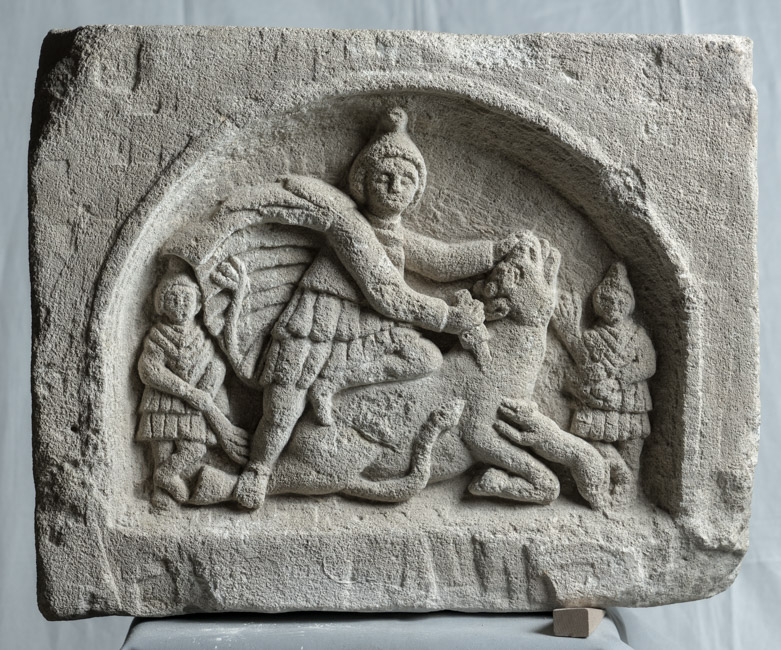
This relief found at Carnuntum represents Mithras slaughtering the bull, without the scorpion, in the sacred cave.
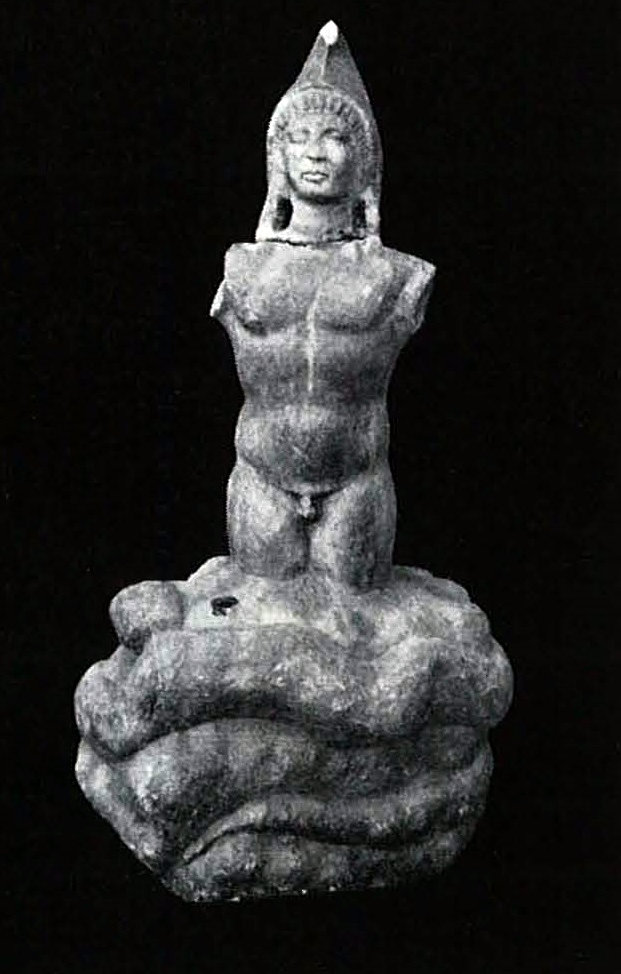
The rock of Mithra's birth in the Petrogenia of Sarmizegetusa is surrounded by a snake.
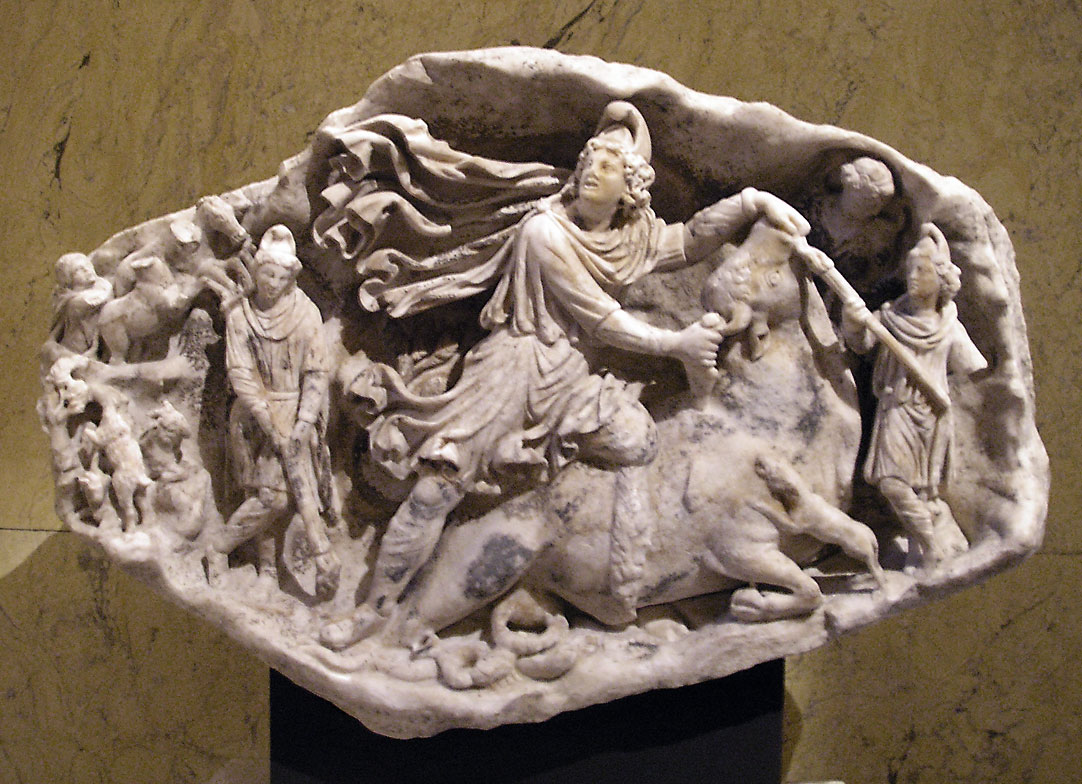
The relief of the Mithraic tauroctony of Aquiliea is currently on display in Vienna.
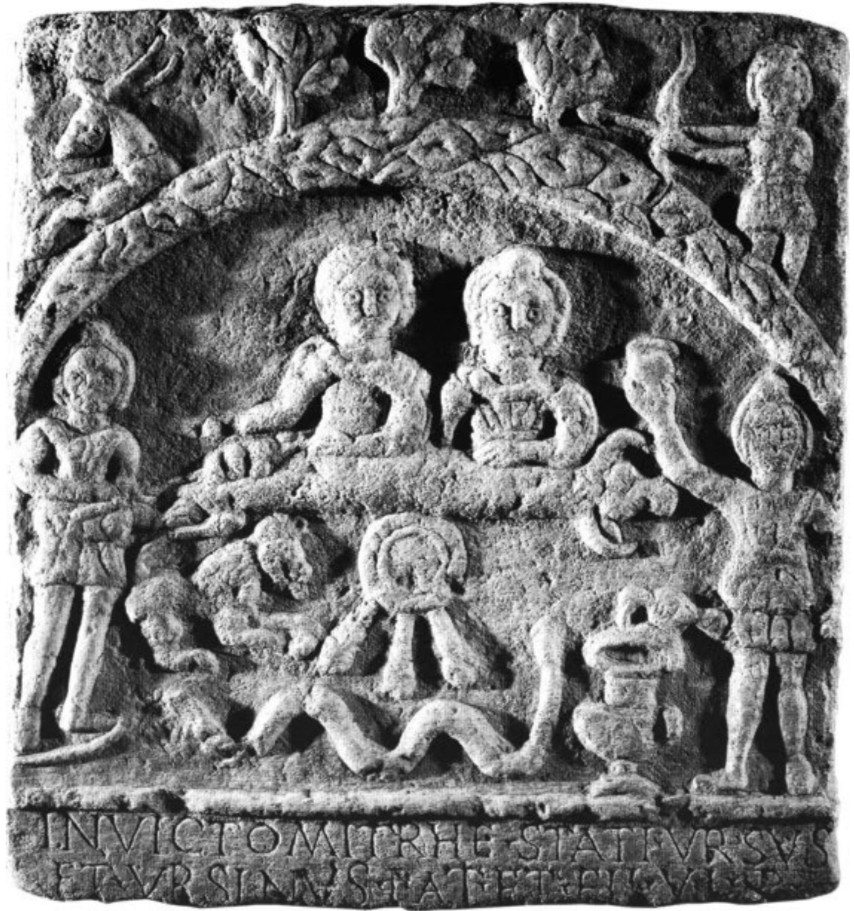
Mithras and Sol share a sacred meal accompanied by Cautes and Cautopates on a relief found in a cemetery from Croatia.
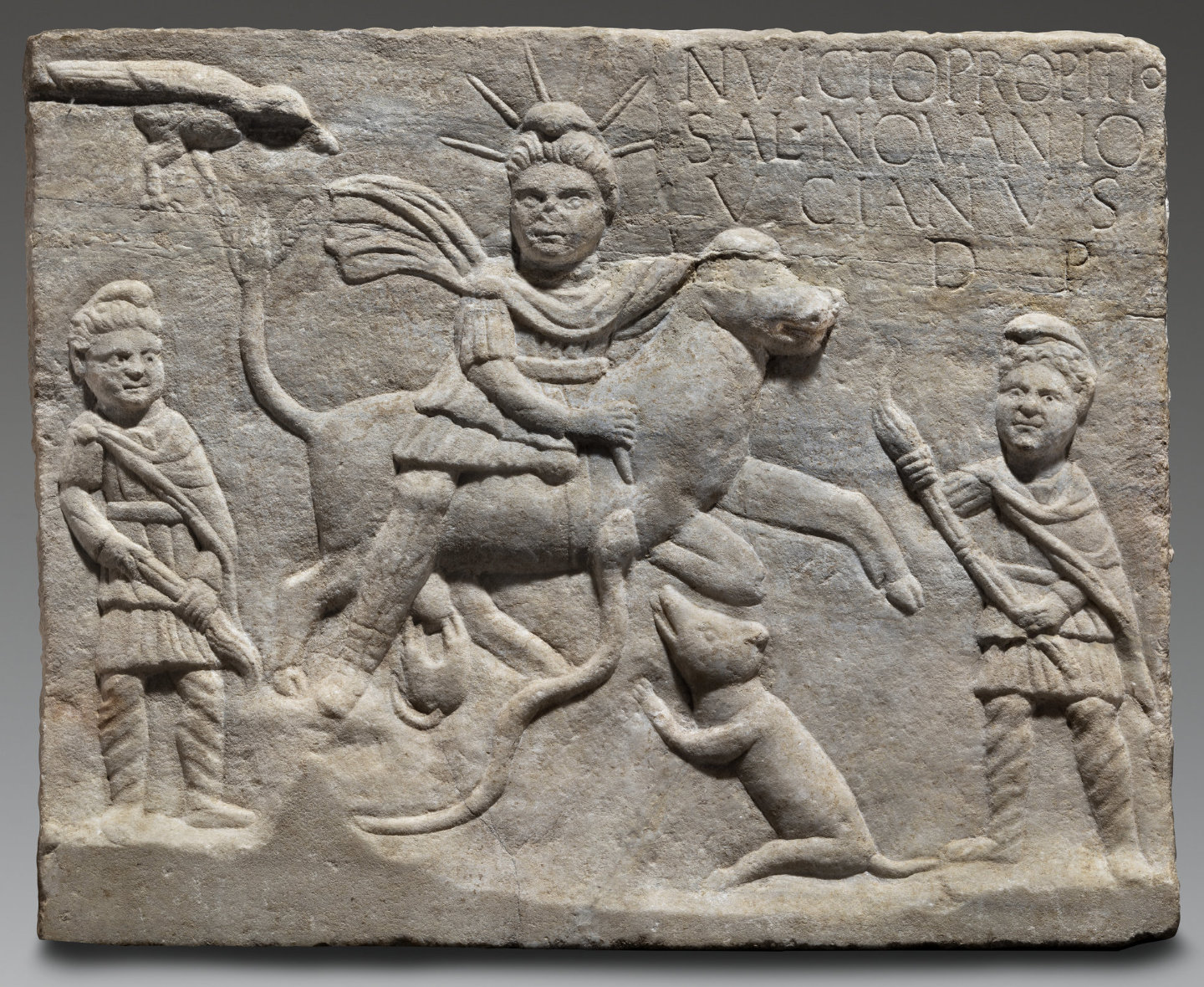
The Macerata Tauroctony shows Mithra slaying the bull with the usual Pyrigian cap and six rays around his head.
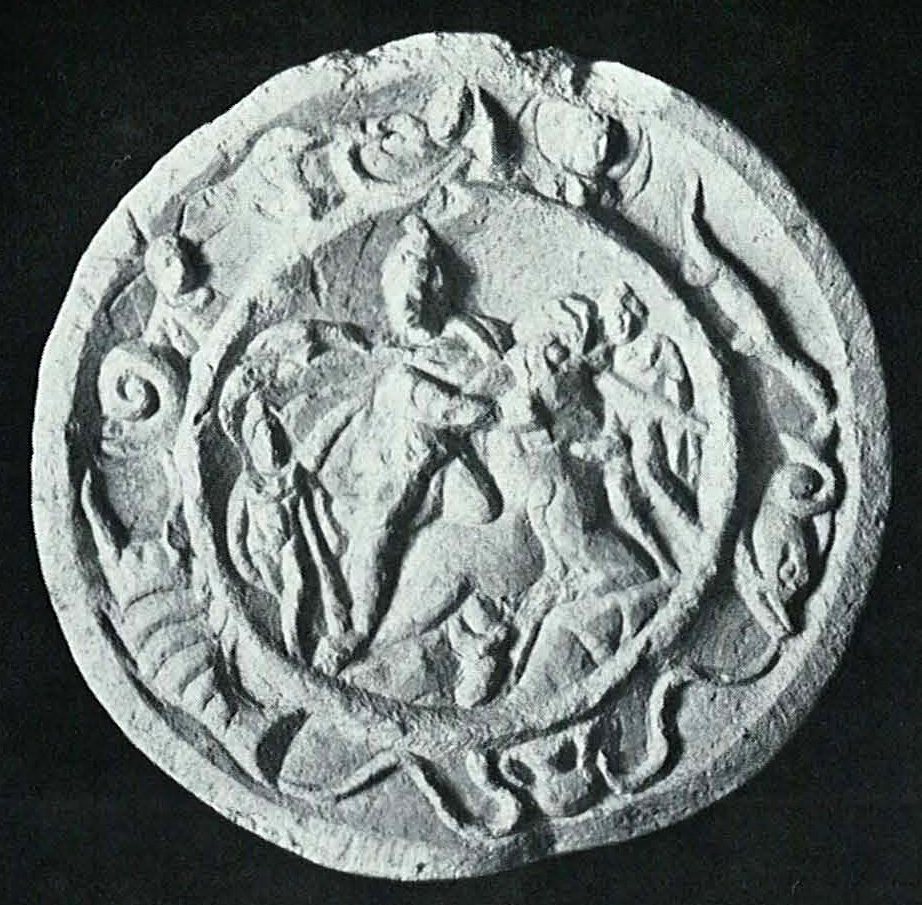
The round relief of Mithras killing the bull of Split is surrounded by a circle with Sun, Moon, Saturn and some unusual animals.
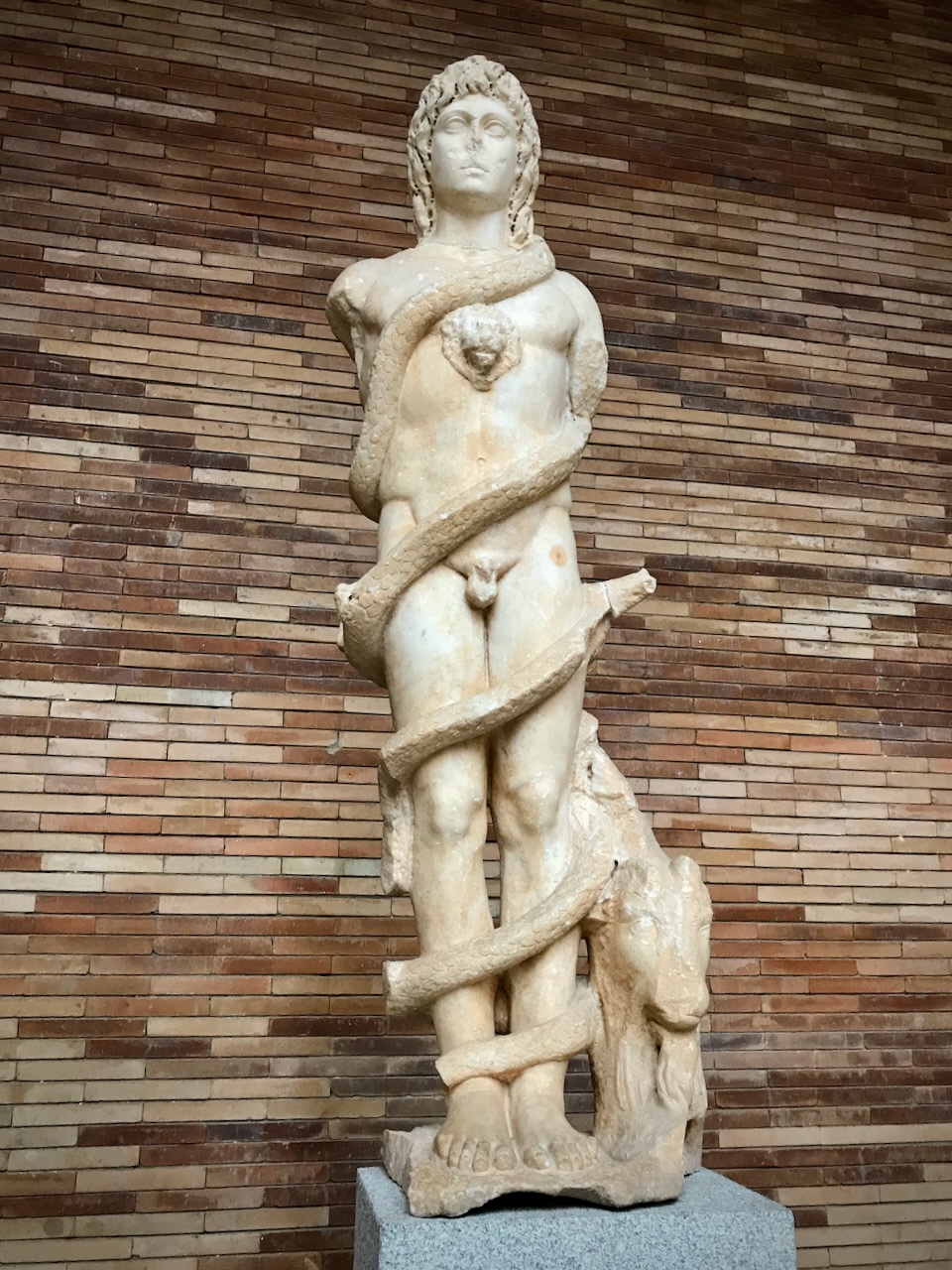
The Aion-Chronos of Mérida was found near the bullring of the current city, once capital of the Roman province Hispania Ulterior.
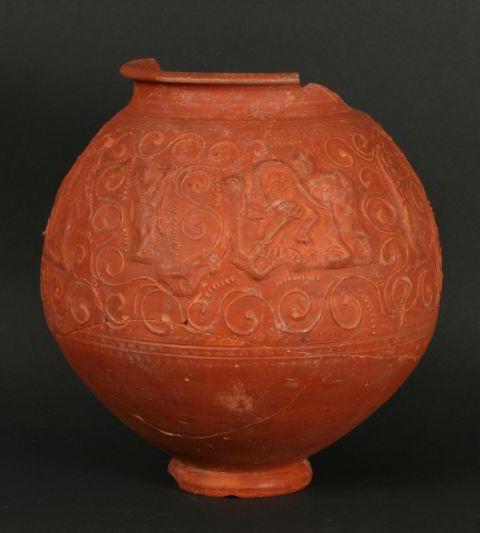
This terracotta vase features prolific decoration, including Mithras Tauroctonos, Fortuna, Cautes, a dog and Pan playing a syrinx.
