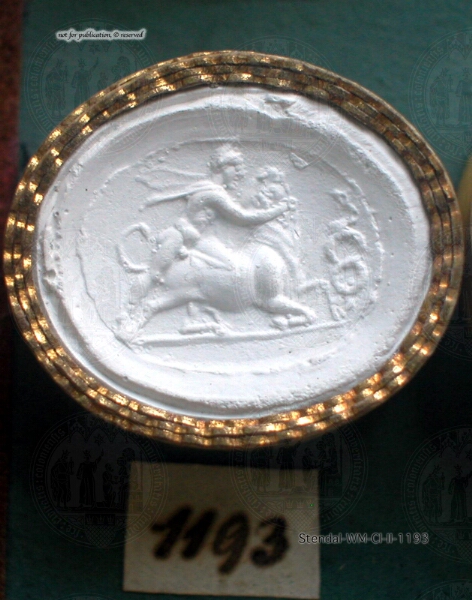
Imprint on glass of a Tauroctony exposed at Winckelmann Museum.
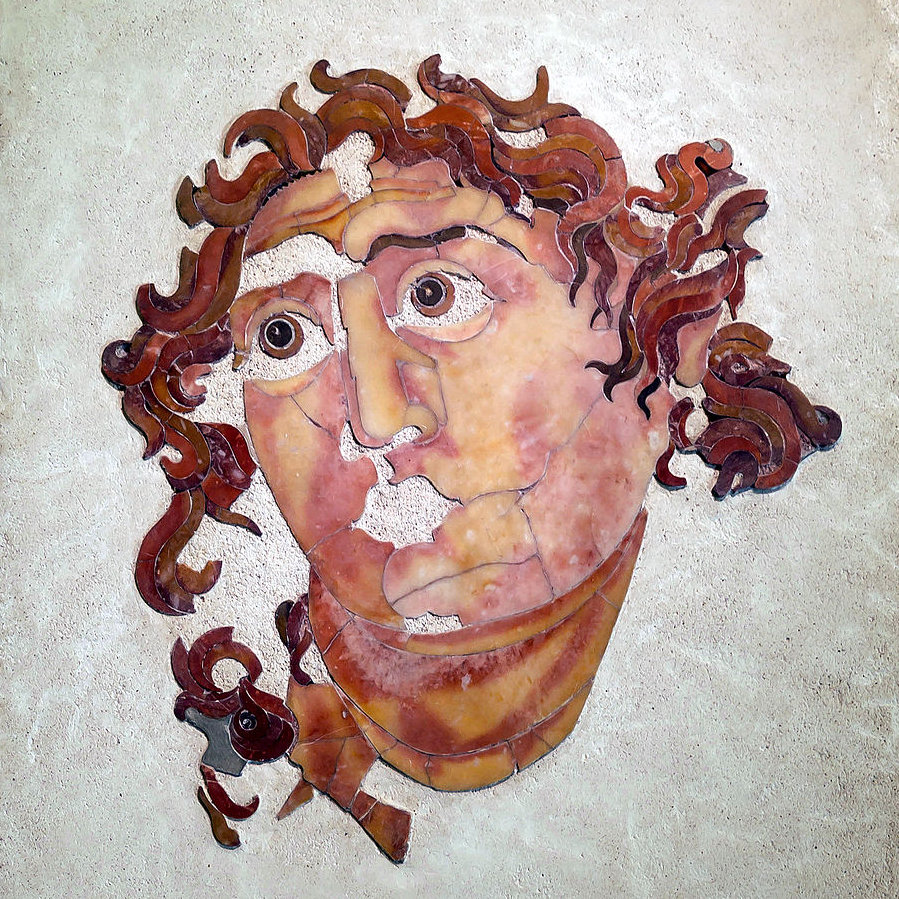
The intarsium of Sol found in the Mithraeum of Santa Prisca is composed of several varieties of marble.
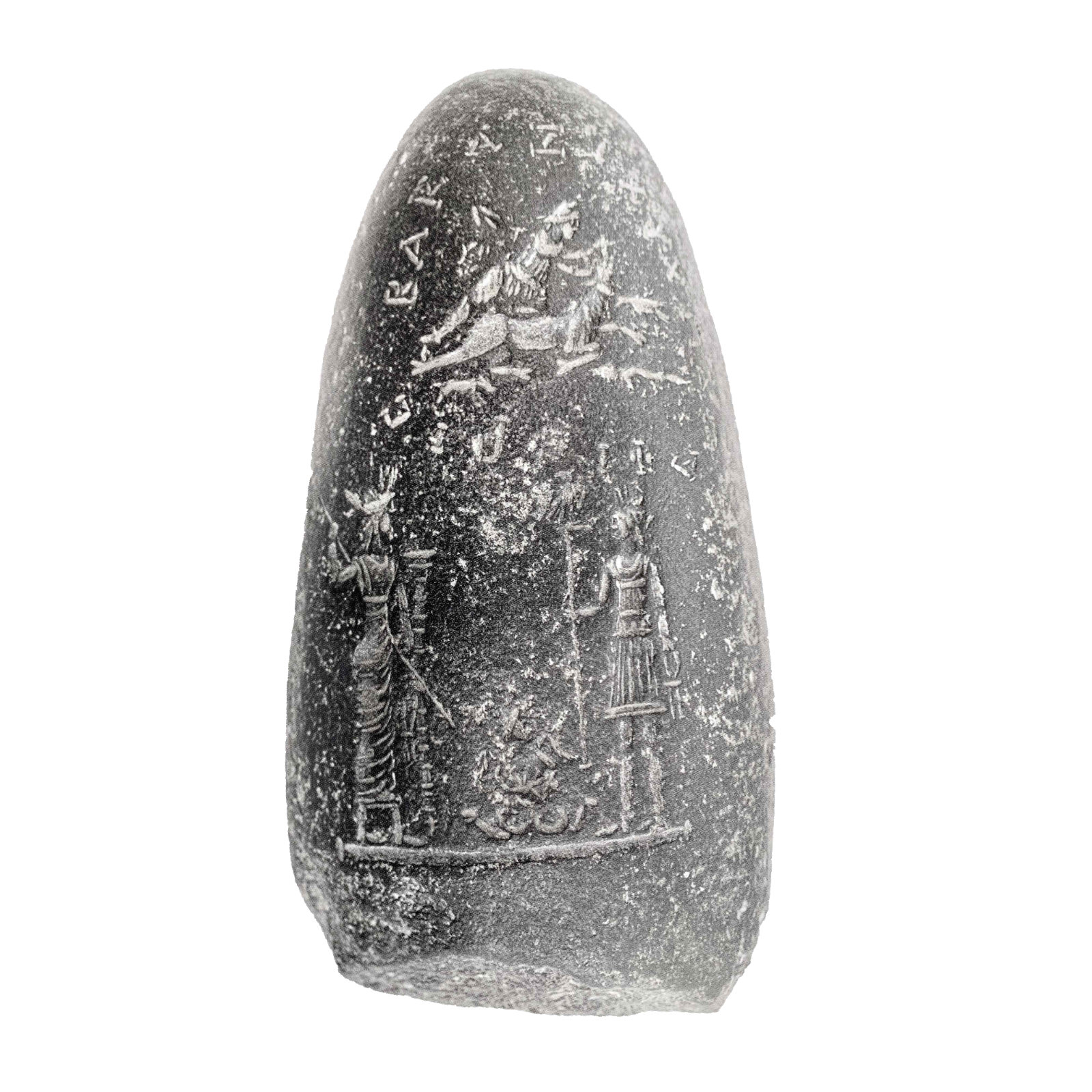
According to Christopher A. Faraone, the axe-head from Argos belong to a category of thunderstones reused as amulets.
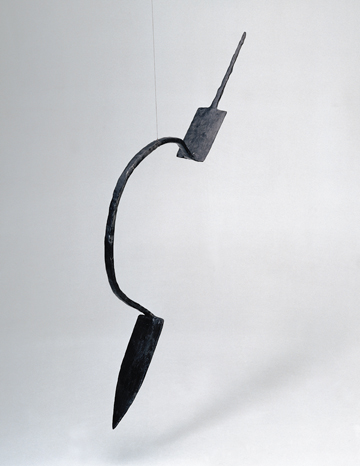
The Mithraic sword found in the Riegel Mithraeum may have been used as a prop during rituals.
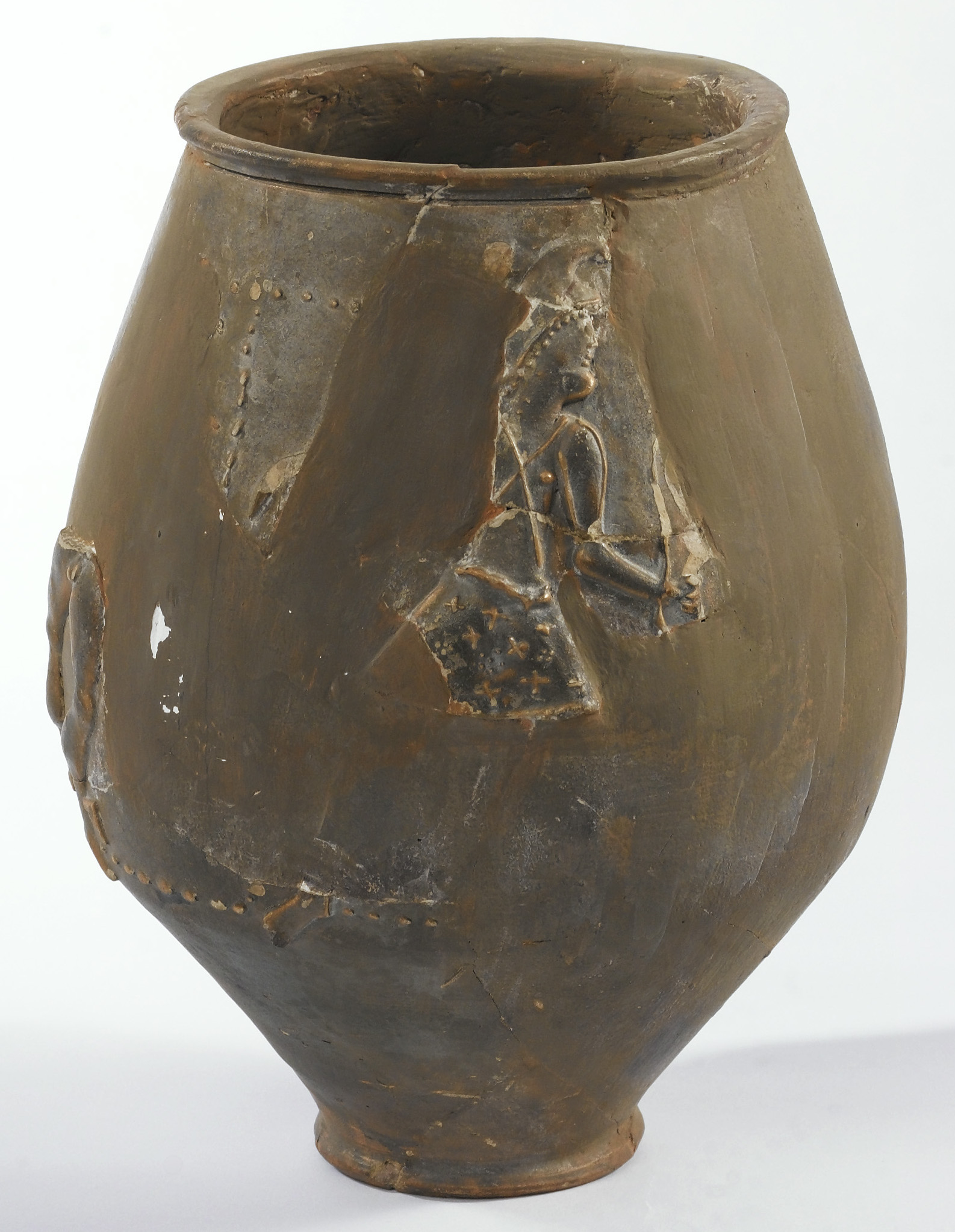
The St Albans mithraic vase depicts fragments of three figures identified by Vermaseren as Hercules, Mercury and Mithras as an archer.
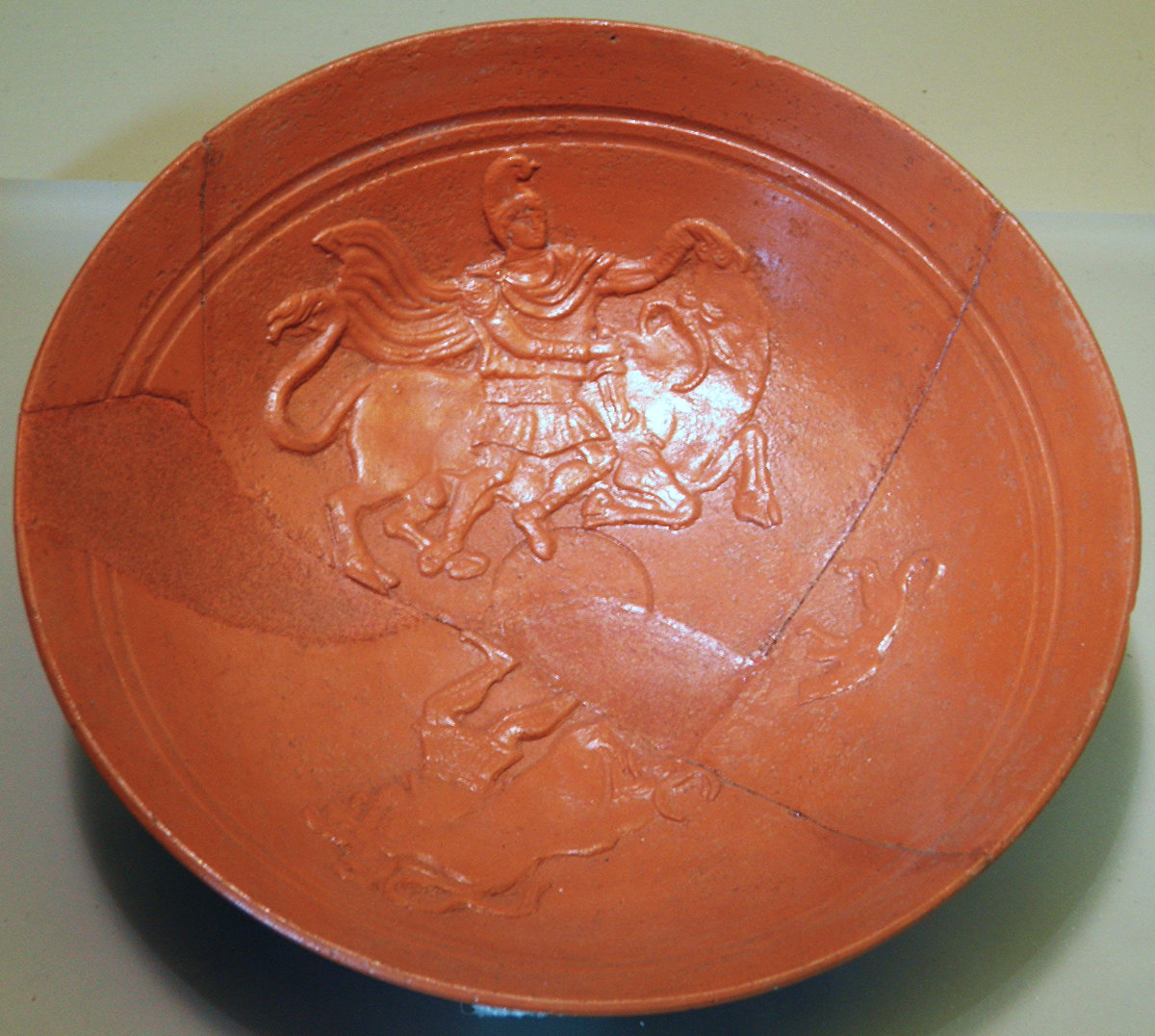
The red ceramic vessel from Lanuvium shows Mithra carrying the bull, followed by the dog, and the Tauroctony on the opposite side.
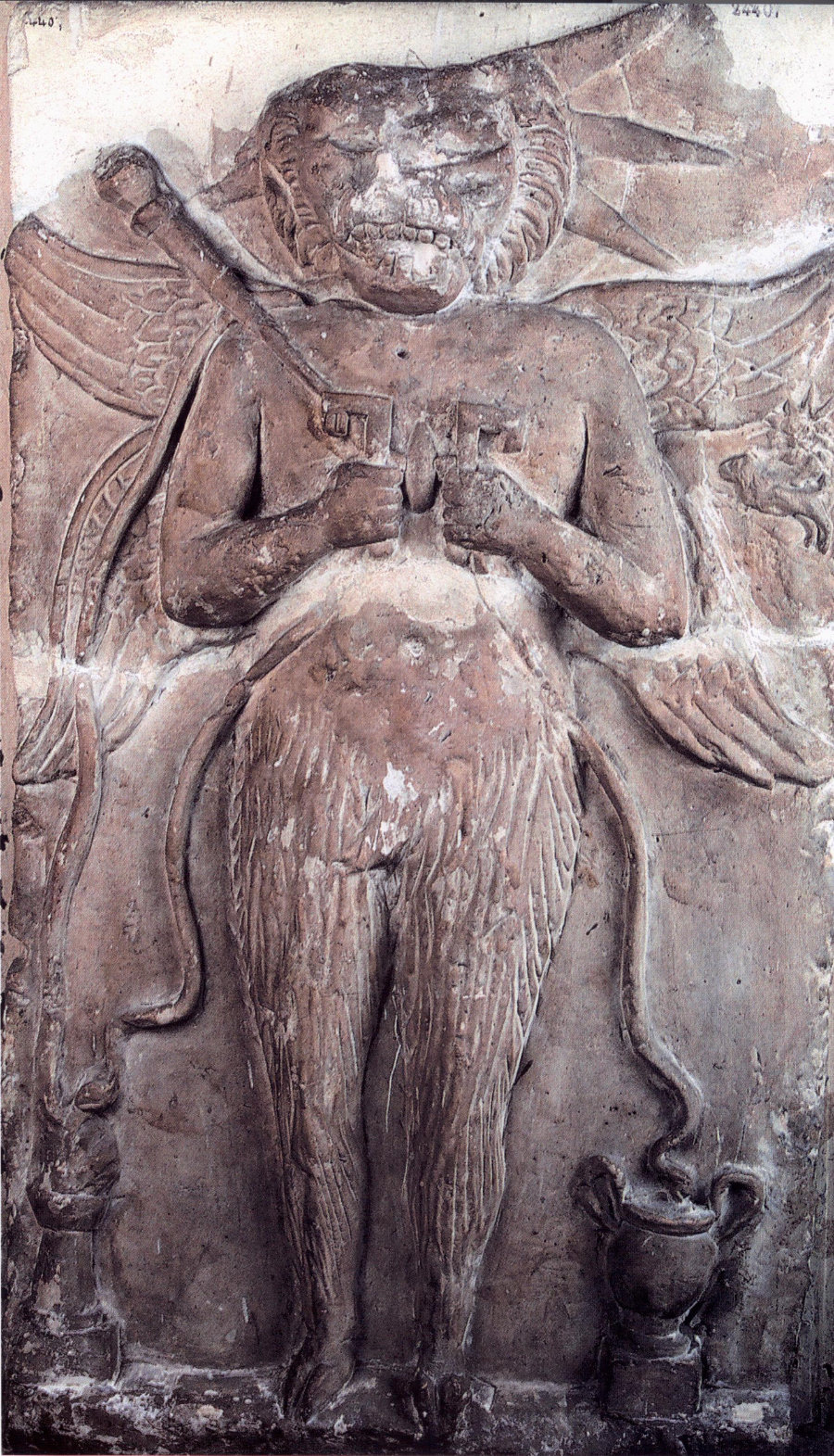
According to Pettazzoni Aion in general finds its iconographical origin in Egypt. Mithras must have been worshipped in Egypt in the third century B.C.
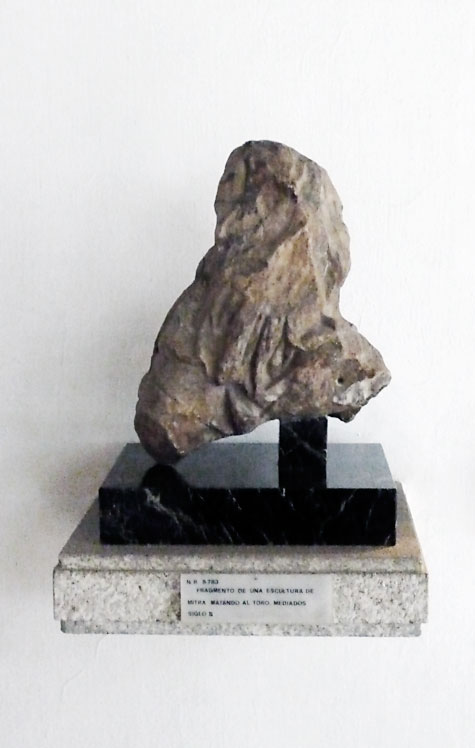
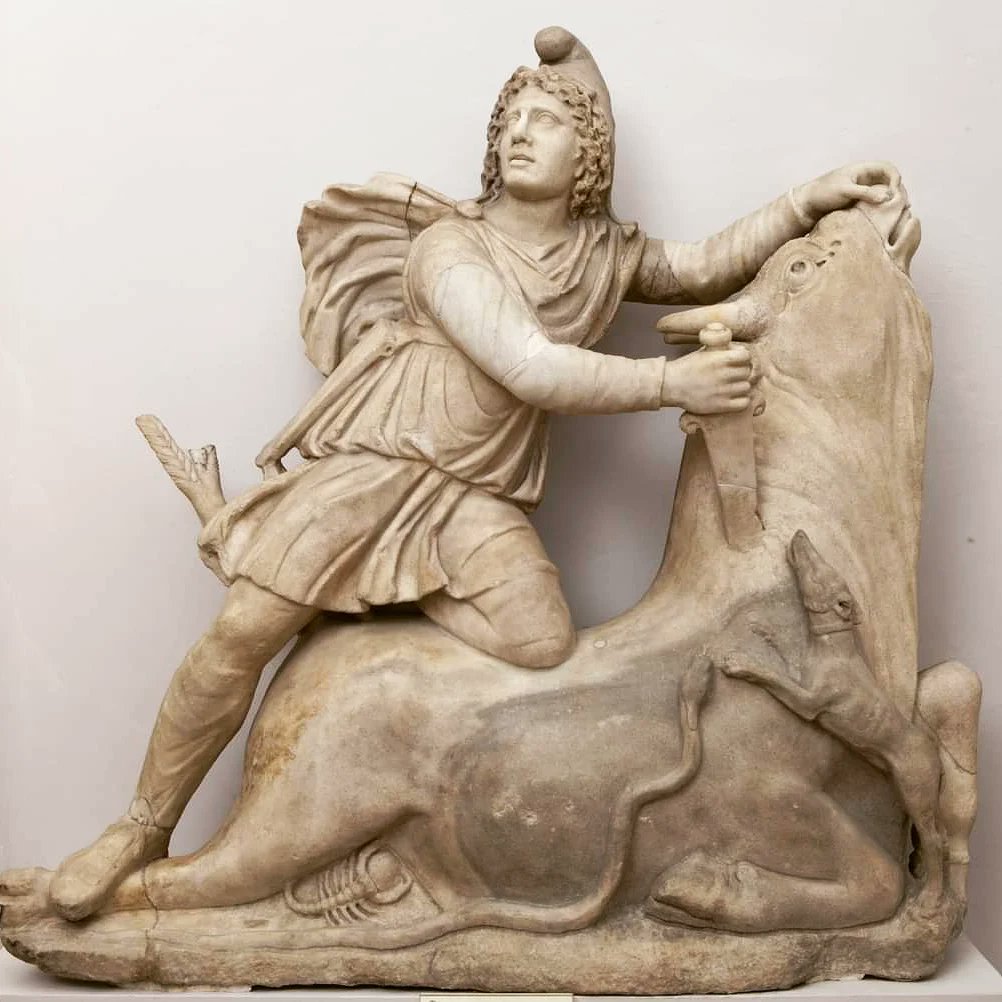
This sculpture of Mithras slaying the bull was bequeathed to the Republic of Venice in 1793 by Ambassador Girolamo Zulian.

At about a mile's distance from the village of Mit-Rahine near Memphis a Mithraeum has been discovered, which itself has not yet been described.
García y Bellido proposed the existence of a mithraeum in a narrow, elongated room where the Troia mithraic relief was found.
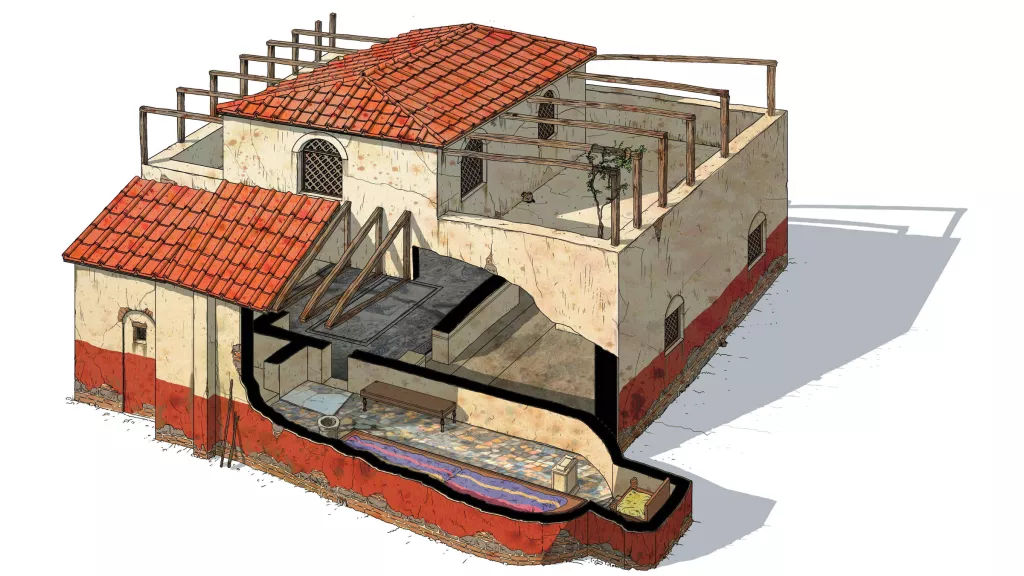
The Mitreo dei Marmi Colorati takes its name after the discovery of a black-and-white mosaic of Pan fighting with Eros.
This Mithraic temple, now disappeared, is known thanks to the numerous remains recorded since 1594 in the 'Memorie di varie antichità trovate in diversi luoghi della città di Roma'.
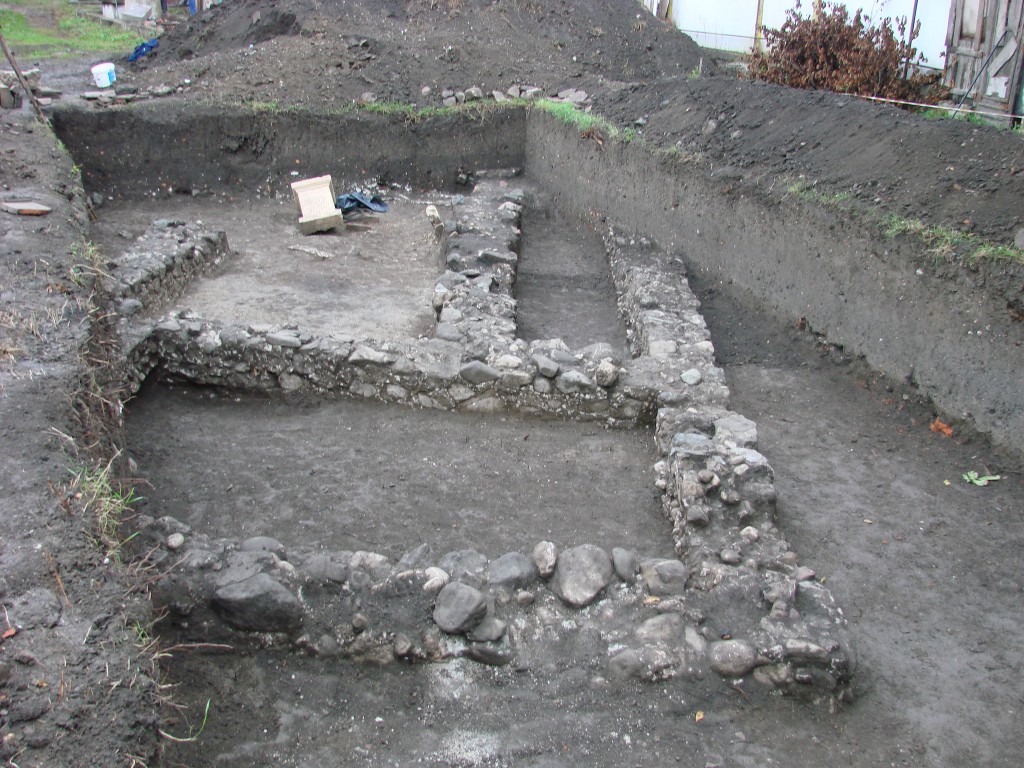

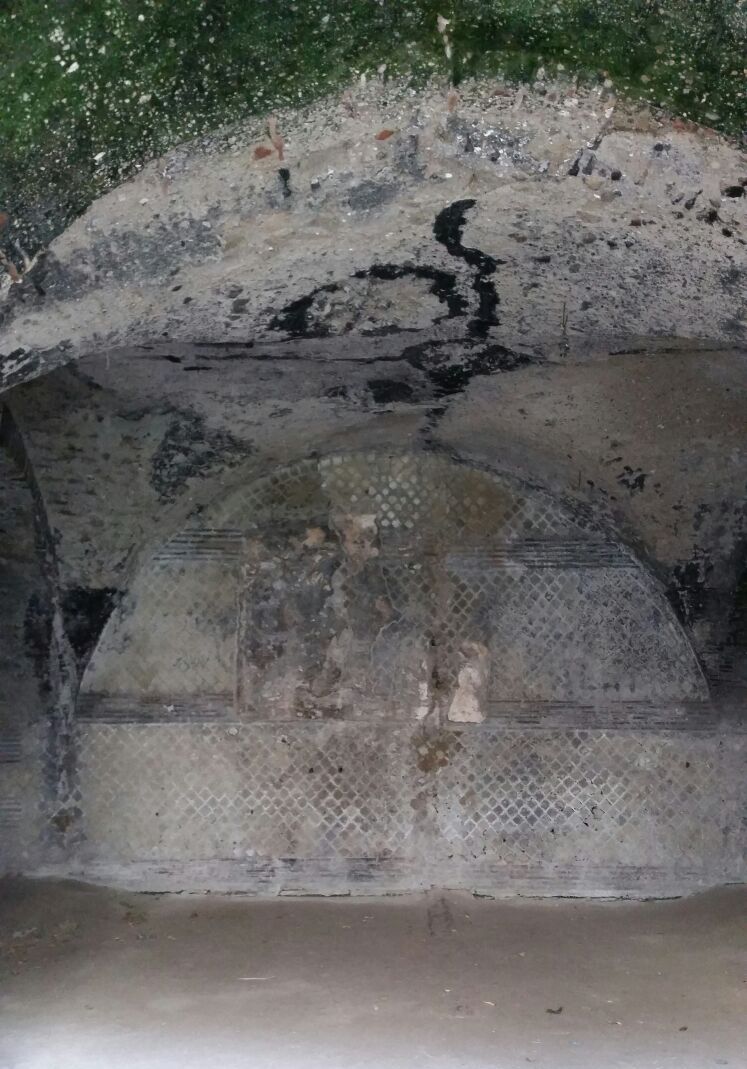
The Mithraeum of Carminiello ai Mannesi was installed in two rooms of a 1st century BC domus.
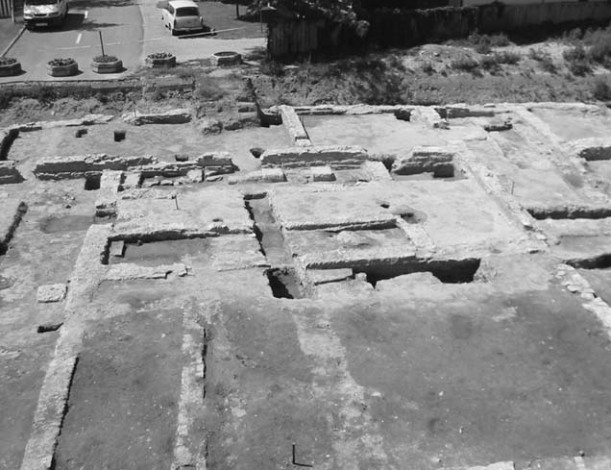
The Mithraeum has found in a Roman building at the end of Attila Road, in Hévíz, Egregy
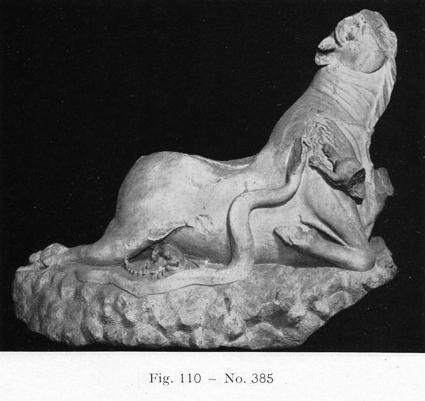
This sculpture of Mithras sacrificing the bull was found in the Quirinal and is now on display in the Musei Capitolini.
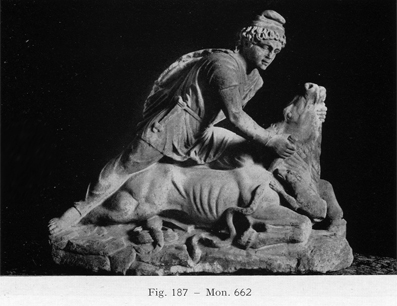
The marble Tauroctony of Asciano, Siena, was donated by Franz Cumont to the Academia Belgica, Rome.
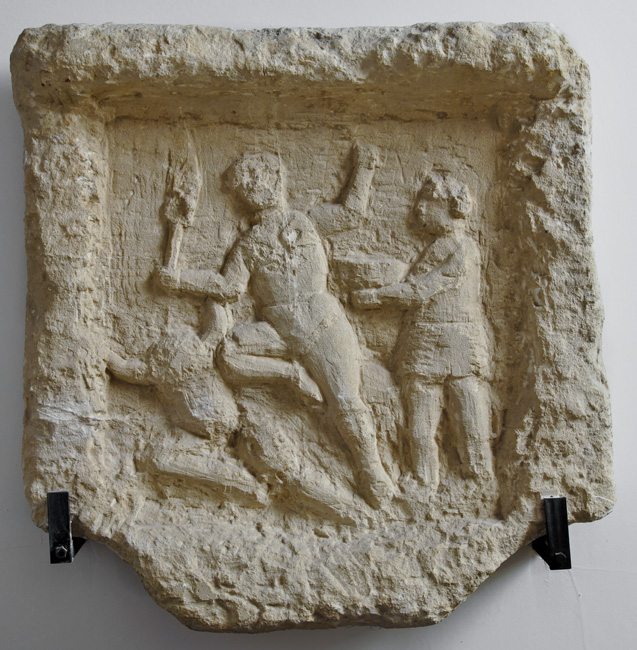
Possibly a Mithraic scene discovered in Mödling, Austria.
