Your selection in monuments gave 71 results.

Altar found at Salona, Dalmatia, in 1884, dedicated simply to Petrae genetrici — the rock that gives birth to the god.
Inscription from a house staircase at Salona, Dalmatia, dedicated to Deo Mithrae invicto and all the other immortal gods by a dedicant whose name ends in -elius.
Oval relief fragment from the outskirts of Split near ancient Salona, Dalmatia, preserving two zodiacal signs — probably from a border decoration of a Mithraic monument.
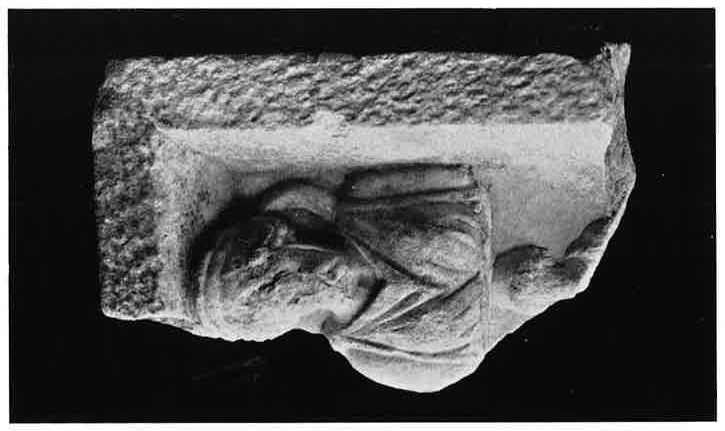
Right upper corner of a white marble bordered tauroctony relief from Salona or its surroundings, Dalmatia, with framing elements and part of the bull-slaying iconography.
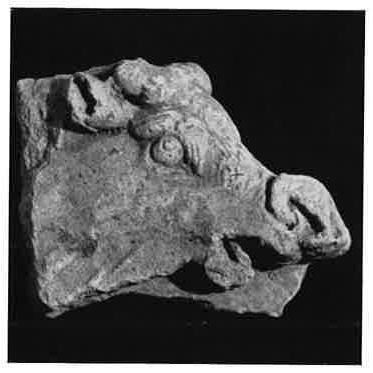
Limestone relief fragment from Salona or its surroundings, Dalmatia, preserving a very fine bull's head and the left hand of Mithras.
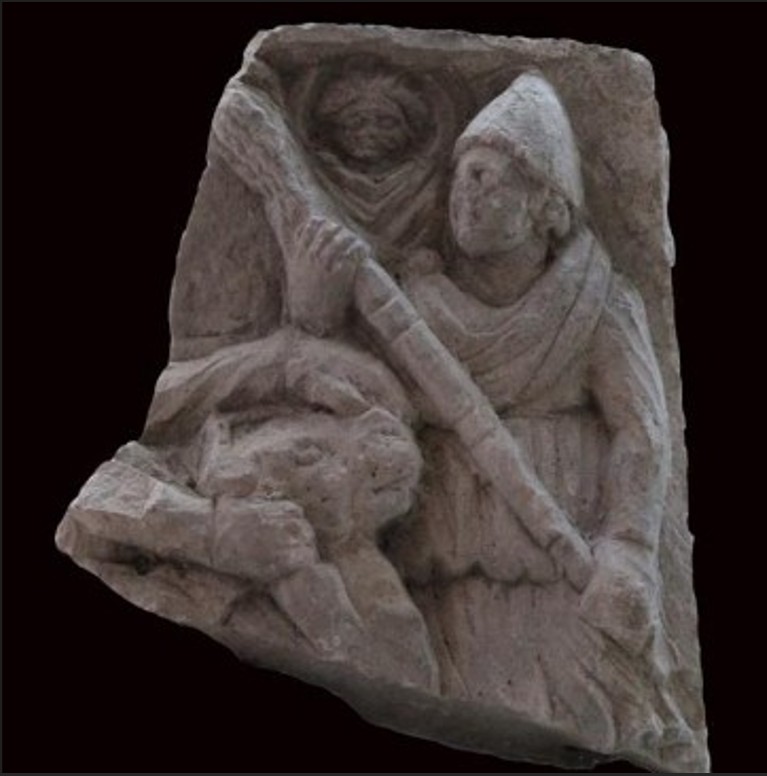
Right upper portion of a limestone relief from Salona or its surroundings, Dalmatia, depicting a standing figure — probably a torchbearer or divine attendant.
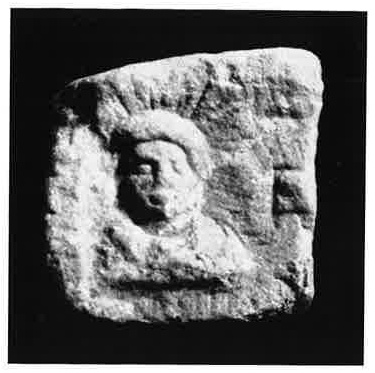
Left upper corner of a white marble relief from Salona, Dalmatia, found in 1895, preserving the bust of Sol in radiate crown.
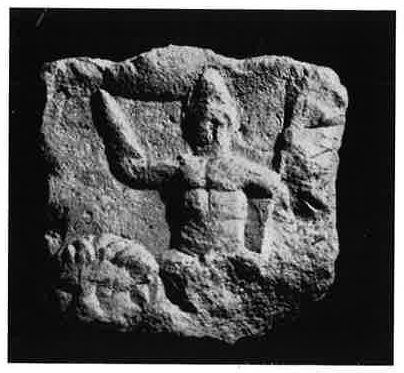
White limestone relief fragment from the walls of Salona, Dalmatia, found in 1906, depicting naked Mithras being born from the rock with a dagger in his right hand and a torch in his left.

Left lower corner of a limestone tauroctony relief from Salona, Dalmatia, preserving the crossed legs of a torchbearer and the grotto base.
Fragmentary inscription from Salona, Dalmatia, preserving only the phrase impendio suo — probably recording a building act.
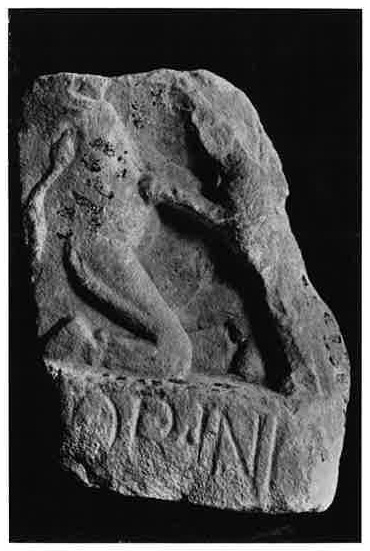
Limestone tauroctony relief fragment from Salona, Dalmatia, preserving the foremost part of the bull, the dog, the serpent, and part of Mithras's dagger hand.
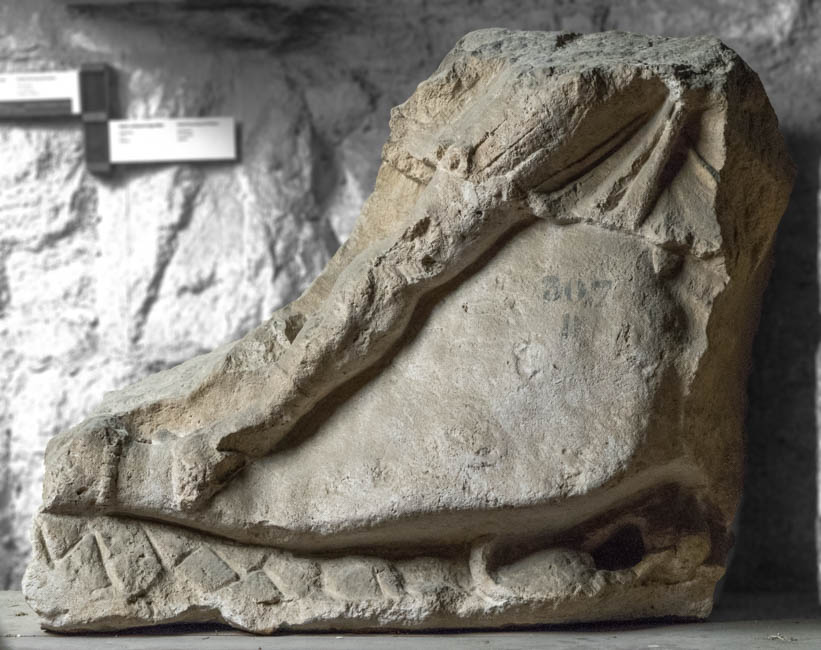
This large limestone fragment from Roman Salona preserves the hind part of the bull together with Mithras’ foot and traces of his red tunic.
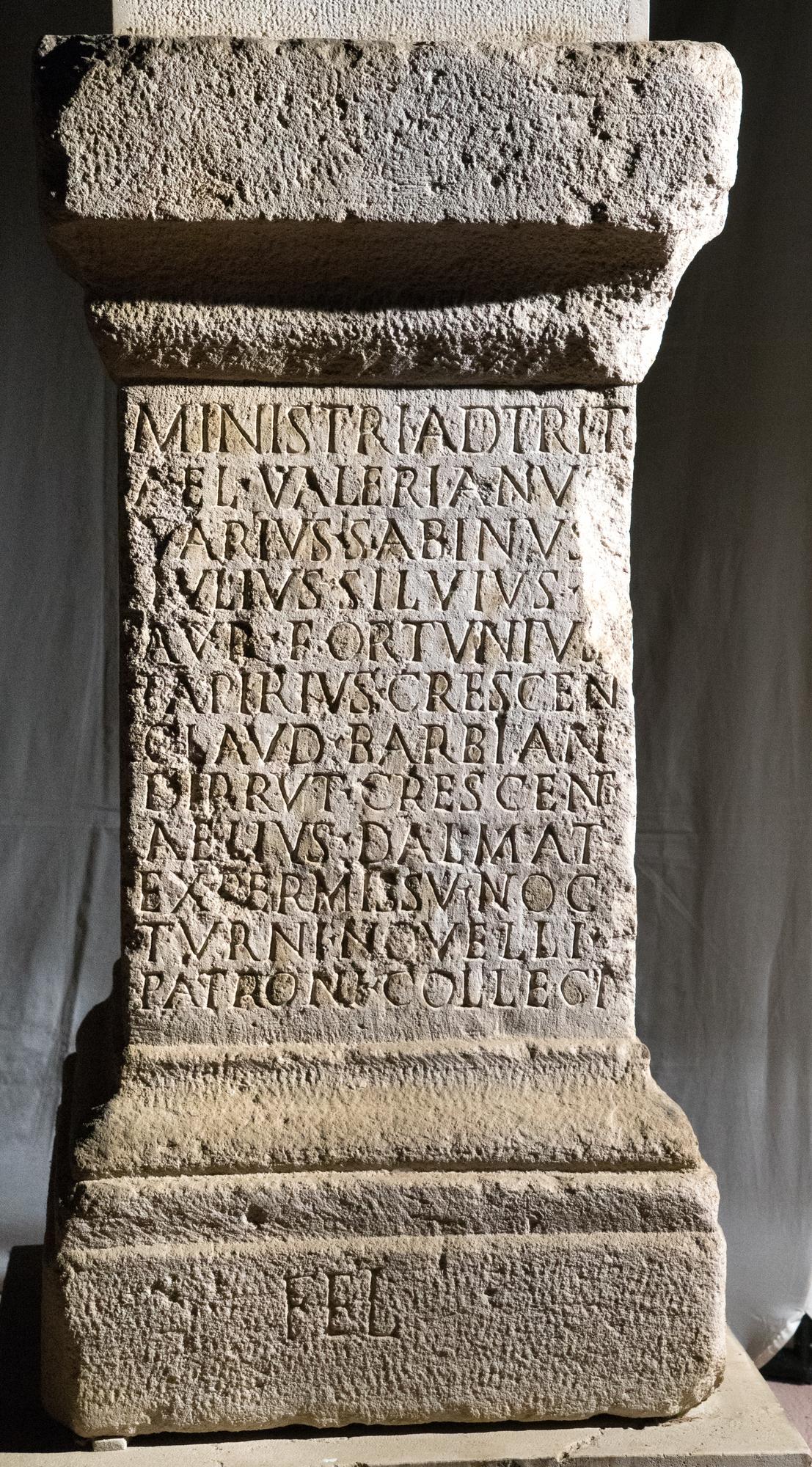
This inscribed limestone altar from Roman Salona preserves several lists of ministers associated with the Tritones collegium during the Tetrarchic period.
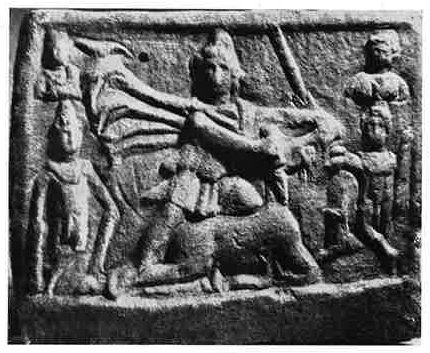
This marble relief depicting Mithras as a bull-slayer was once owned by Major Holzhausen and Franz Cumont and is now housed at the Belgian Academy.
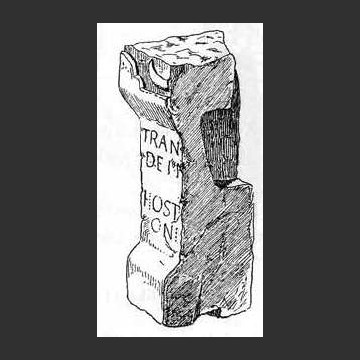
This damaged monument of a certain Hostilius from Malvesiatium, now Skelani, bears an inscription apparently to Mithras transitus.

Beheaded Cautopates in limestone found on the podium of the Jajce Mithraeum, Bosnia and Herzegovina.
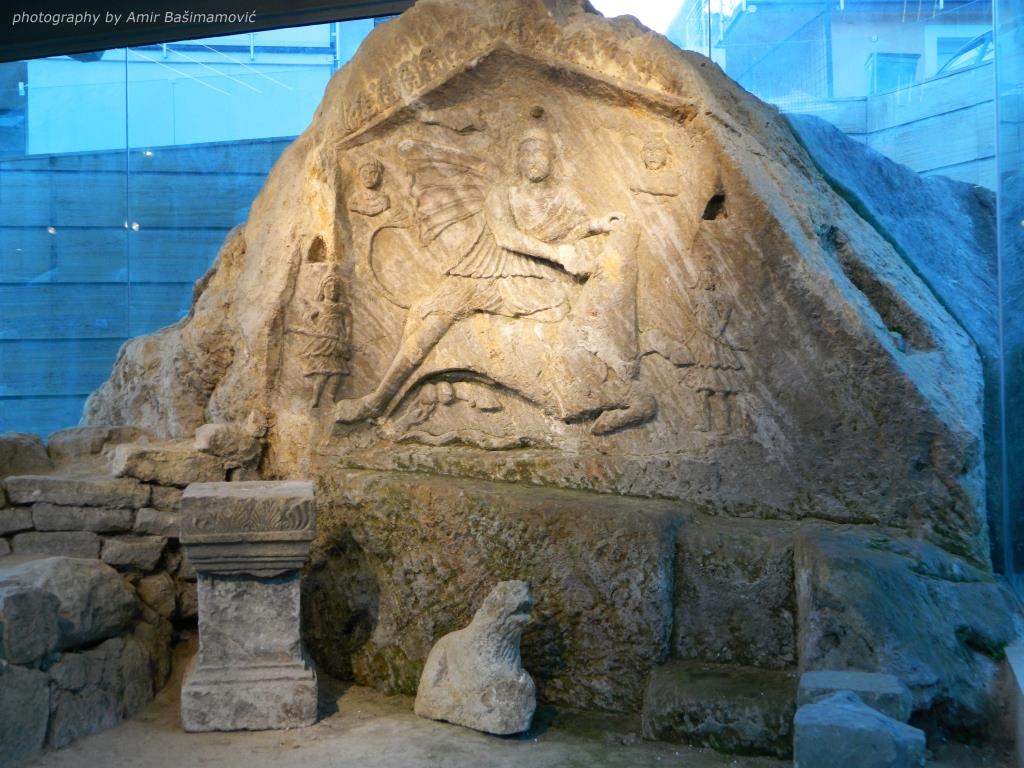
The relief of Mithras killing the bull from the Jajce Mithraeum is walled into the cult niche and surmounted by a roof.
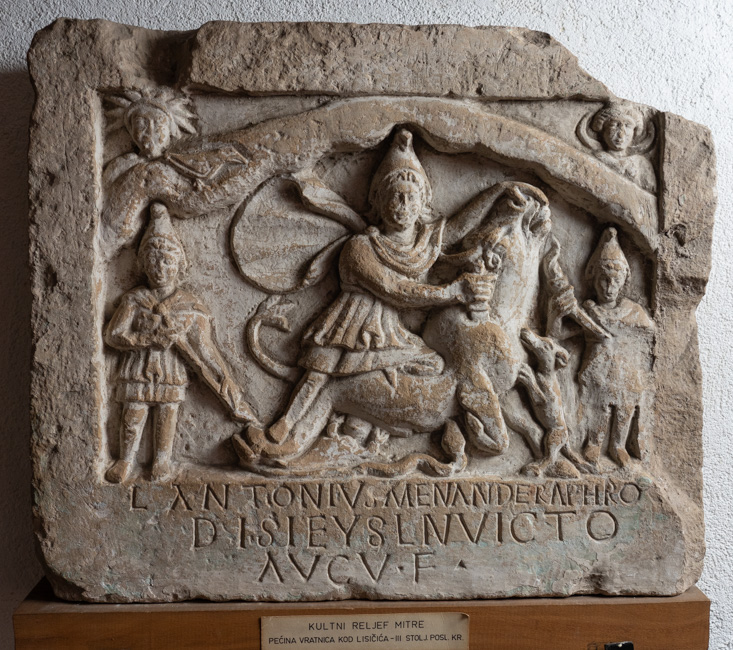
This relief of Mithras as a bullkiller found at Vratnitsa, near Lisicici in northern Macedonia, was signed by a certain Menander Aphrodisieus.

The Mithraea in the territory of Arupium were first mentioned by Š. Ljubić in 1882.
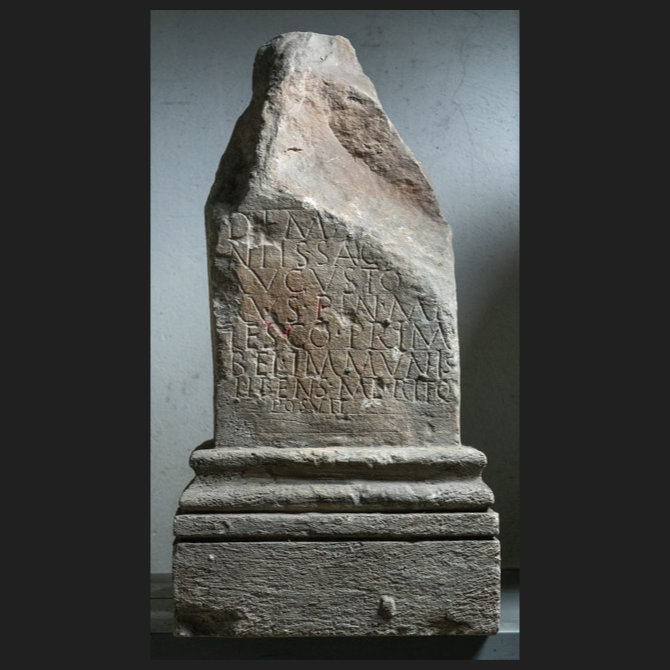
This altar, discovered in Grude, near Tihaljina, Bosnia and Herzegovina, bears an inscription by Pinnes, a soldier of the Cohors Prima Belgica.
