Your selection in monuments gave 140 results.

A small woman's head crowned with flowers, found at the Mithraeum of Les Bolards (ancient Venetonimagus) in Lugdunensis.
Two small heads in Phrygian caps, possibly belonging to a tauroctony of Mithras, together with a fragment of a bull's foot and the mouth and neck of the dog, found at the Mithraeum of Les Bolards (ancient Venetonimagus) in Lugdunensis.
Fragmentary remains of a statuette of Cautopates in a short tunic, including a thigh, knee, and hand holding the end of a torch, found near the entrance of the Mithraeum at Les Bolards (ancient Venetonimagus) in Lugdunensis.
A vase or plate bearing a representation of Mithras, reported to be in the Archaeological Seminary of the University of Vienne (ancient Colonia Iulia Vienna Allobrogum) in Narbonensis, but unpublished at the time of Vermaseren's catalogue.
A brief dedicatory inscription to Deus Sol Invictus Mithras, found at Vasio (modern Vaison-la-Romaine) in Narbonensis.
A white marble statuette of Cautes, dressed in a long cloak and raising his torch with both hands without being cross-legged, found near Eauze (ancient Elusa) in the Armagnac region of Aquitania.
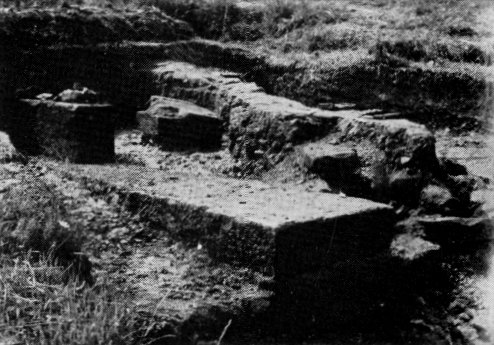
The Mackwiller Mithraeum was built in the middle of the 2nd century, during the reign of Antoninus the Pious, on the site of a spring already worshipped by the natives.
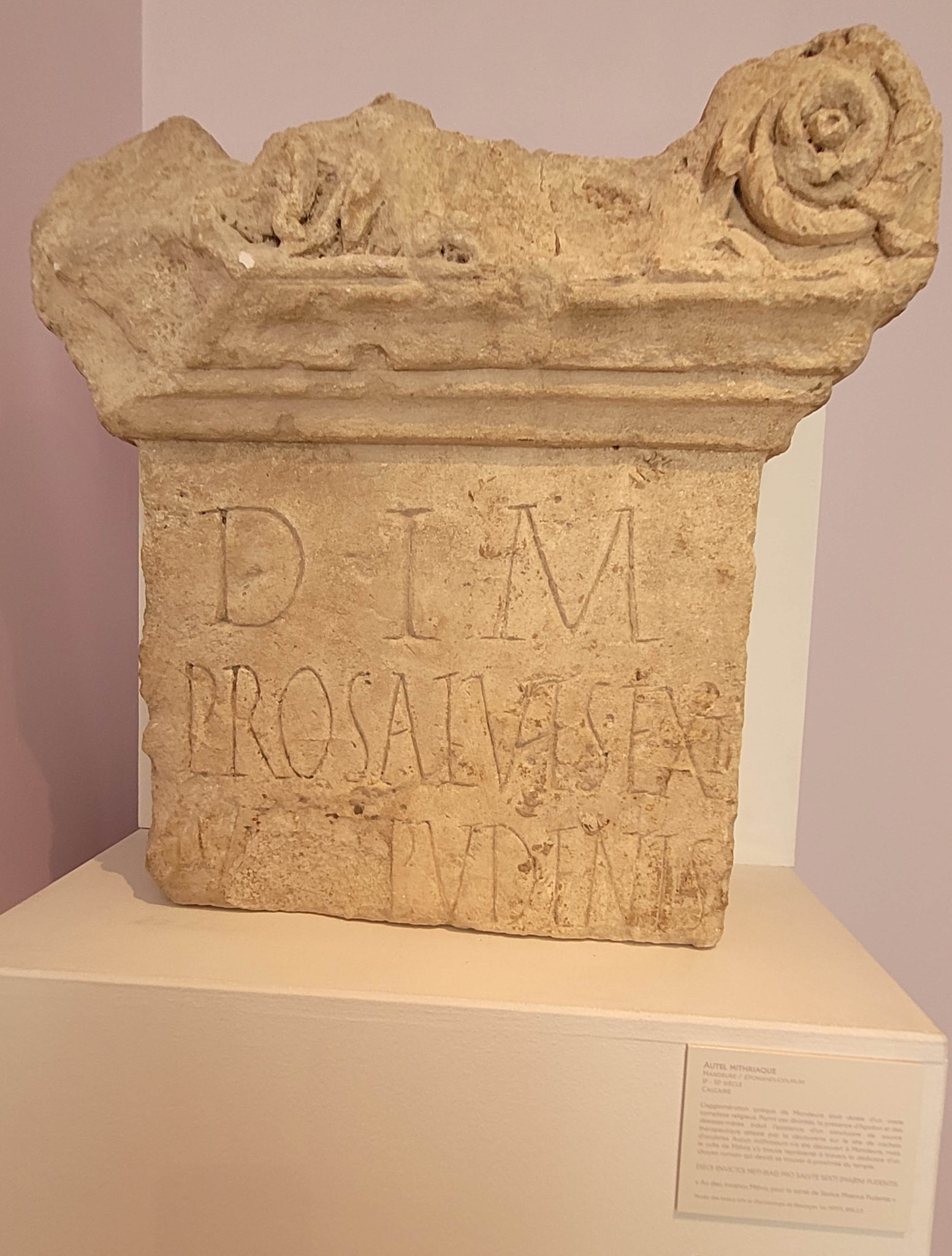
Stela dedicated to Mithras Invictus, found in 1895–1896 at Epamantodurum (modern Mandeure), in the territory of the civitas Sequanorum (Gallia Belgica). The inscription records a vow to Mithras Invictus made for the welfare of Sextus Maenius Pudens.
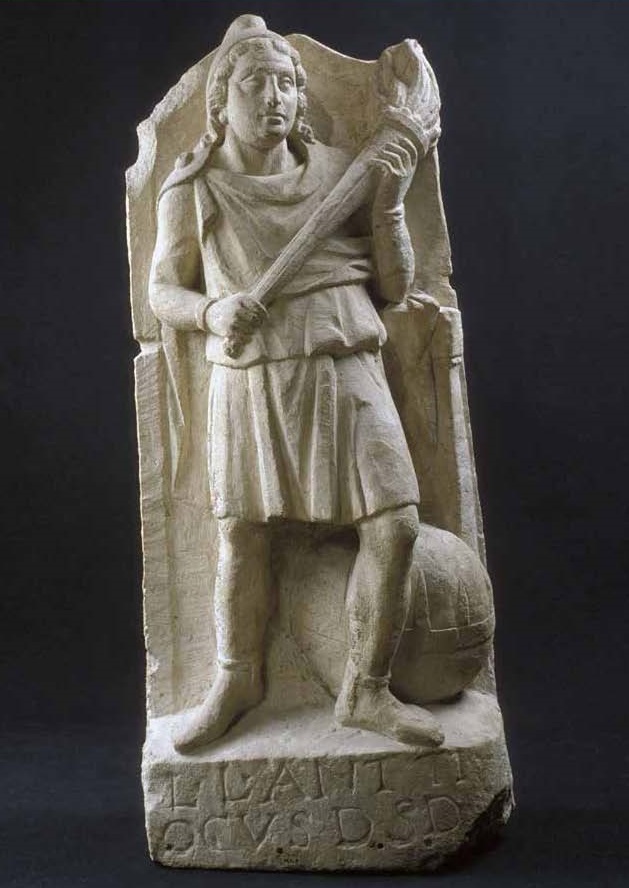
This monument representing Cautes with uncrossed legs was consecrated by a certain Anttiocus.
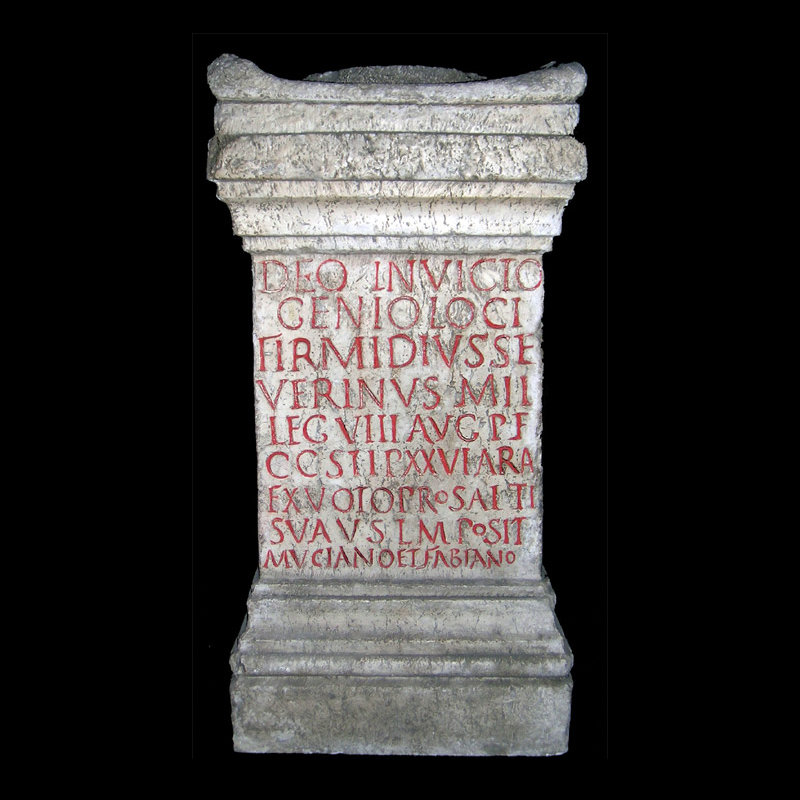
This limestone altar bears an inscription from its donor, Firmidius Severinus, in honour of Mithras after 26 years of service in the Legio VIII Augusta.
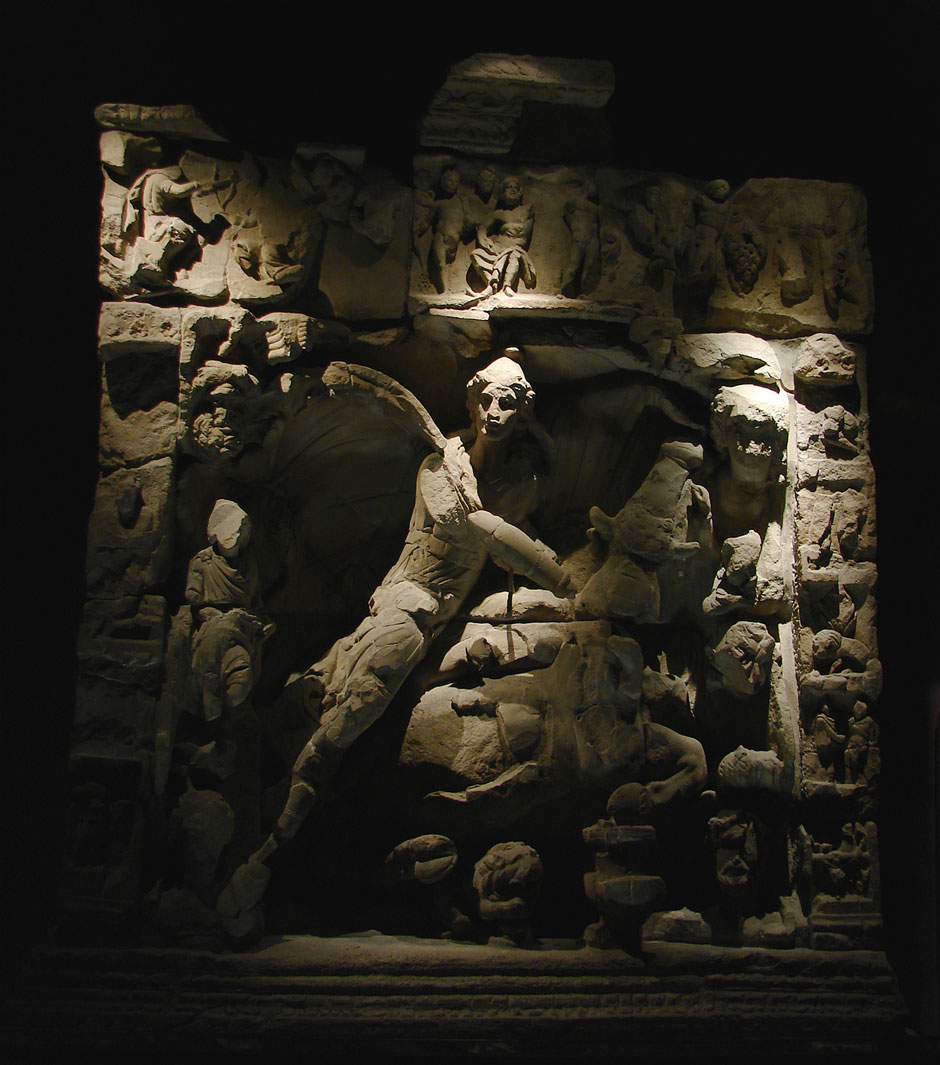
The Tauroctony of Saarbourg (Sarrebourg, ancient Pons Sarravi), France, contains most of Mithras deeds known in a single relief.
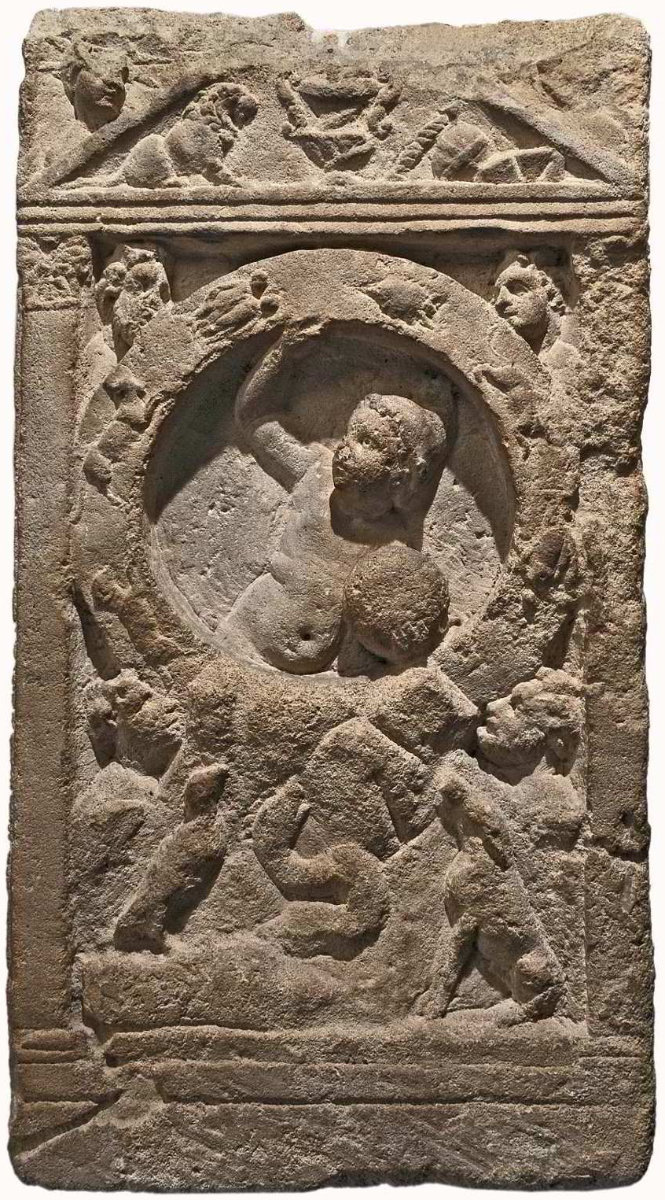
The relief depicts the birth of Mithras, holding a globe, surrounded by the zodiac.
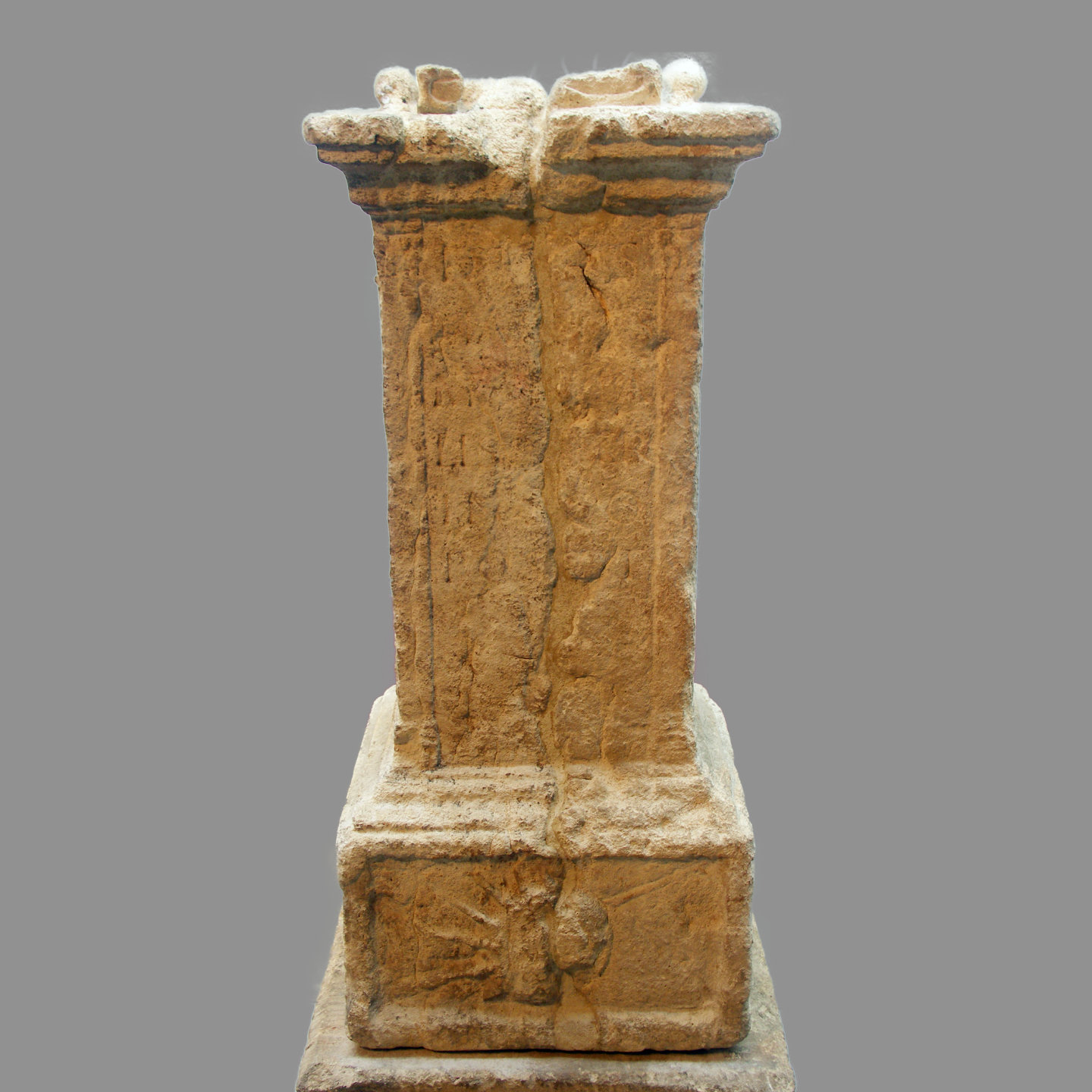
This stone altar fround in Altbachtal bears an inscription by a certain Martius Martialis.
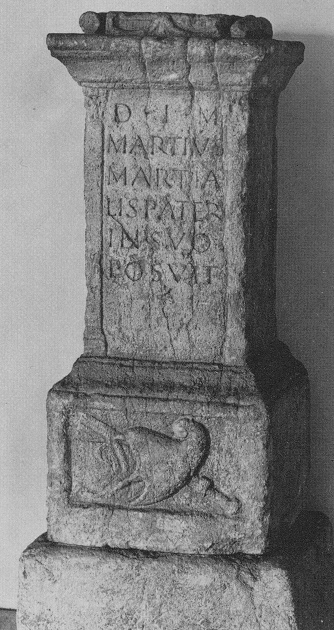
The altar with a Phrygian cap and a dagger from Trier was erected by a Pater called Martius Martialis.
Group of Mithraic monuments preserved in the museums of Liège.
Structure in the Tarn region initially reported as a Mithraeum but later identified as an ordinary silo.
Group of Mithraic objects now preserved in the museum of the Société des Sciences de Semur at Alésia.
Fragmentary ceramic mould preserving the lower part of a cross-legged Mithraic torchbearer.
Terracotta matrix used to produce vessels decorated with the bull-killing scene of Mithras.
Decorated ceramic vessel showing Mithras slaying the bull together with torchbearers, zodiacal motifs and figures of abundance.
