
Small surviving fragment depicting Mithras as bull-slayer together with the torchbearer Cautes.
Scene from a bull-slaying relief preserving the dagger of Mithras, the dog and the raised torch of Cautes.
Only the left section survives, showing Sol above the torchbearer Cautopates beside the cave border.
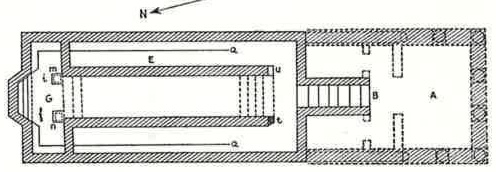
Second Mithraic sanctuary discovered in 1826 some 150 metres west of Mithraeum I at Heddernheim, ancient Nida, with finds in the Wiesbaden museum.
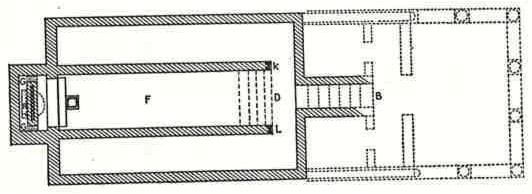
First Mithraic sanctuary discovered at Heddernheim (ancient Nida) in 1826, with finds preserved in the Städtisches Museum at Wiesbaden.
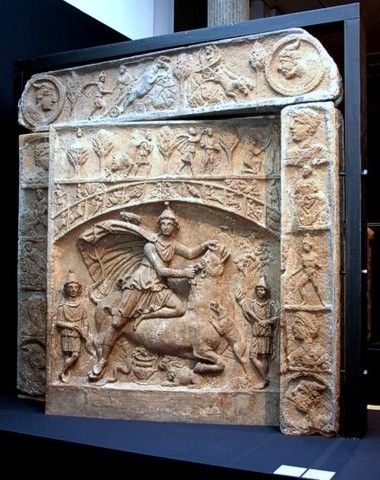
This relief is so well-known that it has been reproduced in nearly every handbook of archaeology and of history of religions.
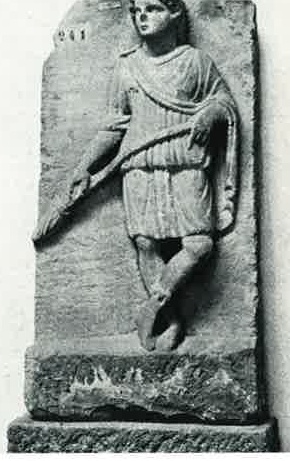
Relief in red sandstone originally standing on a base in Mithraeum I at Heddernheim, ancient Nida, featuring the bull-slaying scene.
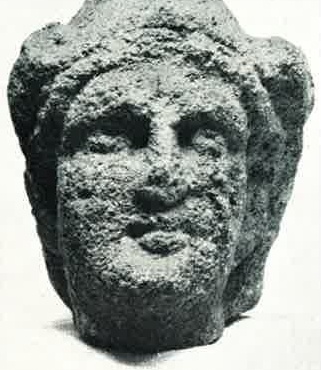
Sandstone fragment from Mithraeum I at Heddernheim, ancient Nida, probably the damaged head of a torchbearer, often misidentified as Mercury.
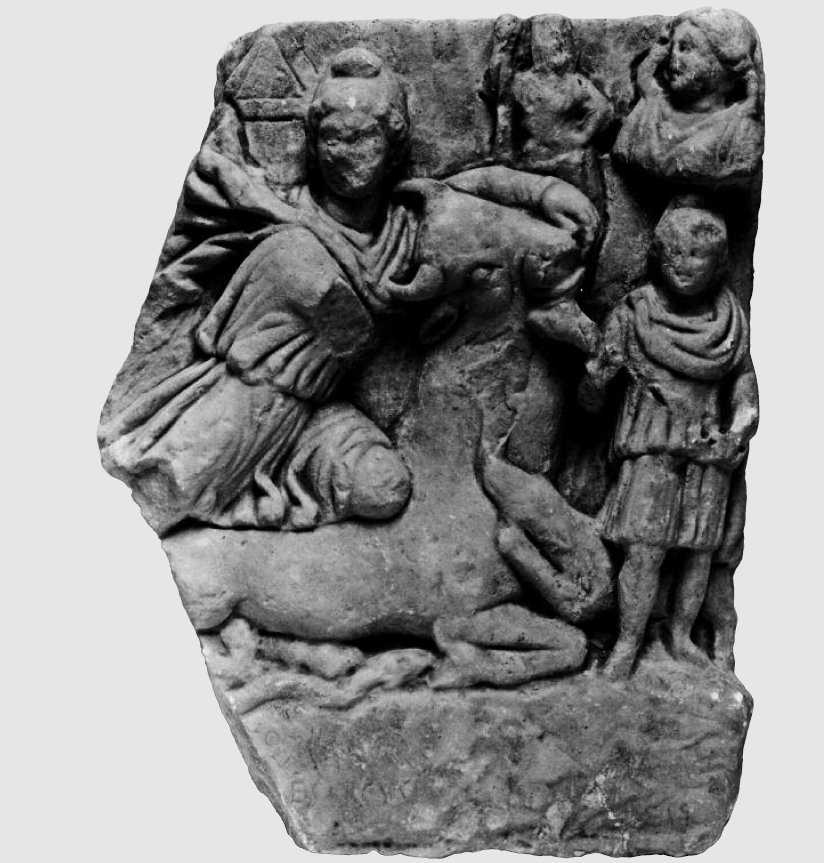
The Tauroctony of Patras was found years before the temple over which the relief of Mithras sacrificing the bull was supposed to preside.
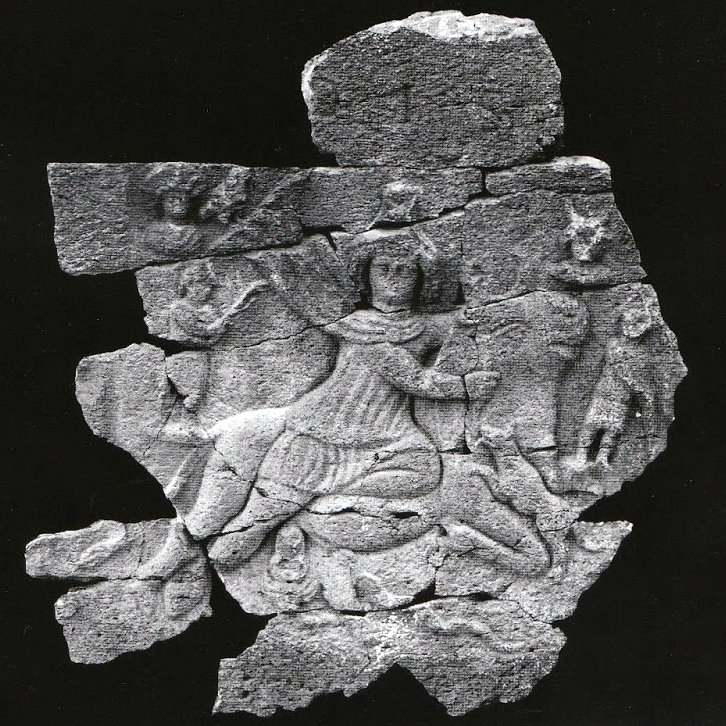
The second tauroctony of Jabal al-Druze seems to have be made by the same sculptor.
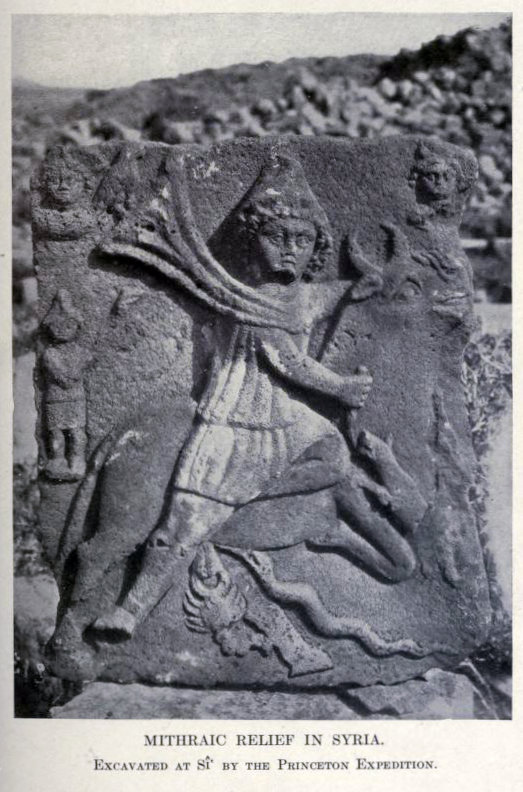
In the tauroctony of Jabal al-Druze in Syria, the snake appears to be licking the head of the bull's penis.
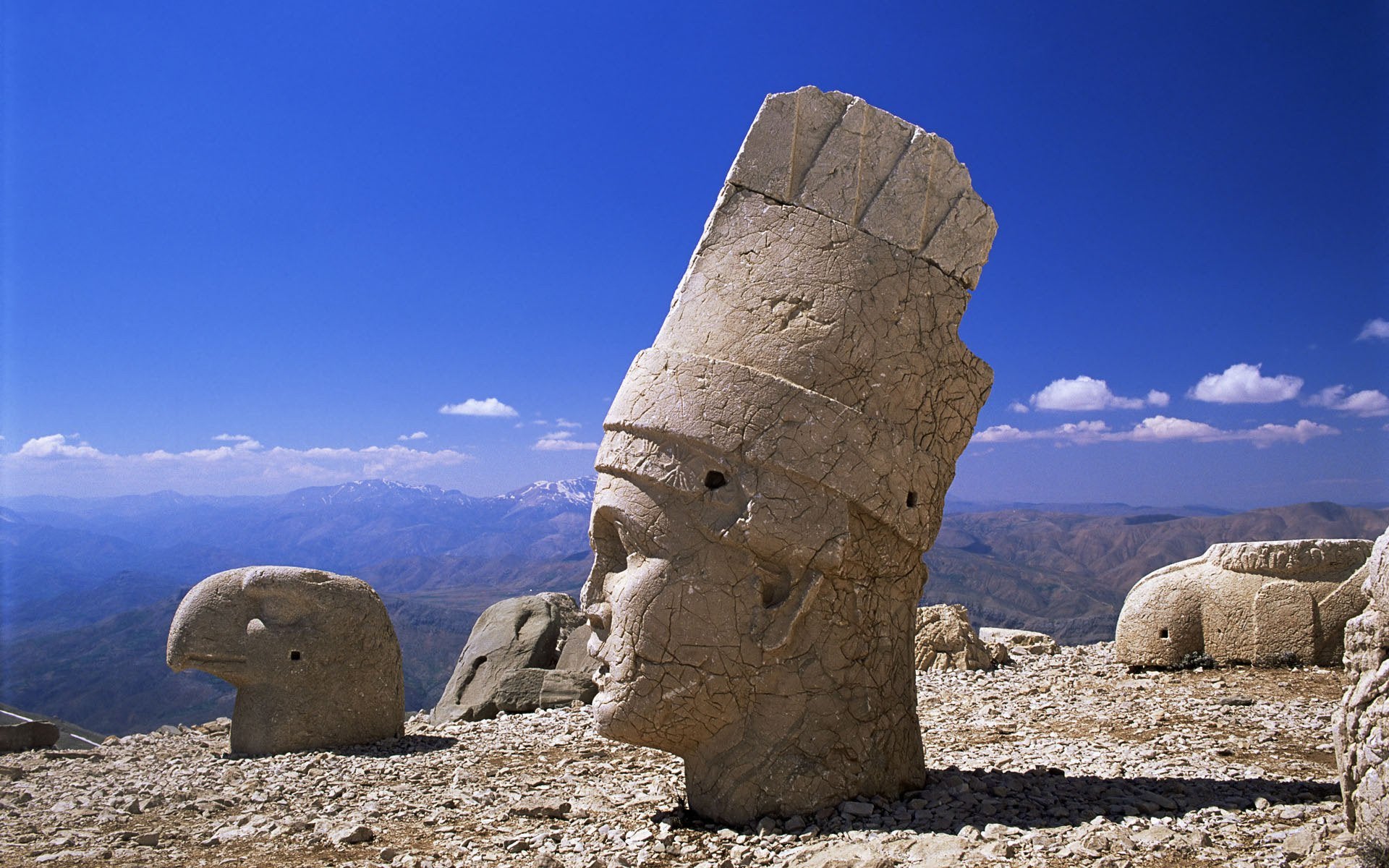
The colossal head has been identified as a solar god, Apollo-Mihr-Mithras-Helios-Hermes.
This inscription by a certain Numidius Decens was found in the Forum of Lambaesis, now Tazoult تازولت in Algeria.
Painted Parthian inscription on a ceramic sherd possibly referring to Mithras as a bull-slayer.
Large apsidal hall with podium discovered at Uruk-Warka, once interpreted as a possible Mithraic sanctuary.
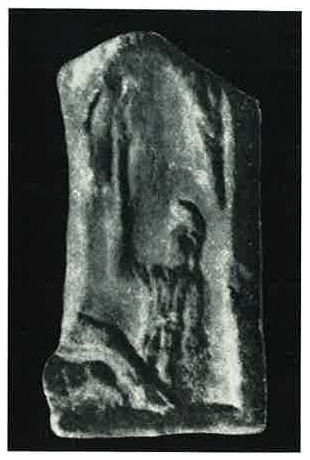
The site of Ay-Todor in Crimea revealed a Roman camp, a temple with votive offerings, and a Mithraeum.
Sassanian-period frescoes discovered at Susa whose possible Mithraic interpretation remains uncertain.
Gold coin from Bactria depicting ΜΙΙΡΟ (Mithras) with radiate crown and military attributes.
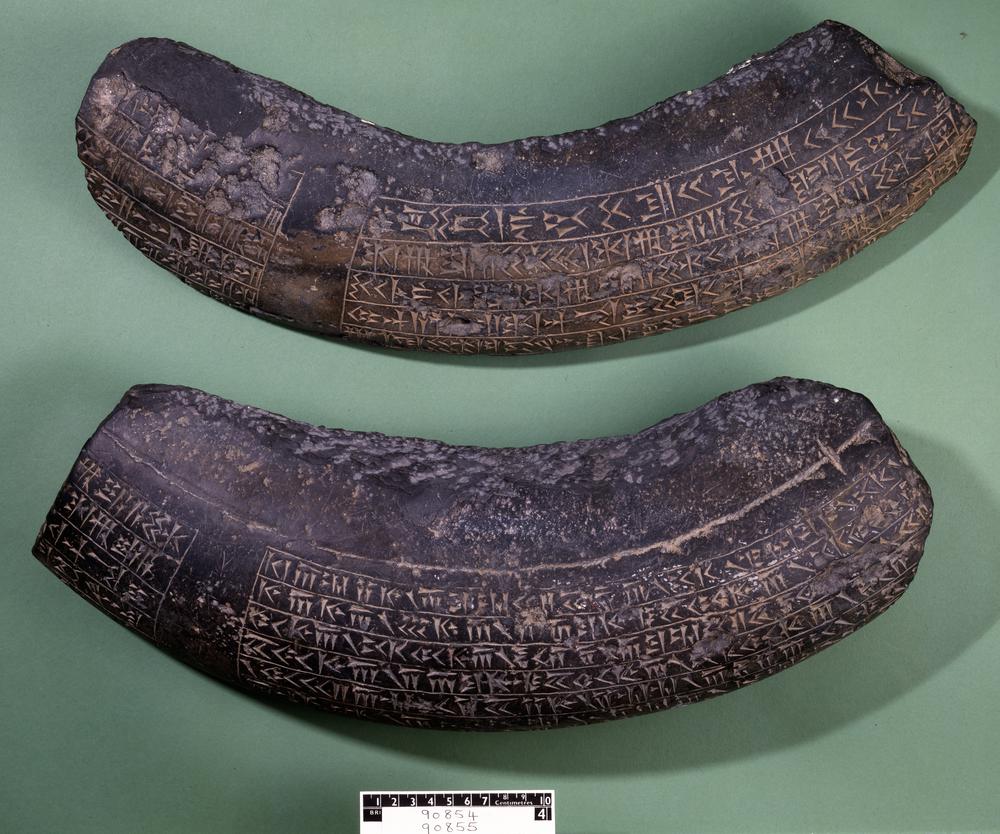
The base of the column bears an inscription that records the rebuilding of a palace at Ectabana ’by the favour of Ahuramaza, Anahita and Mithra’.
