Filtering by Province: Germania superior in monuments gave 305 results.

A small sanctuary at Neuenheim associated with a richly decorated Jupiter column and a nearby well.
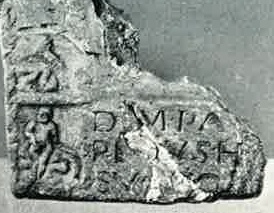
Fragmentary two-sided Mithraic relief depicting the rock-birth, Zodiac and other mythological scenes from Stockstadt.
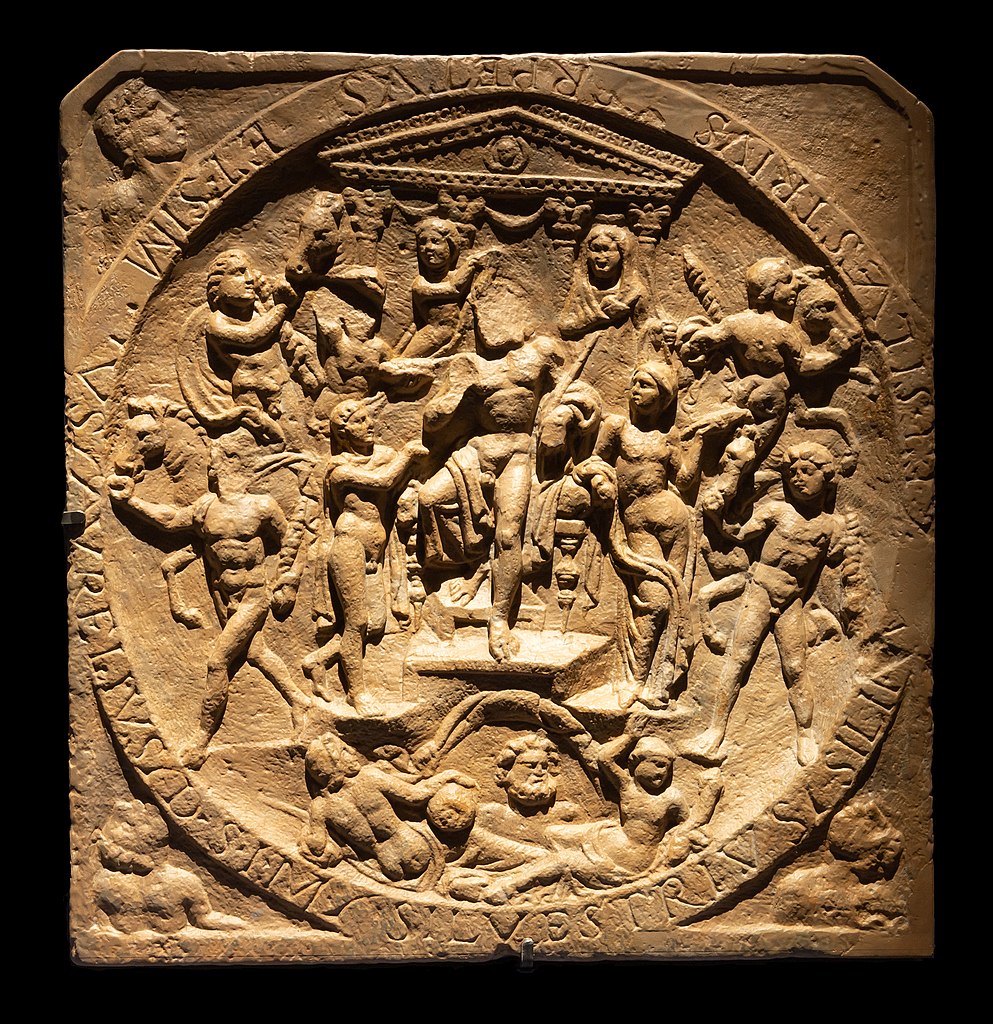
The relief of Dieburg shows Mithras riding a horse as main figure, surrounded by several scenes of the myth.

Ritual terracotta offering plate decorated with a serpent and traces of white paint from the Friedberg Mithraeum.
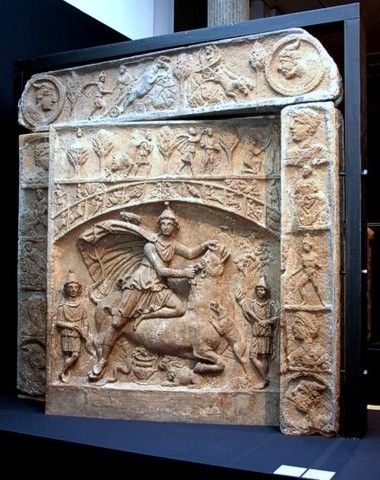
This relief is so well-known that it has been reproduced in nearly every handbook of archaeology and of history of religions.
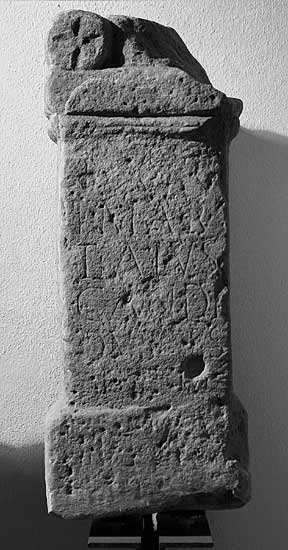
Bright red sandstone altar from Mithraeum II at Stockstadt dedicated to Deo Cauti by Titus Martialius Candidus, found near the north podium.
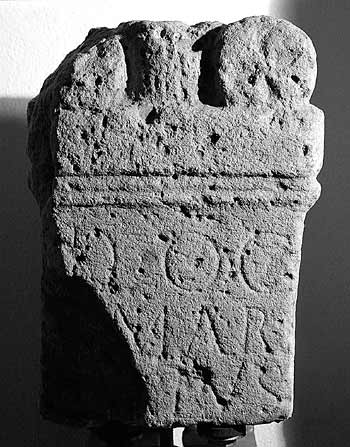
These two inscriptions by a certain Titus Martialius Candidus are dedicated to Cautes and Cautopates.
Fragment of a sandstone relief from Nida-Heddernheim depicting the torchbearer Cautopates.
A skull and two human femora, the lower jaw missing, recovered from a small circular pit within the Mithraeum at Königshoffen; interpreted by Cumont as a parallel to ritual deposits of human remains in other Oriental sanctuaries on the Janiculum.
Animal bones from the refuse pit of the Mithraeum at Königshoffen, comprising goat, hen, ox, and deer remains, attesting to ritual feasting within the sanctuary.
Assemblage of cult objects from the Mithraeum at Königshoffen including painted lamps, glass and terra-sigillata fragments with potters' stamps and graffiti (including Deo invicto Mithrae), two iron bells, an iron shield-knob, and stone fragments.
Circular sandstone fire-basin with a spout from the Mithraeum at Königshoffen, found near the entrance; one of three fire-basins attested in the sanctuary.
Square sandstone fire-basin from the Mithraeum at Königshoffen bearing a partially legible dedication to Deo Mithrae; found near the entrance area.
Square sandstone fire-basin from the Mithraeum at Königshoffen, found with remnants of pitch still adhering to its interior, dedicated to Deo invicto Mithrae by Marcus Bellius.
Rectangular sandstone water-basin from the Mithraeum at Königshoffen, placed near the great tauroctony relief; only the bottom, front, and part of the left side survive, and the front inscription records the flow of water as a votive act.
Circular limestone water-basin from the entrance area of the Mithraeum at Königshoffen, equipped with a spout and two handles; traces of red paint survive on the interior.
Altar from the Mithraeum at Königshoffen, dedicated in honour of the Domus Divina to Deo invicto Mithrae by a dedicant whose name is partially preserved and may be read as Secundus or Secundinus.
Large sandstone altar from the Mithraeum at Königshoffen, hollowed out at the back with a circular opening in the top, which stood before the great tauroctony relief; the front bears a dedication to Deo invicto Mithrae.
Miscellaneous sandstone altar fragments from the Mithraeum at Königshoffen, including uninscribed pieces and one bearing a solar disc with two heart-shaped figures on the upper front face.
Red sandstone altar fragments from the Mithraeum at Königshoffen, reused as a step or threshold in the sanctuary's third building phase, preserving only the opening of a dedication to Deo invicto Mithrae.
