Filtering by Province: Narbonensis in monuments gave 22 results.

Lost altar dedicated by Lucius Apronius Chrysomallus on the occasion of his initiation into the Mithraic grade of Perses, the only known inscription explicitly recording admission to this grade.

A funerary cippus, dated to the 2nd–3rd century, commemorating Publius Anthius Logus, pater sacrorum, and erected by Cornelia, daughter of Lucius, found at Sextantio near modern Montpellier in Narbonensis.
Two small stone altars from Apt (ancient Apta Iulia) in Narbonensis, one bearing a carved upraised torch representing Cautes and the other a downturned torch representing Cautopates.
An altar from Lucey in Narbonensis, dedicated to the unconquered god under the epithet Nabarze, possibly a variant of Mithras, set up by a dedicant named Severianus.
A dedicatory inscription to Sol Invictus, made by an individual named Eudaemon, found at Glanum (modern Saint-Rémy-de-Provence) in Narbonensis.
A vase or plate bearing a representation of Mithras, reported to be in the Archaeological Seminary of the University of Vienne (ancient Colonia Iulia Vienna Allobrogum) in Narbonensis, but unpublished at the time of Vermaseren's catalogue.
A brief dedicatory inscription to Deus Sol Invictus Mithras, found at Vasio (modern Vaison-la-Romaine) in Narbonensis.
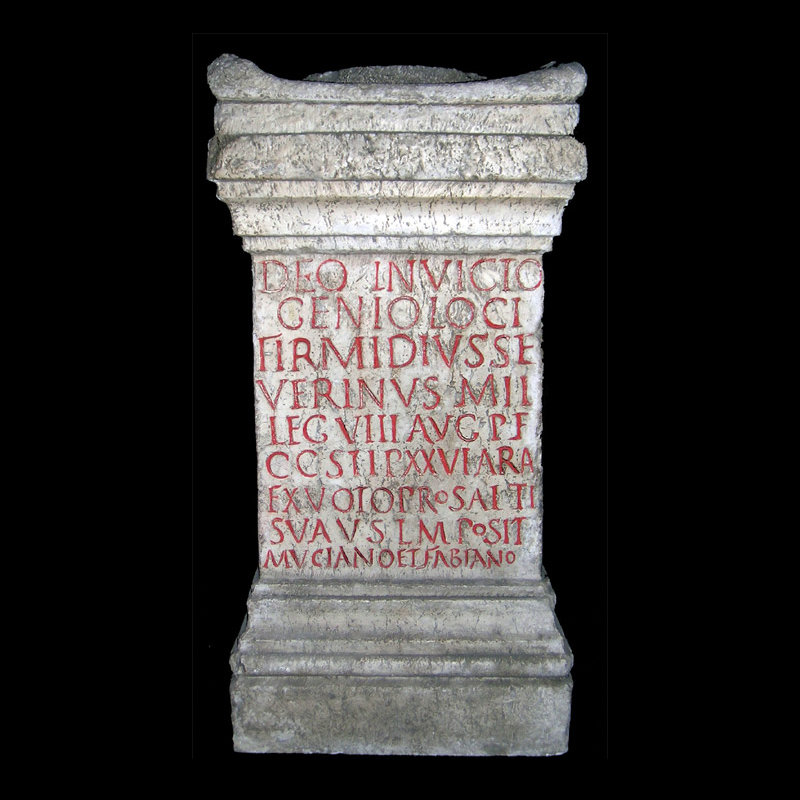
This limestone altar bears an inscription from its donor, Firmidius Severinus, in honour of Mithras after 26 years of service in the Legio VIII Augusta.
Bronze handle of a knife or dagger reportedly originating from Narbo and formerly preserved in major private collections.
This heavily damaged relief from Narbo preserves the figure of a cross-legged Mithraic torchbearer carved in low relief near the church of Saint-Sébastien in Narbonne.
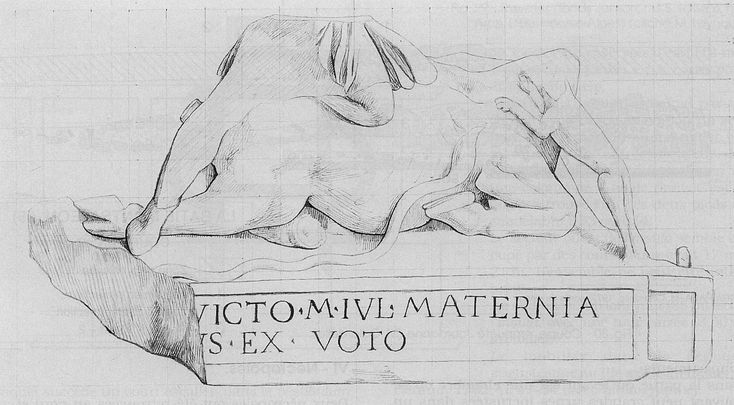
This damaged relief of Mithras killing the bull found in 1804 and formerly exposed at Gap, is now lost.

White marble relief, found near Aix "a la Torse dans un enclos ayant appartenu à la famille de Colonia".

This lamp, depicting a man slicing his victim into pieces with a sword, was believed to be associated with the Cult of Mithras.
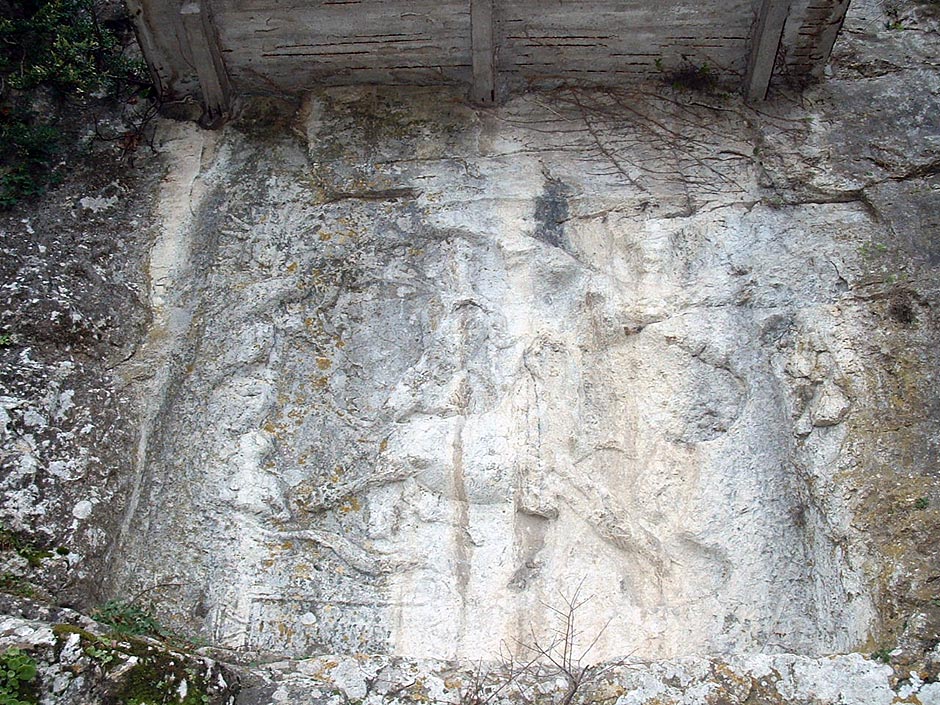
The low relief of Bourg-Saint-Andéol depicting Mithras killing the bull has been chiseled on the rock.
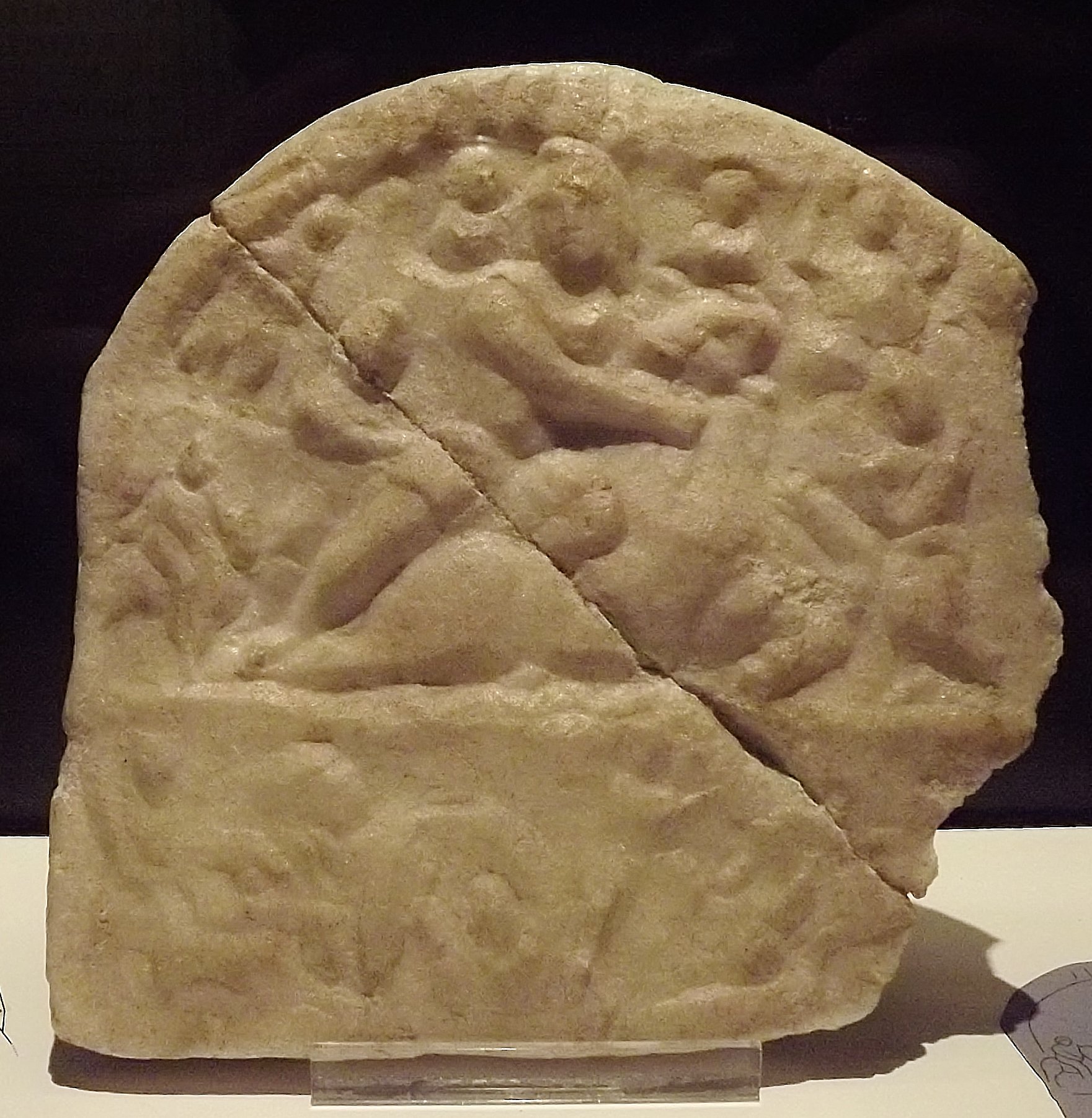
This small white marble relief of Mithras as a bullkiller was found in the Botanical Gardens of Vienna in 1950.

Emperor Julian may have been initiated into the cult of the god Mithras at the Mithraeum of Vienne, France, according to Turcan.
Small limestone stele, discovered at Apt in 1903. It depicts a standing torchbearer in the conventional Mithraic posture and dress, accompanied by a cock placed at his feet.
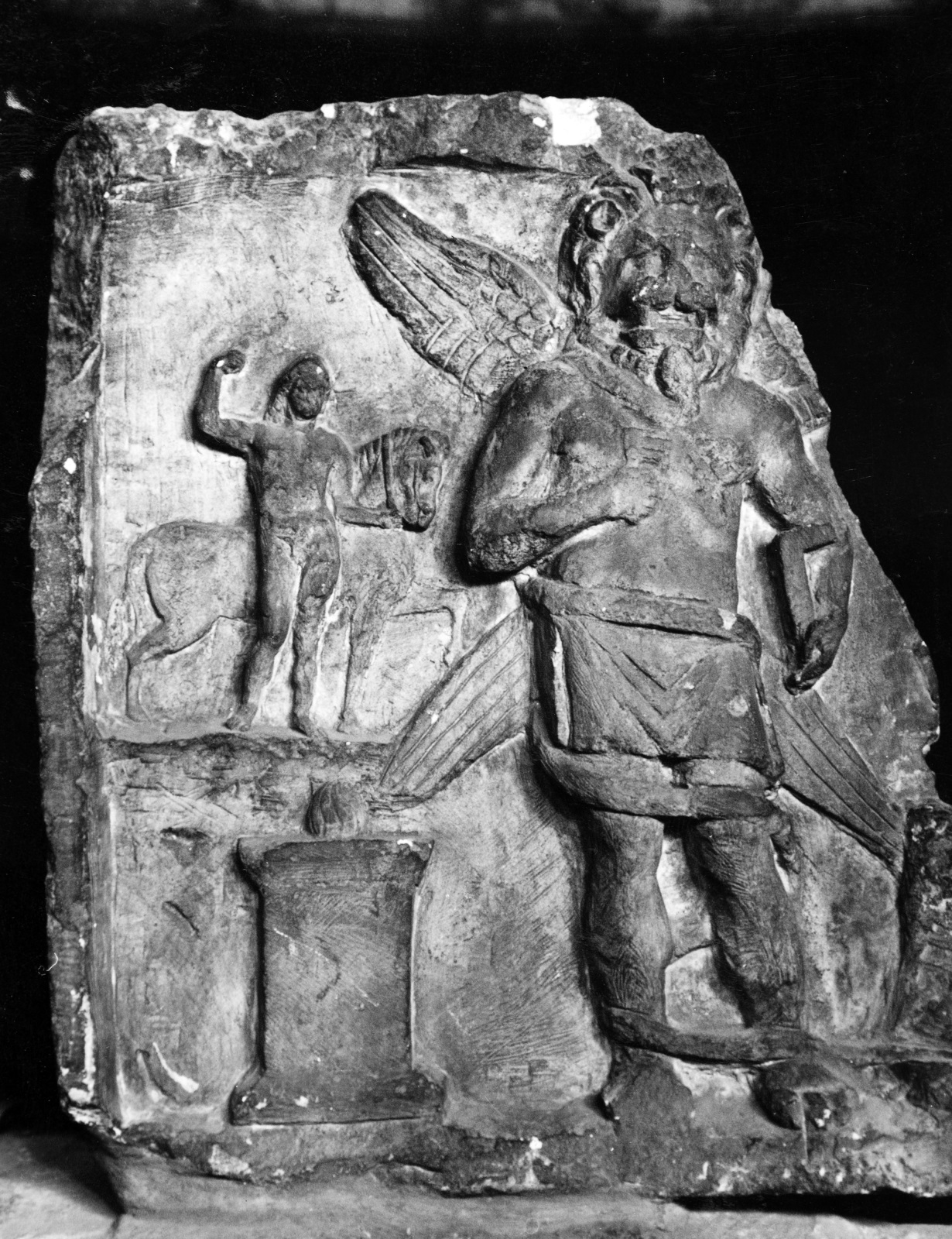
The relief of Aion from Vienne includes a naked youth in Phrygian cap holding the reins of a horse.
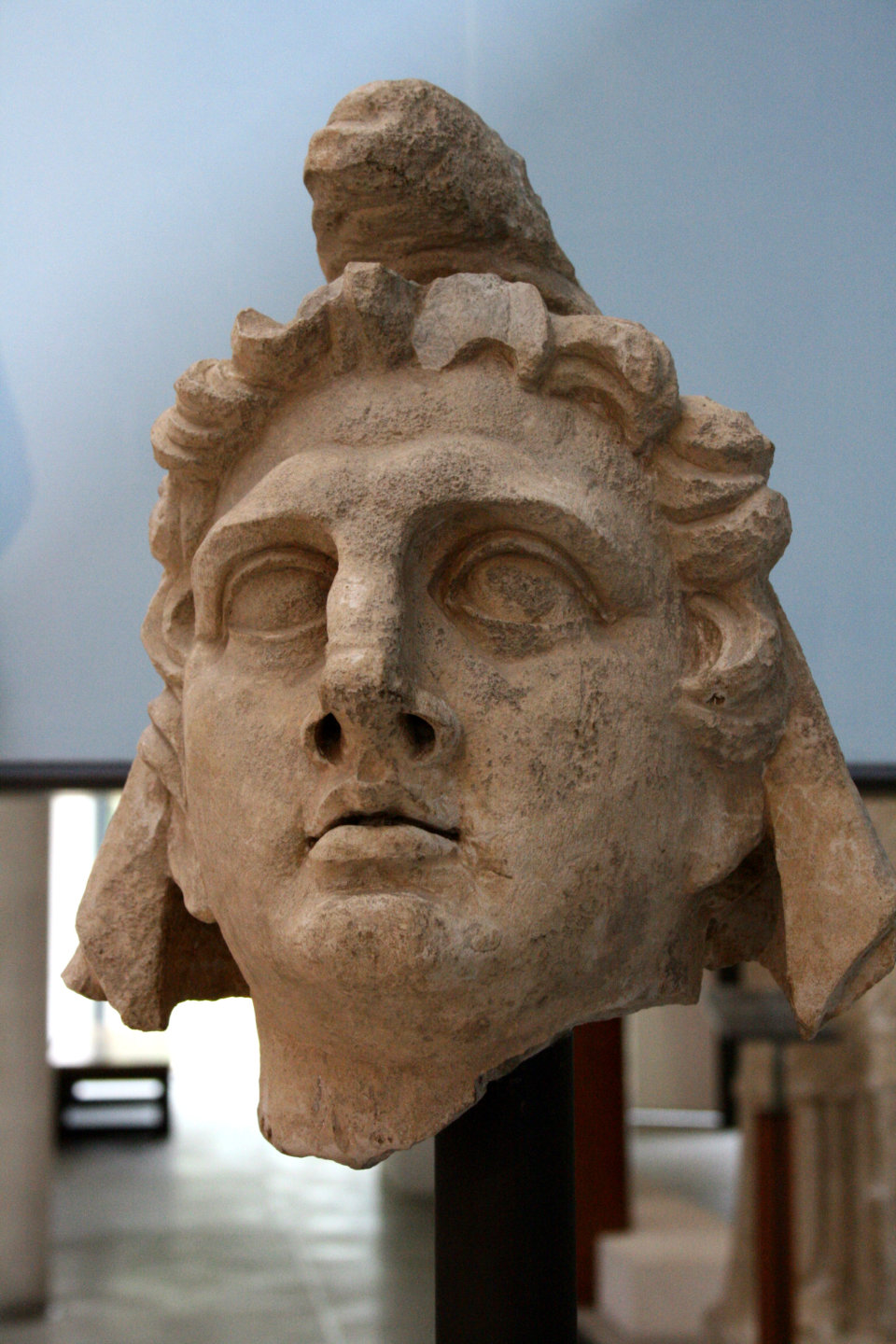
This head of Italian marble, found at Arles, probably belongs to a sculpure of Mithras.
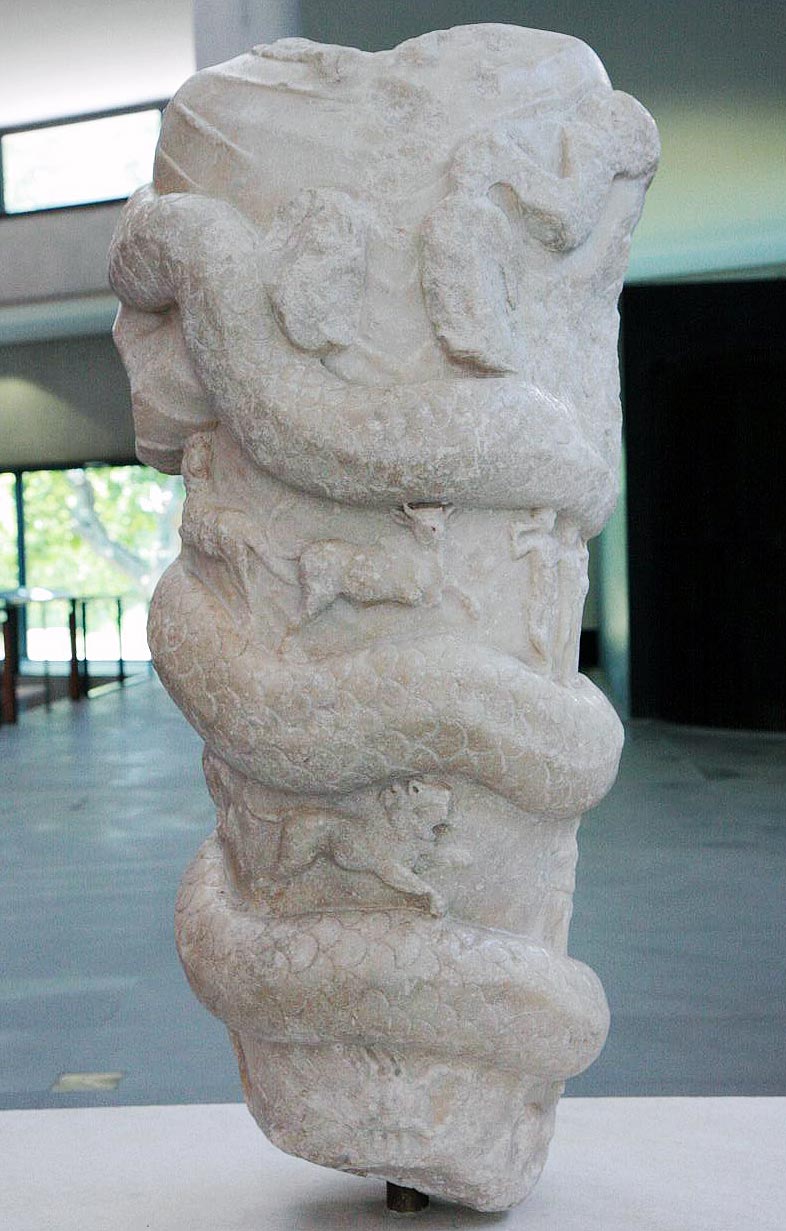
The Aion of Arles includes nine signs of the zodiac in three groups of three, between the spirals of the serpent.
