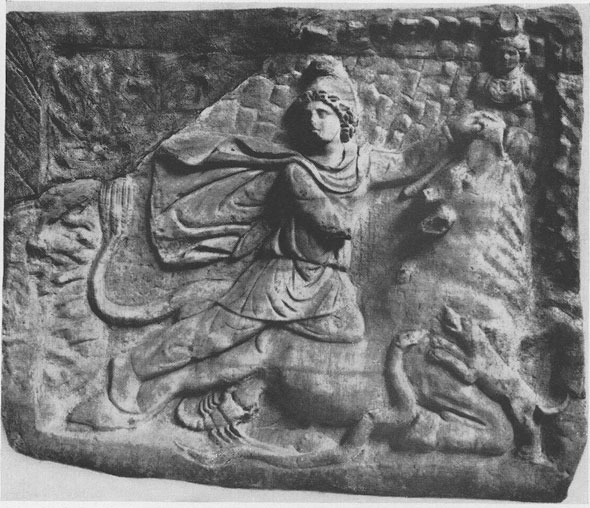
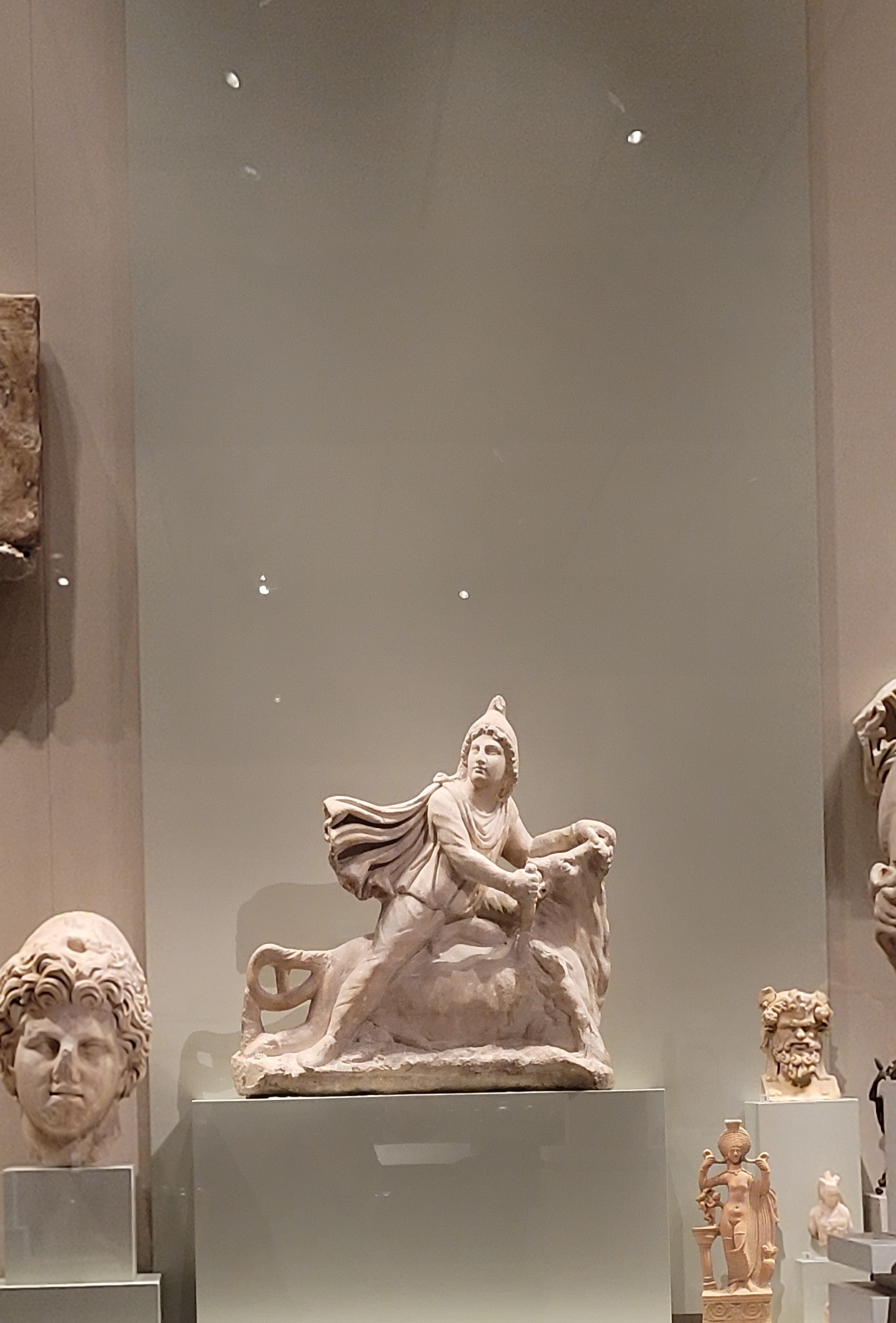
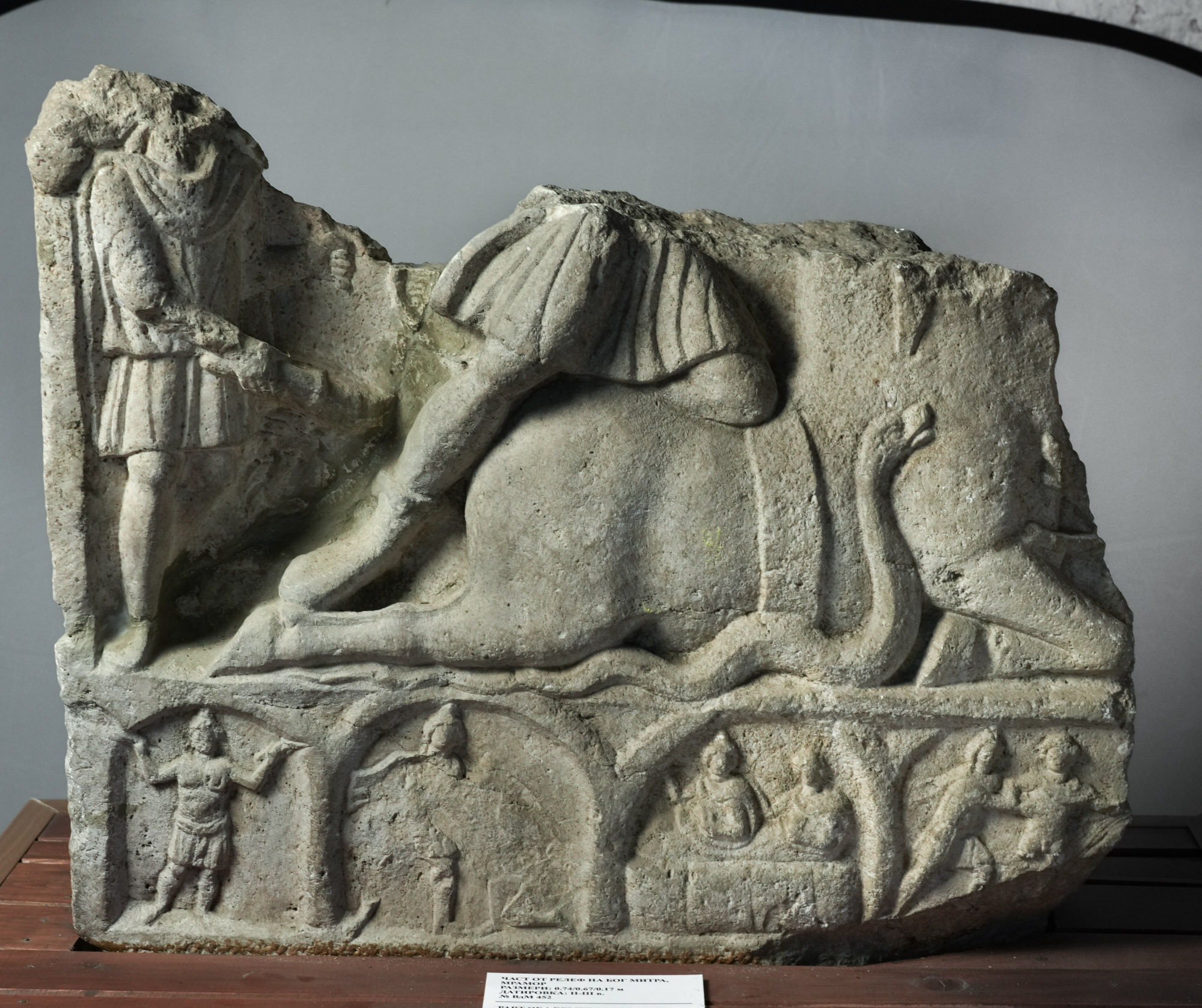
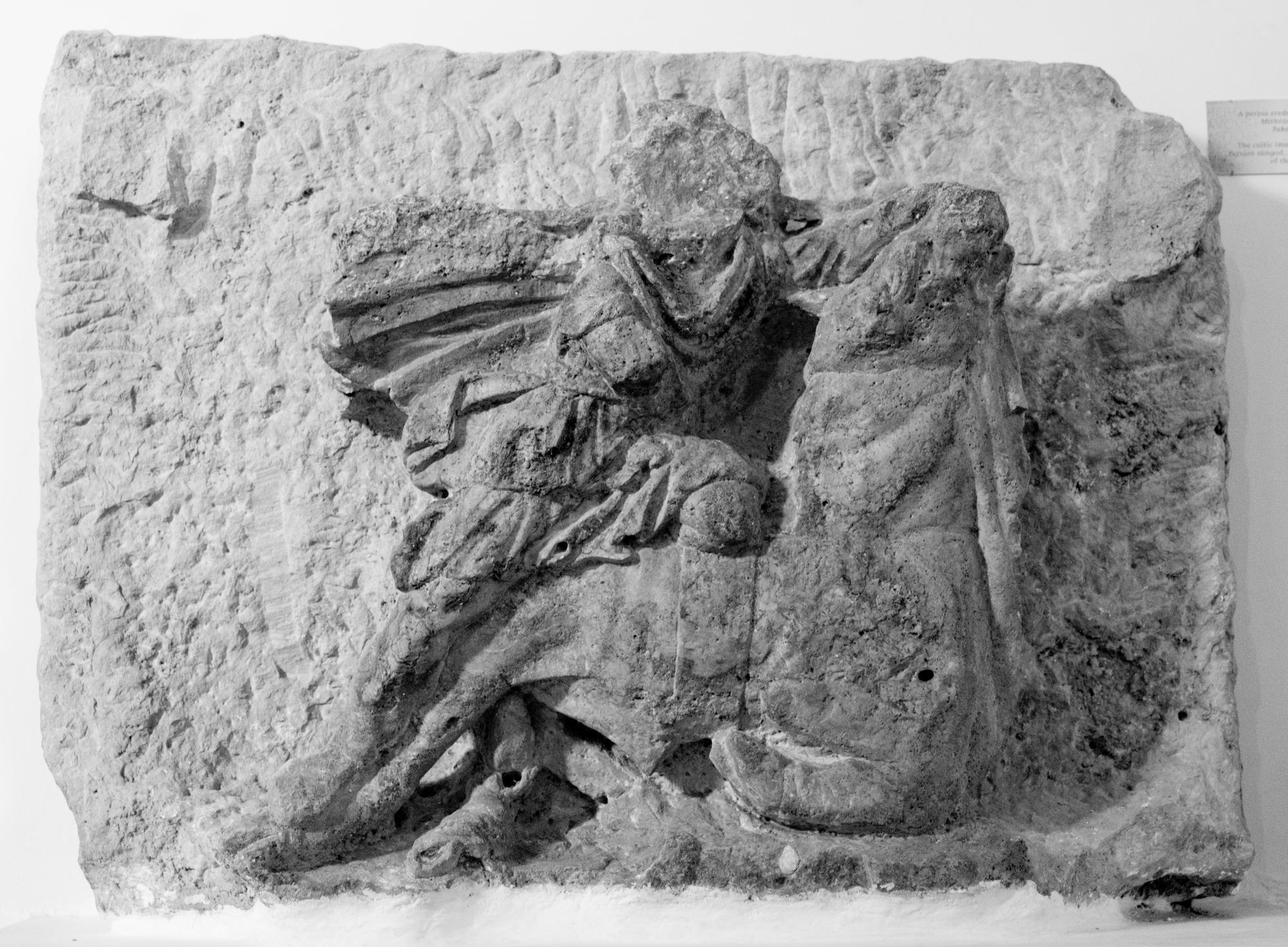
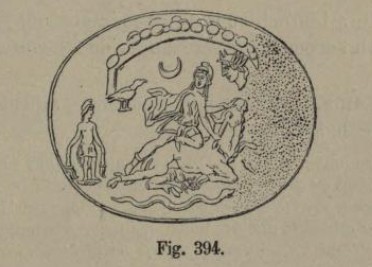
This marble tauroctony relief, probably originating from Naples, depicts Mithras slaying the bull within a cave-like setting, accompanied by the usual animals and celestial busts.
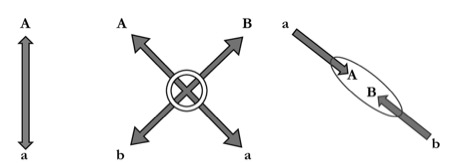
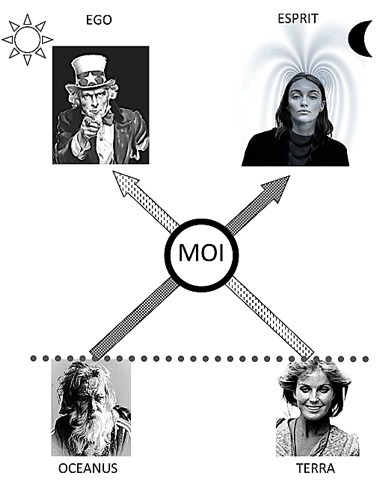
I believe that the top left corner does not come from this relief: there is no Sun facing the Moon, the frieze is not the same, the stone does not have the same texture... The thought related with the meeting of two opposing principles ( Chiasma) requires two opposing substances above (and possibly two additional substances below).
You can see, by the scoring in the "stone", that the corner was simply added to make it more appealing to museum viewers at the time. Happily, times have changed and it is currently displayed without the restoration.
Thank you for your testimony, great! And then, a Mithras stele without the Sun is like Jesus without the cross, it doesn’t work. Thought by chiasm requires two symbols and two principles above Mithra, otherwise there is no X. Because of René Descartes and Sigmund Freud, we live in a monolithic thought called Monism. But fortunately, dualism still exists, which is how we can interpret the philosophy of Mithra ...
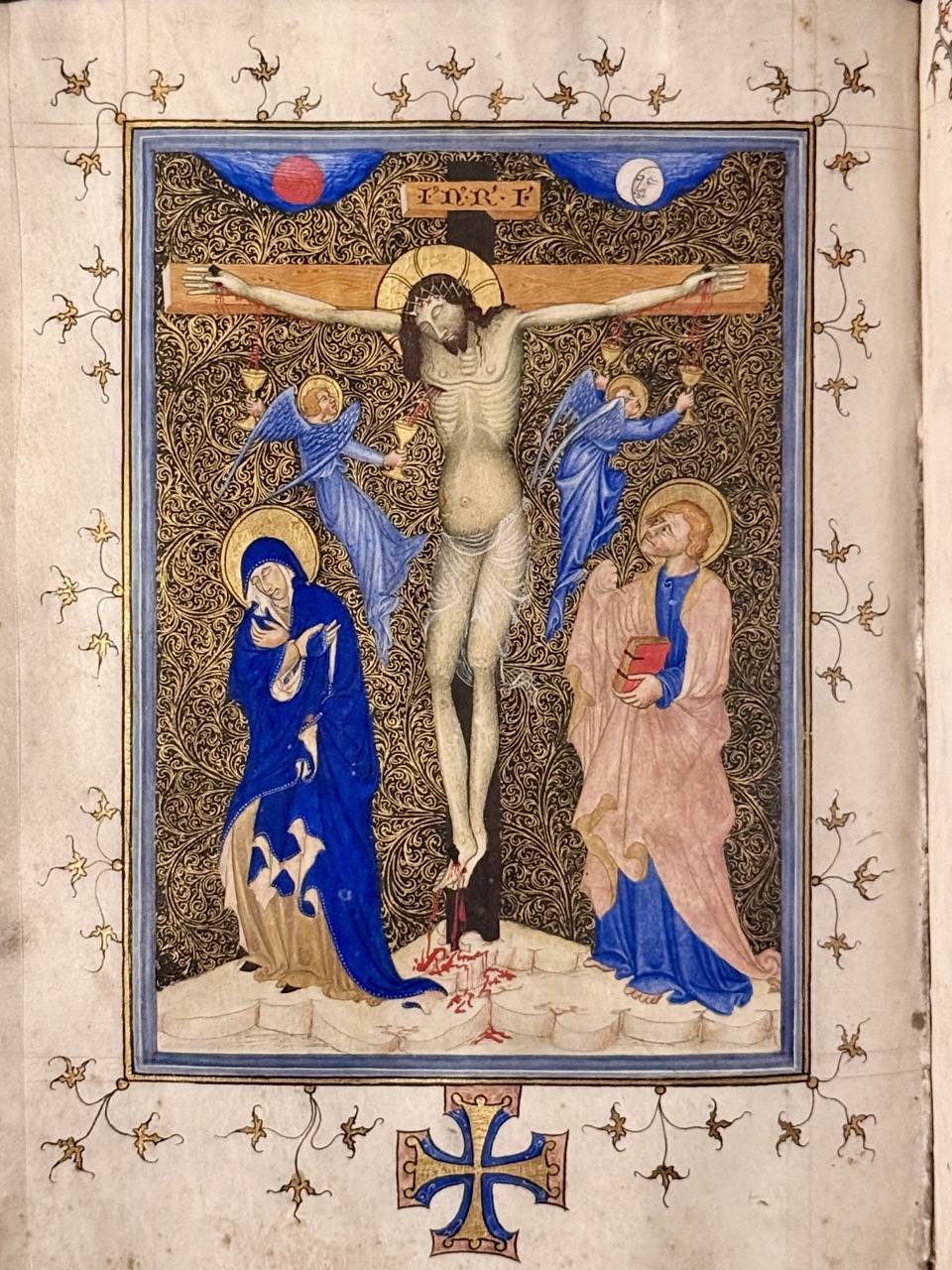
On this, the sun and the moon are a common motif in Roman iconography, appearing of course on the tauroctony to imperial apotheosis scenes, always framing the central figure to providing a cosmic dimension. The tradition has been also inherited by Christians, where it became standard in Crucifixion imagery from the Carolingian period onwards. Here, a beautiful example from the Hours of the abbey Sant Pere de Rodes in Spain, impressive place to visit, btw!
There are more than a few examples of tauroctonies without Sol and Luna. Space is always a consideration when carving stone. You shouldn’t read into it too much.
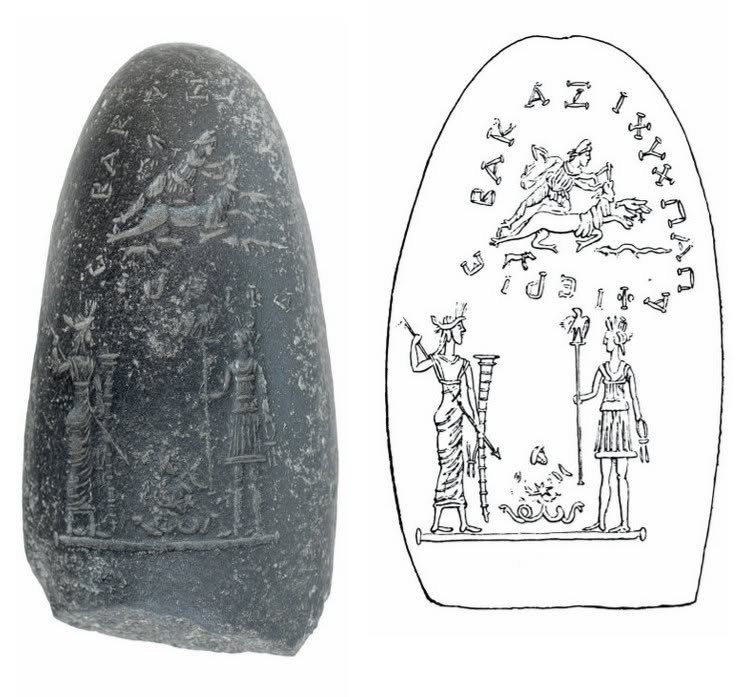
Black polished cone-shaped prehistoric axe from Argolis, now in the Athens National Museum, interpreted by some scholars as having Mithraic votive associations.
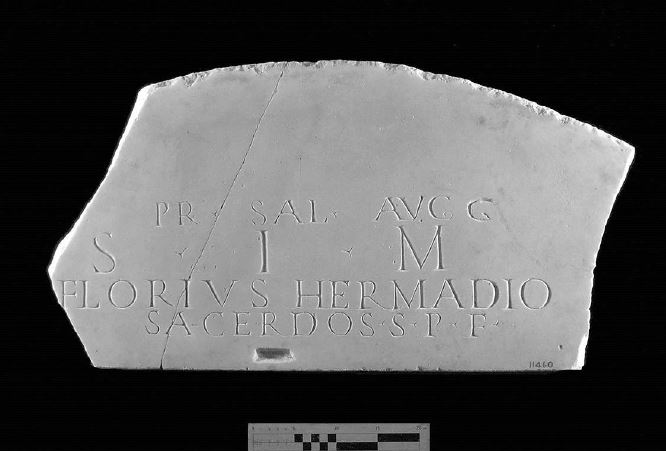
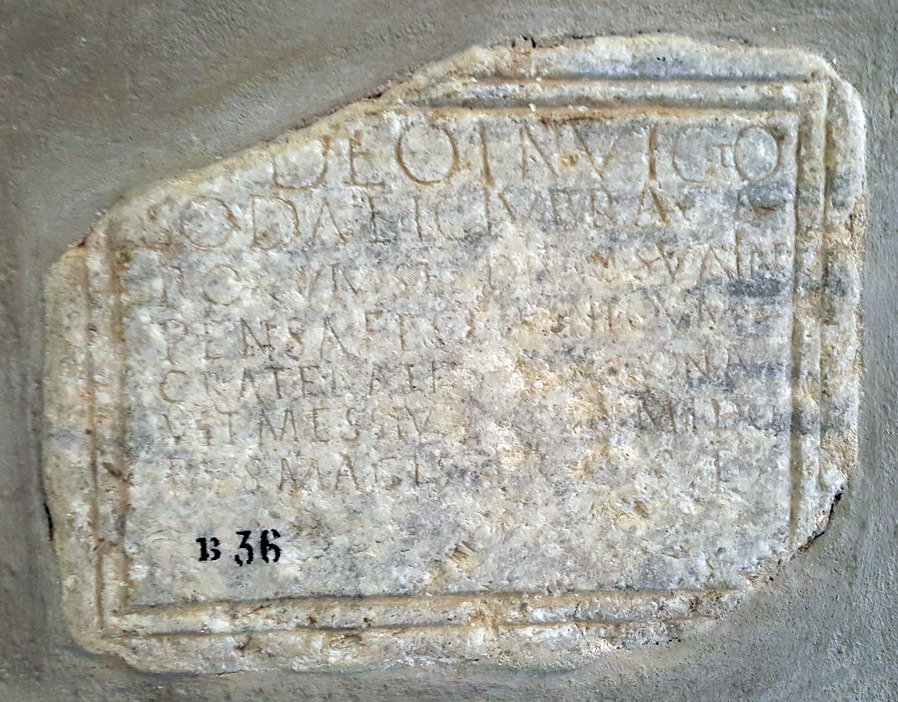
Marble revetment inscription from the cult niche of the Mitreo della Planta Pedis recording a dedication to Sol Invictus Mithras by the priest Florius Hermadio for the welfare of two emperors.
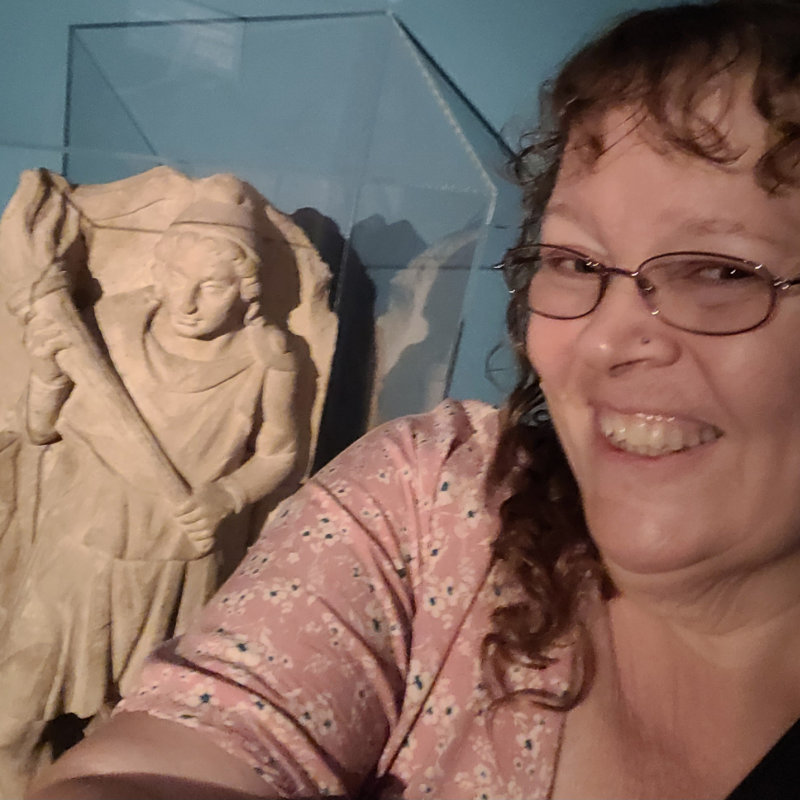
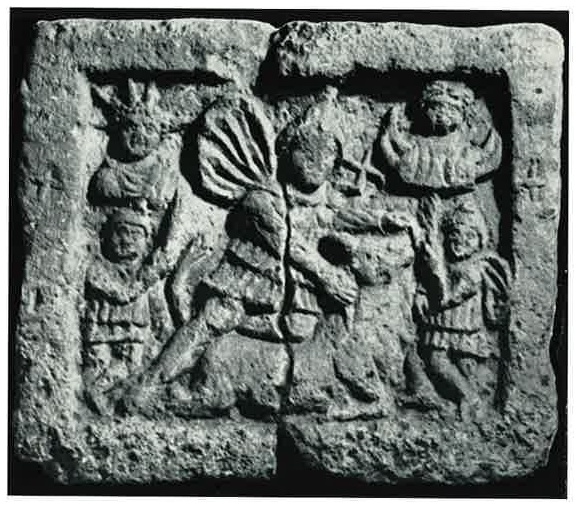
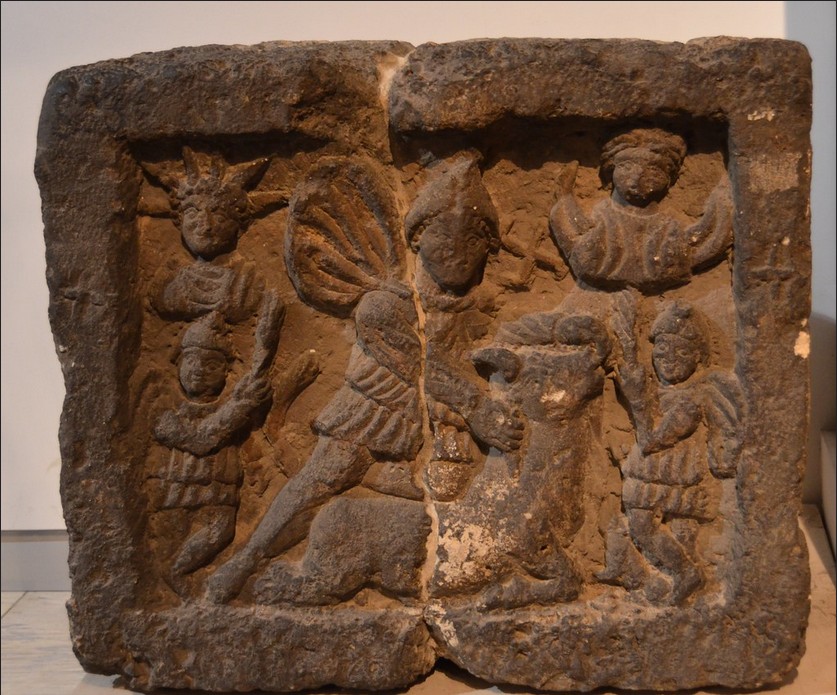
Tuff tauroctony relief in two fragments from Ghighen, ancient Oescus in Moesia Inferior, depicting the standard bull-slaying scene with the full iconographic programme.
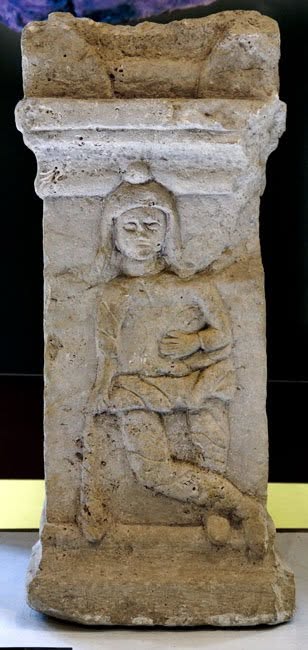
Was working in the 2200s today and found an image of this tauroctony on Flickr, (photo by Richard Mortel) as well as a video from the museum in Sofia. Not sure if Mithras is laughing, but Cautes appears happy enough.
Based on the CIMRM, this museum should have the mother-load of mithraic pieces for Bulgaria, but this is the only one (seemingly) on display. I’ve written to them for more info... fingers crossed. 😉