
Biography
of Lucius Valerius Monteius
- Lucius Valerius Monteius, a free citizen, is attested as a member of a Mithraic community (syndexios).
- Attested at Baetulo, Tarraconensis, Hispania in mid-2nd century (TNMM 541).
TNMP 166
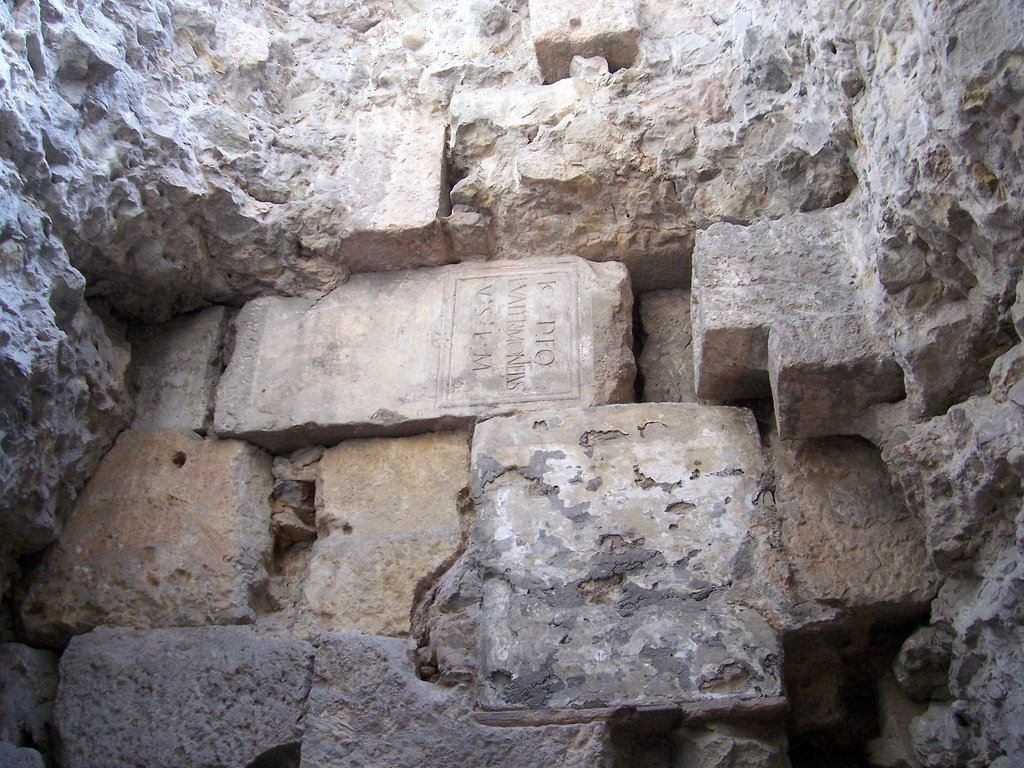
Lucius Valerius Monteius is known from a votive pedestal discovered in 1962 within the foundations of a Roman tower at Barcelona, bearing a dedication to Cautes. The inscription, usually dated to the second half of the second century CE, reads K(auti) deo / L. Valerius Monteius / v.s.l.m., recording the fulfilment of a vow to the deity (TNMM 541; Serra Ràfols 1965; Fabre, Mayer & Rodà 1984; Alvar 1981; Chalupa 2023).
Nothing is known of Monteius’ occupation, social rank or family background. Nevertheless, his possession of the full Roman tria nomina suggests Roman citizenship, while the absence of official titles or military ranks may indicate that he belonged neither to the municipal aristocracy nor to the provincial administration. His dedication instead reflects the participation of private individuals in the cult of Mithras within the urban environment of Barcino.
Particularly noteworthy is the use of the form K(auti) rather than the more common Cauti or Cautae. This orthographic feature also appears in Mithraic material from nearby Can Modolell and has been interpreted as evidence for a distinctive regional tradition of Mithraic worship in the coastal territory of north-eastern Hispania. The repetition of this unusual spelling across several inscriptions suggests that it was not an isolated mistake but rather a local convention shared by communities operating in the region.
Some scholars have proposed a possible connection between Monteius and individuals bearing related names documented in Lusitania, particularly at Emerita Augusta, seeing in this coincidence a potential indication of family links and the movement of Mithraic traditions between provincial centres (Fabre, Mayer & Rodà 1984). Such hypotheses remain speculative and cannot presently be demonstrated. More securely, Monteius’ inscription provides evidence that Mithraic worship was already sufficiently established in Barcino during the High Empire to sustain dedications to individual figures of the Mithraic pantheon rather than exclusively to Mithras himself.
References
- Epigraphic Database Heidelberg. Altar with inscription from Baetulo in EDH.
- Alfred Shenington Geden. Altar with inscription from Baetulo in EDCS.
- Hispania Epigraphica. Altar with inscription from Baetulo in HE.
- Mitra en Hispania. Altar with inscription from Baetulo in MEH.
Attestations
Altar with inscription from Baetulo
TNMM 541
This altar was dedicated to Cautes by a certain Lucius in Baetulo (Badalona), near Barcino (Barcelona).
