The corpus from Lusitania is dominated by the exceptional material documented in Augusta Emerita, one of the principal centres of Mithraic activity in the Iberian Peninsula. Additional evidence from other urban contexts illustrates the integration of Mithraic cults within the administrative, commercial and social networks of western Roman Hispania.
Mithraic monuments of Lusitania
Cerro de San Albín
Although the site at Cerro de San Albín is not a Mithraeum, archaeologists have found several monuments related to the cult of Mithras.
CIMRM 772
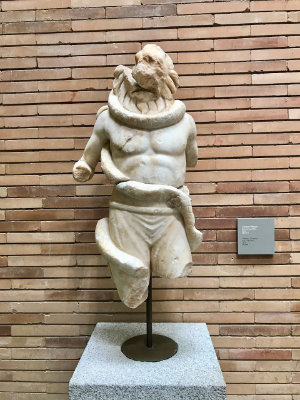
Lion-headed figure of Mérida
The lion-headed figure, Aion, from Mérida, wears oriental knickers fastened at the waist by a cinch strap.
CIMRM 776
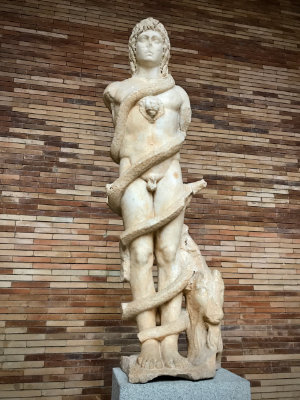
Aion of Mérida
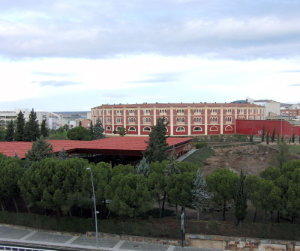
The Aion-Chronos of Mérida was found near the bullring of the current city, once capital of the Roman province Hispania Ulterior.
CIMRM 777
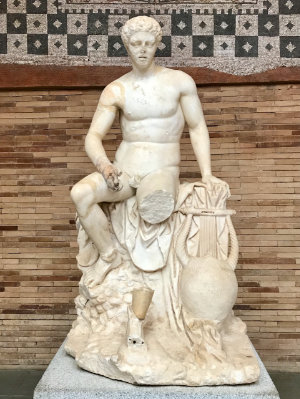
Mercury of Mérida
The statue of Mercury in Merida bears a dedication from the Roman Pater of a community in the city in 155.
CIMRM 780
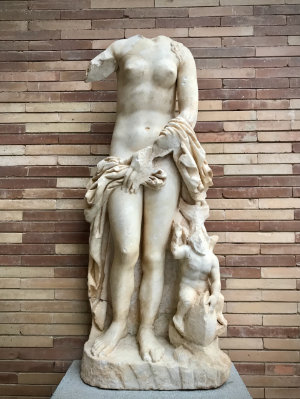
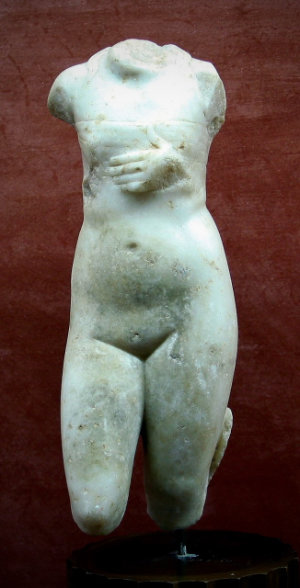
Venus pudica of Mérida
The Venus pudica of Merida stands next to the young Amor riding a dolplhin.
CIMRM 784
Triptic of Tróia
The remains of the mithraic triptic of Tróia, Lusitania, were part of a bigger composition.
CIMRM 798
Tauroctony from the Gran Mitreo de Mérida
These fragments of a monumental tauroctony found in the Cerro de San Albín must have decorated the Gran Mitreo de Mérida, which has not yet been found.
Feast from Mérida
This scene of a feast from Mérida shows three persons at a table with other people standing beside them, one holding a bull’s head on a plate.
CIMRM 782
Mitreo de la calle Espronceda
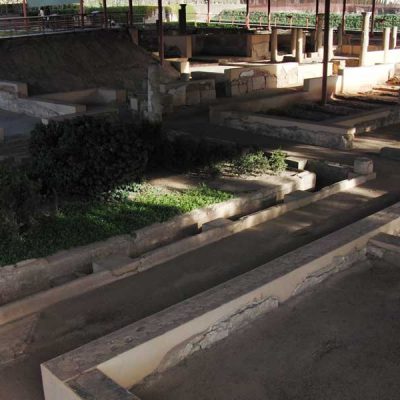
The Mithraeum at Espronceda Street, in Merida, was discovered in 2000. It is a semi-subterranean temple.
Venus of Mérida small sculpture
The lack of attributes and its decontextualisation prevent us from attributing a specific Mithraic attribution to this small Venus pudica from Mérida.
CIMRM 785
Brothers active in Lusitania
Places in Lusitania
Caetobriga
Caetobriga, now Setúbal of Proto-Celtic *Caetobrix, became a Turdetani settlement which passed under Roman rule. In the time of Al-Andalus the city was known as Shaṭūbar.
Emerita Augusta
Emerita Augusta was founded in 25 BC by order of the Emperor Augustus to protect a pass and a bridge over the Guadiana River. The city became the capital of the province of Lusitania and one of the most important cities in the Roman Empire.
Inscriptions from Lusitania
Mercury of Mérida
Altar of Merida consecrated by Marcus Valerius Secundus
Cautopates from Casa del Mitreo of Mérida
Δημήτριος ἐποίει
Demetros made it.
Oceaunus of Mérida
Altar by Hector Corneliorum of Mérida
Altar of Gaius Iulius from Mérida
Altar by Caius Aemilius Superaius of Merida
Altar of Mérida from Quintio
References
- Jaime Alvar (2020) 1.01.02.04. Ara de mármol blanco con inscripción
- Jaime Alvar (2021) 1.02.01.01. Fragmentos de tríptico en bajorrelieve
- Jaime Alvar (2020) Mitra en Hispania: 1.01.02.14. Fragmentos del relieve de la tauroctonía
- Jaime Alvar (2020) Mitra en Hispania: 1.01.03. Materiales procedentes de la Calle Constantino de Mérida
- Jaime Alvar (2020) Mitra en Hispania: 1.01.04.01. Pequeña ara votiva de mármol blanco
- Jaime Alvar. https://humanidadesdigitales.uc3m.es/s/mitra/item/443
- Javier Alvar (2020) 1.01.04.02. Basa de estatua con inscripción – Mithra en Hispania
- Universidad Carlos III de Madrid (2018) C019. Catálogo. Lusitania. Emerita Augusta - Mérida (Badajoz). Escultura
- House of Mithraeum. Turismo de Mérida
- La Casa del Mitreo. ArcheoAndrea