
Biography
of Gaius Curius Avitus
- Gaius Curius Avitus, a free citizen, is attested as a member of a Mithraic community (syndexios).
- Attested at Emerita Augusta, Lusitania, Hispania in 2nd – 3rd century (TNMM 242).
TNMP 60
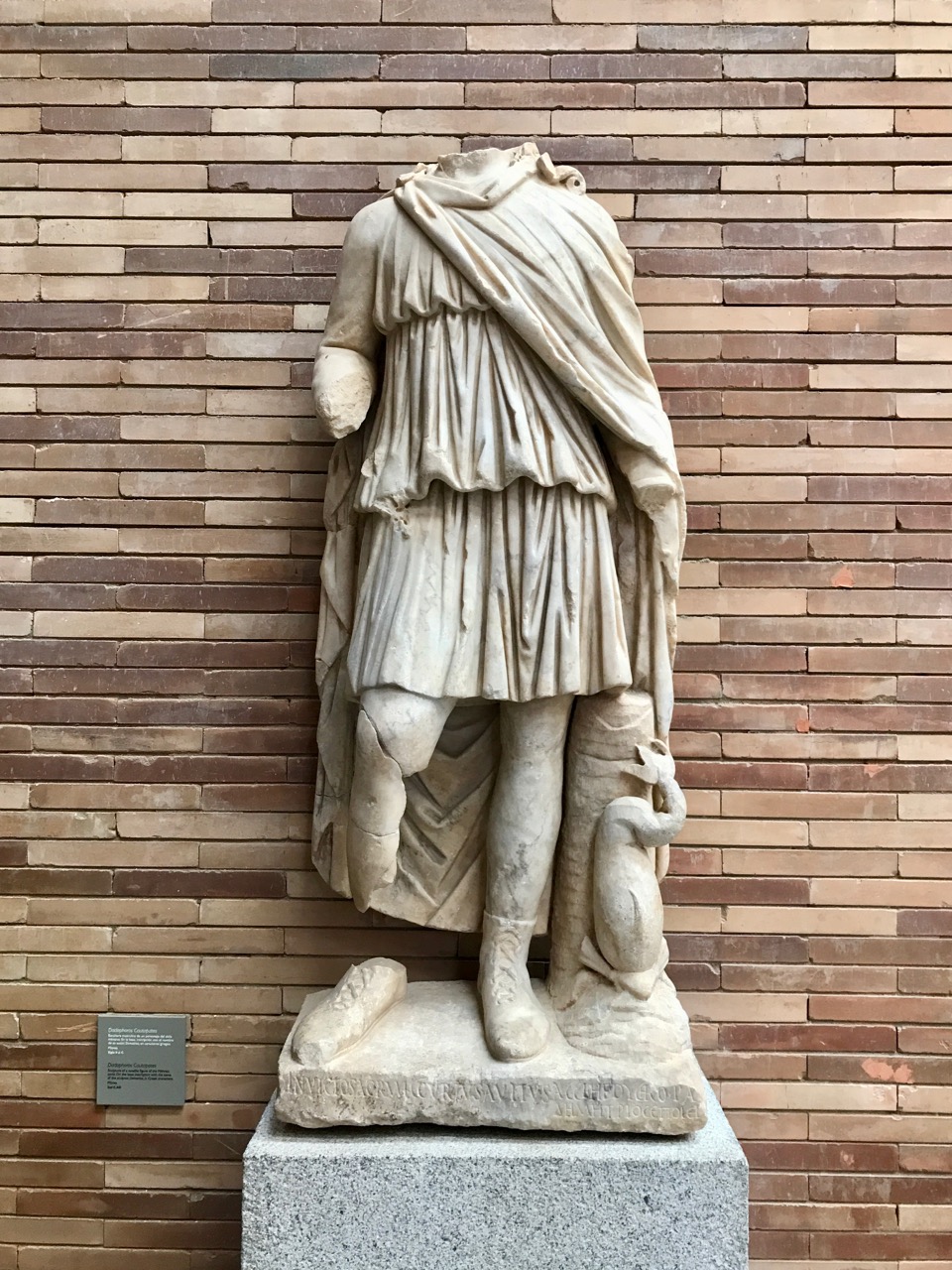
Gaius Curius Avitus is known from a bilingual Latin-Greek inscription carved on the base of a marble statue generally identified as Cautopates (TNMM 242). The monument was discovered at the Cerro de San Albín at Emerita Augusta and records that the dedication was made under the authority of the community’s Father, Gaius Accius Hedychrus, while the sculpture itself was executed by a Greek-speaking artisan named Demetrios. The inscription provides a rare glimpse into the social network that supported the sanctuary, linking a dedicant, a religious leader and a sculptor within a single monument (Alvar 2018; Chalupa 2023).
Little is known about Avitus beyond this dedication. Unlike several other individuals associated with the Emeritan mithraea whose names suggest servile or eastern origins, his cognomen Avitus belongs to a group of indigenous names particularly well attested in Lusitania and is documented numerous times in Augusta Emerita. Although his social status cannot be established with certainty, his tria nomina and his ability to commission a monumental sculpture suggest that he was a free member of the local community rather than a slave. His dedication illustrates the participation of locally rooted inhabitants alongside military personnel, freedmen and immigrants in the Mithraic congregation of Emerita (Rodríguez Plano 2022).
The statue formed part of the exceptional sculptural programme installed in the sanctuary during the mid-second century CE. Its unfinished rear surface indicates that it was intended to stand against a wall, while the inscription confirms the prominent role exercised by Accius Hedychrus in the organisation of the community. Together with the dedications of Marcus Valerius Secundus and other members of the congregation, Avitus’ monument contributes to the reconstruction of one of the best-documented Mithraic groups in Roman Hispania.
References
- Epigraphic Database Heidelberg. Cautopates from Casa del Mitreo of Mérida in EDH.
- Alfred Shenington Geden. Cautopates from Casa del Mitreo of Mérida in EDCS.
- Hispania Epigraphica. Cautopates from Casa del Mitreo of Mérida in HE.
- Mitra en Hispania. Cautopates from Casa del Mitreo of Mérida in MEH.
Attestations
Cautopates from Casa del Mitreo of Mérida
TNMM 242
The sculpture of the solar god is signed by its author, Demetrios.
Δημήτριος ἐποίει
Demetros made it.
