Biography
of Gaius Iulius
- Gaius Iulius is attested as a member of a Mithraic community (syndexios) at the Cerro de San Albín.
- Attested at Emerita Augusta, Lusitania, Hispania in 2nd half of 2nd century (TNMM 427).
TNMP 11
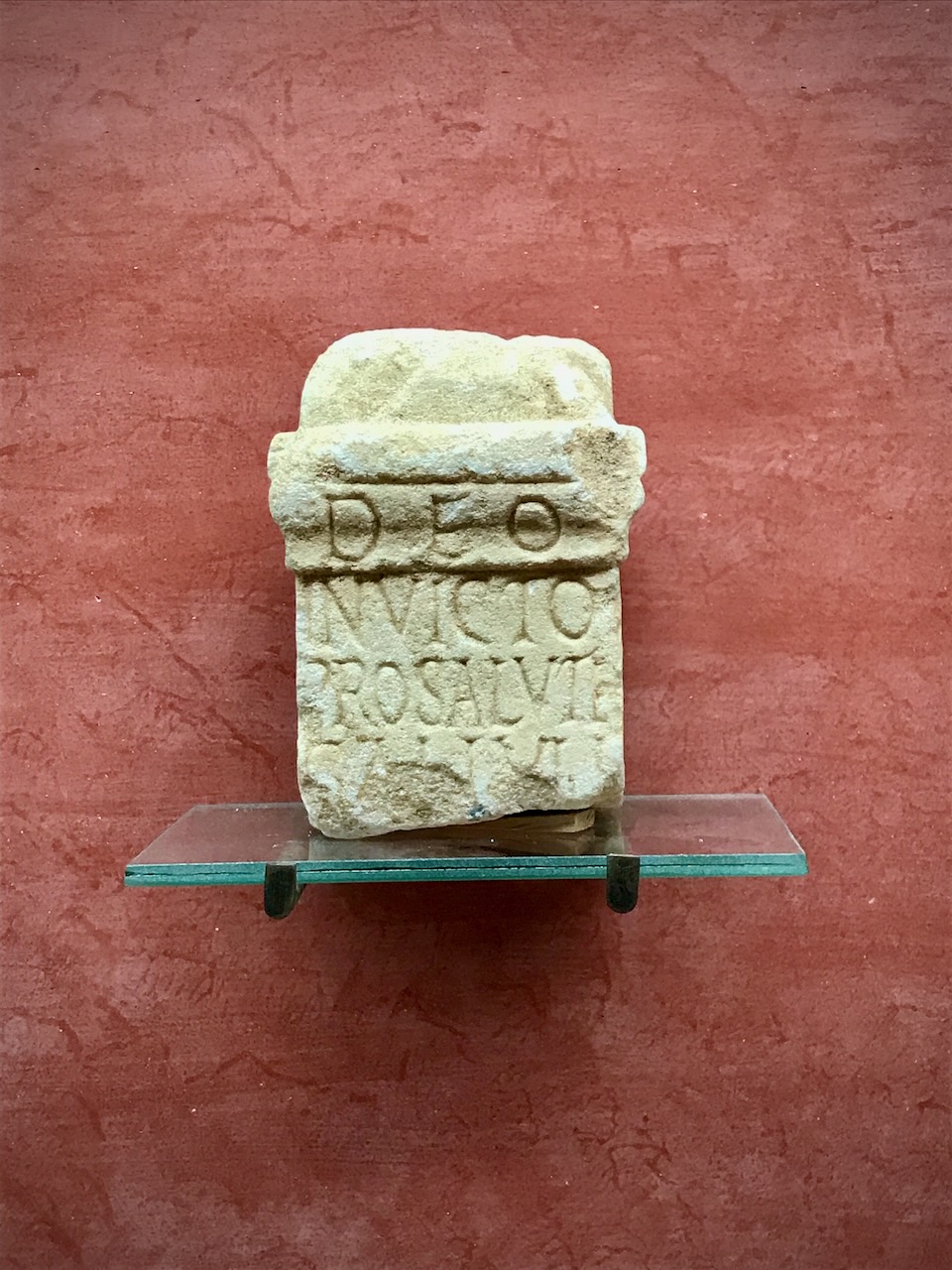
Gaius Iulius is known from a small marble altar discovered among the Mithraic material deposited at Cerro de San Albín in Emerita Augusta and dated to the second half of the second century CE. The surviving inscription reads Deo invicto pro salvte Gai. Ivli…(“To the Invincible God. For the health of Gaius Iulius…”). Because the lower part of the monument is lost, the name of the dedicator has not survived. As Jaime Alvar has observed, it would be highly unusual for Gaius Iulius himself, the beneficiary of the dedication, to refer to himself in the third person, making it virtually certain that another member of the community commissioned the altar on his behalf (Alvar 2018).
Although Mithras is not named explicitly, both the archaeological context and the wording of the inscription strongly connect the monument with the Mithraic cult. Aleš Chalupa includes the altar among the monuments that can be regarded as unequivocally Mithraic from Cerro de San Albín and notes that, given its findspot alongside other Mithraic dedications, the Deus Invictus invoked in the text was almost certainly Mithras (Chalupa 2023). The altar belongs to the same assemblage that yielded the dedications of Marcus Valerius Secundus, Gaius Camilius Superatus, Quintio and the pater Gaius Accius Hedychrus, placing Gaius Iulius within the earliest documented Mithraic community of Emerita Augusta.
The formula pro salute is uncommon in Mithraic epigraphy but appears several times in Hispania in dedications addressed to Deus Invictus or Sol Invictus. Alvar has argued that these inscriptions point to a protective and salutary dimension of the god’s power while also highlighting the noteworthy absence of the explicit name Mithras in all known Hispanic examples of the formula. Although nothing is known about the social status, profession or initiatory grade of Gaius Iulius, the dedication made for his well-being offers a rare glimpse into the personal bonds and mutual support that characterised the Mithraic community of Emerita Augusta.
References
- House of Mithraeum. Turismo de Mérida.
- La Casa del Mitreo. ArcheoAndrea.
- Hispania Epigraphica. Altar of Gaius Iulius from Mérida in HE.
- Mitra en Hispania. Altar of Gaius Iulius from Mérida in MEH.
Attestations
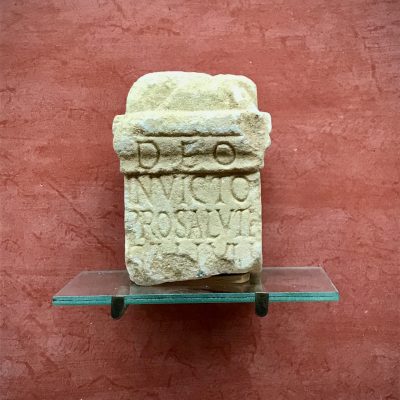
Altar of Gaius Iulius from Mérida
TNMM 427
The small Mithraic altar found at Cerro de San Albin, Merida, bears an inscription to the health of a certain Caius Iulius.
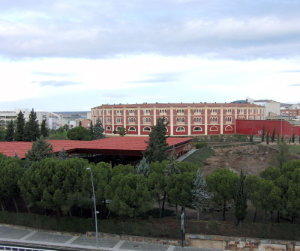
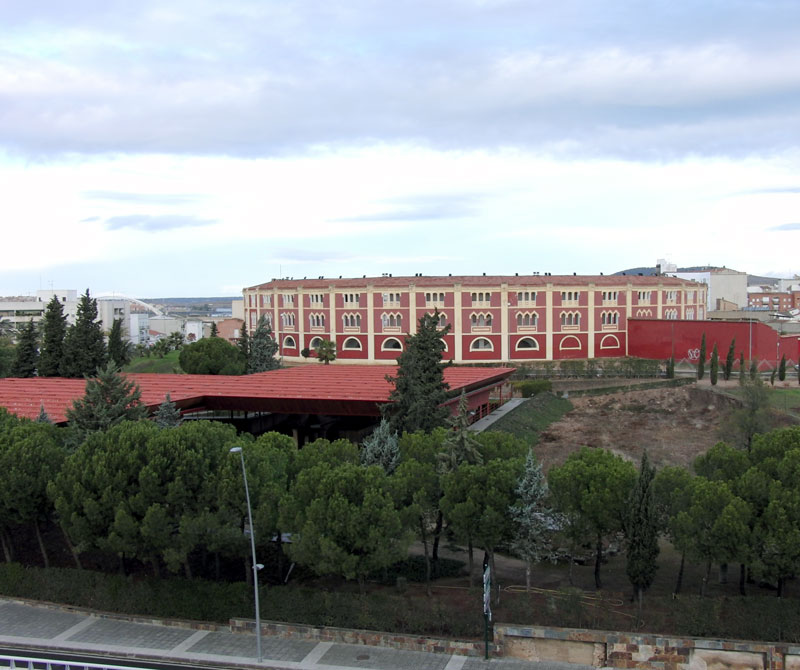
Cerro de San Albín
TNMM 29
Although the site at Cerro de San Albín is not a Mithraeum, archaeologists have found several monuments related to the cult of Mithras.