
This site uses cookies to offer you a better browsing experience.
Find out more on how we use cookies in our privacy policy.

 
Support The New Mithraeum The New Mithraeum is an independent, non-profit project dedicated to Mithraic studies, ancient religions and classical culture. Developed and maintained independently since 2007, the site exists without advertising, paywalls or institutional funding. If you have found value in its articles, interviews, photographs or database, please consider supporting the project with a contribution. Every contribution helps keep The New Mithraeum open, free and alive. Thank you.
Support us →
Locus

Sárkeszi

Sárkeszi is a village in Fejér county, Hungary.

Mithraic monuments of Sárkeszi


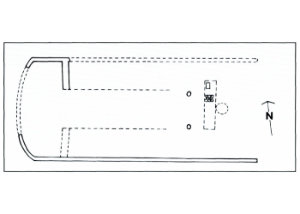
Mithraeum of Sárkeszi

One of the largest known Mithraea in Pannonia, the sanctuary of Sárkeszi stood near the Roman road linking Herculia and Aquincum.


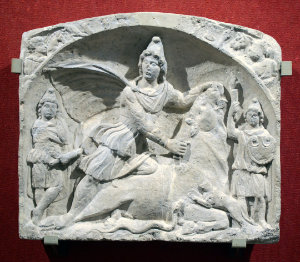
Tauroctony from Sárkeszi

In this relief found in the Sárkeszi Mithraeum, Cautes and Cautopates hold an Amazon shield.


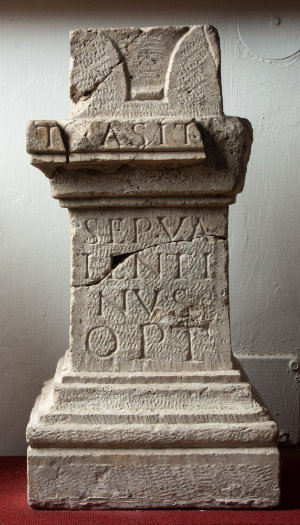
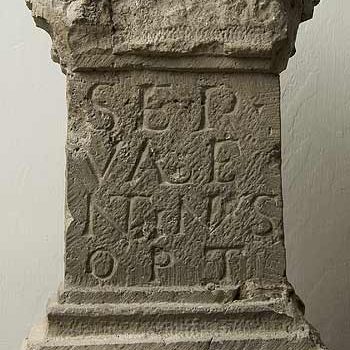
Altar to Transitus from Sárkeszi

This is one of the altars erected by Septimius Valentinus, in this case, to the transitus of Mithras.

CIMRM 1811


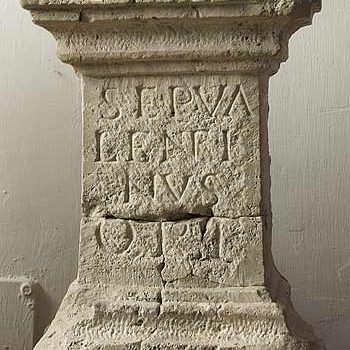
Altar for Fons Dei

Fragmentary limestone altar dedicated by Septimius Valentinus, an optio, probably discovered in Mithraeum IV at Aquincum.

CIMRM 1810


Altar to Cautes by Septimius Valentinus

Limestone altar dedicated to Cautes by the Roman optio Septimius Valentinus, discovered in the Mithraeum of Sárkeszi in Pannonia Inferior.

CIMRM 1812


Altar of Septimius Valentinus to Fons from Sárkeszi

Limestone altar fragment from the Mithraeum at Sárkeszi, Pannonia Inferior, dedicated to Fonti dei by Septimius Valentinus, optio.

CIMRM 1809


Altar fragment for temple restoration from Sárkeszi

Limestone altar fragment from the Mithraeum at Sárkeszi, Pannonia Inferior, recording the restoration of a templum that had collapsed through age.

CIMRM 1813


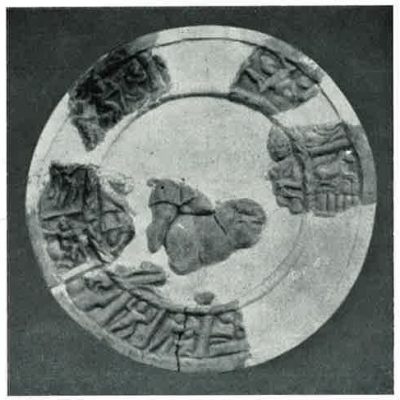
Circular tauroctony in laurel wreath from Sárkeszi

Circular white marble relief in five fragments from the Mithraeum at Sárkeszi, Pannonia Inferior, depicting an open-work tauroctony enclosed in a laurel wreath; only part of the bull's body, the god's foot, and the scorpion are preserved.

CIMRM 1814


Tauroctony relief with belted bull from Sárkeszi

Limestone tauroctony relief from the Mithraeum at Sárkeszi, Pannonia Inferior, depicting Mithras killing the bull with a broad belt, dog, serpent, raven, and torchbearers; the grotto is indicated by rough soil.

CIMRM 1815


Lamps and coin from Sárkeszi

Two lamps — one bearing the stamp Fortis — and a bronze coin of Hadrian from the Mithraeum at Sárkeszi, Pannonia Inferior.

CIMRM 1816


Tauroctony grotto border from Székesfehérvár

Fragment of a limestone tauroctony relief from Székesfehérvár, Pannonia Inferior, preserving only the border of the grotto in which Mithras kills the bull; the greater part of the god and bull are lost.

CIMRM 1817

Brothers attested in Sárkeszi

Inscriptions from Sárkeszi

Altar to Transitus from Sárkeszi

Tra[n]sit[u D[ei]] / Sep[timius] Va/lenti/nus / opt[io].
To the transit of the God, Septimius Valentinus, optio.

Altar for Fons Dei

Font[i d(ei?)] / Sep(timius) Valenti/nus opt(io).
To the spring/source of the god(?), Septimius Valentinus, optio, [dedicated this].

Altar to Cautes by Septimius Valentinus

[Cauto] // Sep(timius) / Vale/ntinus / opt(io).
To Cautes, Septimius Valentinus, optio, [dedicated this].
Back to Top