This site uses cookies to offer you a better browsing experience.
Find out more on how we use cookies in our privacy policy.

 
Region

Mithras in Pannonia

Pannonia preserves one of the most important frontier corpora of Mithraic evidence in the Roman world.

The Mithraic evidence documented in Pannonia is exceptionally rich and closely connected to military communities stationed along the Danube frontier. The province preserves numerous monuments, inscriptions and mithraea illustrating the strong implantation of the cult within the frontier systems of the Roman Empire.
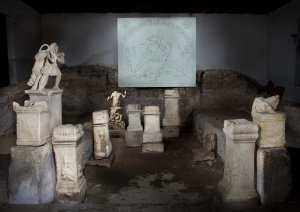
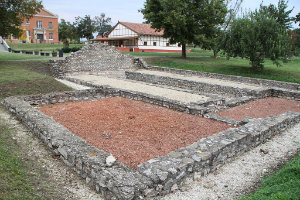
Mithraic monuments of Pannonia


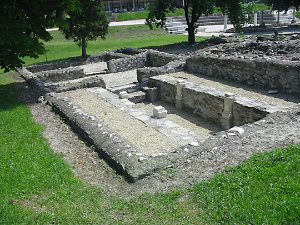
Mithraeum I of Ptuj

The Mithraeum I of Ptuj contains the foundation, altars, reliefs and cult imagery found in it.

CIMRM 1487


Mithraeum VI of Aquincum

A sixth temple dedicated to Mithras has been identified for the first time in the military sector of the ancient Roman city of Aquincum.


Mithraeum III of Ptuj

Mithraeum III in Ptuj was built in two periods: the original walls were made of pebbles, while the extension of a later period was made of brick.

CIMRM 1578


Mithraeum I of Carnuntum

According to the scarcely detailed design of von Sacken, the lay-out of the temple must have been nearly semi-circular.

CIMRM 1664


Mithras rock-birth of Mithraeum III, Ptuj

Cautes and Cautopates attend the birth of Mithras from the rock in the Petrogenia of the third Mithraeum of Ptuj.

CIMRM 1593


Mithraeum II of Aquincum in Victorinus’s house

This temple of Mithras in Aquincum was located within the private house of the decurio Marcus Antonius Victorinus.

CIMRM 1750


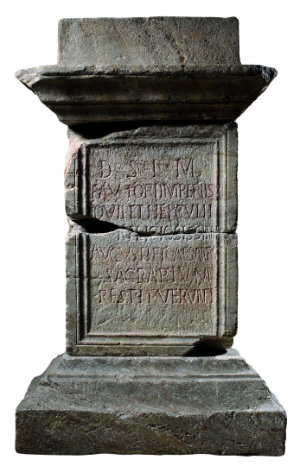
Altar of Carnuntum by the Augusti and Caesares

Altar with Cautes and Cautopates dedicated to Sol Invictus Mithras as protector of the Tetrarchy in 3rd-century Carnuntum.

CIMRM 1697


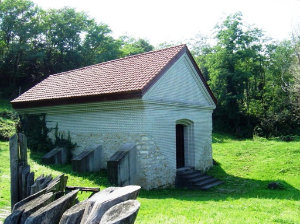
Mithraeum of Fertőrákos

The temple of Mithras in Fertorakos was constructed by soldiers from the Carnuntum legion at the beginning of the 3rd century AD.

CIMRM 1636


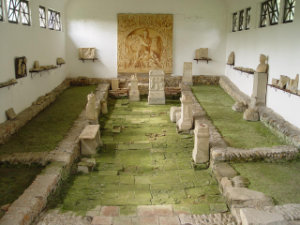
Mithraeum IV of Aquincum

The Mithraeum of Symphorus and Marcus, in Óbuda, Budapest, has been restored to public view in 2004 and, while well presented, it has been heavily restored.

CIMRM 1767


Tauroctony relief of Fertőrákos

The main cultic relief of Mithras slaying the bull of Fertorakos was carved into the rock face.

CIMRM 1642


Mithraeum III of Carnuntum

Mithraeum III found in the west part of Petronell near Hintausried in August 1894 by J. Dell and C. Tragau.

CIMRM 1682


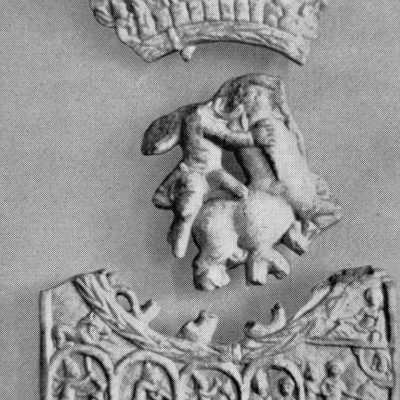
Mithras rock-born from Ptuj

The sculpture includes a serpent climbing the rock from which Mithras is born.

CIMRM 1492

See all Mithraicmonuments in Pannonia

Places in Pannonia


Rodine

Rožanec is a settlement north of the town of Črnomelj in the White Carniola area of southeastern Slovenia.


Aquincum

Aquincum was an ancient city, situated on the northeastern borders of the province of Pannonia within the Roman Empire.


Brigetio

Brigetio, which became Szőny, was an independent town until 1977, when it was incorporated into Komárom. The Roman legion Legio I Adiutrix was stationed here from 86 AD until the middle of the 5th century.


Budaors

Budaörs is a town in Pest County, in the metropolitan area of Budapest, Hungary. Before the Romans, the Celtic tribe of Eraviscus occupied the area for about 100 years.


Carnuntum

Carnuntum was a Roman legionary fortress and headquarters of the Pannonian fleet from 50 AD. After the 1st century, it was capital of the Pannonia Superior province. It also became a large city of 50,000 inhabitants.


Illmitz

Illmitz is a market town in the district of Neusiedl am See in Burgenland in Austria.


Intercisa

Intecisa was a military camp and town located in the Roman Province of Pannonia, now known as Dunaújváros, bordering Western Hungary.


Poetovio

The Romans controlled Poetovium until the 1st century BC. It became the base camp of the Legio XIII Gemina, where they built a castrum.


Pregrada

Pregrada is a town and municipality in Krapina-Zagorje County in Croatia.


Sárkeszi

Sárkeszi is a village in Fejér county, Hungary.


Savaria

Szombathely is the oldest recorded city in Hungary. It was founded by the Romans in 45 AD under the name of Colonia Claudia Savariensum, and it was the capital of the Pannonia Superior province of the Roman Empire.


Scarbantia

Sopron is a city in Hungary on the Austrian border, near Lake Neusiedl/Lake Fertő.

See all Mithraic sites in Pannonia

Inscriptions from Pannonia

Mithras rock-birth of Mithraeum III, Ptuj

D[eo] S[oli] i[nvicto] M[ithrae] / pro sal[ute] officialium Apri prae/positi leg[ionum] V M[acedonicae] et XIII gem[inae] / Galli[enarum].
To the invincible god Sol Mithras, for the salvation of the members of the administrative office [officiales] of [Flavius] Aper, commander of the Macedonian legions V and XIII Gemina Galliens

Altar of Carnuntum by the Augusti and Caesares

D[eo] S[oli] i[nvicto] M[ithrae] / fautori imperii sui / Iovii et Herculii / religiosissimi / Augusti et Caesares / sacrarium / restituerunt.
To the god Sol Invictus Mithras, the protector of their empire, the most devout followers of Jupiter and Hercules, the Augusti and Caesares, restored this shrine.

Tauroctony relief of Fertőrákos

---] fecit inpendio suo
[—] made (this) at his own expense

Mithras rock-born from Ptuj

Naturae dei / Prudens Primi / Antoni Rufi p[ublici] p[ortorii] / vil[ici] vic[arius].
To the birth of God. Prudentus, under the management of Primus, caretaker of the public customs office [tenant] Antonius Rufus.

Mithraeum of Rožanec

D[eo] i[nvicto] M[ithrae] / d[omino] P[ublius] P[ublii] Aelii Nepos et / Proculus et Firminus / pro salute sua suorumque.
Mithras invincible god / to the master Publius Publius Aelius Nepos and / Proculus and Firminus / for the safety of their people and their relatives.

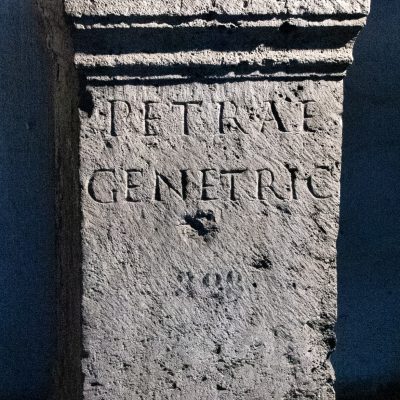
Altar to Petra Genetrix from Carnuntum

Petrae / Genetrici / P[ublius] Ael[ius] Nigri/nus sacerd[os] / v[otum] s[olvit].
To the Petra Genetrix, Publius Aelius Nigrinus, priest, has fulfilled his vow.

Flavius Aper altar (CIMRM 1584)

D[eo] S[oli] i[nvicto] M[ithrae] / pro sal[ute] d[omini] n[ostri] Gallieni p[ii] f[elicis] / invicti Aug[usti] Fl[avius] Aper v[ir] e[gregius] l[ibens] m[erito].
To the invincible god Mithras, for the salvation of our pious and happy master Gallienus, the invincible emperor, Flavius Aper, a remarkable man [= knight], willingly and justly.

Altar with inscription and symbolic figures from Ptuj

Invict[o] Mithrae / et Transitu dei / Theodorus p[ublici] p[ortorii] / scrut[ator] stat[ionis] Poet[ovionensis] / ex visu.
To the invincible Mithras and for the passage [transitus] of the god, Theodorus, scrutator of the customs of the Poetovio station, following a vision.

Mithras taurophorus of Ptuj

Transitu / C[aius] Caecina / Calpurnius / temp[lum] redemi[t] et restitu[it].
For the Transitus, Caius Caecina Calpurnius bought back the temple and restored it.

Tauroctonia de Carnuntum (III ?)

T[itus] Fl[avius] Viato[r] condi fe[cit].
Titus Flavius Viator had (this) built.

Tauroctony from Symphorus and Marcus from Aquincum

[Sy]mphorus et M[arcus].
Symphorus and Marcus.

Altar of Carnuntum by Sacidius Barbarus

Invicto Mitrhe / C. Sacidius Ba/rbarus [c[enturio]] leg[ionis] / XV Apol[linar[is]] / ex voto ....
To the invincible Mithras, Caius Sacidius Barbarus, centurion of the XV Apollinaris legion, upon a vow.

See all Mithraicinscriptions from Pannonia

References

Back to Top