This site uses cookies to offer you a better browsing experience.
Find out more on how we use cookies in our privacy policy.

 
Provincia

Mithras in Pannonia inferior

Along the lower sectors of the middle Danube, Pannonia inferior became a major centre of Mithraic activity in the frontier provinces.

Evidence from Pannonia inferior reflects the strong implantation of Mithraic cults within military, administrative and urban environments connected to the Danubian frontier. Numerous monuments and inscriptions illustrate the importance of the province within the wider religious networks of the Roman military world.
Mithraic monuments of Pannonia inferior


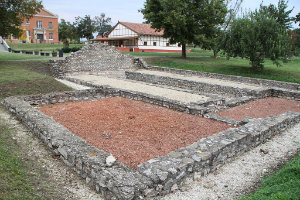
Mithraeum VI of Aquincum

A sixth temple dedicated to Mithras has been identified for the first time in the military sector of the ancient Roman city of Aquincum.


Mithraeum II of Aquincum in Victorinus’s house

This temple of Mithras in Aquincum was located within the private house of the decurio Marcus Antonius Victorinus.

CIMRM 1750


Mithraeum IV of Aquincum

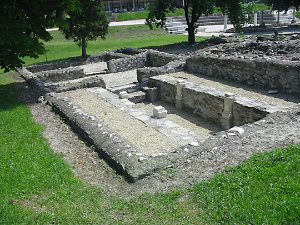
The Mithraeum of Symphorus and Marcus, in Óbuda, Budapest, has been restored to public view in 2004 and, while well presented, it has been heavily restored.

CIMRM 1767


Mithraeum of Sárkeszi

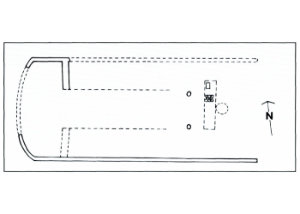
The Sárkeszi mithraeum is unusual for its large dimensions and its semicircular eastern wall.


Tauroctony from Sárkeszi

In this relief found in the Sárkeszi Mithraeum, Cautes and Cautopates hold an Amazon shield.


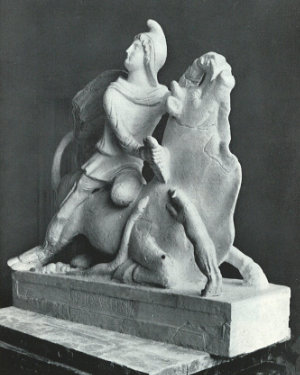
Tauroctony from Symphorus and Marcus from Aquincum

This sculpture of Mithras killing the sacred bull bears an inscription that mentions the donors.

CIMRM 1768


Tauroctony from Dunaújváros (Intercisa)

The relief of Mithras slaying the bull of Danaújváros was found broken into three parts in a tomb looted in antiquity.

CIMRM 1838


Altar of Libella, Budapest

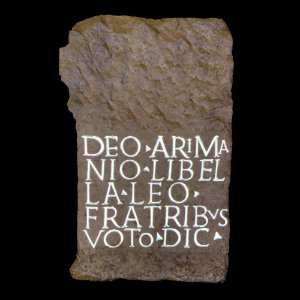
The dedicant of this altar to the god Arimanius was probably a slave who held the grade of Leo.

CIMRM 1773


Petrogenia of Aquincum

In Aquincum petrogenia, Mithras holds the usual dagger and torch as he emerges from the rock.

CIMRM 1758


Mithraeum V of Aquincum

The fifth mithraeum from Aquincum has been found in the house of a military tribune.


Second petrogeny of Aquincum

Another sculpture of Mithras rock-birth from the Mithraeum of Victorinus, in Aquincum.

CIMRM 1756


Altar to Transitus from Sárkeszi

This is one of the altars erected by Septimius Valentinus, in this case, to the transitus of Mithras.

CIMRM 1811

See all Mithraic monuments in Pannonia inferior

Places in Pannonia inferior


Aquincum

Aquincum was an ancient city, situated on the northeastern borders of the province of Pannonia within the Roman Empire.


Budaors

Budaörs is a town in Pest County, in the metropolitan area of Budapest, Hungary. Before the Romans, the Celtic tribe of Eraviscus occupied the area for about 100 years.


Intercisa

Intecisa was a military camp and town located in the Roman Province of Pannonia, now known as Dunaújváros, bordering Western Hungary.


Sárkeszi

Sárkeszi is a village in Fejér county, Hungary.


Teutoburgium

Dalj is a village on the Danube in eastern Croatia, near the confluence of the Drava and Danube, on the border with Serbia.

Inscriptions from Pannonia inferior

Tauroctony from Symphorus and Marcus from Aquincum

[Sy]mphorus et M[arcus].
Symphorus and Marcus.

Altar of Libella, Budapest

Deo Arima/nio Libel/la leo / fratribus / voto dic[avit].
To the god Arimanius, Libella, a Lion, dedicated this as promised for his brothers.

Altar to Transitus from Sárkeszi

Tra[n]sit[u D[ei]] / Sep[timius] Va/lenti/nus / opt[io].
To the transit of the God, Septimius Valentinus, optio.

Altars to Cautes and Cautopates from Aquincum

Deo Cauti / M. Ant[onius] Victorinus / dec[urio] col[oniae] / Aq[uinci] aedilis.

Deo Cau/topati / M. Ant[onius] / Victori/nus / dec[urio] col[oniae] / Aq[uinci] / aedilis.
To Cautes, Marcus Antonius Victorinus, decurion of the colony of Aquincum, aedile.

To Cautopates, Marcus Antonius Victorinus, decurion of the colony of Aquincum, aedile.

Altar of Iulius Rasci from Borovo

Invicto / Mitre / Iul[ius] Rasci or Racci /[—].
To the Invincible Mithras Iulius Rasci[—] or Racci[—]...

Altar to Sol by brothers of Budaors

Sol[i] Soc[io] / M[arcus] Aur[elius] Fron/tinianus / et M[arcus] Aur[elius] Fr[o]/nto mil[ites] leg[ionis] /II Ad[iutricis] fratres / templ[um] const[ituerunt] / Antonino / IIII co[n]s[ule].
To the sun god, Marcus Aurelius Frontinianus and Marcus Aurelius Fronto, soldiers of the Second Adiutrix Legion, brothers, have built a temple in the consulship of Antoninus IV.

Altar from Aquincum by Castinus

Deo Invicto / Mitrae C[aius] / Iul[ius] Casti/nus leg[atus] Augg[ustorum] / pr[o] pr[aetore].
To the invincible god Mitra, Caius Iulius Castinus, legate prefect of the emperors.

Altar of Veturius Dubitatus from Dalj

I[nvicto] d[eo] M[ithrae] / [Ve?]t[urius] Du/[bi]tatus / [vet[eranus]] a[lae] I [primae] c[ivium] R[omanorum] / [e]x dupl[icario] / v[otum] s[olvit] l[ibens] m[erito].
To the Invincible God Mithras, Veturius Dubitatus, veteran of the first ala of the Roman citizens, ex duplicarius, fulfilled his vow willingly and deservedly.

CIMRM 1743

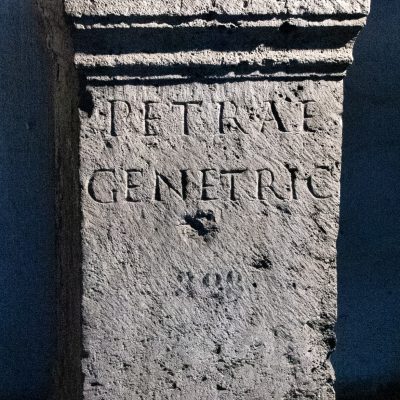
Petrae genetrici.
To the Mother Rock.
Back to Top