Your selection in monuments gave 186 results.
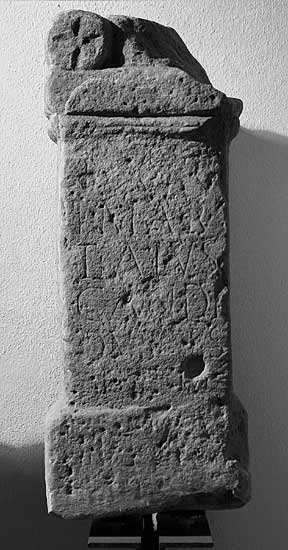
Bright red sandstone altar from Mithraeum II at Stockstadt dedicated to Deo Cauti by Titus Martialius Candidus, found near the north podium.
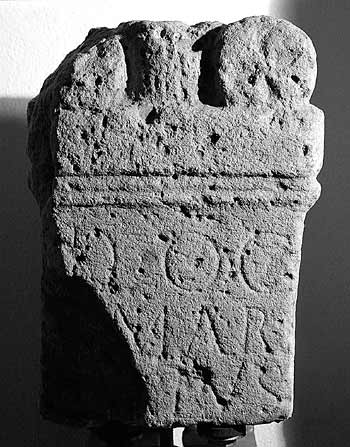
These two inscriptions by a certain Titus Martialius Candidus are dedicated to Cautes and Cautopates.

This altar from Grumentum in Lucania was dedicated to Sol Invictus Mithras by Titus Flavius Saturninus, an evocatus in imperial service.
Sandstone altar from the Mithraeum of Vindobala bearing a dedication to Sol Invictus and Mithras by the prefect Aponius Rogatianus.
This sandstone altar from the Mithraeum of Vindobala (modern Rudchester) preserves a dedication to the Invincible Mithras by P. Aelius Titullus, prefect of a cohort.
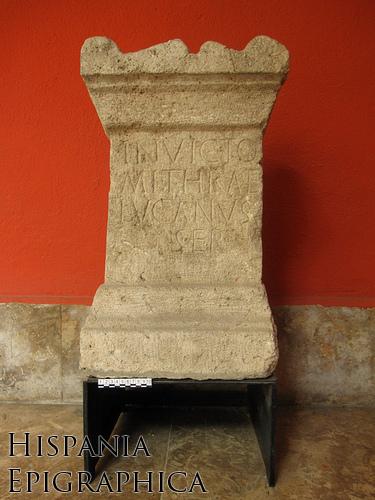
This altar found in Benifaió, València, was erected by a slave called Lucanus.
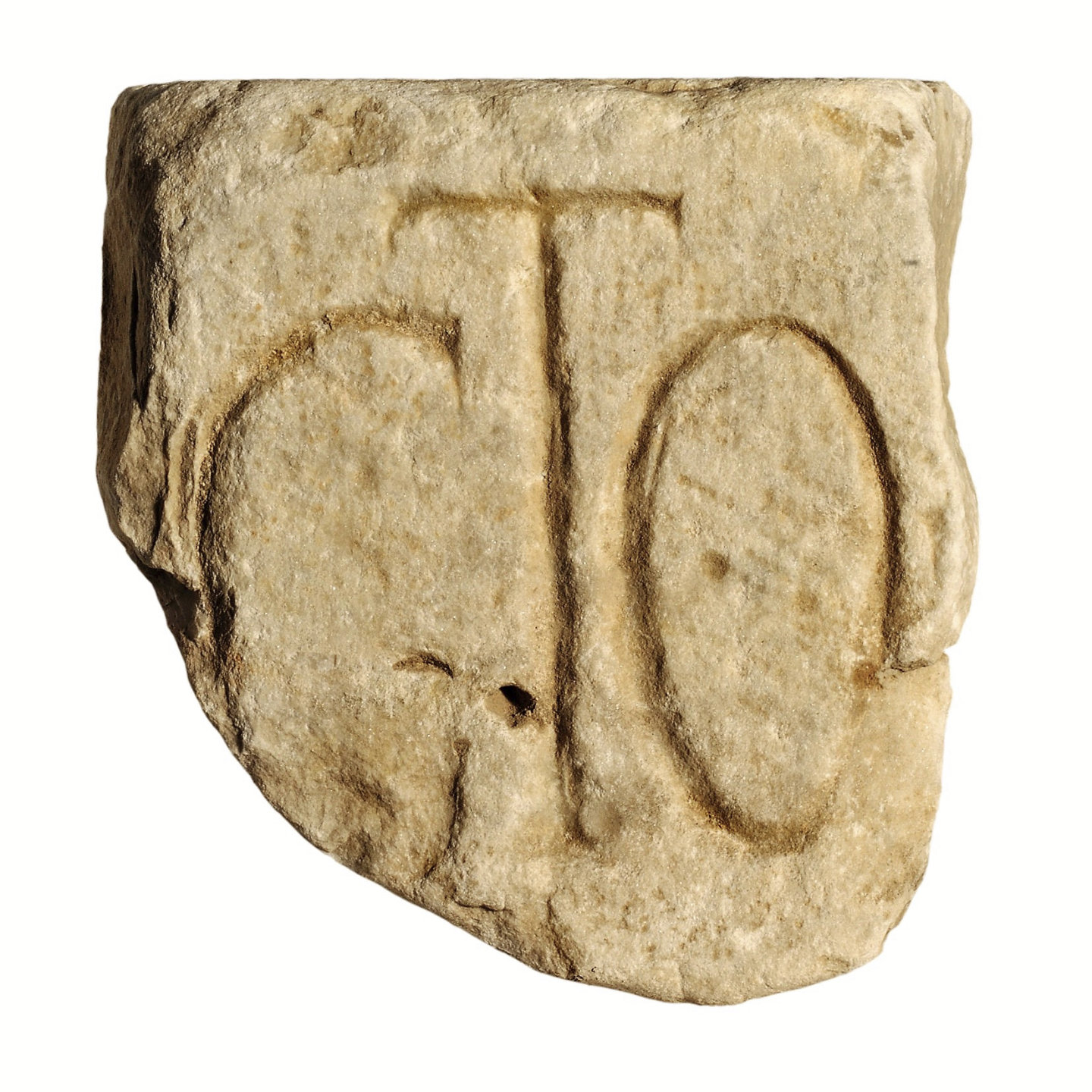
This fragment of the base of a statue from Tarragona, Spain, bears an inscription which appears to be dedicated to the invincible Mithras.
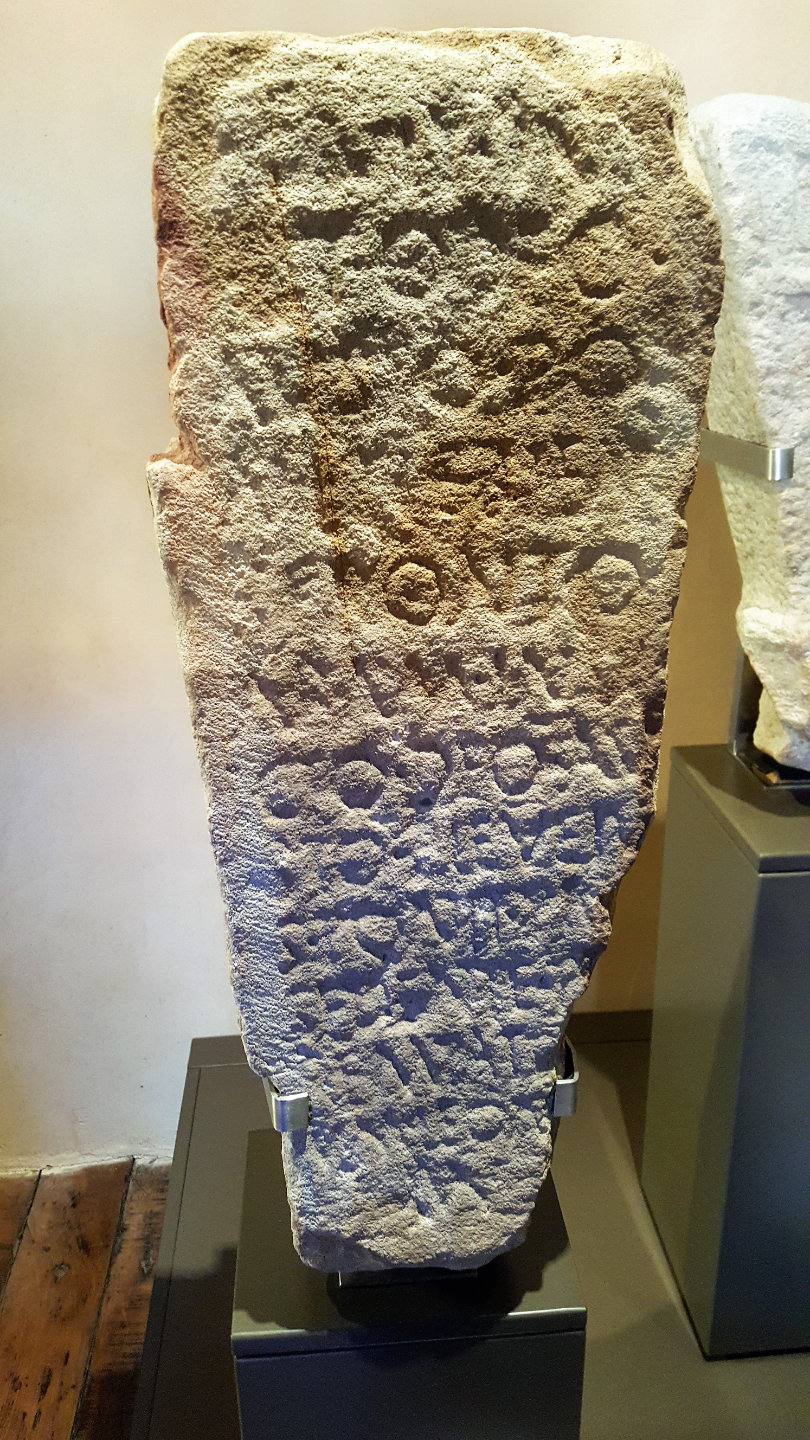
The monument of San Juan de la Isla (Asturias) devoted to Mithras was preserved in the portico of the main church until 1843.
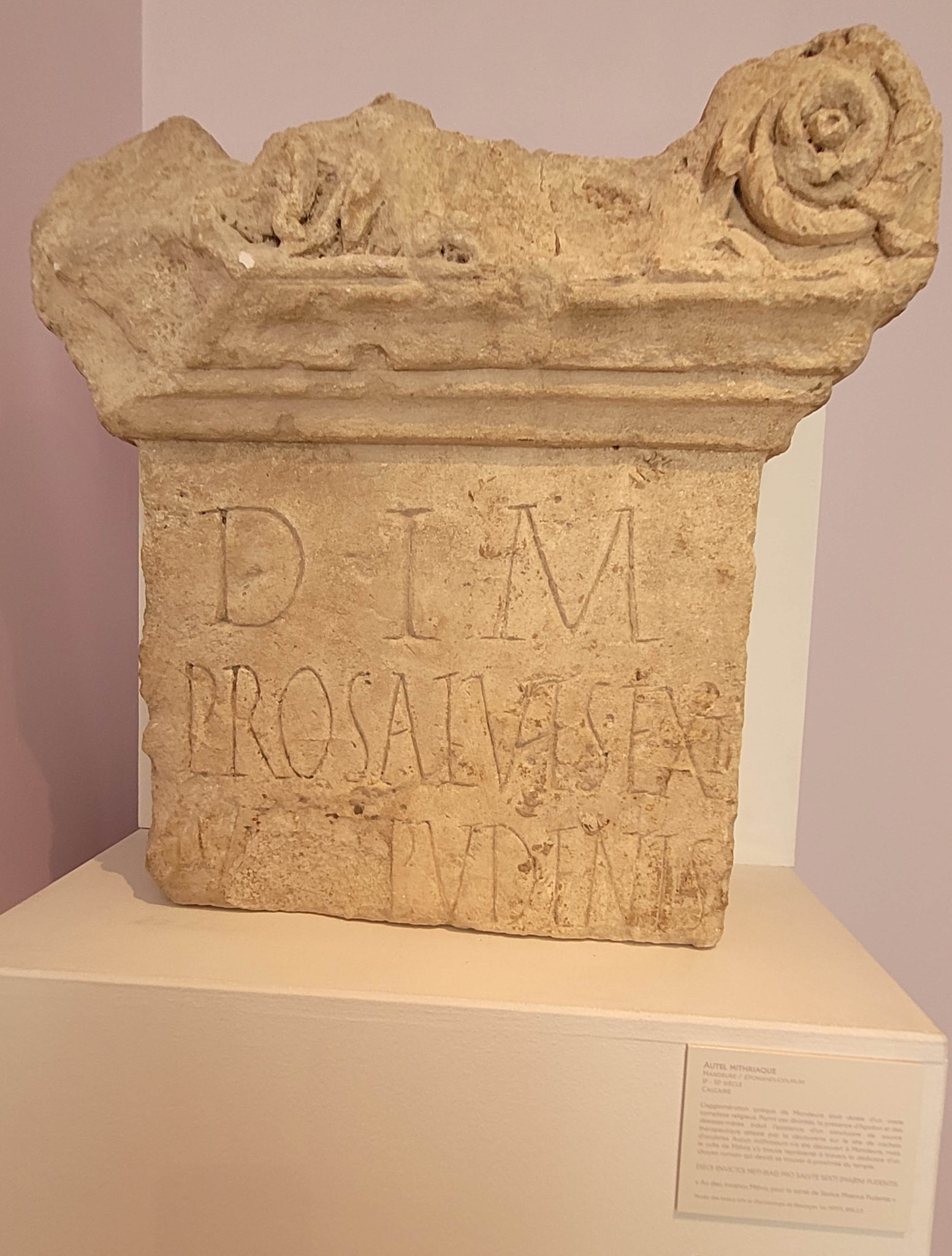
Stela dedicated to Mithras Invictus, found in 1895–1896 at Epamantodurum (modern Mandeure), in the territory of the civitas Sequanorum (Gallia Belgica). The inscription records a vow to Mithras Invictus made for the welfare of Sextus Maenius Pudens.
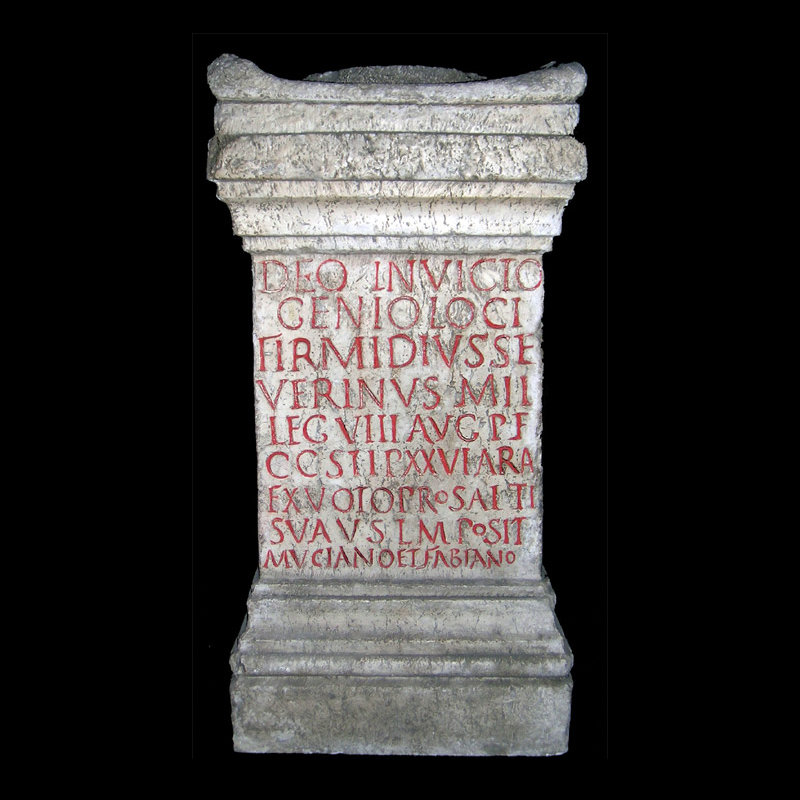
This limestone altar bears an inscription from its donor, Firmidius Severinus, in honour of Mithras after 26 years of service in the Legio VIII Augusta.
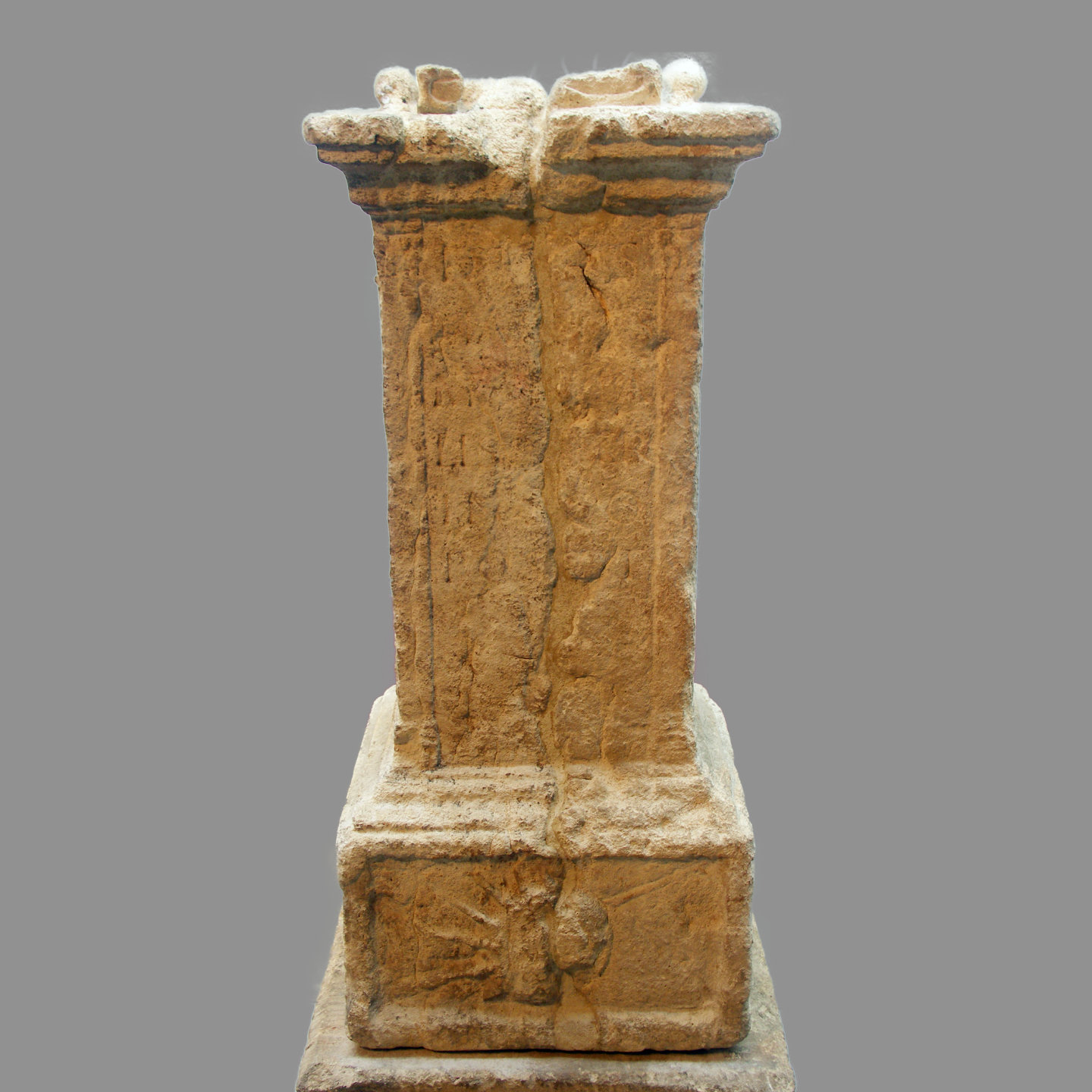
This stone altar fround in Altbachtal bears an inscription by a certain Martius Martialis.
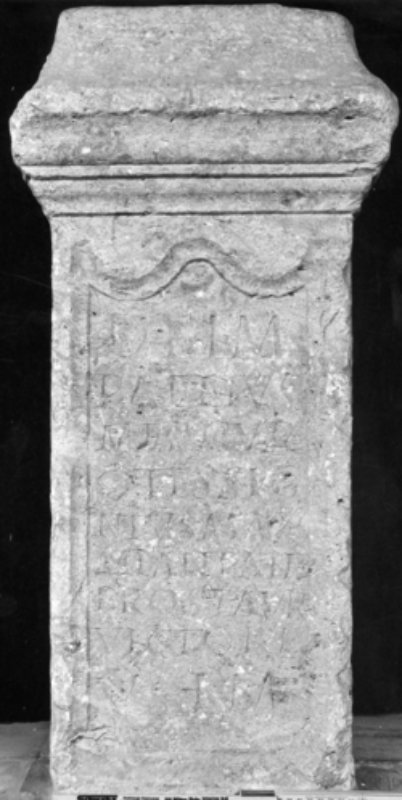
This altar to Mithras found in Aquilieia mentions several persons of a same community.
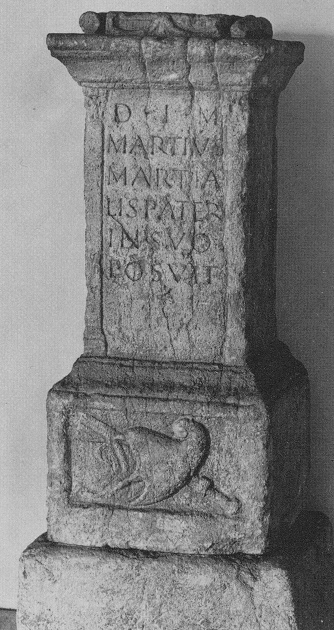
The altar with a Phrygian cap and a dagger from Trier was erected by a Pater called Martius Martialis.
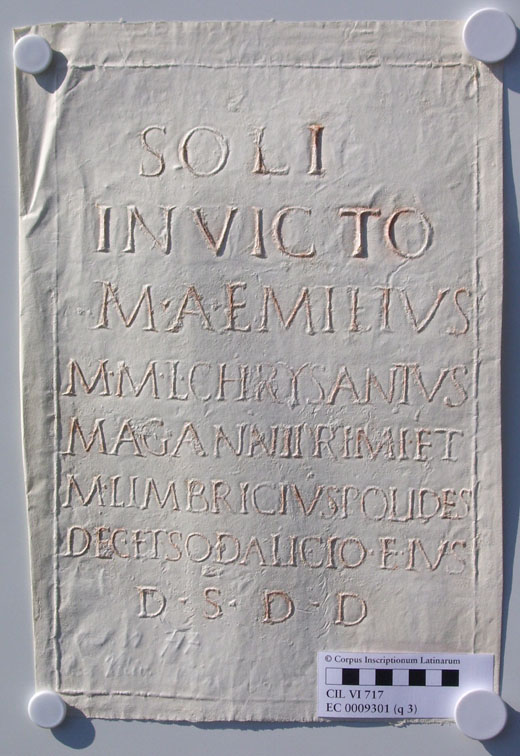
Aemilius Chrysanthus shares the expenses of this monument with a decurio named Limbricius Polides.
This small cippus to Zeus, Helios and Serapis includes Mithras as one of the main gods, although some authors argue that it could be the name of the donor.
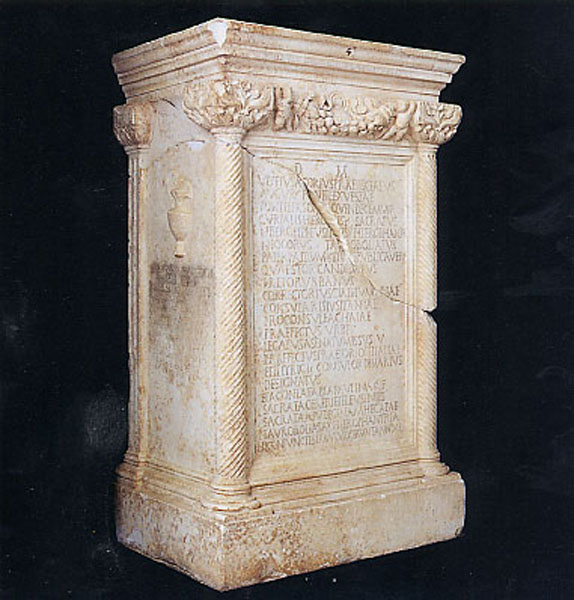
The marble altar mentions Vettius Agrorius Praetextatus as Pater Sacrorum and Patrum and his wife Aconia Fabia Paulina.
This monument was erected on the occasion of the elevation of a member to the Mithraic grade of Perses.
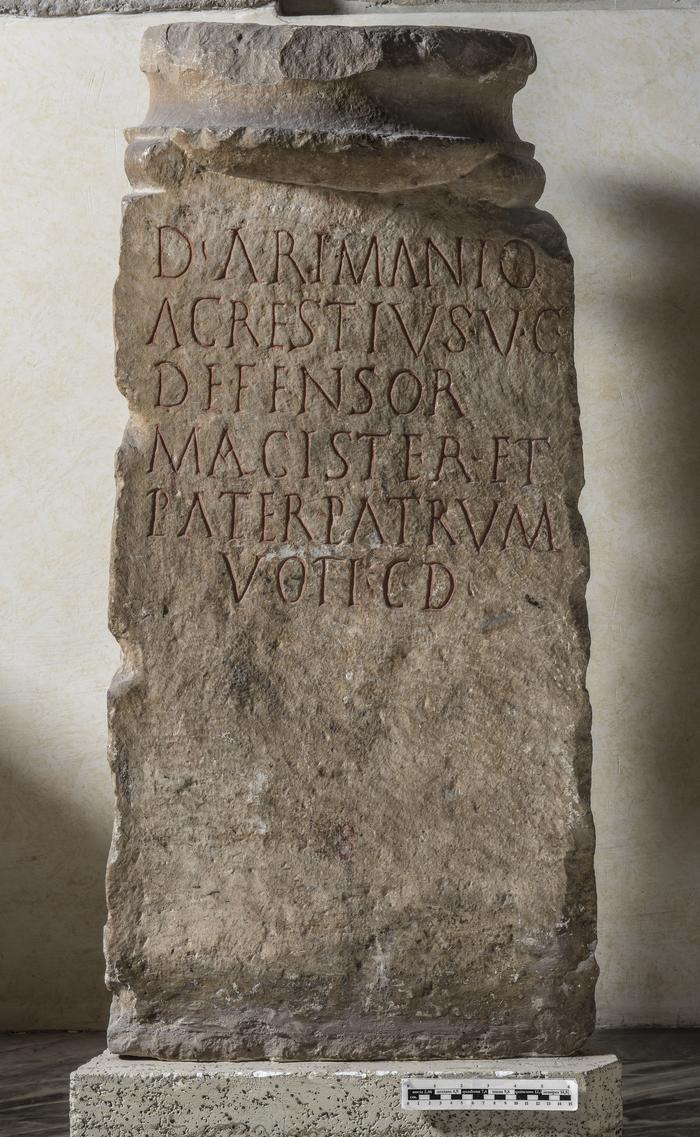
This altar mentioning the god Arimanius was found in 1655 at Porta San Giovanni, on the Esquilino.
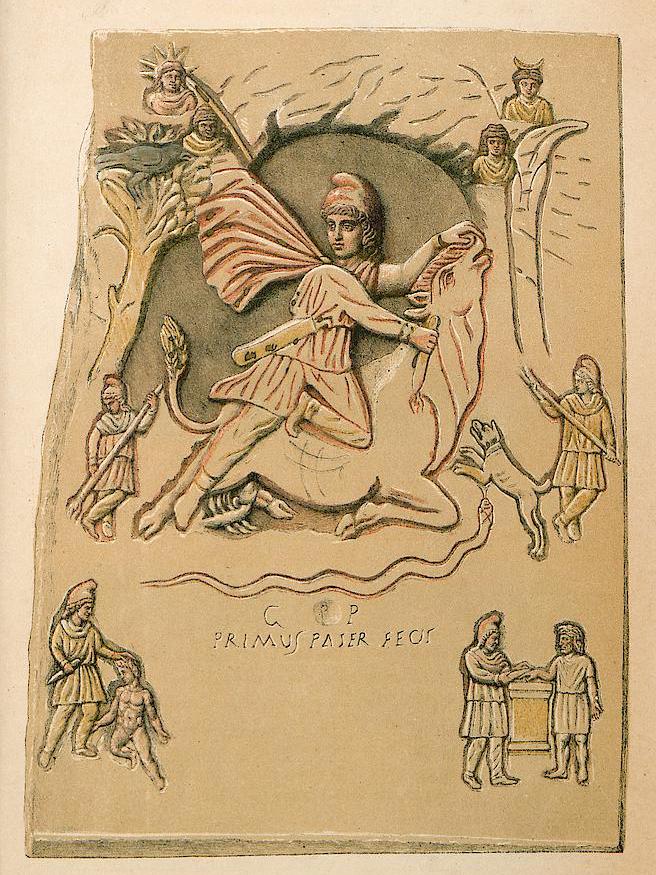
The relief of Mithras slaying the bull found on the Esquiline Hill includes two additional scenes with Mithras and two other figures.
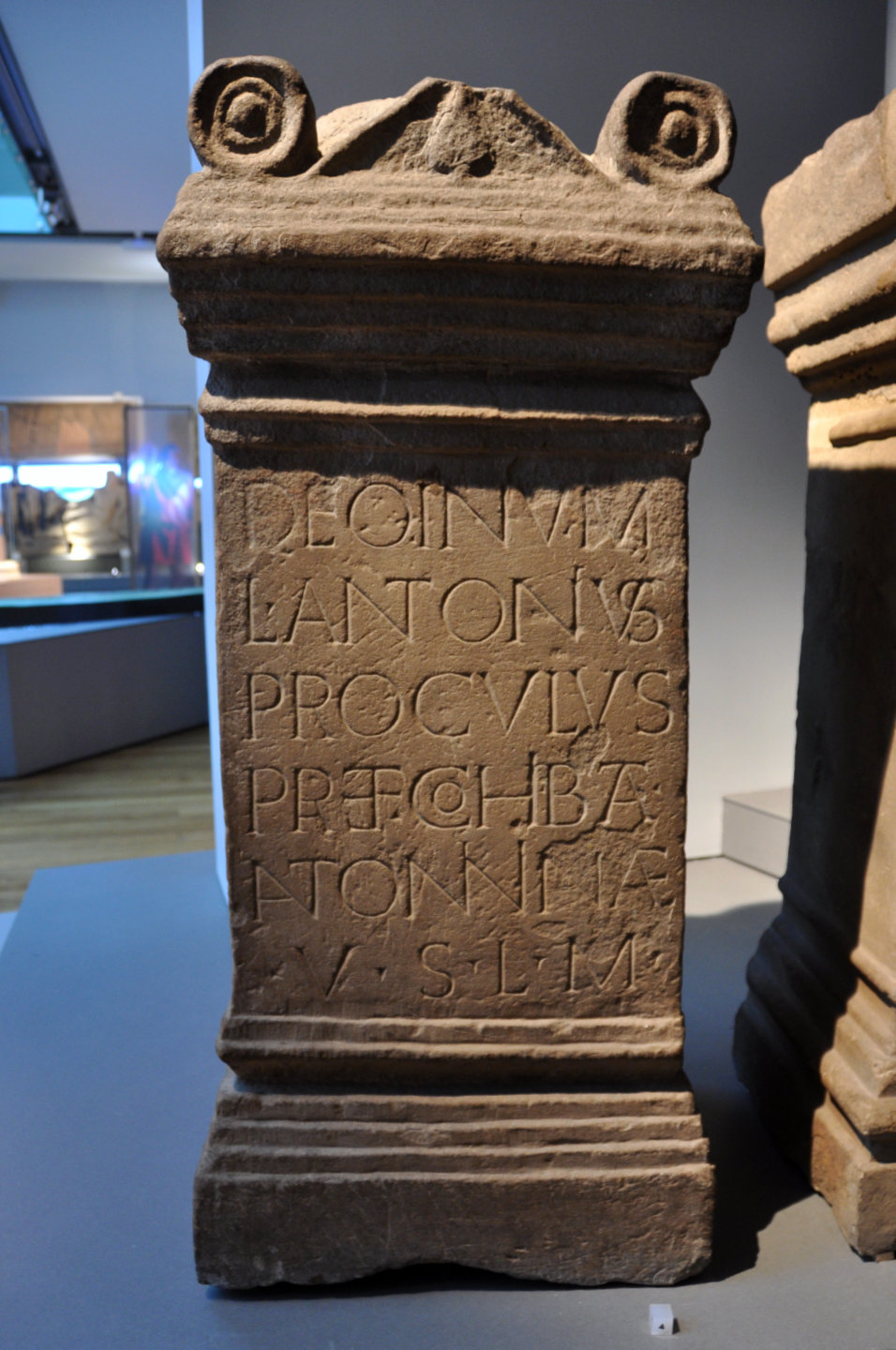
One of the three altars to Mithras found at the Mithraeum of Carrawburgh fort.
