Your selection in monuments gave 428 results.
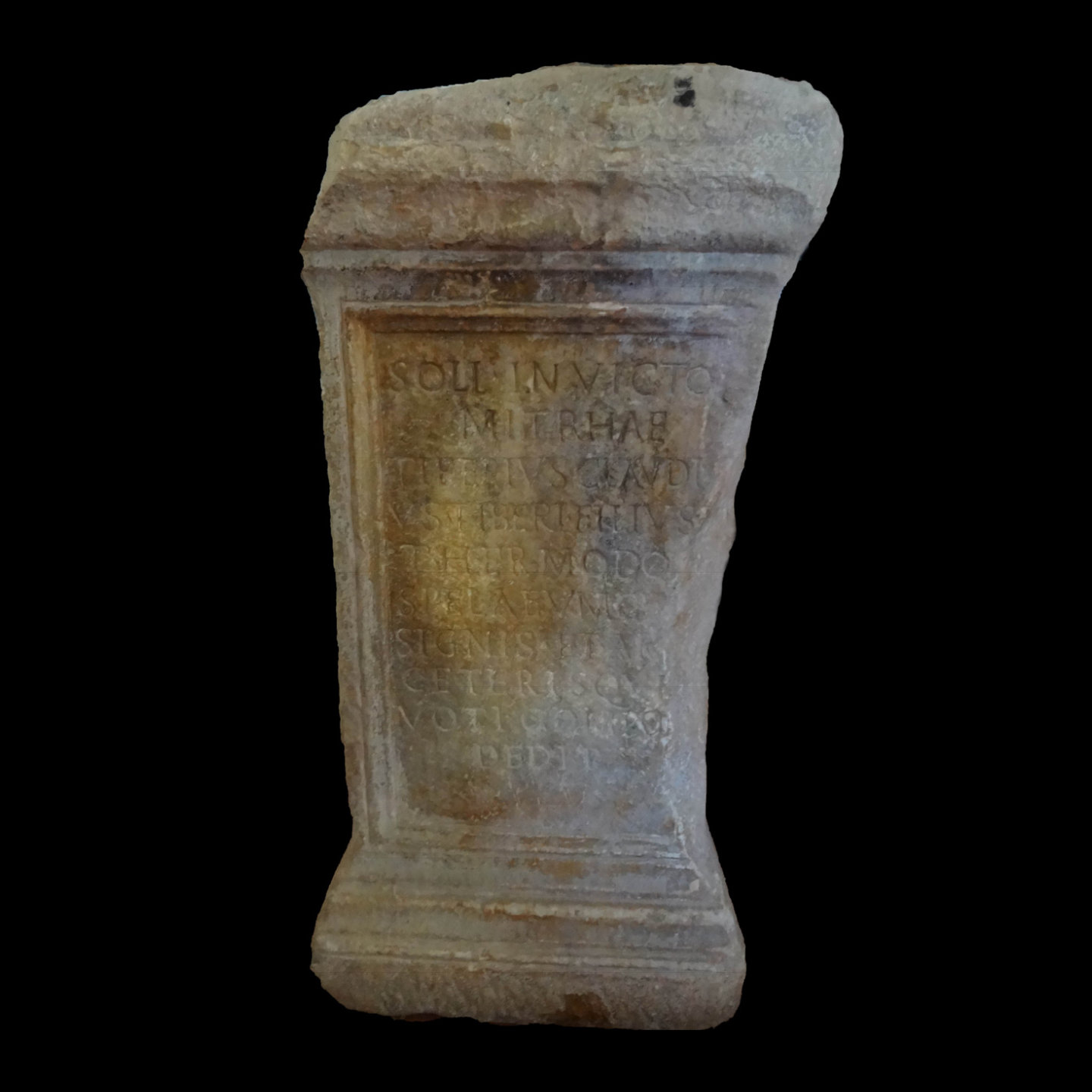
The donor of this Mithraic inscription from Bolsena, a certain Tiberius Claudius Thermoron, is known from two other monuments.
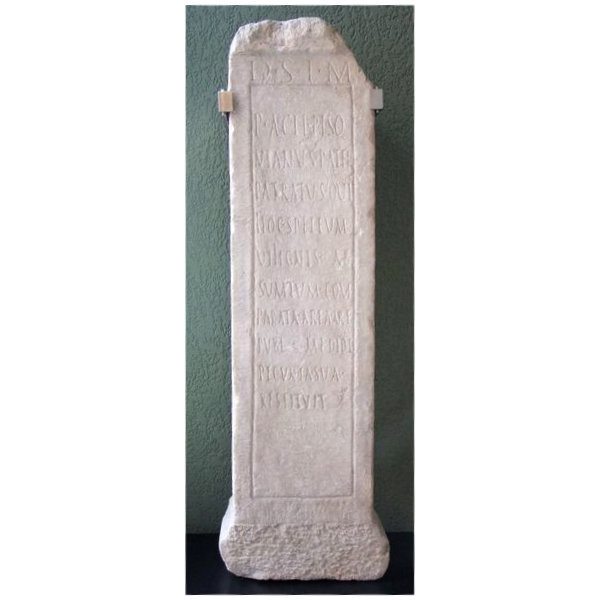
This high stele by a certain Acilius Pisonianus bears an inscription commemorating the restoration of a Mithraeum in Mediolanum, today's Milan.
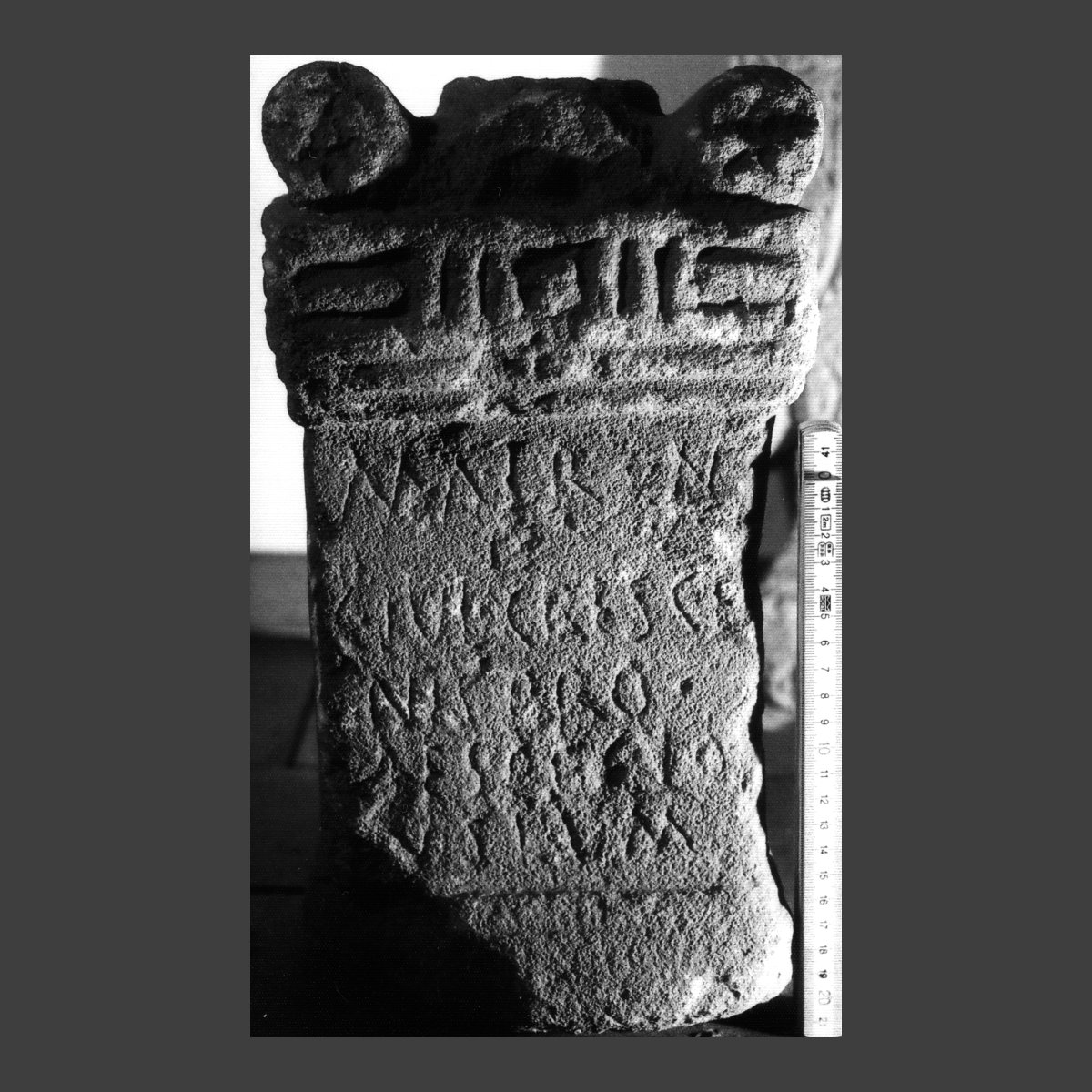
This fragmented altar of a certain Caius Iulius Crescens, found in the Mithraeum of Friedberg, bears an inscription to the Mother Goddesses.
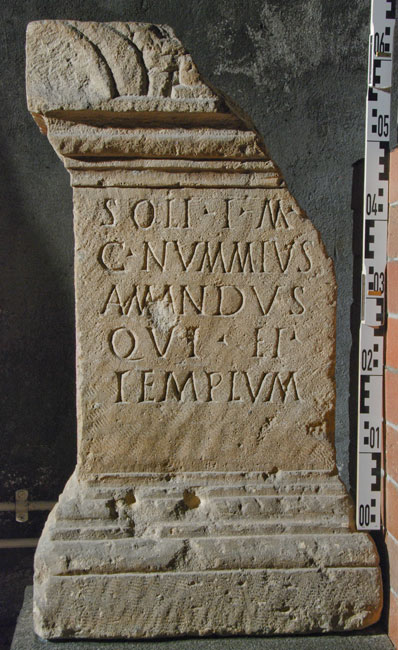
This altar dedicated to the Invincible Sol Mithra was found in 1878 in a cemetery in Alba Iulia.
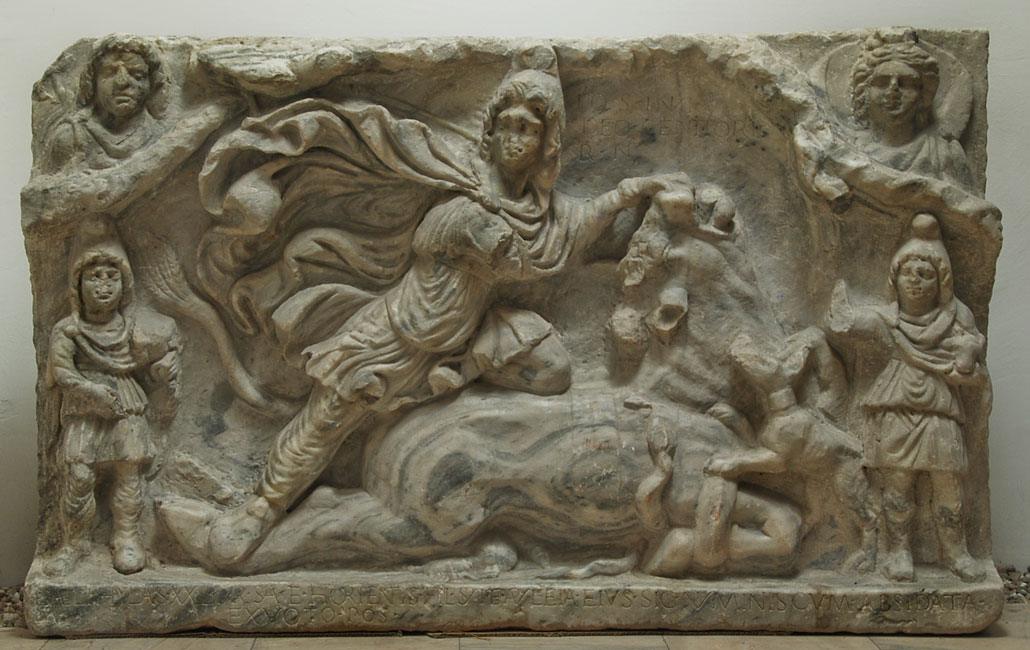
This monument bears an inscription by a certain Lucius Aelius Hylas, in which he associates Sol Invictus with Jupiter.
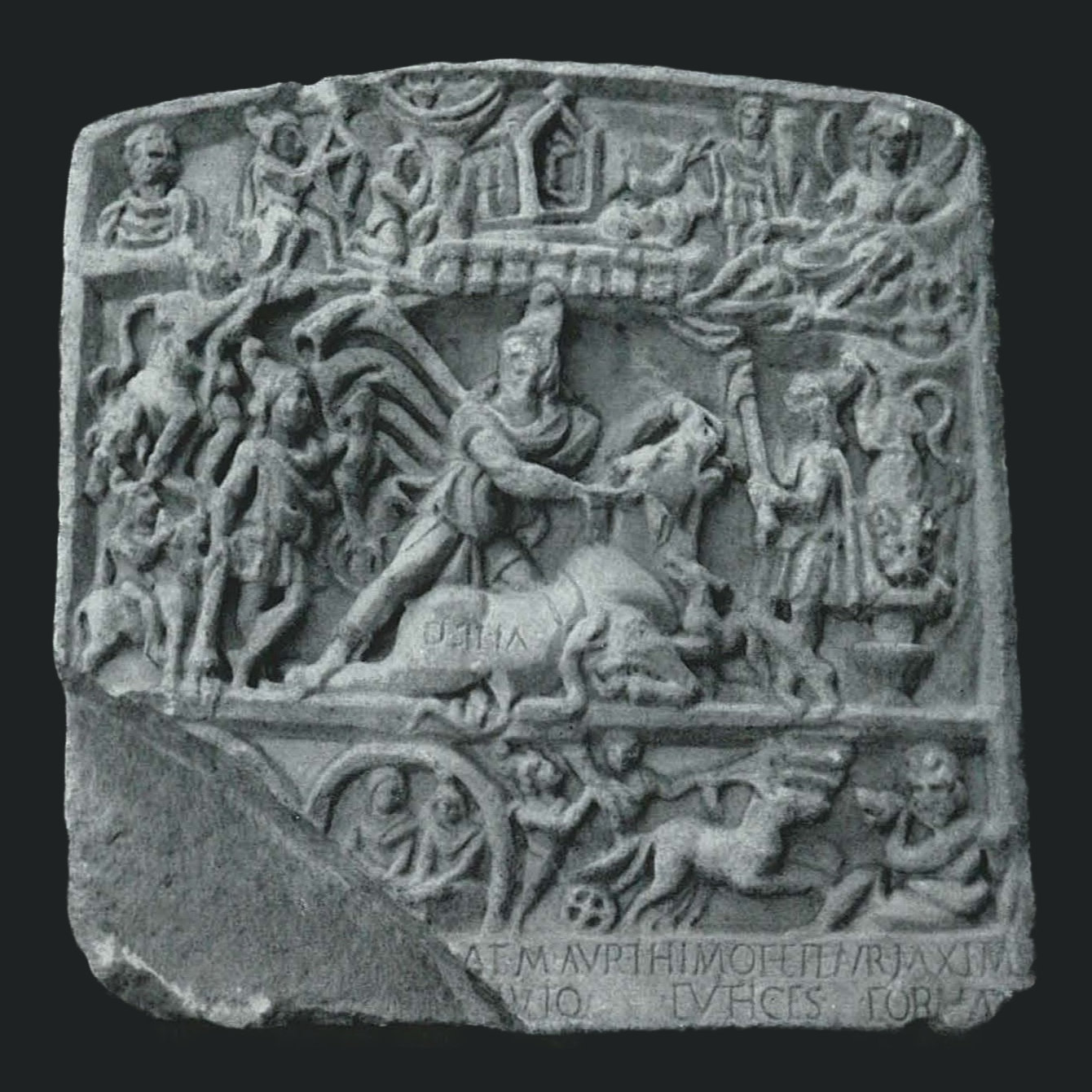
This marble relief of Mithras killing the bull was made by a freedman who dedicated it to his old masters.

In the altar that Titus Tettius Plotus dedicated to the invincible God, he called himself pater sacrorum.
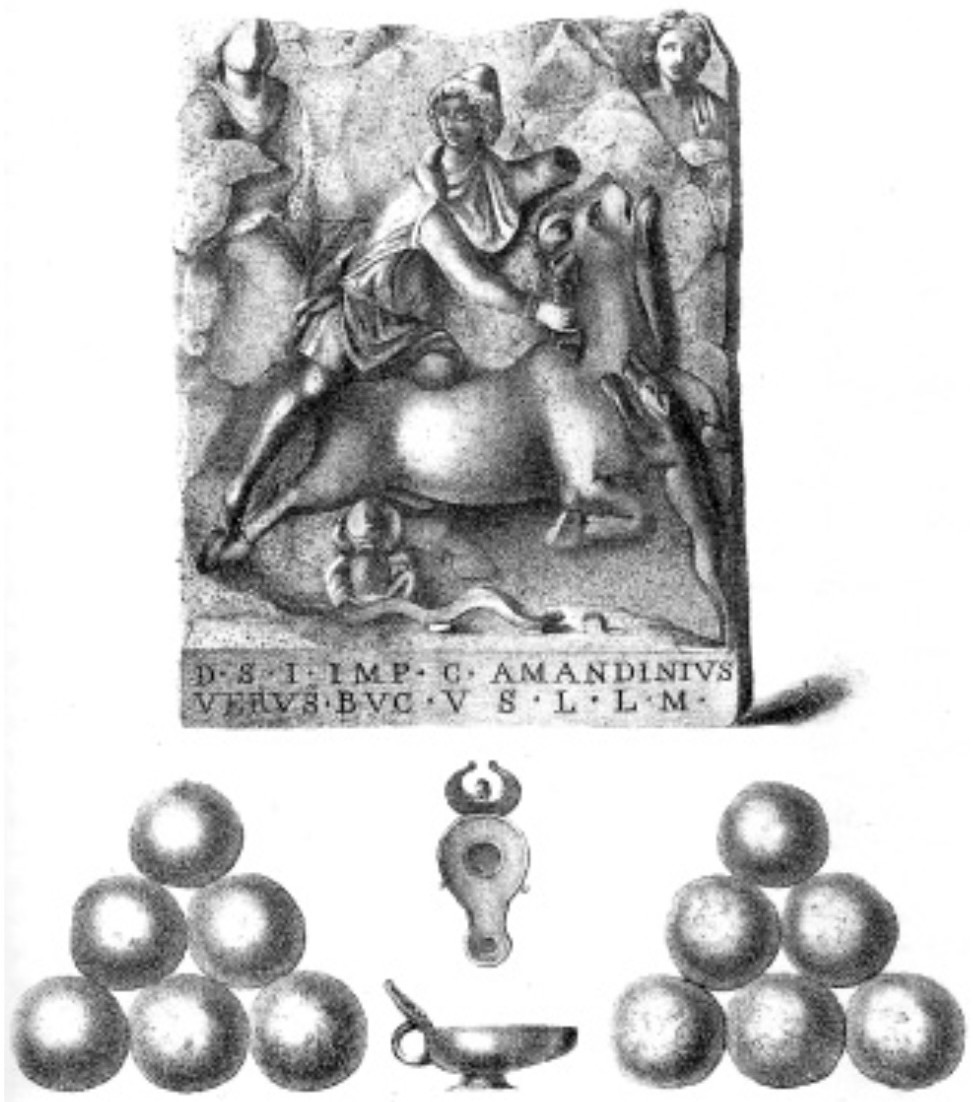
Workman digging in a field near Dormagen found a vault. Against one of the walls were found two monuments related to Mithras.
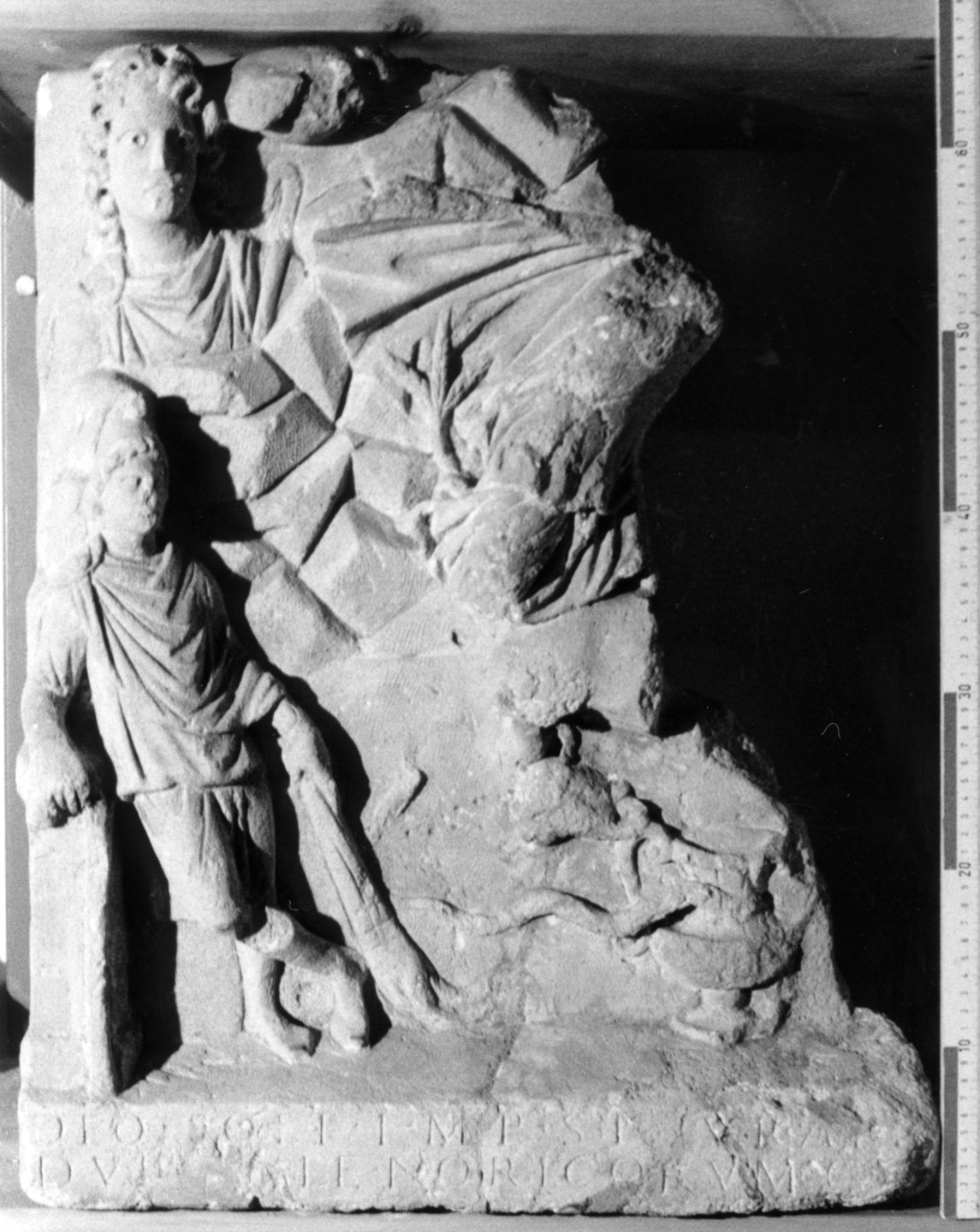
This second tauroctony, found in the Mithraeum of Dormagen, was consecrated by a man of Thracian origin.
This inscription to Zeus Helios Mithras Serapis by a certain Ioulios Pyrros is now lost.
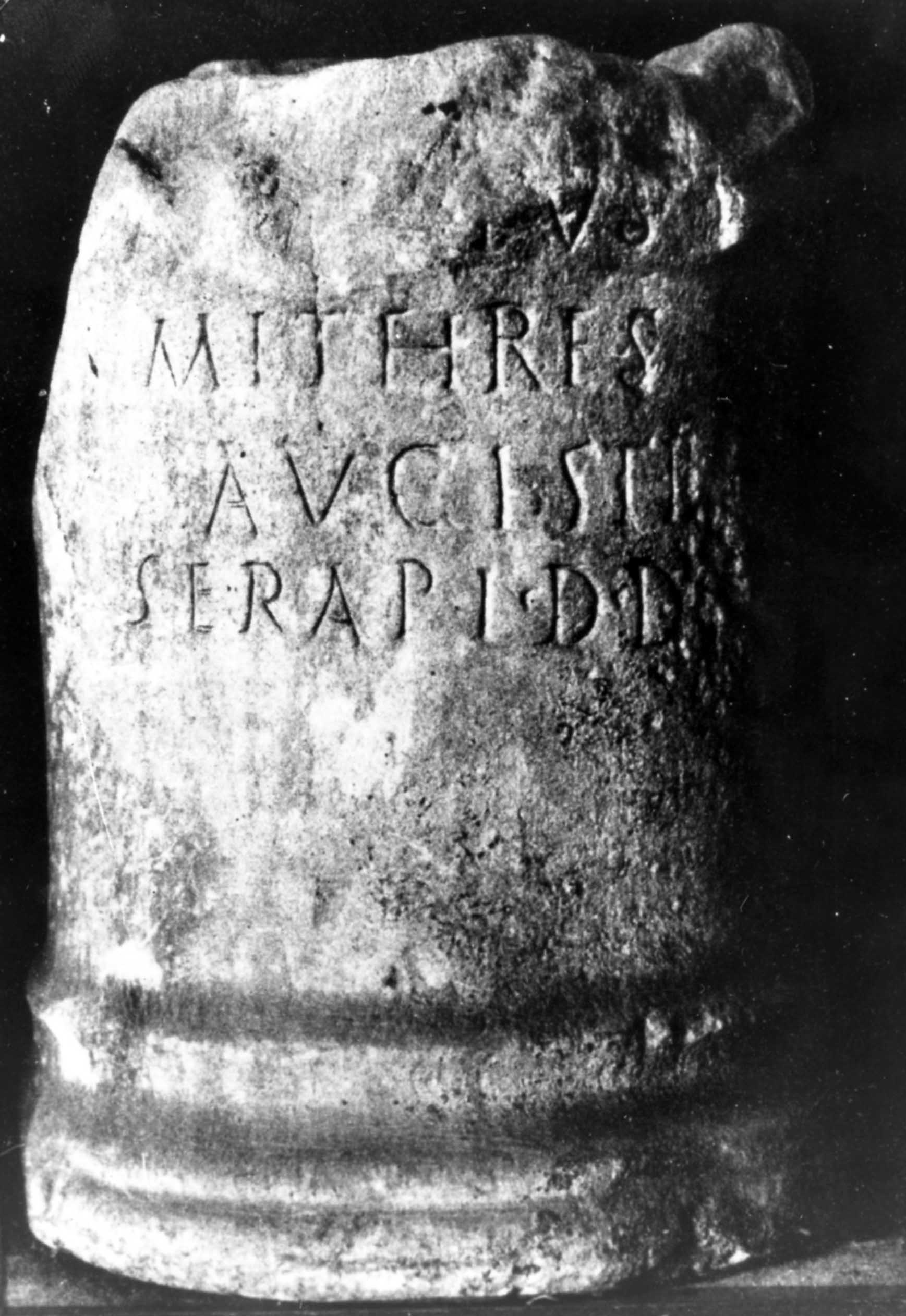
This monument, found in the Domus Flavia in Rome, bears an inscription by a certain Aurelius Mithres.
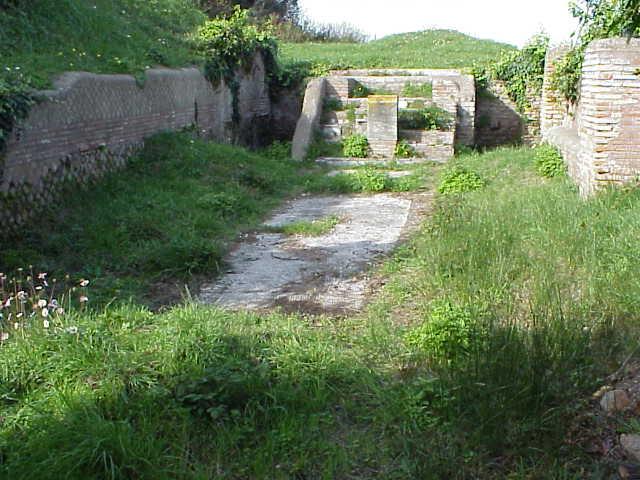
A mosaic of Silvanus, dated to the time of Commodus, was found in a niche in a nearby room of the Mithraeum in the Imperial Palace at Ostia.
In this inscription, found in Angera in Lombardy, Mithras is referred to by the unicum 'adiutor'.
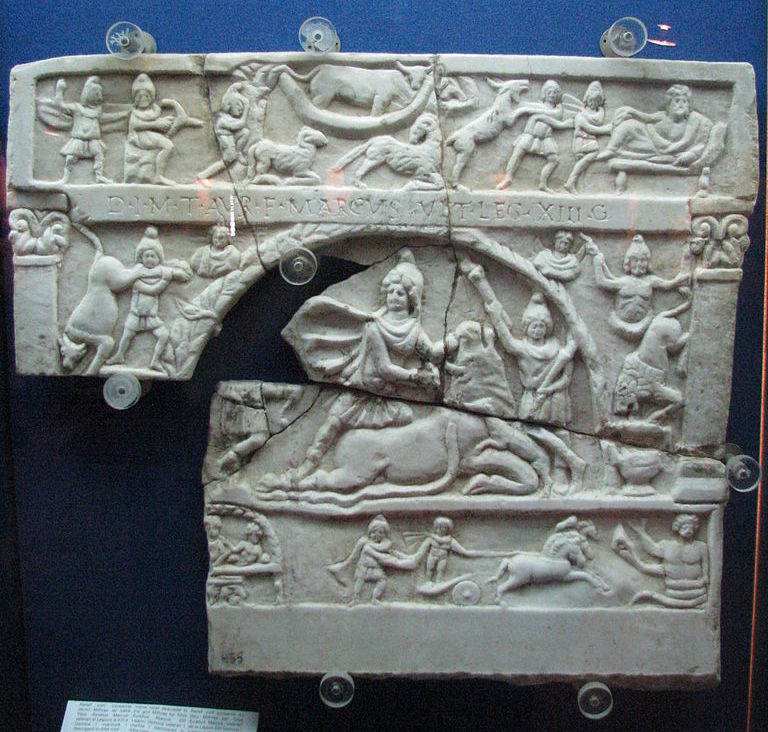
This marble relief from Alba Iulia contains numerous scenes from the myth of Mithras.
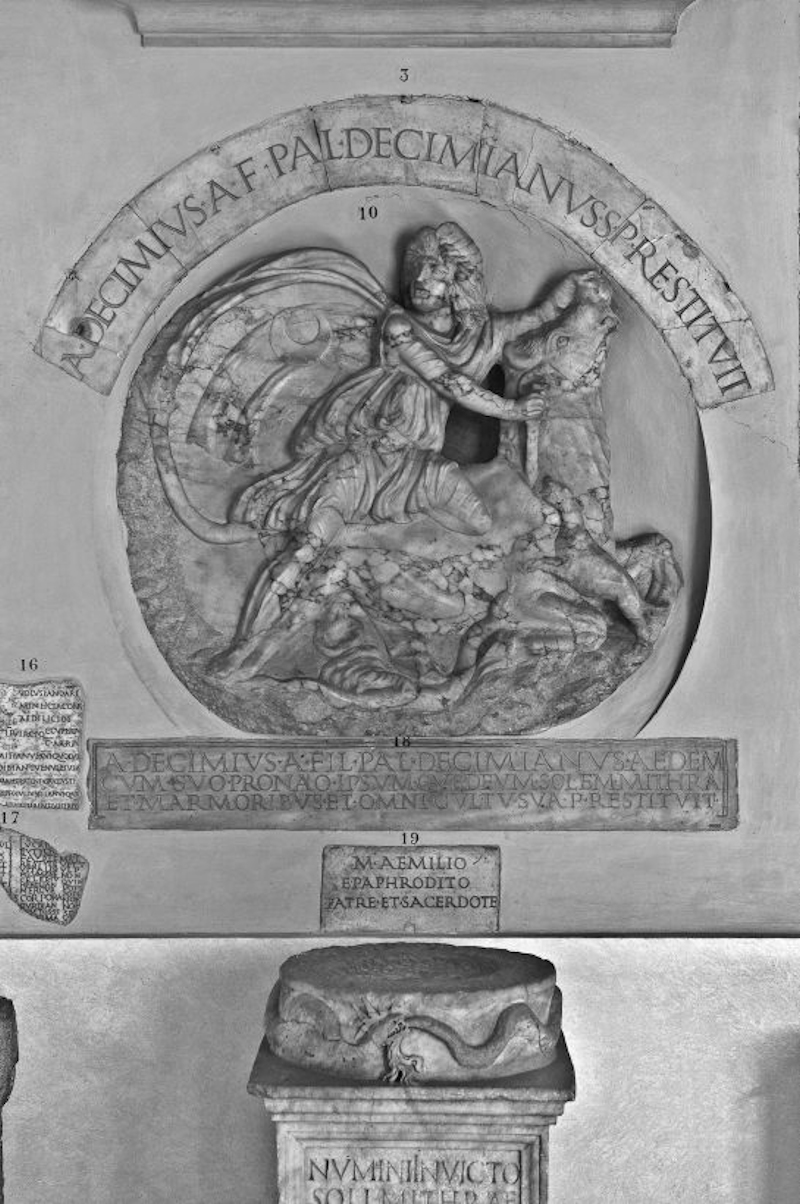
The relief of Mithras slaying the bull from the Mithraeum of the Seven Spheres was discovered in 1802 by Petirini by order of Pope Pius VII.
This inscription found in the Mithraeum of the Seven Spheres mentions the Pater Marco Aemiliio Epaphrodito known from other monuments in Ostia.
Only a fragment of this marble group of Mithras killing the bull remains.
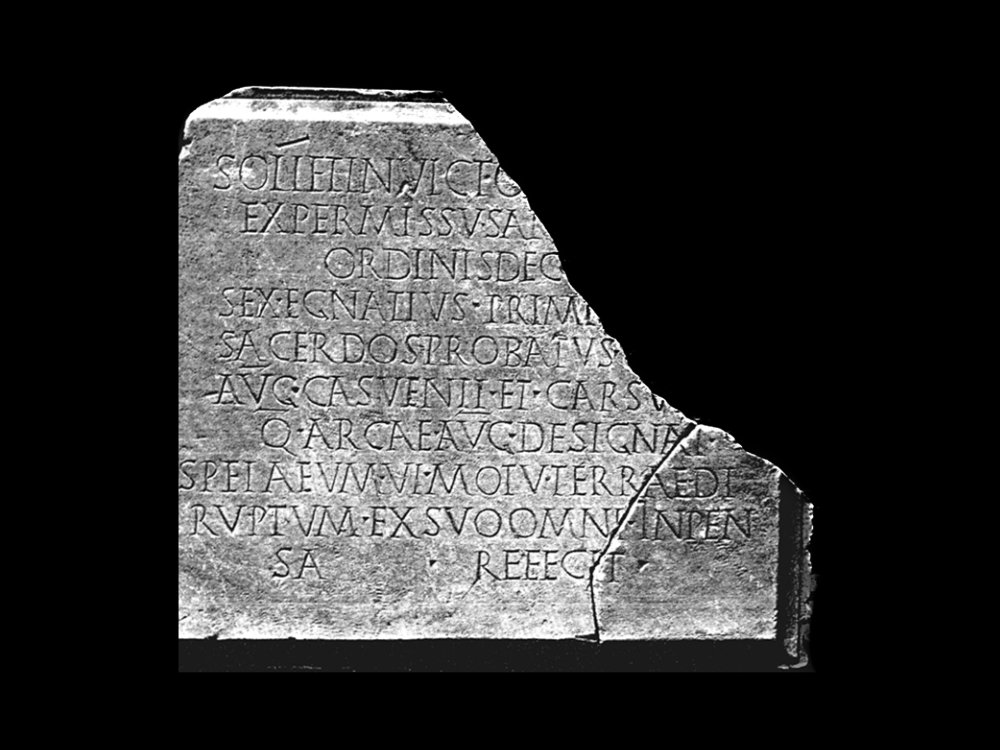
Marble plaque with inscription of a sacerdos probatus to Sol and the god Invictus Mithras.
This lost monument bears an inscription to Cautes by a certain Tiberius Claudius Artemidorus.
Second Mithraic monument dedicated by the Kastos family, found not far from the Arco di S. Lazzaro, in Rome.
