Your selection gave 273 results.

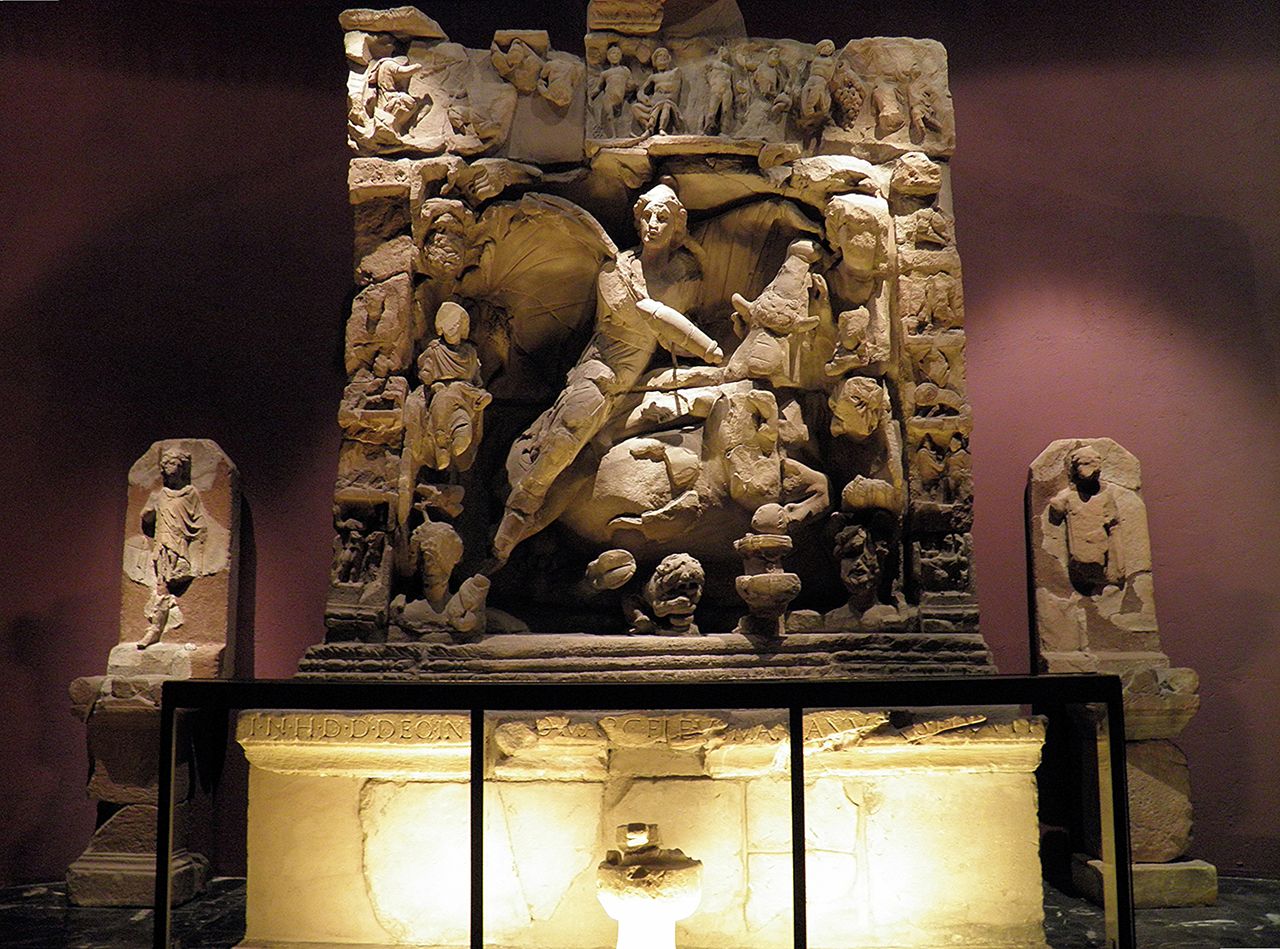
The base of these sandstone reliefs bears an inscription referring to a certain Marcellius Marianus.
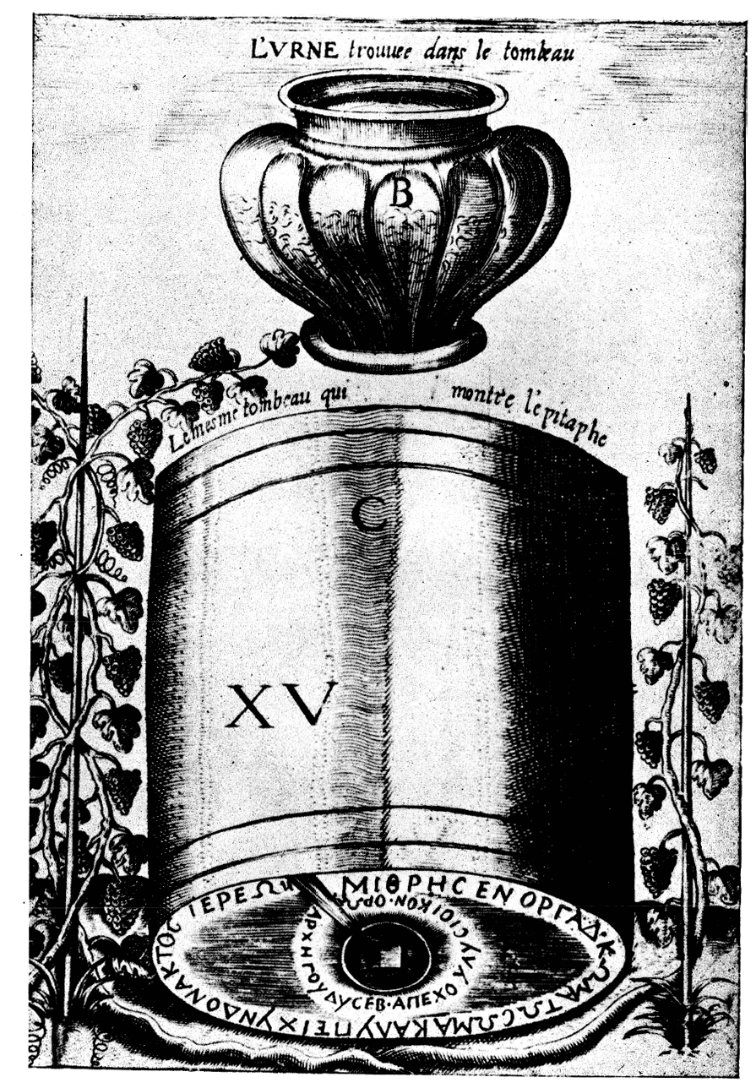
This funerary inscription, engraved on a stone urn discovered near Roman Dijon, mentions a certain Chyndonax, described as a priestly leader of Mithras.
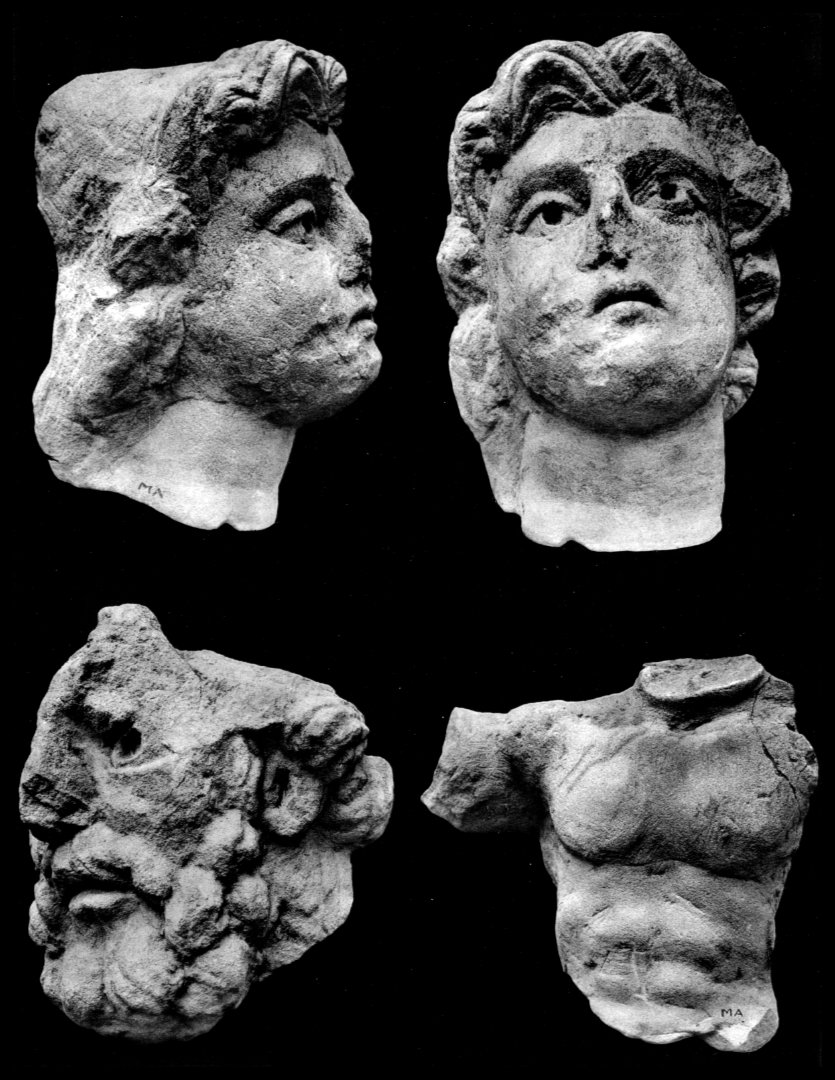
This fragment of the head of a young Mithras is one of the finds made during the excavations carried out by Jean-Jacques Hatt at Mackwiller, France, in 1955.
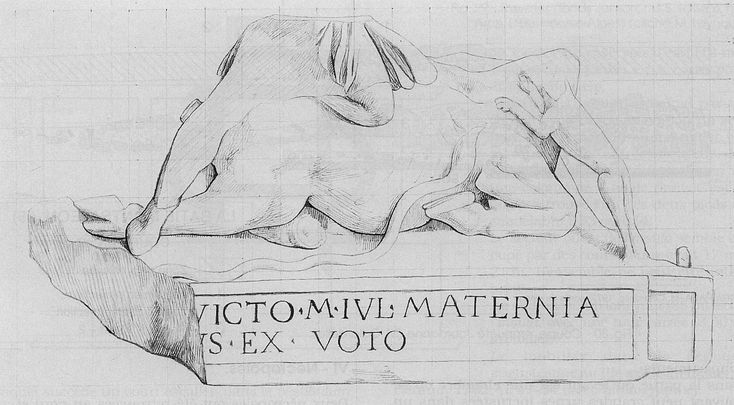
This damaged relief of Mithras killing the bull found in 1804 and formerly exposed at Gap, is now lost.
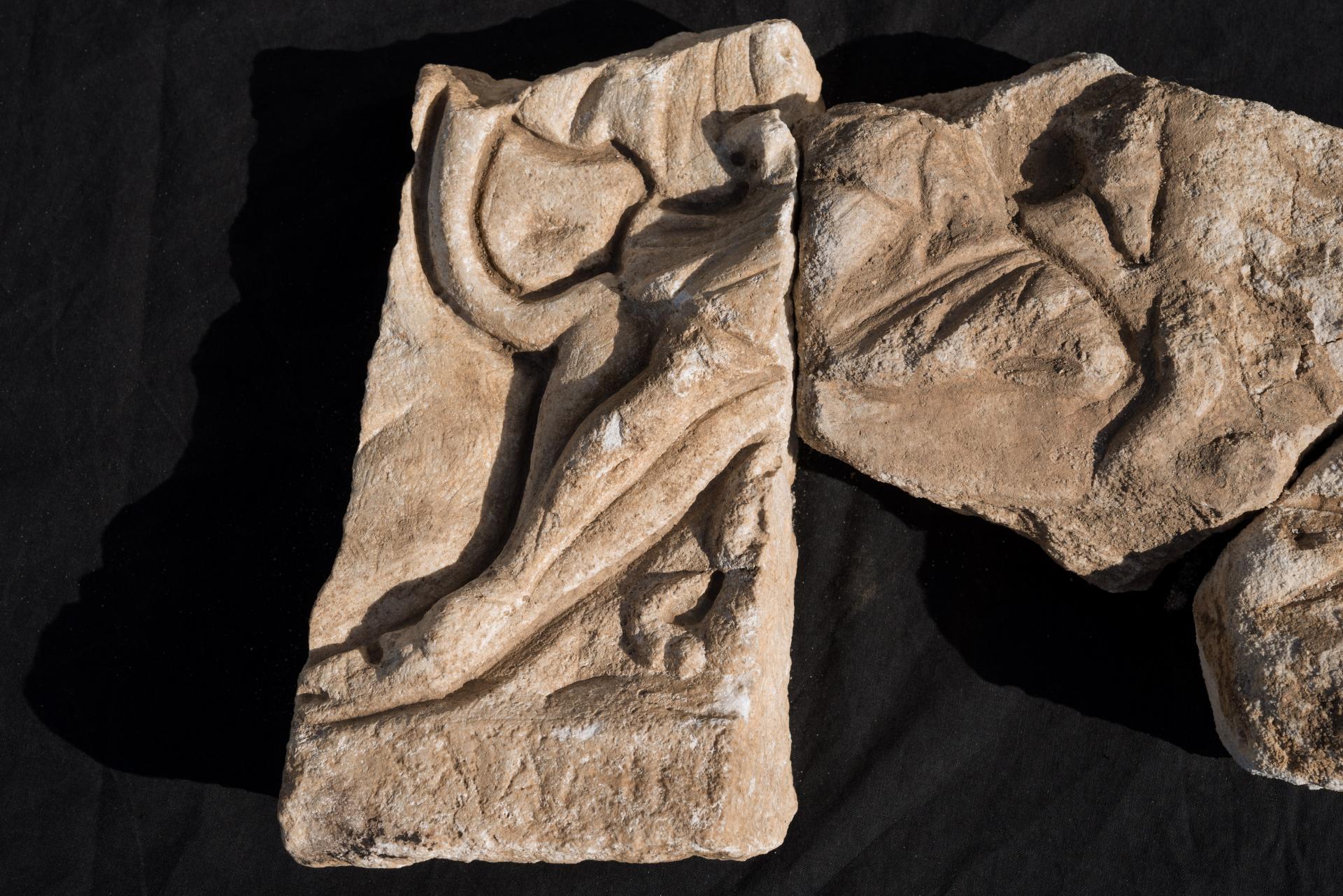
The archeologists have found three fragments of the Tauroctony of Lucciana, which includes Cautes and Cautopates.

White marble relief, found near Aix "a la Torse dans un enclos ayant appartenu à la famille de Colonia".

This lamp, depicting a man slicing his victim into pieces with a sword, was believed to be associated with the Cult of Mithras.
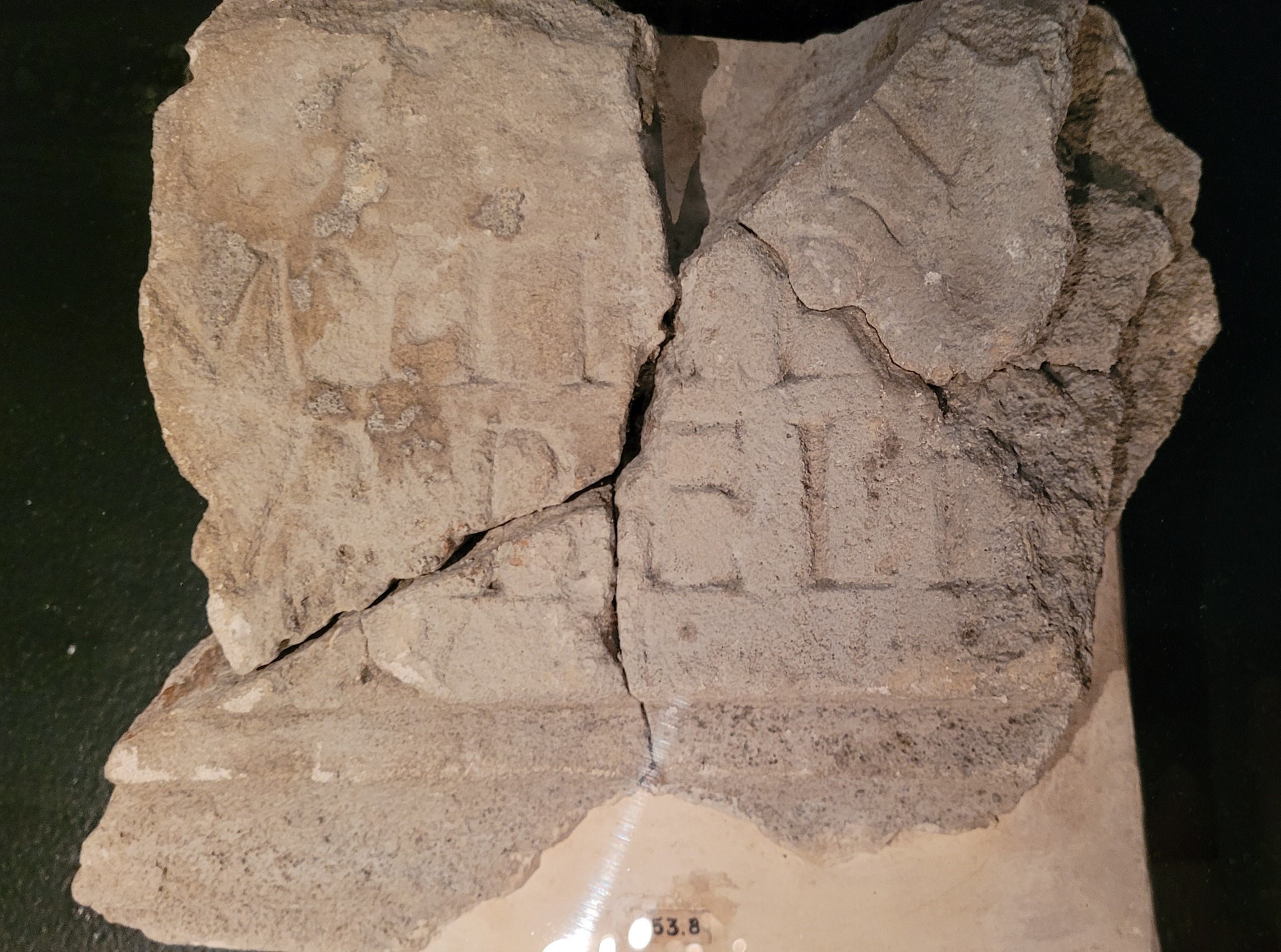
Fragment of limestone from Porêts, which was used in the 4th century.
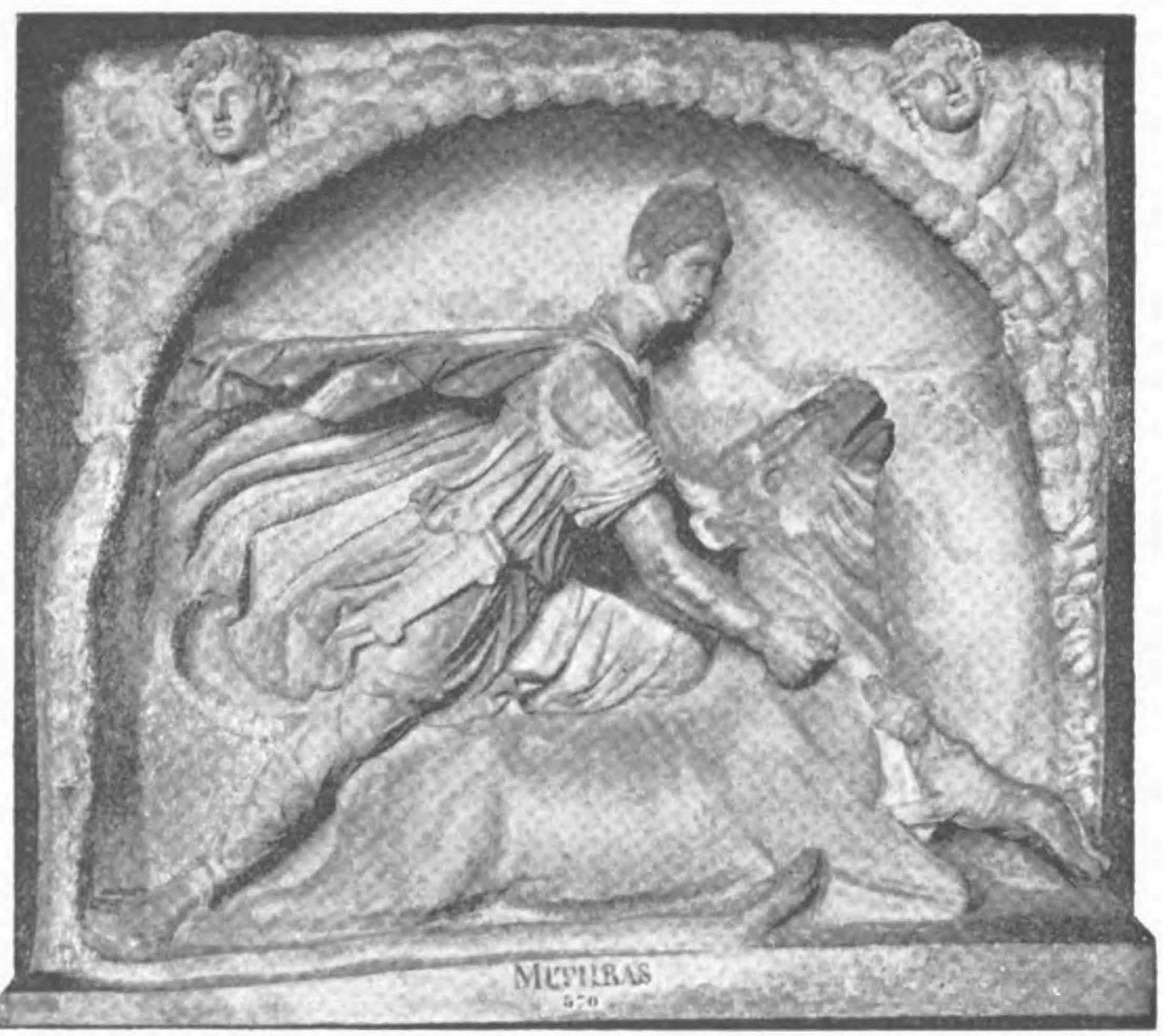
This is one of the three reliefs depicting Mithras killing the bull that the Louvre Museum acquired from the Roman Villa Borghese collection.
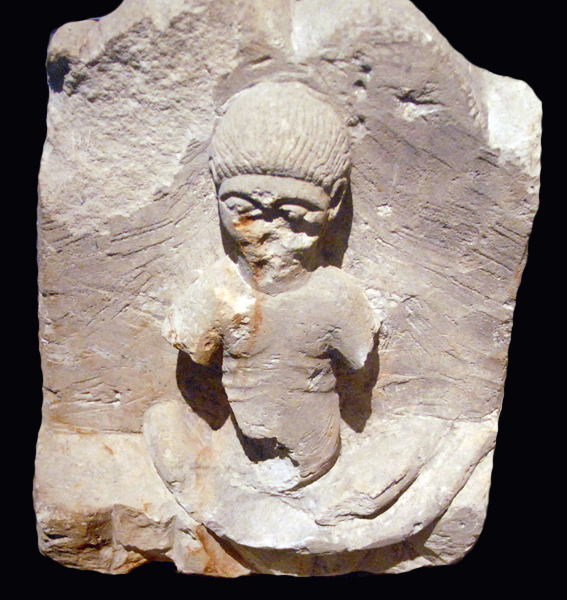
A serpent emerging from a umbilicus at the side of the stele coils over Mithras naked body.
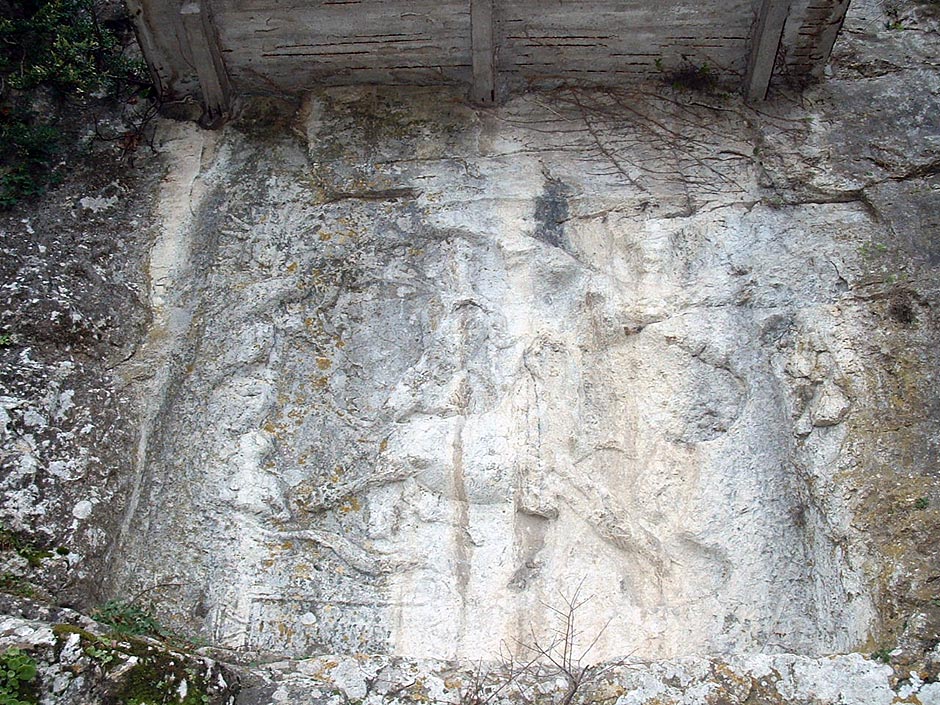
The low relief of Bourg-Saint-Andéol depicting Mithras killing the bull has been chiseled on the rock.
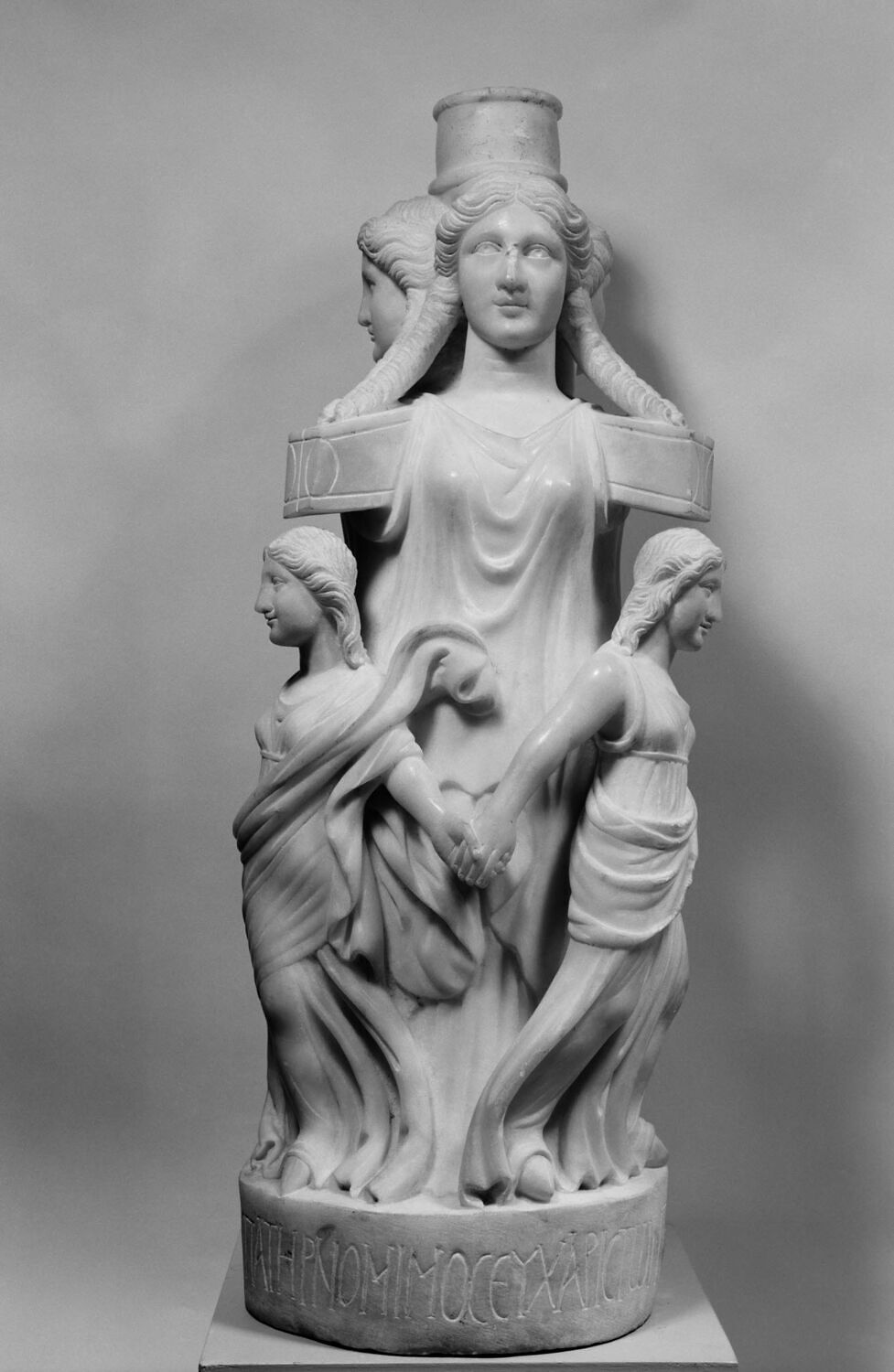
The Hekataion of Sidon, which depicts Hekate in her trimorphic form surrounded by three dancing girls, is the only example found to date in connection with the Mithraic cult.
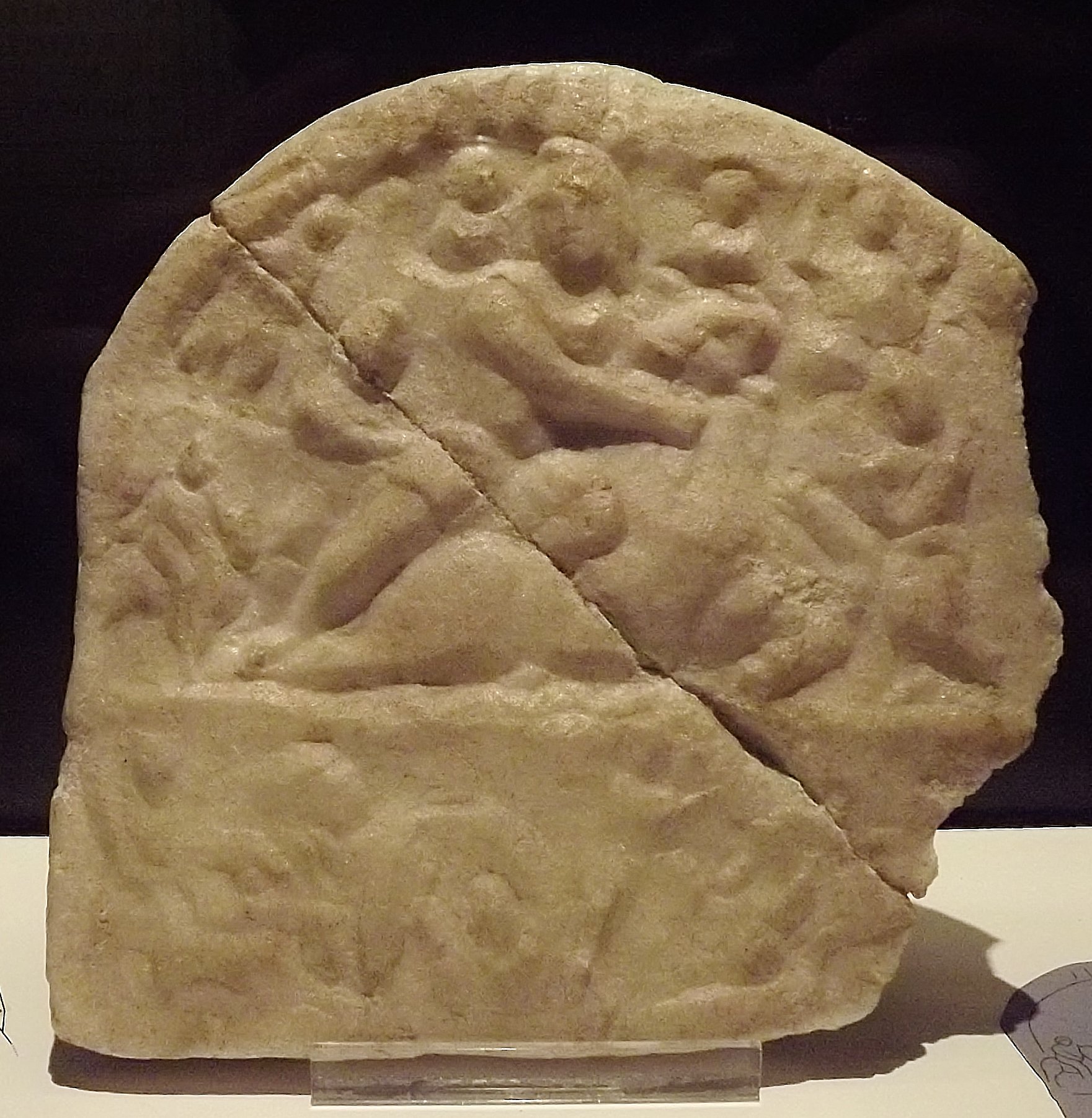
This small white marble relief of Mithras as a bullkiller was found in the Botanical Gardens of Vienna in 1950.

This rock-cut Mithraeum occupies the north-eastern slope of the Grand-Rebberg at Saarburg, featuring a stepped entrance, a sloping central aisle, lateral benches, and a spring-fed water conduit.

Two altars dedicated to Sucellus and Nantosvelta found near the Sarrebourg Mithraeum.
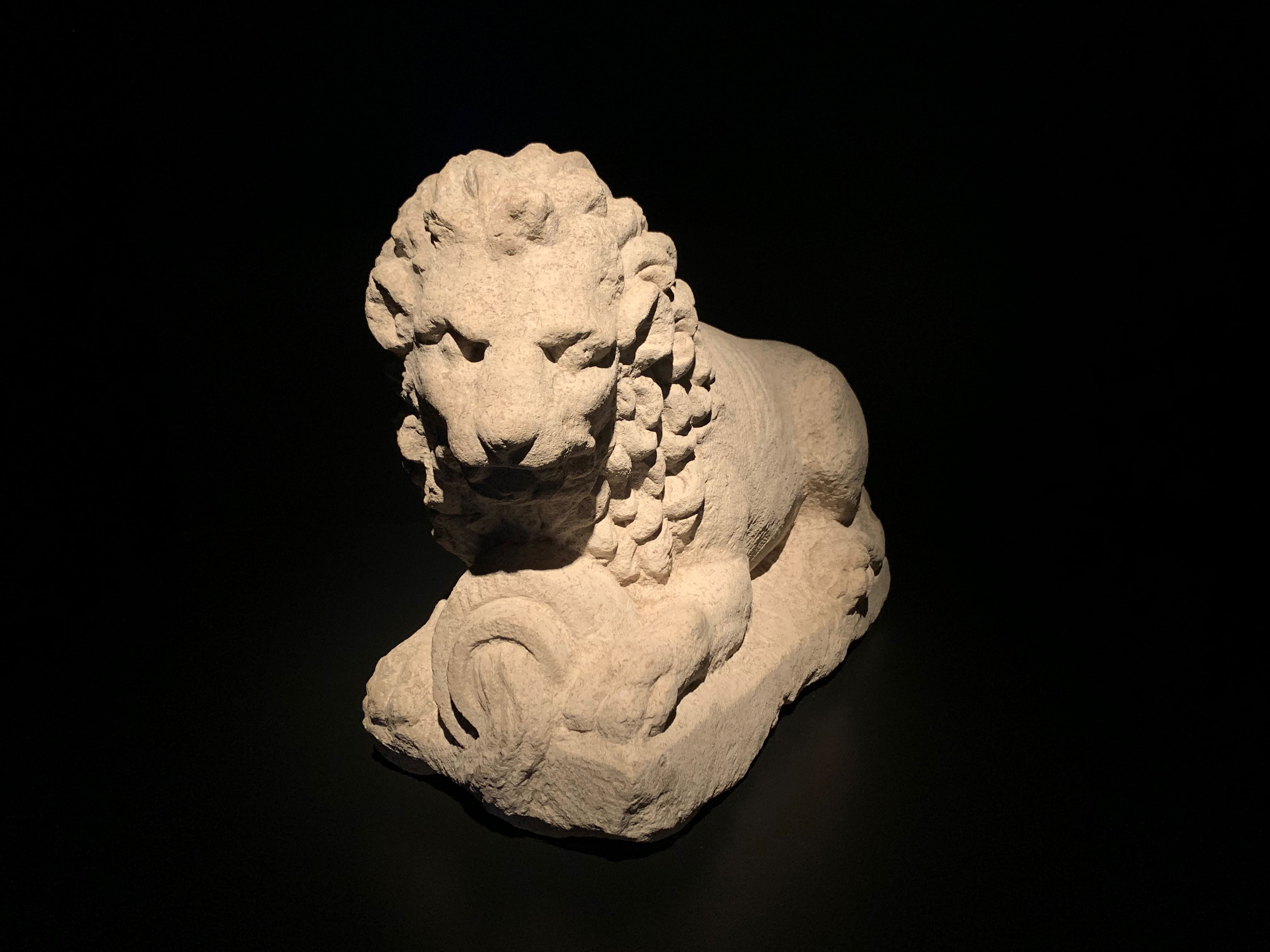
A limestone lion holding a flowing urn, discovered at the entrance of the Mithraeum of Les Bolards, reflects the ritual significance of water within the cult of Mithras.
