Your selection gave 80 results.

Samsat, formerly Samosata is a small town in the Adıyaman Province of Turkey, situated on the upper Euphrates river.
Anazarbus was an ancient Cilician city. Under the late Roman Empire, it was the capital of Cilicia Secunda.
Zeugma was an ancient Hellenistic era Greek and then Roman city of Commagene; located in modern Gaziantep Province, Turkey.
Baris was a town of ancient Pisidia inhabited during Roman and Byzantine times.
Pessinus was an Ancient city and archbishopric in Asia Minor, a geographical area roughly covering modern Anatolia.
Aphrodisias was a small ancient Greek Hellenistic city in the historic Caria cultural region of western Anatolia, Turkey.
Caesarea, also known historically as Mazaca, was an ancient city in what is now Kayseri, Turkey.
Zerzevan Castle, also known as Samachi Castle, is a ruined Eastern Roman castle, a former important military base, in Diyarbakır Province, southeastern Turkey.
Mount Nemrut or Nemrud is a 2,134-metre-high mountain in southeastern Turkey, notable for the summit where a number of large statues are erected around what is assumed to be a royal tomb from the 1st century BC.
Trabzon is a historic city on the Black Sea coast of northeastern Turkey, founded in 756 BC as Trapezous by Greek colonists from Miletus. It passed from Achaemenid control to the Kingdom of Pontus, then became part of the Roman and Byzantine empires.
Pamphylia was a region in the south of Asia Minor, between Lycia and Cilicia, extending from the Mediterranean to Mount Taurus.

This eulogy of Saint Eugene of Trapezos tells how, in the time of Diocletian, he and two other Christian fellows destroyed a statue of Mithras.
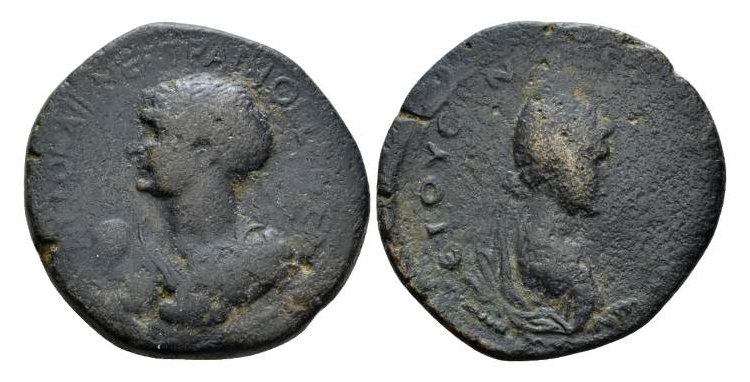
These bronze medallions associates the image of several Roman emperors with that of Mithras, usually as a rider, in the province Pontus.
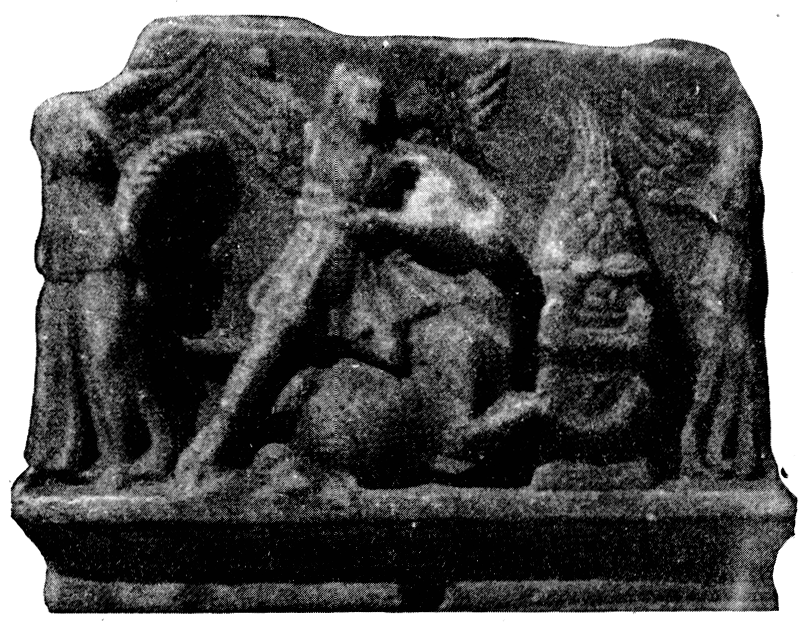
The Mithraic relief from Baris, in present-day Turkey, shows what appears to be a proto-version of the Tauroctony, with a winged Mithras surrounded by two Victories.
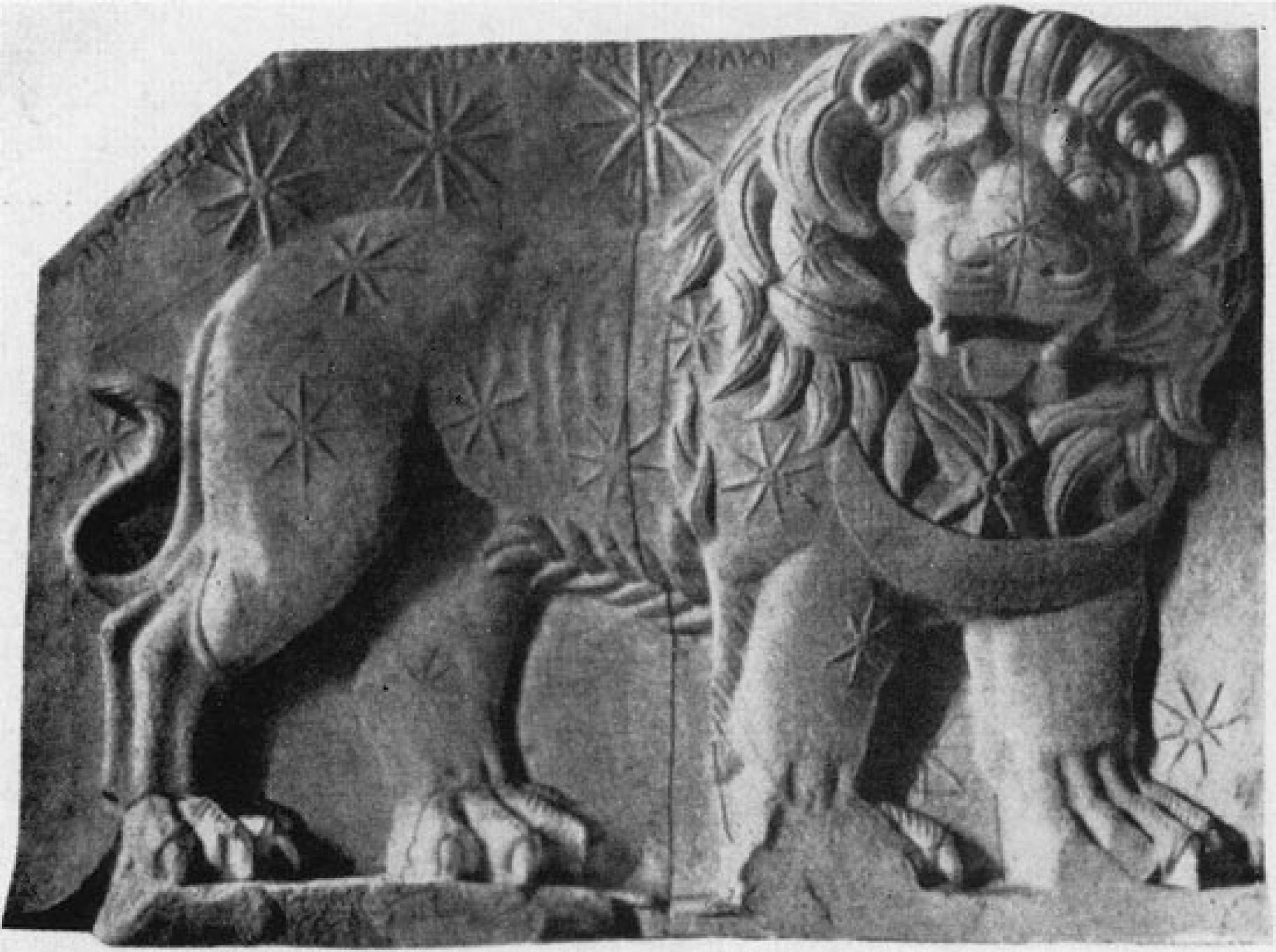
The lion relief from Nemrut Dag has the moon and several stars over his body.
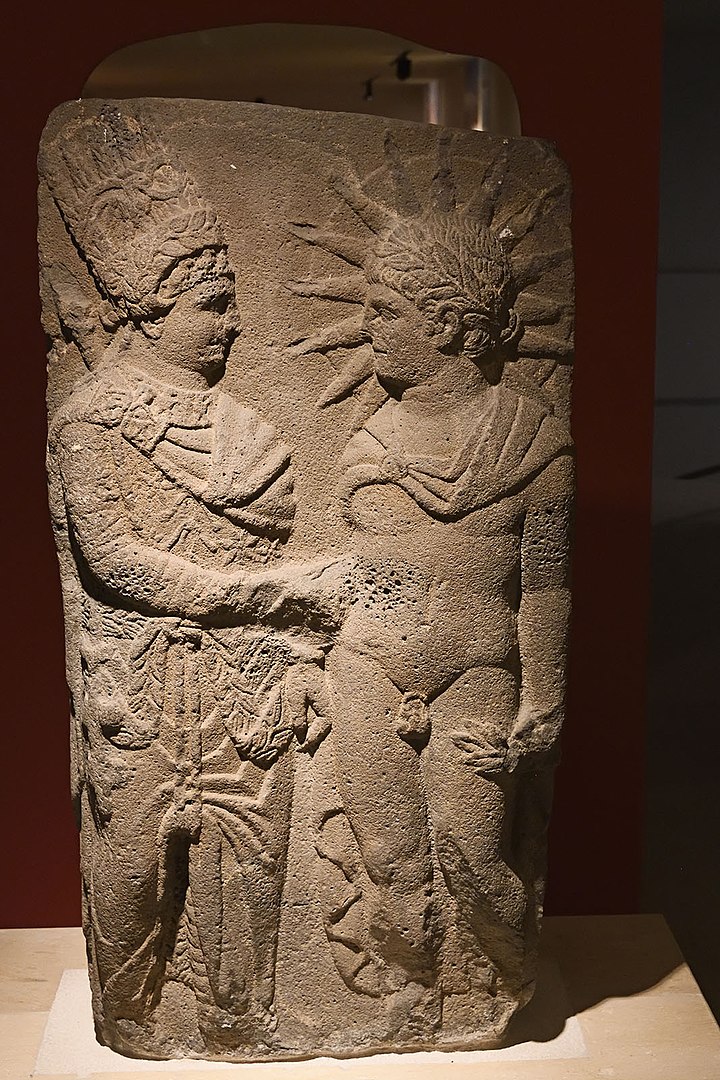
Stele representing Apollo-Mithras-Helios in a Hellenistic nude fashion, shaking hands with Antiochus I.
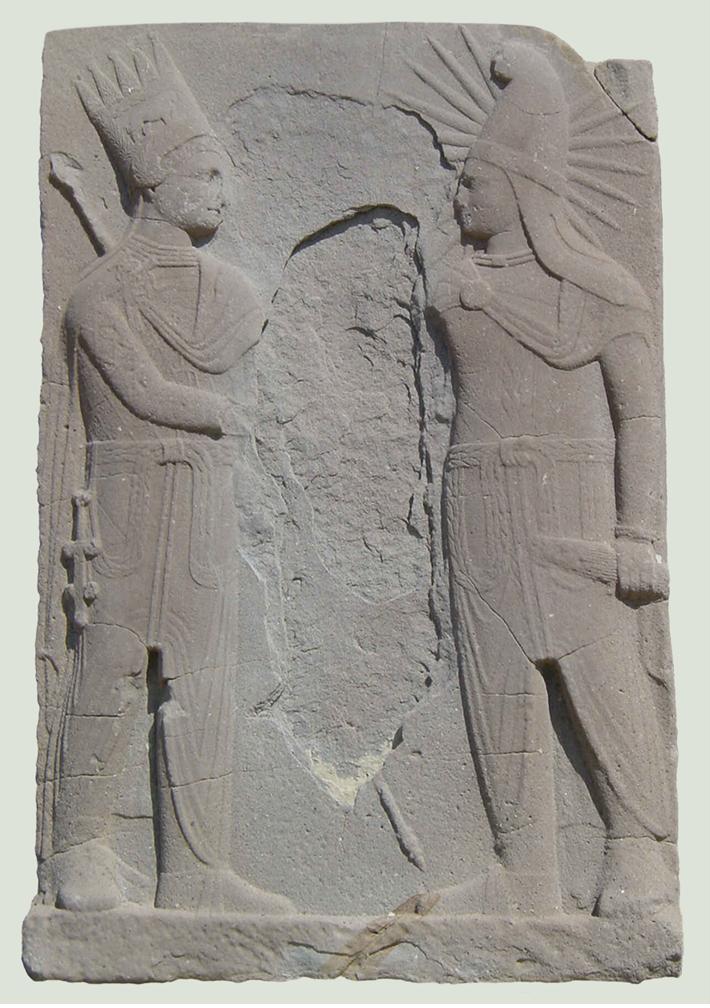
Antiochus I of Commagene shakes Mithras hands in this relief from the Nemrut Dagi temple.