Your search Édouard des Places gave 86 results.
Under Roman rule from the 1st century CE, Histria was incorporated into the province of Moesia. The city is noted on the Tabula Peutingeriana, which places it 11 miles from Tomis and 9 miles from Ad Stoma.
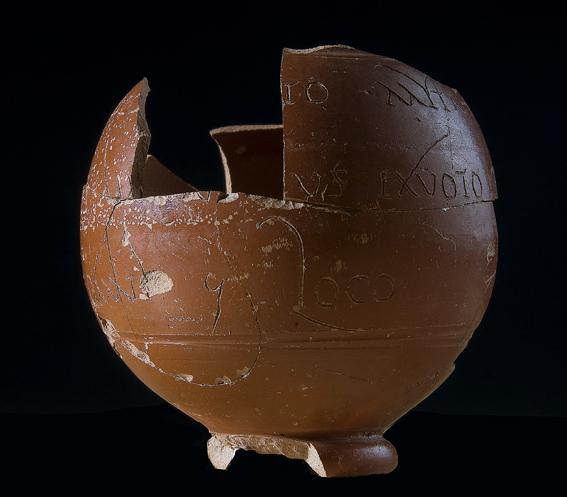
The spherical ceramic cup found at the Mithraeum in Angers bears an inscription to the unconquered god Mithras.
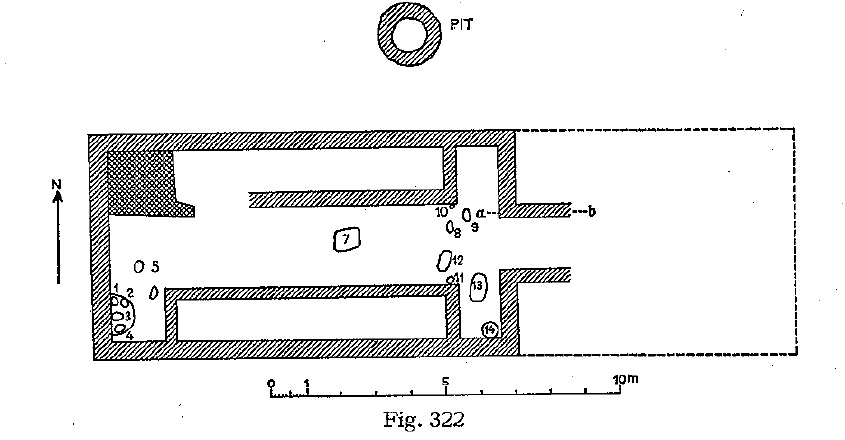
There are references to two places of worship from Dieburg, whereby the Mithraeum, discovered in 1926.

Veteran recalled to imperial service and sole named devotee of Mithras currently attested at Grumentum.

A limestone low-relief tauroctony fragment found in 1869 near the entrance of the valley of San Zeno di Romedio in the Trentino, now in the Museum at Trento, showing a primitive Mithras bullkiller with Cautes upraised, the bust of Luna and an inscription on the lower border…
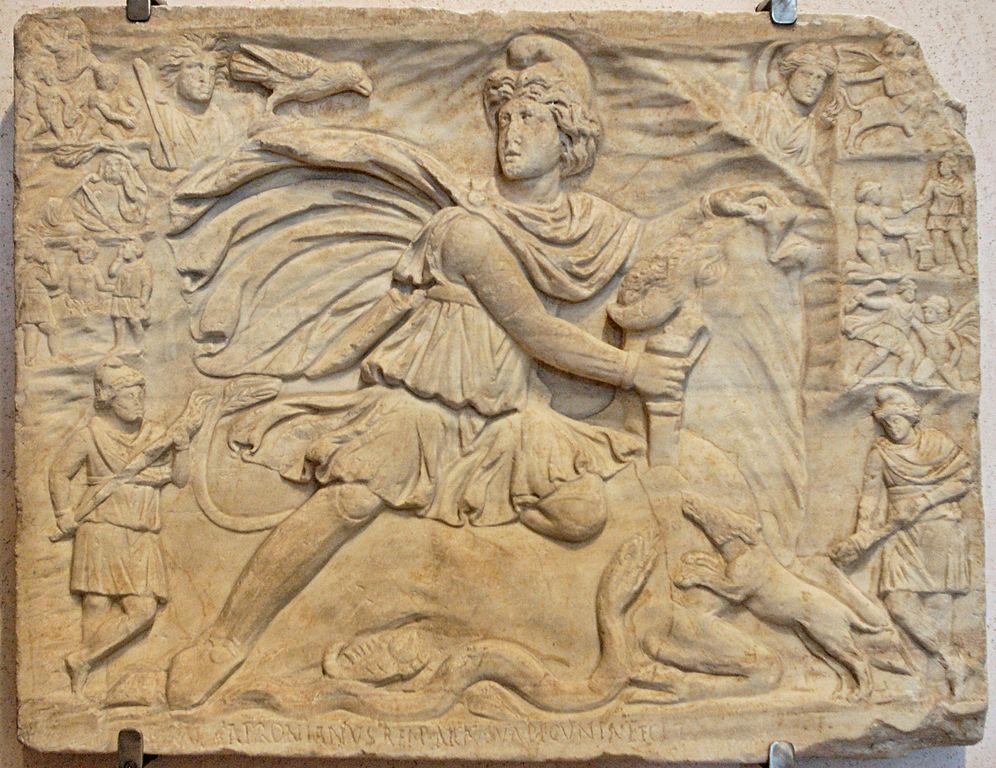
The relief of Mithras slaying the bull of Nersae includes several episodes from the exploits of the solar god.
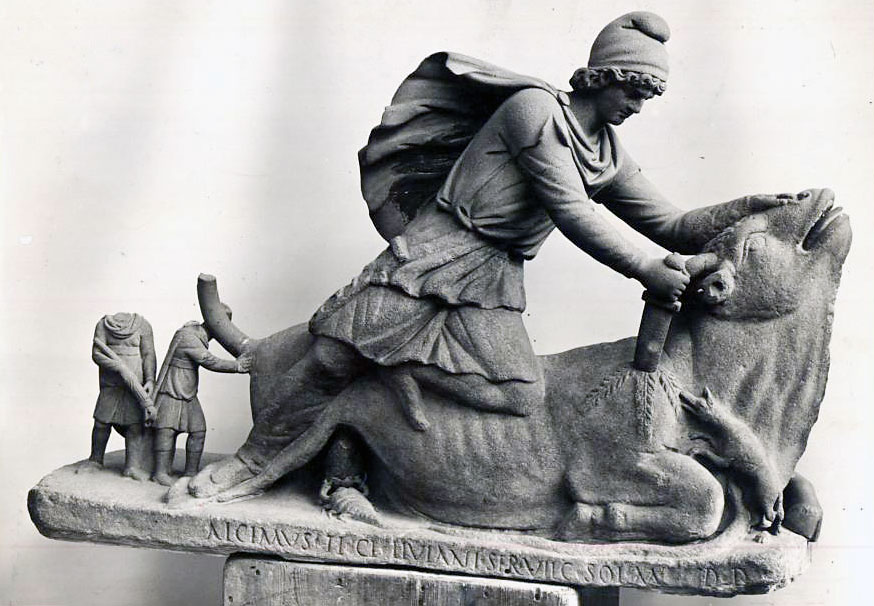
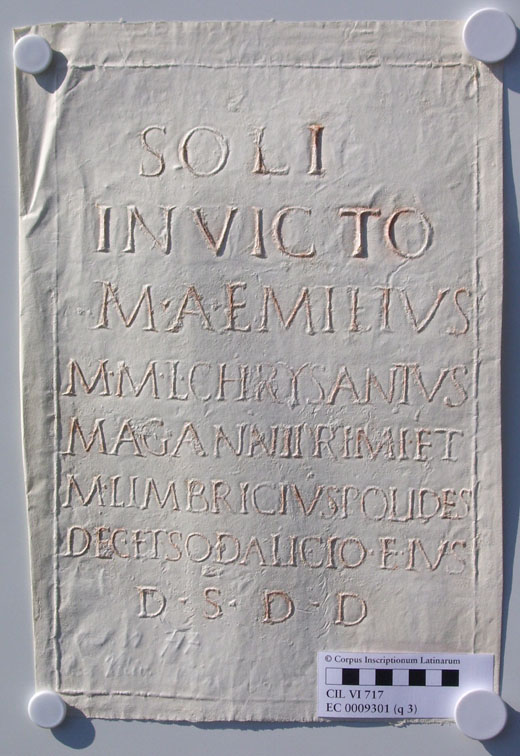
Aemilius Chrysanthus shares the expenses of this monument with a decurio named Limbricius Polides.
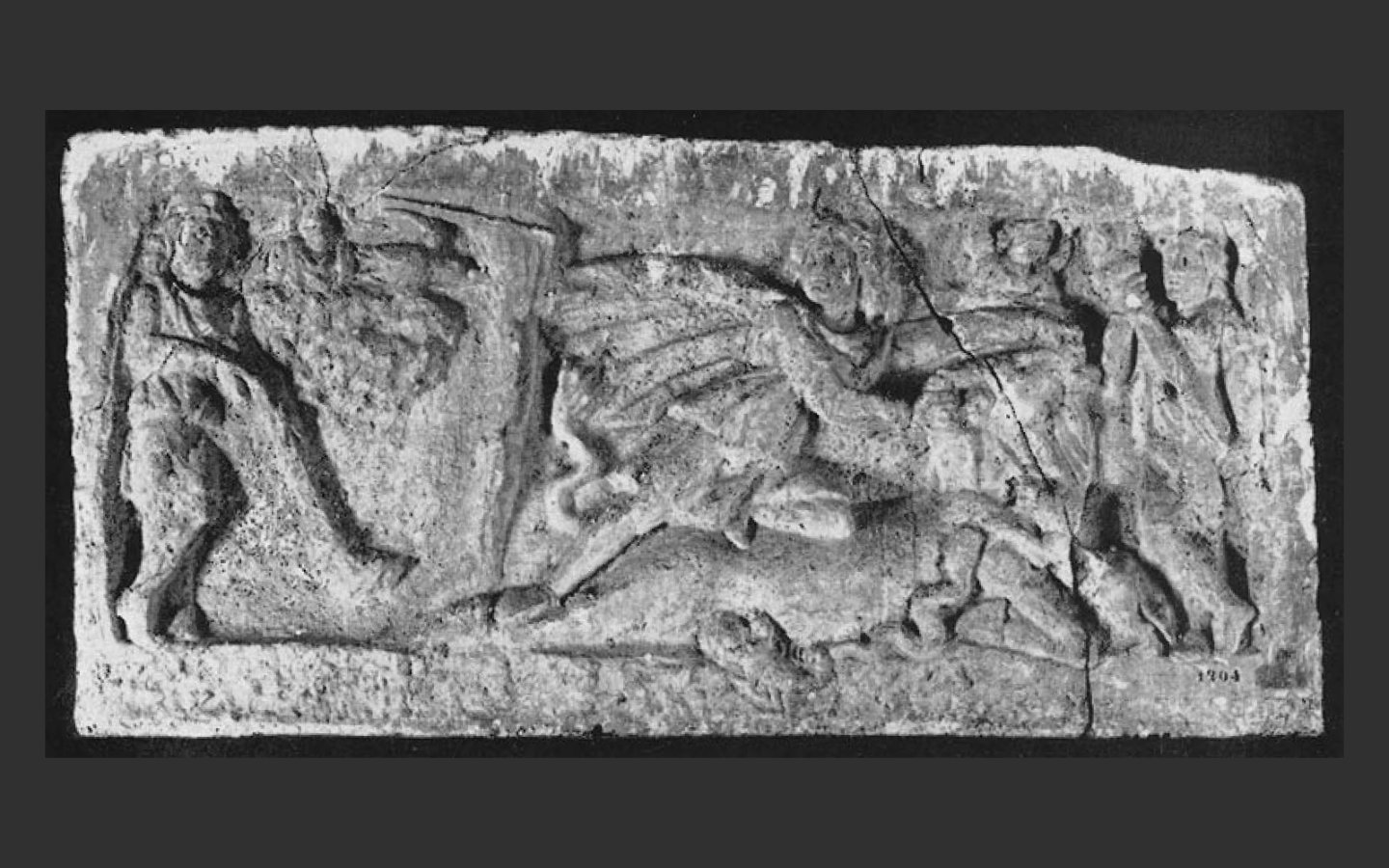
This relief of Mithras Tauroctonos from Rome bears the inscription of three brothers, two of them lions.
Upper part of a small marble column with late 2nd- or 3rd-century lettering, bearing a dedication to Sol Invictus Mithras and his sodality by actors from the Forum Suarium, excavated on the Esquiline.
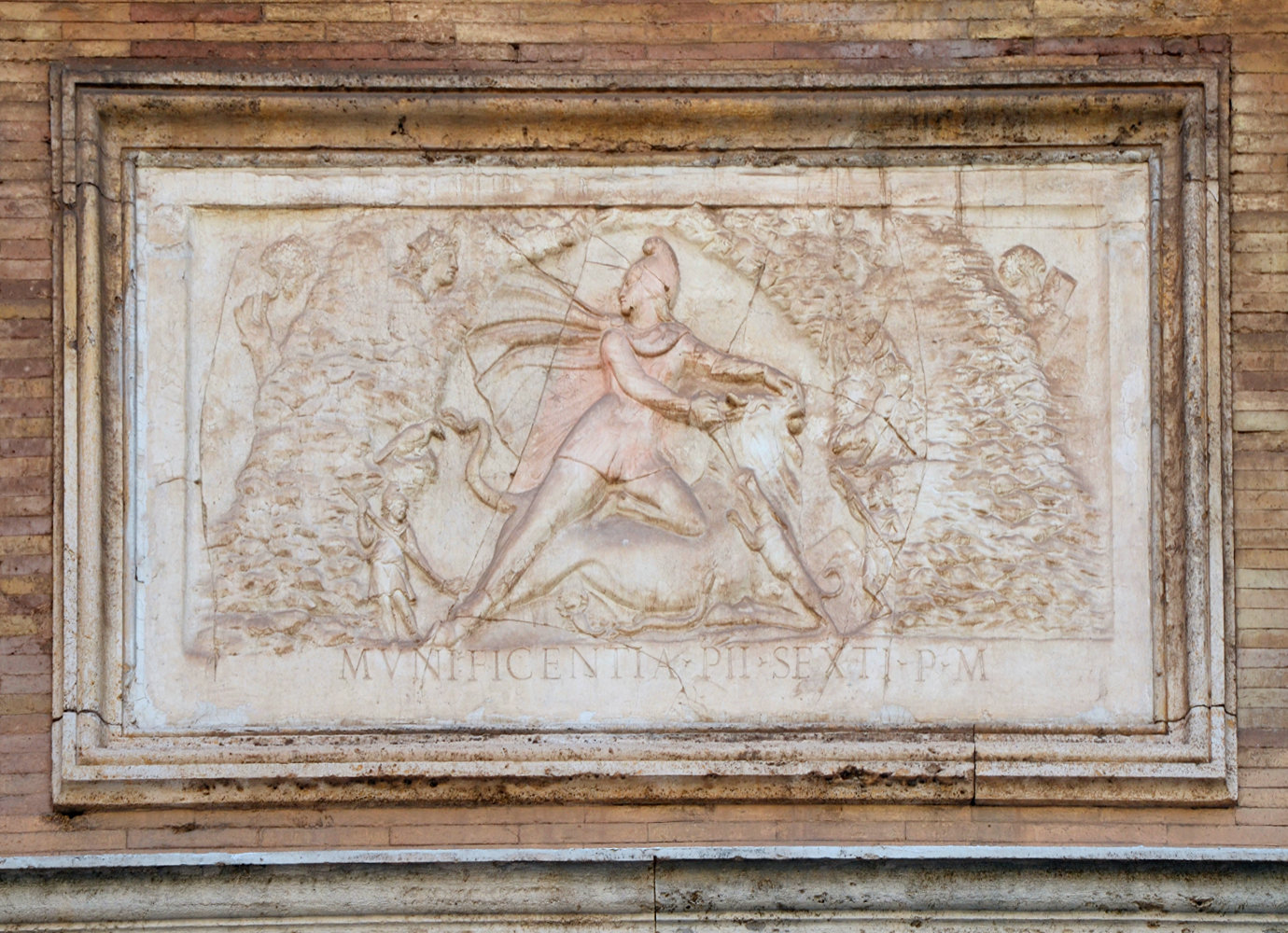
The Tauroctony relief of Mithras killing the bull walled in the Cortile of the Belvedered, Vatican City, was found by Fagan near Ostia.
Square altar from Zwiefalten near Ulm, Raetia, found reused in the apse of a church; local tradition places the original sanctuary on a hilltop between Zell and Zwiefalten, or alternatively near Reichenstein.
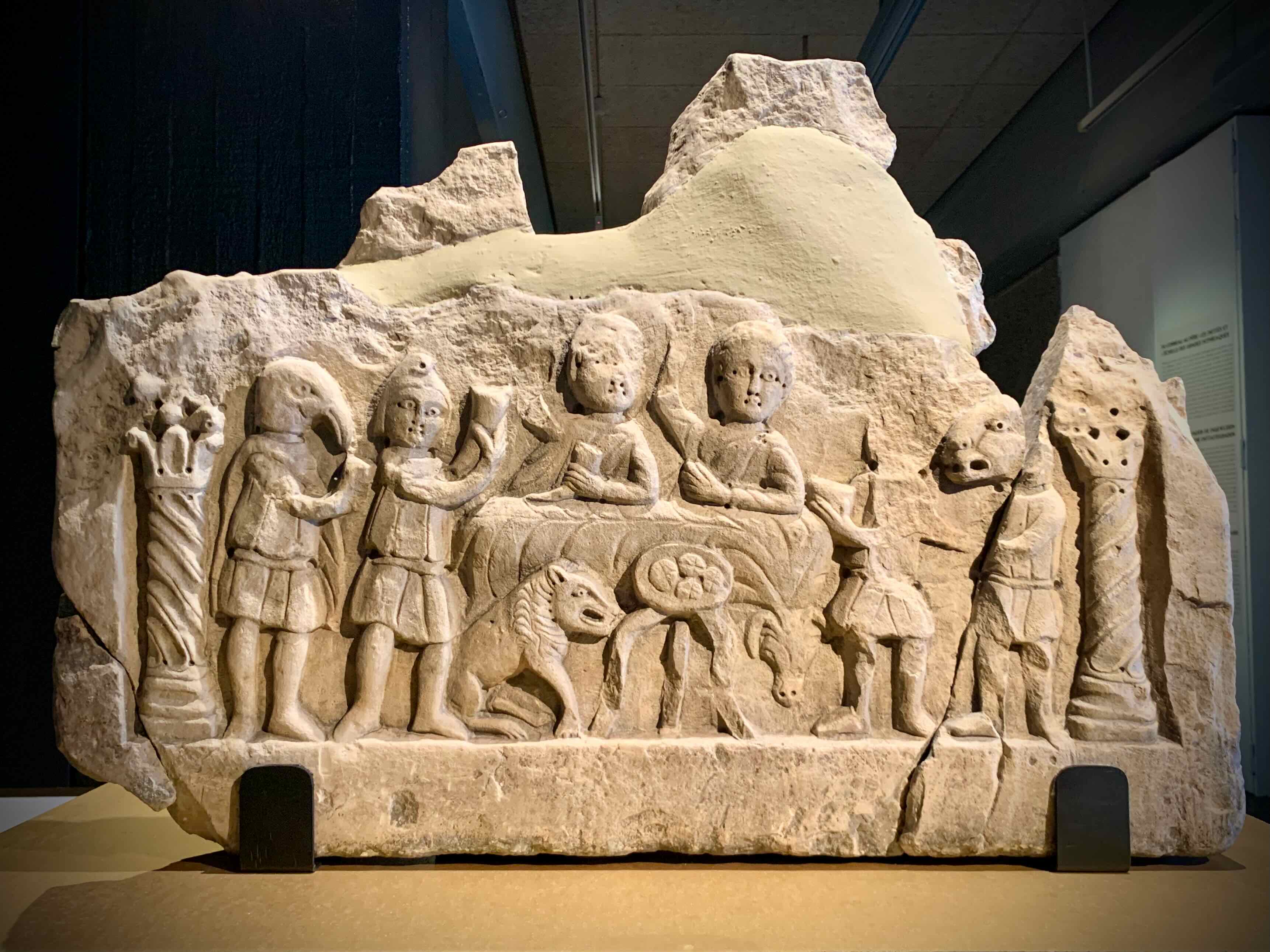
The mithraic relief of Konjic shows a Tauroctony in one side and a ritual meal in the other.
A bluish marble tauroctony relief once in the Villa Ludovisi in Rome, showing Mithras slaying the bull with the raven perched on his cloak holding a heart-shaped fruit, the bull's tail ending in ears of grain, and the dressed busts of Sol and Luna in the upper corners…
Marble relief formerly in the Palazzo Giustiniani showing Mithras slaying the bull while grasping one of its horns, with the dog, serpent, scorpion and torchbearers, and a krater before the feet of Cautes.
White marble relief from the Casino of the Villa Giustiniani showing Mithras slaying the bull, whose tail ends in ears, with the usual torchbearers, dog, serpent, scorpion and raven, and the busts of Sol and Luna in the upper corners.
Group of Mithraic finds distributed across different localities named San Zeno along the Verona–Brenner route.
Marble cippus from the Quirinal residence of Ceionius Iulianus Kamenius preserving references to his Mithraic and other priestly functions.


