Your search Al-Ankawi gave 2246 results.
The second tauroctony of Jabal al-Druze seems to have be made by the same sculptor.
This sculpture of Mithras slaying the bull was bequeathed to the Republic of Venice in 1793 by Ambassador Girolamo Zulian.
According to PA II, 1907-8, 204 (d. BATH 1908) there must be a vase or plate with a Mithras representation in the Archaeological Seminary of the Uni- versity of Vienne.

Scholar, politician and a court astrologer to the Roman emperors Claudius, Nero and Vespasian.

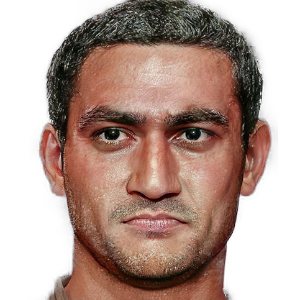
Roman emperor from 253 to 260, he was taken captive by Shapur I of Persia. He was thus the first emperor to be captured as a prisoner of war.

This rock-cut Mithraeum occupies the north-eastern slope of the Grand-Rebberg at Saarburg, featuring a stepped entrance, a sloping central aisle, lateral benches, and a spring-fed water conduit.
Two altars dedicated to Sucellus and Nantosvelta found near the Sarrebourg Mithraeum.
The Mithraeum I in Stockstadt contained images of Mithras but also of Mercury, Hercules, Diana and Epona, among others.
Limestone altar from the Trier baths, carved on four sides with a lion and serpent, flanked by Sol and Luna, and likely linked to a Mithraic context involving Hekate.
The votive fresco from the Mithraeum Barberini displays several scenes from Mithras’s myth.
Fragment of an alabaster relief from Cologne with part of a tauroctony scene. Only the tip of Mithras’ Phrygian cap and small narrative details above are preserved.
Small votive altar in white limestone from Aquae Mattiacae, dedicated to Deo Invicto by a miles pius. The top preserves the head of Cautes with his raised torch.
A small limestone altar from Bandorf near Oberwinter dedicated to Deo Invicto Regi. Found in an isolated structure not resembling a mithraeum, its function remains uncertain.
An oval carnelian gem from Carnuntum showing Mithras tauroktonos in a grotto. Sol and Luna appear above, with both torchbearers and a small altar before the bull.
A limestone lion holding a flowing urn, discovered at the entrance of the Mithraeum of Les Bolards, reflects the ritual significance of water within the cult of Mithras.
This small golden figurine seems to represent the Mithraic god Aion, as usual surrounded by a serpent.
Excavated in 1919, the Mithraeum near the Roman Gate was installed in the 3rd century within a larger building complex.
The relief of Dieburg shows Mithras riding a horse as main figure, surrounded by several scenes of the myth.
