Your search Al. N. Oikonomides gave 3559 results.
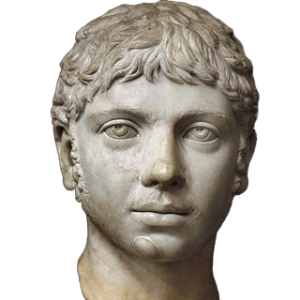
Roman emperor at the age of 14, from 218 to his death in 222, Elagabalus was a main priest of the sun god Elagabal in Emesa.

Emperor Caracalla ordered one of Rome’s largest temples to the god Mithras to be built in the baths bearing his name.

Alexandria was founded by Alexander the Great in April 331 BC as one of his many city foundations. After he captured the Egyptian Satrapy from the Persians, Alexander wanted to build a large Greek city on Egypt’s coast that would bear his name.
Cales was an ancient city of Campania, in today's comune of Calvi Risorta in southern Italy, belonging originally to the Aurunci/Ausoni, on the Via Latina.
Italica was an ancient Roman city in Hispania; its site is close to the town of Santiponce in the province of Seville, Spain.
Skelani (Serbian Cyrillic: Скелани) is a village in the municipality of Srebrenica, in the Republika Srpska entity of Bosnia and Herzegovina.
Within the southern sectors of Roman Dacia, Dacia Malvensis preserves evidence linked to military mobility and provincial urbanisation.

This small and highly questionable relief from southern France may depict a winged leontocephalic figure seated.
Syria-Palestina occupied a complex religious landscape shaped by imperial administration, pilgrimage and eastern Mediterranean mobility.
Galatia occupied the central Anatolian crossroads through which military movement and eastern provincial networks intersected.
Dalmatia connected the Adriatic world to the Balkan interior through maritime routes, military mobility and provincial urban networks.
The high mountain routes of Alpes Graiae formed part of the Alpine corridors connecting Italy, Gaul and the northwestern provinces.
Alpes Poenninae controlled important Alpine routes through which military movement and religious practices circulated between Gaul and Italy.
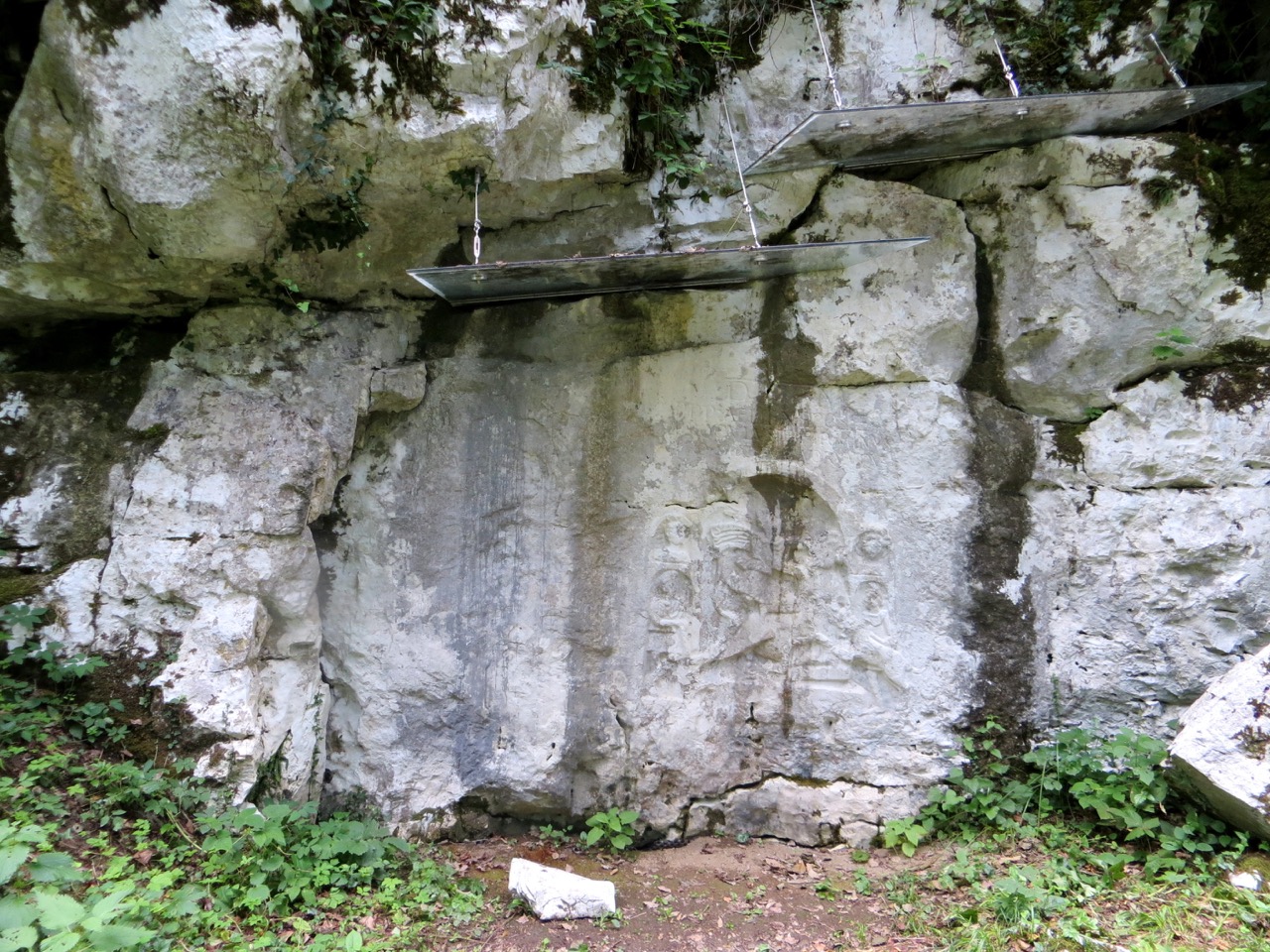
According to Hitzinger remnants of animal bones were found in front of the relief of the Mithraeum at Rozanec.
Galatia preserves Mithraic evidence shaped by central Anatolian routes and eastern provincial networks.
Dalmatia preserves Mithraic evidence shaped by Adriatic routes, military movement and provincial urban centres.
The Alpine regions preserve scattered Mithraic evidence associated with military circulation and strategic routes across the western empire.
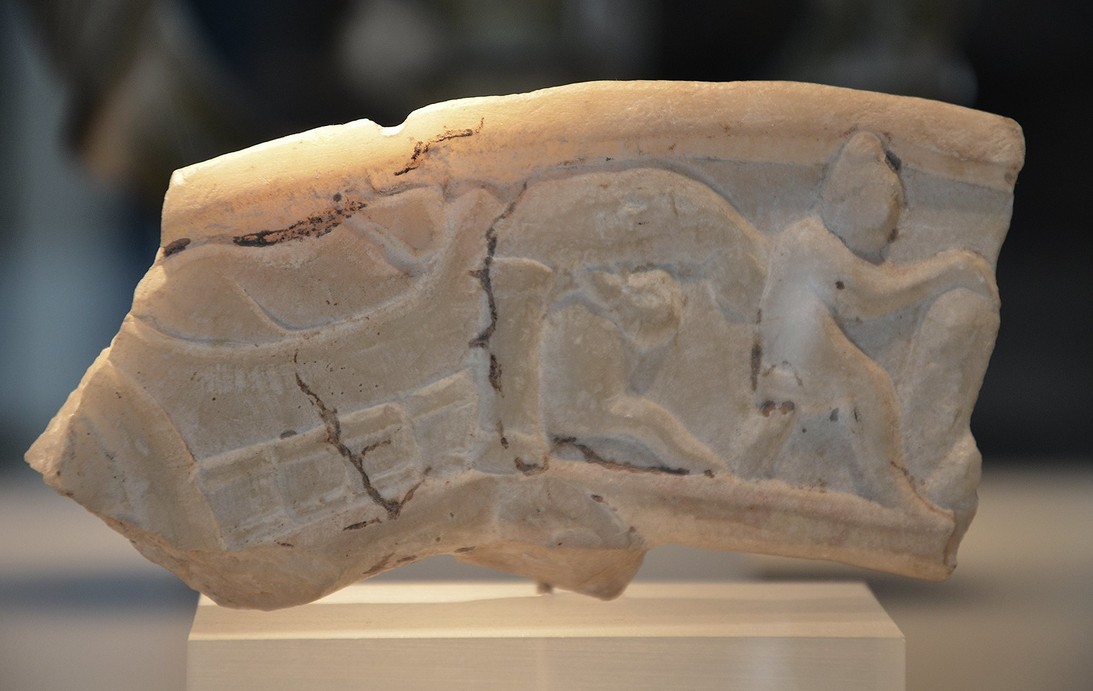
Fragment of an alabaster relief from Cologne with part of a tauroctony scene. Only the tip of Mithras’ Phrygian cap and small narrative details above are preserved.
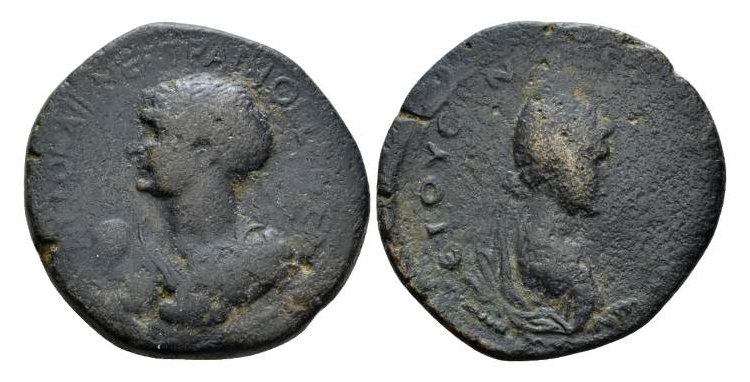
These bronze medallions associates the image of several Roman emperors with that of Mithras, usually as a rider, in the province Pontus.

This plaque, located on the western staircase of the Palace of Darius, mentions the god Mithra together with Ahura Mazda as protectors of King Artaxerxes III Ochus.
