This site uses cookies to offer you a better browsing experience.
Find out more on how we use cookies in our privacy policy.

 
Provincia

Mithras in Dalmatia

Dalmatia connected the Adriatic world to the Balkan interior through maritime routes, military mobility and provincial urban networks.

The material documented in Dalmatia illustrates the circulation of Mithraic cults across the eastern Adriatic and the western Balkans. Urban centres, coastal routes and imperial communication networks contributed to the diffusion of religious practices throughout the province.
Mithraic monuments of Dalmatia


Mithraeum of Močići

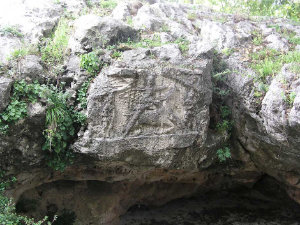
The Mithraeum of Mocici was situated in a grotto at one hour's walk fomr the ancient Epidaurum.

CIMRM 1882


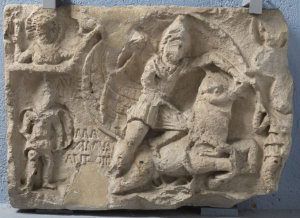
Two-sided relief from Konjic

The mithraic relief of Konjic shows a Tauroctony in one side and a ritual meal in the other.

CIMRM 1896


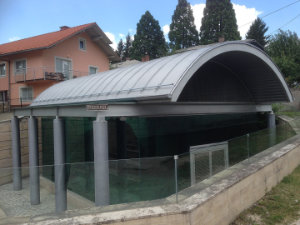
Mithraeum of Jajce

The remains of the Jajački Mithraeum were discovered accidentally during excavation for the construction of a private house in 1931.

CIMRM 1901


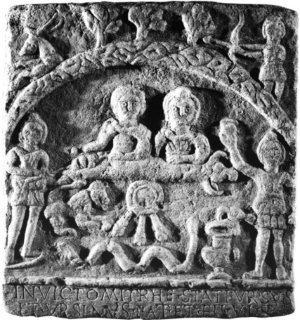
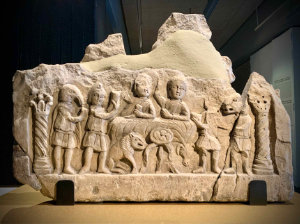
Mithraic meal from Proložac, Croatia

Mithras and Sol share a sacred meal accompanied by Cautes and Cautopates on a relief found in a cemetery from Croatia.


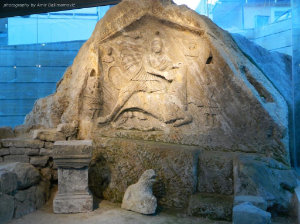
Tauroctony from Jajce

The relief of Mithras killing the bull from the Jajce Mithraeum is walled into the cult niche and surmounted by a roof.

CIMRM 1902


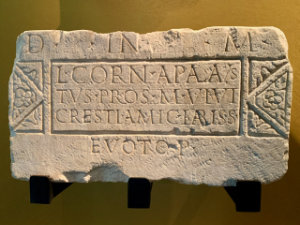
Mithraic exvoto of Dalmatia

The altar that now stands in Split was dedicated to Invincible Mithras for the health of a dear friend.

CIMRM 1873


Altar of Senj made by the slave Hermes

The dedicator of this altar was a slave in the service of a high official, the prefect Gaius Antonius Rufus, known from other inscriptions.

CIMRM 1846


Altar of Tihaljina

This altar, discovered in Grude, near Tihaljina, Bosnia and Herzegovina, bears an inscription by Pinnes, a soldier of the Cohors Prima Belgica.

CIMRM 1889


Mithraeum of Prozor

The Mithraea in the territory of Arupium were first mentioned by Š. Ljubić in 1882.


Tauroctony relief from Crikvine

This relief of Mithras killing the sacred bull was found in 1908 near Klisa, in the surroundings of Salona, the ancient capital of Roman Dalmatia.

CIMRM 1871


Tauroctony from Golubić

This relief of Mithras as a bullkiller was found in Golubić, Bosnia and Herzegovina, near a cementery.

CIMRM 1910


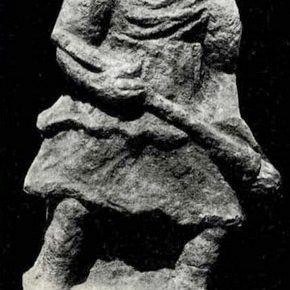
Cautopates from Jajce

Beheaded Cautopates in limestone found on the podium of the Jajce Mithraeum, Bosnia and Herzegovina.

CIMRM 1903

See all Mithraic monuments in Dalmatia

Places in Dalmatia


Aequum

Aequum developed as an important inland centre of Dalmatia in the Cetina valley region.


Arba

The island settlement of Arba occupied a strategic position along the eastern Adriatic maritime routes.


Arupium

The settlement of Arupium formed part of the mountainous inland communications network of Roman Dalmatia.


Aufustianis

Tihaljina is a town in southwestern Bosnia and Herzegovina.


Bihać

Bihać lies in the Una valley and is associated with archaeological remains from the Dalmatian hinterland.


Boka Kotorska

The Bay of Kotor formed an important maritime zone linking the Adriatic coast with the inland Balkans.


Brattia

The island of Brattia, modern Brač, formed part of the Adriatic maritime landscape of Dalmatia.


Burnum

Burnum served as an important legionary centre controlling routes between the Adriatic coast and the Dalmatian interior.


Carevac

The locality of Carevac is associated with archaeological discoveries from the inland territory of Dalmatia.


Danilo

Danilo occupied an important position in the hinterland of the central Dalmatian coast near Šibenik.


Epidaurum

Epidaurum, modern Cavtat, was a major coastal centre in southern Dalmatia near the approaches to the Adriatic.


Han Potoci

The locality of Han Potoci lies within the mountainous hinterland of ancient Dalmatia.

See all Mithraic places in Dalmatia

Inscriptions from Dalmatia

Two-sided relief from Konjic

Deo Soli inv[ict]o Meter[ae].
To the god Sun invincible Mithras.

Mithraic meal from Proložac, Croatia

Invicto Mithre Stati[i] ursus / et Ursinus pat[er] et fil[ius] v[otum] l[ibentes] p[osuerunt].
To the invincible Mithras, Statius Ursus and Statius Ursinus, father and son, took this vow willingly.

Mithraic exvoto of Dalmatia

D[eo] inv[icto] Mlithrael / L[ucius] Corn[elius] Apalaus/tus pro s[atute] M[arci] Vivi / Cresti amic[i] kariss[imi] / ex voto p[osuit].
To the invincible god Mithras, Lucius Cornelius Apalaustus, for the health of his dearest friend Marcus Vivius Crestus, placed [here] as a votive.

Altar of Senj made by the slave Hermes

I[nvicto] M[ithrae] / spelaeum cum / omne impen/sa Hermes C[aii] / Antoni[i] Rufi / praef[ecti] veh[iculorum] et / cond[uctoris] p[ublici] p[ortorii]/ ser[vus] vilic[us] Fortu/nat[us or -ianus] fecit.
To the invincible god Mithras, Hermes, estate manager and slave of Caius Antonius Rufus, prefect of roads and customs collector, [gave] the spelaeum, with all of the [related] expenses, [and] Fortunat[us or -ianus] made it.

Altar of Tihaljina

D[eo] I[nvicto] M[ithrae] a[c Ge]/niis sac[r[orum]] / Augusto[r[um]] / Rus[---] Pin[nes] mi/les / co[hortis] prim[ae] / Bel[garum] immunis / libens merito / posuit.
To the Unconquered God Mithras, [and to] the spirits of the sacred [emperors], Rusticus Pinnes, a soldier of the Cohors Prima Belgica, exempt from duties, willingly and deservedly set this up.

Tauroctony from Golubić

Aure/lius / Ma/ximus /Pant[a]die/[nus].

Altars of Jajce

Invi[cto].
Invincible.

Altar from Skelani by Hostilius

Tran[situi ?] / dei M[ithr[ae]] / Host[ilius[?]] / [.]oni[---].
To the transit of the god Mithras, Hostilius...

Tauroctony from Vratnitsa

L[ucius] Antonius Menander Aphro/disieus invicto / aug[usto] v[otum] f[ecit].

Altar with donor lists from Solin

[DD(ominis) nn(ostris) Dio]cletiano VIII et Maximiano VII Augg(ustis) co(n)ss(ulibus) // Aur(elio) Valen/tiniano v(iro) p(erfectissimo) bis pr(a)efect/o Kalendis Febr(uariis) mns/travimus at(!) Tritons / Aur(elius) Mercurius / Aur(elius) Secundinus / Aur(elius) Fortunius / Aur(elius) Severianus / Aur(elius) Sarmatio / Aur(elius) Antonius / Aur(elius) Ursus / Iul(ius) Secundus / Aur(elius) Uranius / Aur(elius) Fore(n)sis // DD(ominis) nn(ostris) Consta/ntino Aug(usto) V [et] [[[Li]cinio]] iuniore Caesare co(n)s(ulibus) / Aur(elio) Xen[o]ne bis // pr(a)efecto Kal(endis) Febr(u)ari(i)s / mnstrabimus(!) / at(!) Tritones / Aur(elius) Lucentius / Aur(elius) [---]ius / A[ur(elius) G]regorius / Aur(elius) [F]irminus / Aur(elius) Ma[rce]llinus / [Au]r(elius) Dalmatius / [---] Valentinus // Aur(elius) Vincentius / Aur(elius) Messor // [---]PECVS // [---]ORVS // Dominis nostris C[o]/nstantino Augusto / {s}et Constantino noi//[l]issimo Caesare / pr(a)efe{i}to Quin ili//o Faintilo at(!) Triton(es) / [K]alenis Febr(u)ariis / Aur(elius) Martinus / [A]ur(elius) Donatus / V[ari]us Terent(i)anus / Aur(elius) [S]tercorius / Aur(elius) Exuperius / Aur(elius) Terentianus / Aur(elius) Alexander / Aur(elius) (H)eracl(i)a[nus] / Aur(elius) Reditus // Aur(elius) Maurenu[s] / Aur(elius) Balbinu[s] // Aur(elius) Euticiu[s] // Aur(elius) Leuntiu[s] / Aur(elius) Senat[or] // Ministri ad Trit(ones) / Ael(ius) Valerianus / Varius Sabinus / Iulius Silvius / Aur(elius) Fortunius / Papirius Crescent(i---) / Claud(ius) Barbian(us) / Dirrut[ius] Crescent(i---) / Aelius Dalmat(ius) / ex permissu Noc/turni Novelli / patroni collegi(i) // fel(iciter).
Under our lords Diocletian, consul for the eighth time, and Maximian, consul for the seventh time. Under Aurelius Valentinianus, vir perfectissimus, prefect for the second time, on the Kalends of February, we served among the Tritones: Aurelius Mercurius, Aurelius Secundinus, Aurelius Fortunius, Aurelius Severianus, Aurelius Sarmatio, Aurelius Antonius, Aurelius Ursus, Julius Secundus, Aurelius Uranius, Aurelius Forensis.

Under our lords Constantine Augustus, consul for the fifth time, and Licinius Junior Caesar, consuls. Under Aurelius Xenon, prefect for the second time, on the Kalends of February, we served among the Tritones: Aurelius Lucentius, Aurelius [---]ius, Aurelius Gregorius, Aurelius Firminus, Aurelius Marcellinus, Aurelius Dalmatius, [---] Valentinus, Aurelius Vincentius, Aurelius Messor.

Under our lords Constantine Augustus and Constantine, most noble Caesar, under the prefect Quintilius Faintillus, among the Tritones, on the Kalends of February: Aurelius Martinus, Aurelius Donatus, Varius Terentianus, Aurelius Stercorius, Aurelius Exuperius, Aurelius Terentianus, Aurelius Alexander, Aurelius Heraclianus, Aurelius Reditus, Aurelius Maurenus, Aurelius Balbinus, Aurelius Euticius, Aurelius Leuntius, Aurelius Senator.

Ministers among the Tritones: Aelius Valerianus, Varius Sabinus, Julius Silvius, Aurelius Fortunius, Papirius Crescent[---], Claudius Barbianus, Dirrutius Crescent[---], Aelius Dalmatius, with the permission of Nocturnus Novellus, patron of the collegium. Happily accomplished.

Altar of Faustus from Senia

S(oli) i(nvicto) M(ithrae) / Faustus Ti(berii) Saturni/ni praef(ecti) vehi/culo/r(um) et conductoris p(ublici) p(ortorii) servus / pro se et suis / v(otum) s(olvit) l(ibens) m(erito).
To Sol Invictus Mithras. Faustus, slave of Tiberius Saturninus, prefect of the imperial transport service and contractor of the public customs revenues, willingly and deservedly fulfilled his vow for himself and his family.

References

Back to Top
The New Mithraeum is powered by Enkīdu