The Mithraic material documented in Dalmatia reflects the province’s position between the Adriatic coast, the Balkan interior and the Danubian military zone. The evidence illustrates the circulation of the cult through urban settlements, communication routes and communities connected to imperial administration and mobility.
People attested in Dalmatia







Provinces of Dalmatia
Dalmatia
Dalmatia connected the Adriatic world to the Balkan interior through maritime routes, military mobility and provincial urban networks.
Places in Dalmatia
Arba
The island settlement of Arba occupied a strategic position along the eastern Adriatic maritime routes.
Arupium
The settlement of Arupium formed part of the mountainous inland communications network of Roman Dalmatia.
Bihać
Bihać lies in the Una valley and is associated with archaeological remains from the Dalmatian hinterland.
Boka Kotorska
The Bay of Kotor formed an important maritime zone linking the Adriatic coast with the inland Balkans.
Brattia
The island of Brattia, modern Brač, formed part of the Adriatic maritime landscape of Dalmatia.
Burnum
Burnum served as an important legionary centre controlling routes between the Adriatic coast and the Dalmatian interior.
Carevac
The locality of Carevac is associated with archaeological discoveries from the inland territory of Dalmatia.
Danilo
Danilo occupied an important position in the hinterland of the central Dalmatian coast near Šibenik.
Epidaurum
Epidaurum, modern Cavtat, was a major coastal centre in southern Dalmatia near the approaches to the Adriatic.
Inscriptions from Dalmatia
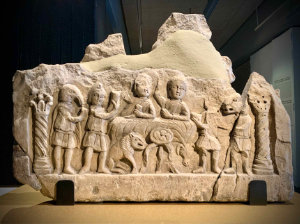
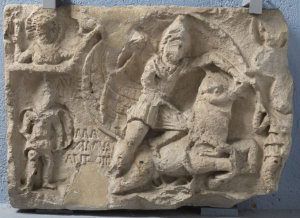
Two-sided relief from Konjic
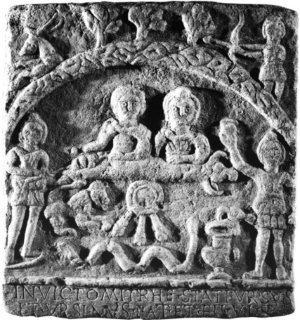
Mithraic meal from Proložac, Croatia
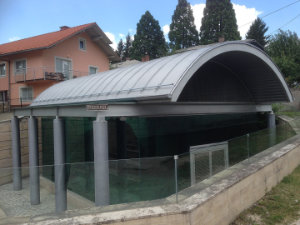
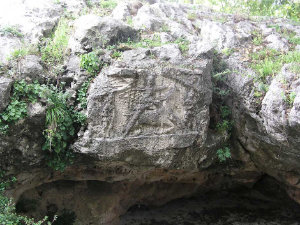
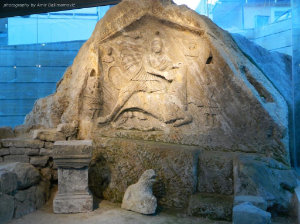
Tauroctony from Golubić
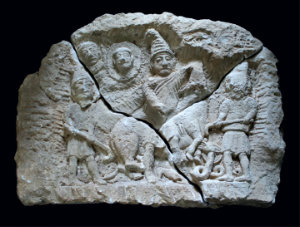
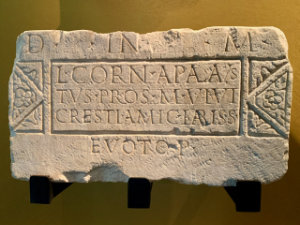
Mithraic exvoto of Dalmatia
Altar of Senj made by the slave Hermes
Altar from Skelani by Hostilius
Altar of Tihaljina
Altars of Jajce
Altar with donor lists from Solin
Under our lords Constantine Augustus, consul for the fifth time, and Licinius Junior Caesar, consuls. Under Aurelius Xenon, prefect for the second time, on the Kalends of February, we served among the Tritones: Aurelius Lucentius, Aurelius [---]ius, Aurelius Gregorius, Aurelius Firminus, Aurelius Marcellinus, Aurelius Dalmatius, [---] Valentinus, Aurelius Vincentius, Aurelius Messor.
Under our lords Constantine Augustus and Constantine, most noble Caesar, under the prefect Quintilius Faintillus, among the Tritones, on the Kalends of February: Aurelius Martinus, Aurelius Donatus, Varius Terentianus, Aurelius Stercorius, Aurelius Exuperius, Aurelius Terentianus, Aurelius Alexander, Aurelius Heraclianus, Aurelius Reditus, Aurelius Maurenus, Aurelius Balbinus, Aurelius Euticius, Aurelius Leuntius, Aurelius Senator.
Ministers among the Tritones: Aelius Valerianus, Varius Sabinus, Julius Silvius, Aurelius Fortunius, Papirius Crescent[---], Claudius Barbianus, Dirrutius Crescent[---], Aelius Dalmatius, with the permission of Nocturnus Novellus, patron of the collegium. Happily accomplished.
