Your search Al. N. Oikonomides gave 2979 results.

Standing stone statuette of Cautopates, the downward-torch bearer, found at Bordeaux and kept in the city’s museum of antiquities (musée d’Aquitaine ?).

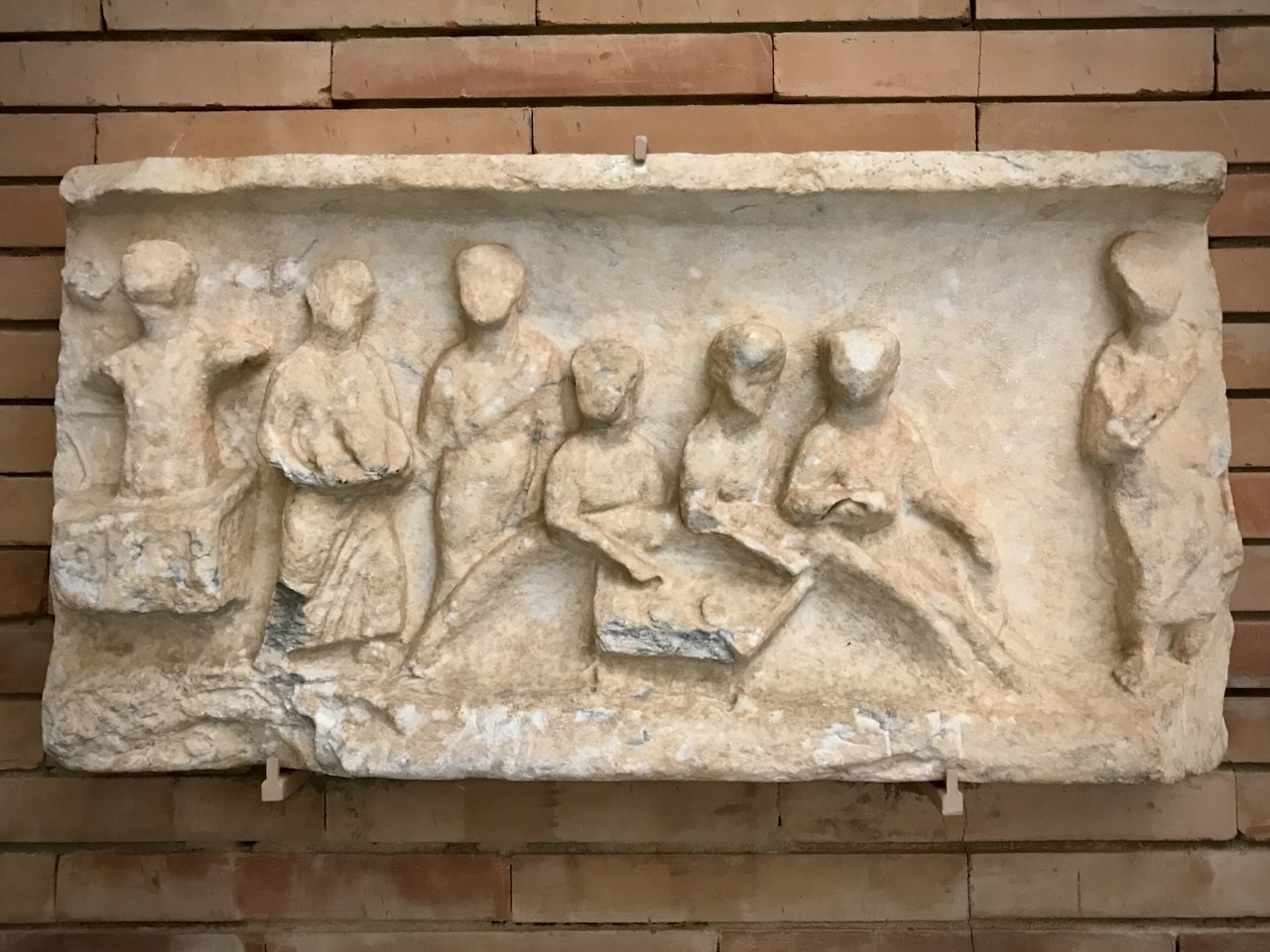
This scene of a feast from Mérida shows three persons at a table with other people standing beside them, one holding a bull’s head on a plate.

Fragment of a marble relief (H. 0.27 Br. 0.38 D. 0.045).

Relief possibly depicting Mithras-Men holding a torch and a a bust of Luna on a crescent.

Fragment of a white statue depicting a naked god entwined by a serpent with its head on his chest, found in the River Tiber.

This remarkable marble statue of Mithras killing the bull from Apulum includes a unique dedication by its donor, featuring the rare term signum, seldom found in Mithraic contexts.
The Mithraea in the territory of Arupium were first mentioned by Š. Ljubić in 1882.
The Trier Mithräum was discovered during work on the city’s new fire station. The findings included a Cautes limestone relief.
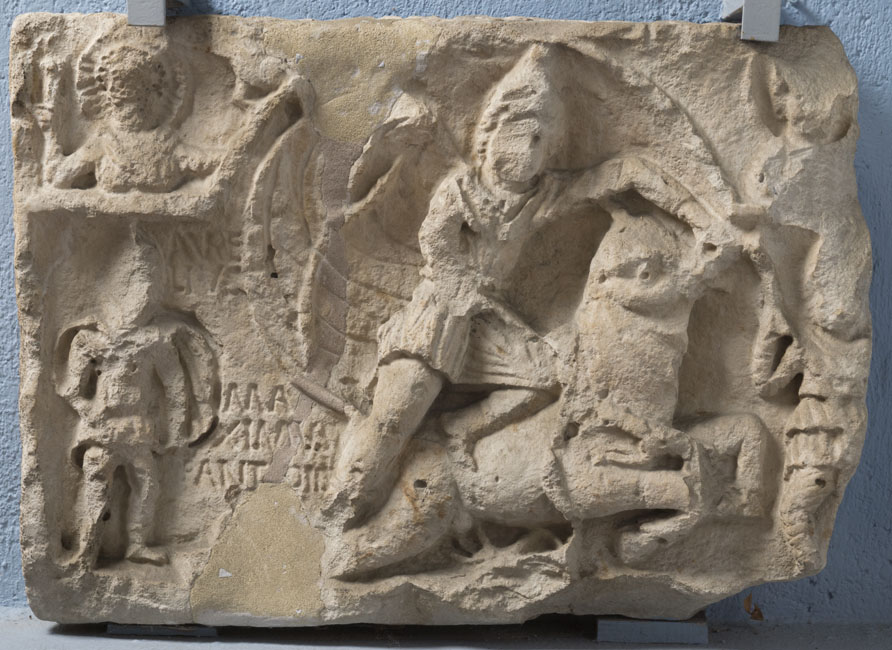
This relief of Mithras as a bullkiller was found in Golubić, Bosnia and Herzegovina, near a cementery.
This monument is too fragmentary to recod it definitely as a Mithras-monument.
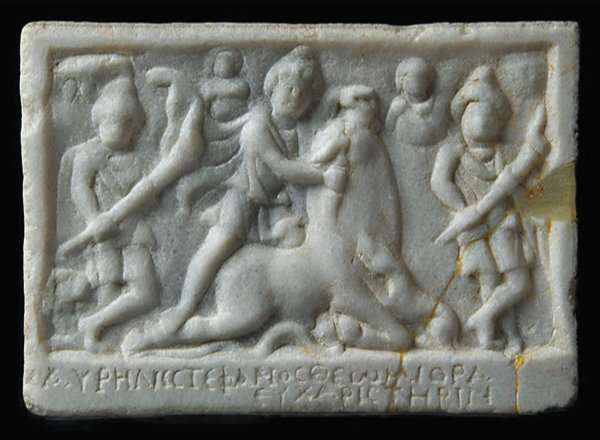
This relief of Mithras killing the bull is unique in the Apulum Mithraic repertoire because of its inscription in Greek.
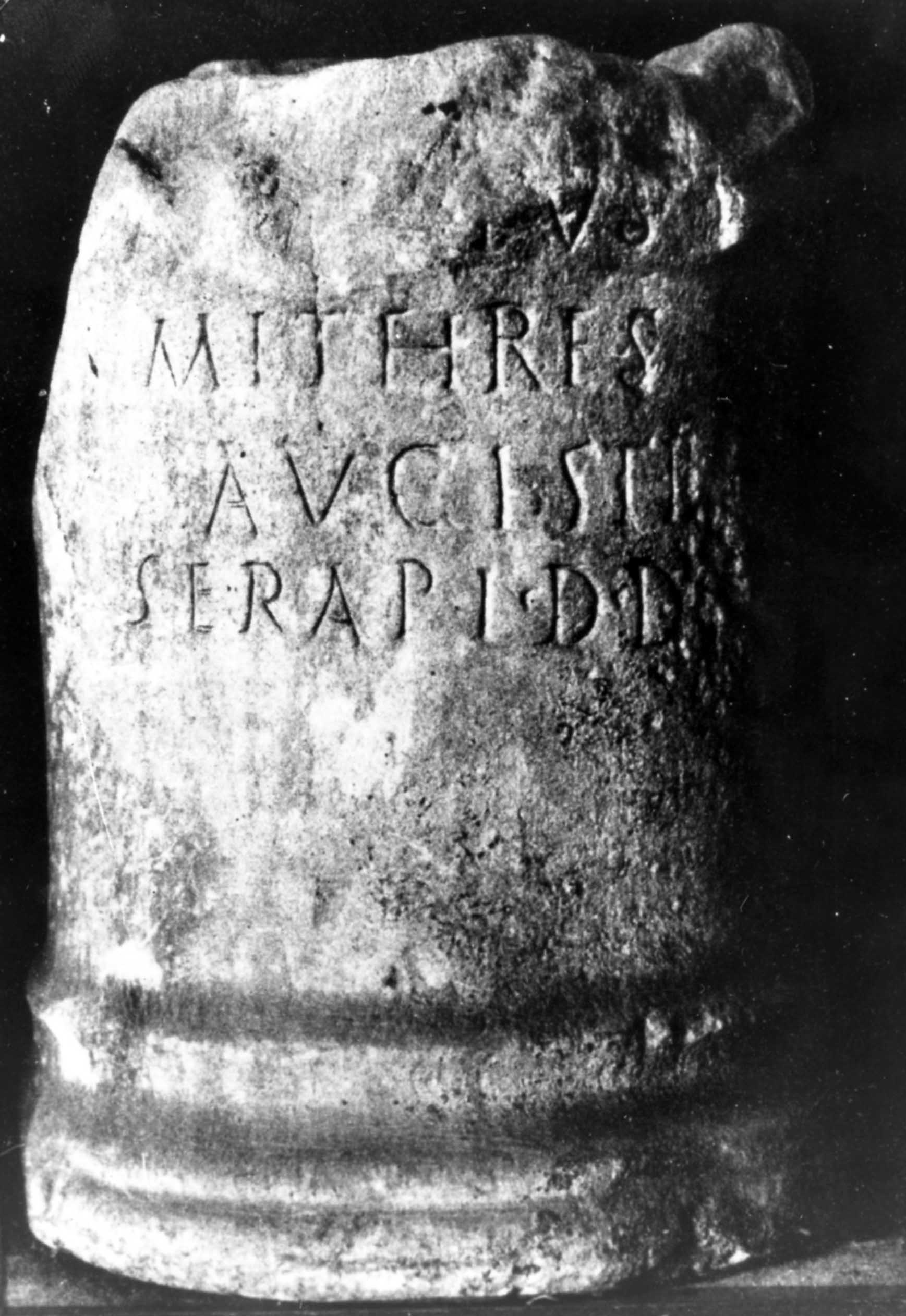
This monument, found in the Domus Flavia in Rome, bears an inscription by a certain Aurelius Mithres.
This inscription found in the Mithraeum of the Seven Spheres mentions the Pater Marco Aemiliio Epaphrodito known from other monuments in Ostia.
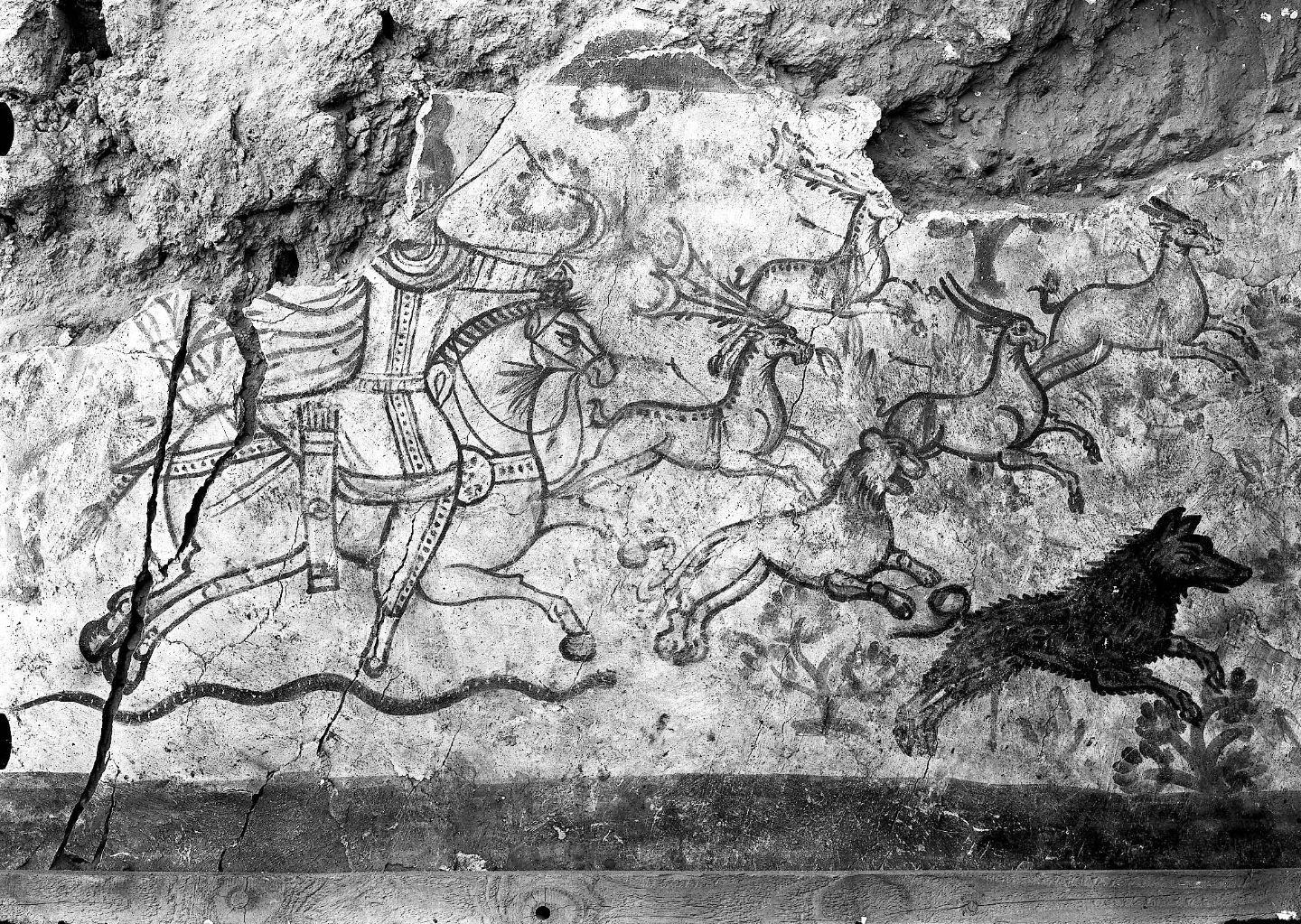
In this fresco from Dura Europos, Mithras is represented as a hunter accompanied by the lion and the serpent.
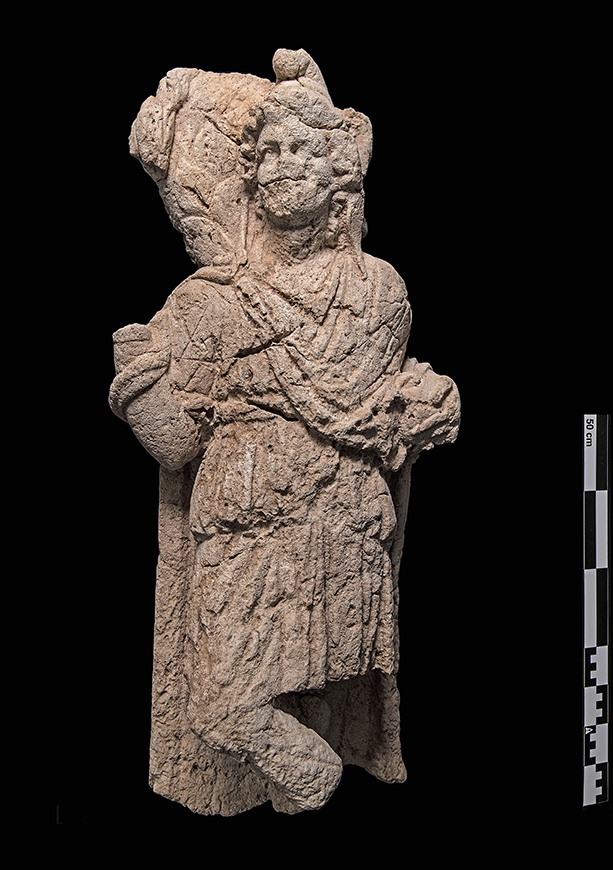
This remarkable relief by Cautes was found in what appears to be a mithraeum in Trier.
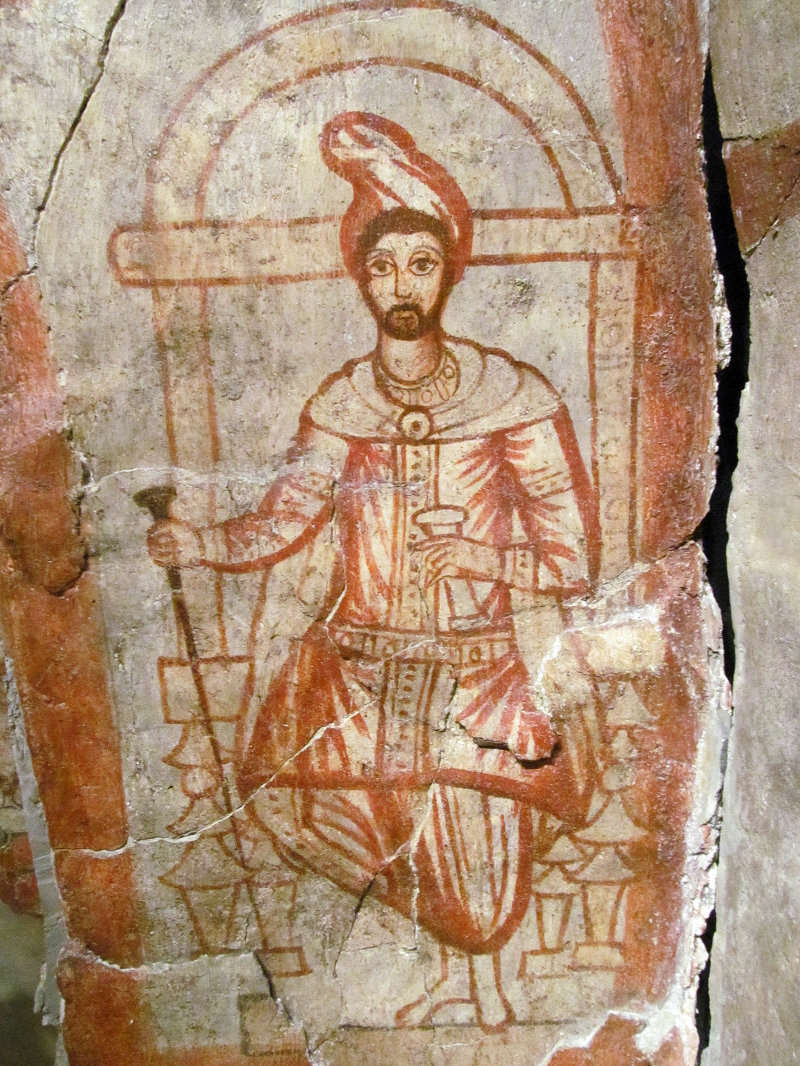
Some scholars have speculated that the scrolls both figures hold in their hands represent Eastern doctrines brought to the Western world.
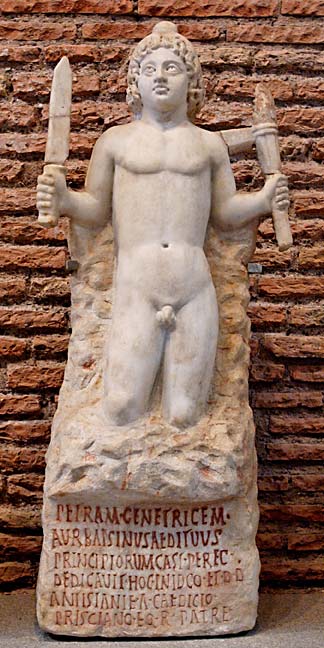
The sculpture of Mithras rock-birth from Santo Stefano Rotondo bears an inscription of Aurelius Bassinus, curator of the cult.
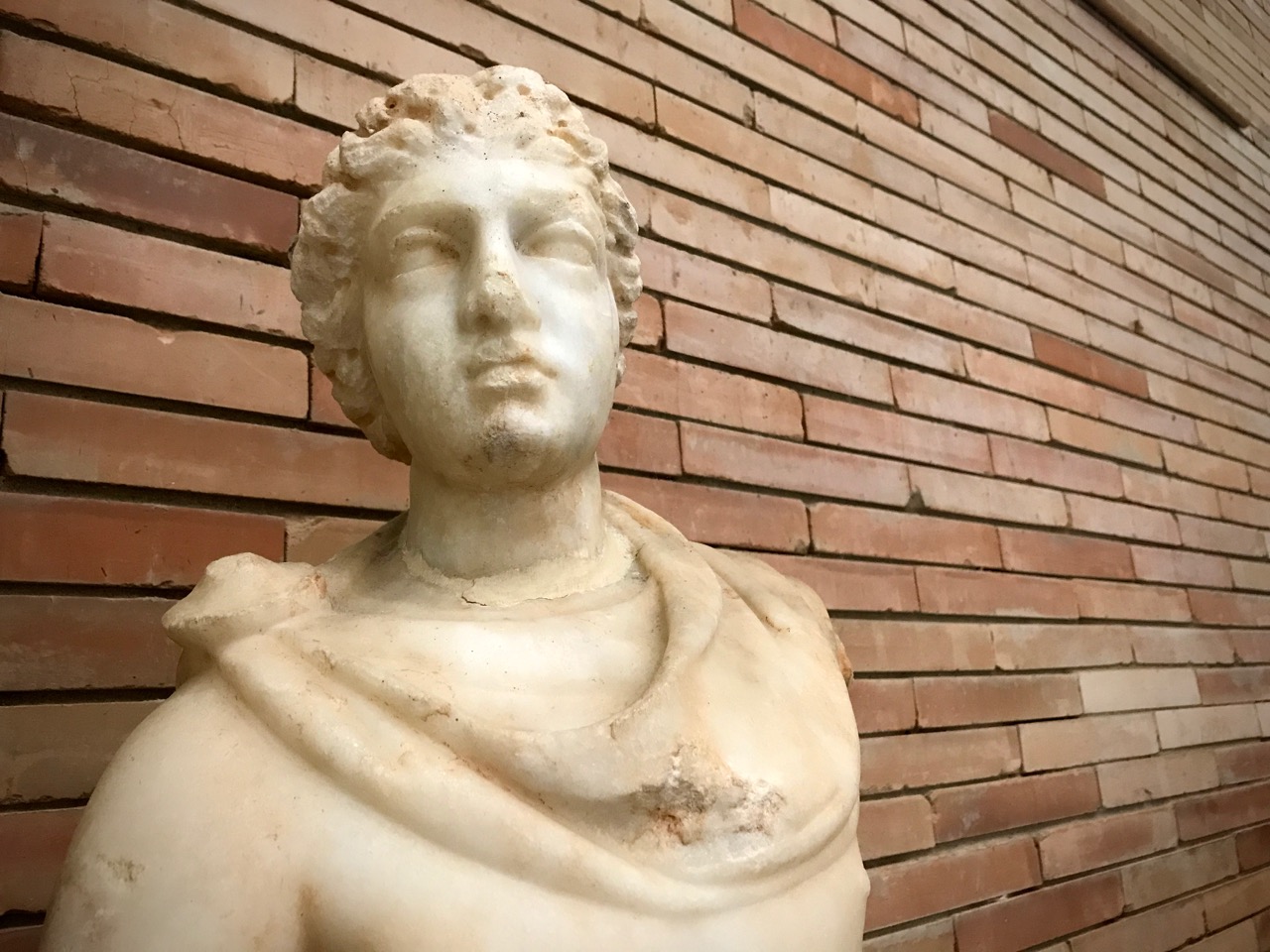
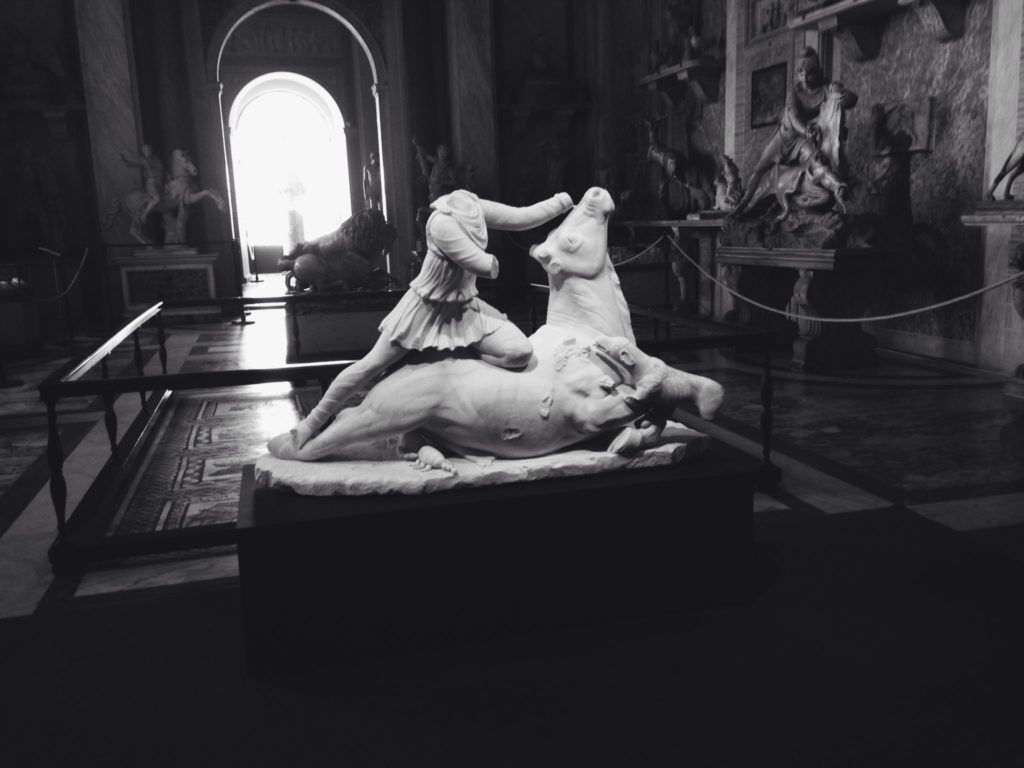
Votive sculpture of Mithras sacrificing the bull from the Mithraeum of Tarquinia.
