Your search Alba Iulia gave 153 results.

Small sandstone head in Phrygian cap from Cannstatt, ancient Clarenna, probably belonging to a statue of Cautes or Cautopates.
Gold lamina from Ciciliano showing a nude, serpent-entwined Aion-Kronos holding a key and surrounded by Greek voces magicae (2nd c. CE).
Mithraic monuments associated with Ceionius Iulianus Kamenius and linked with the inscriptions discussed in entries 395A–B.
Monumental inscription honouring the senator and Mithraic pater Kamenius together with his numerous priestly offices and initiatory roles.
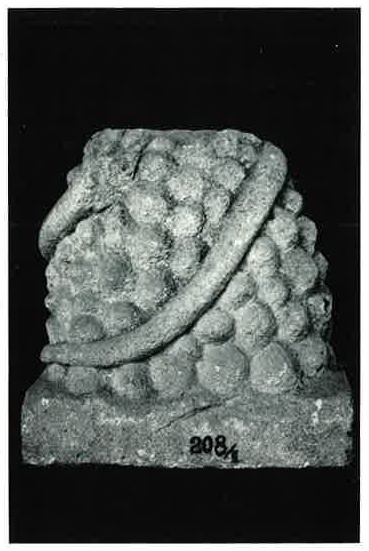
Dark sandstone statue from Mureș Port, Dacia, depicting Mithras's rock-birth with the rock encircled by a serpent; the statue's attribution to Mureș Port rather than Apulum is uncertain.
Lost white marble tauroctony relief from Turda, ancient Potaissa in Dacia, depicting the bull-slaying with dog, serpent, and scorpion; the inscription in the lower border named the dedicant Iulius Iulianus.
Head in Phrygian cap from the bed of the Danube near the Isle of Szalk, Intercisa area, Pannonia Inferior; the face is lost — possibly a torchbearer or Attis.
Base probably found during the discovery of the Dolichenum at Brigetio in 1899, Pannonia Superior; possibly belonging to the adjacent Mithraeum given its proximity.
Fragmentary marble altar from Ptuj, ancient Poetovio, dedicated to Deo Soli invicto Mithrae by a dedicant identified with the publicum portorium Illyricum; the name may be Iulius or Iulianus.
Altar from Töltschach am Zollfeld, Noricum, dedicated to Soli invicto Mithrae for the welfare of the Augustus in honour of the Domus Divina by Hilarus, imperial freedman and tabularius patrimonii regni Norici, and Epictetus, imperial arkarius…

Administrator, probably a slave of Pater Alfius Severus, who dedicated the main altar of the Mitreo di Marino.
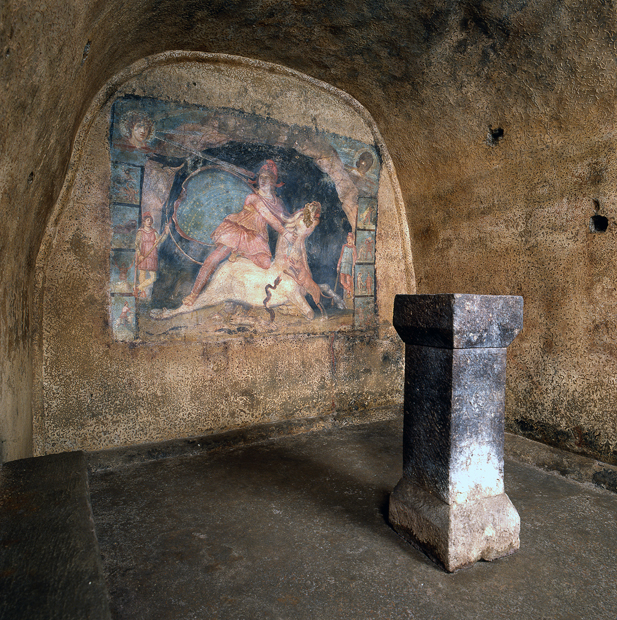
The Marino Mithraeum preserves one of the most elaborate painted cycles of Mithras’ myth, combining the tauroctony, planetary symbolism and scenes from the god’s sacred narrative.

The capital of Hispania Tarraconensis, Tarraco is the oldest Roman settlement on the Iberian Peninsula.
Emona or Aemona was a Roman castrum, located in the area where the navigable Nauportus River came closest to Castle Hill, serving the trade between the city’s settlers – colonists from the northern part of Roman Italy – and the rest of the empire.
The Gaulish name of today Martigny was either Octodurus or Octodurum in the 1st century BC. It was conquered by the Romans in 57 BC and occupied by Servius Galba with the Legion XII.
Vienna was the capital of the Allobroges, a Gallic people, until it was conquered by the Romans in 47 BC. It became a Roman provincial capital, conveniently located on the Rhône, then a major communication route.
One of the clearest examples of the late Roman aristocracy’s involvement in the mysteries of Mithras and other initiatory cults during the fourth century.

Hector erected an altar to Mithras in Emerita Augusta by means of a ‘divine vision’.

Late Roman senator, public augur and Mithraic pater active in the second half of the fourth century CE.
