Your search Apt gave 105 results.
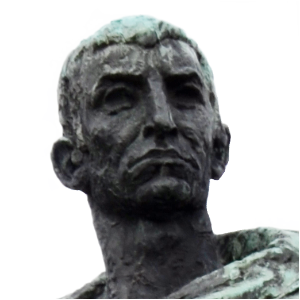
Danube region can be traced back to the legions that fought under his command in Armenia.

The Cilician pirates incorporated significant divine feminine elements, notably Anahita, into their Mithraic practices, profoundly influencing the initiation rites within the Roman Empire.
The Mithraeum of Saara, Syria, has been identified through the deciphering of the remains of the iconographic programme on its arch.
The base of the column bears an inscription that records the rebuilding of a palace at Ectabana ’by the favour of Ahuramaza, Anahita and Mithra’.
Tracing the links between the cult of Mithras and the Proud Boys’ quest for identity, power, and belonging. How ancient rituals and brotherhood ideals resurface in radical modern movements.
Over the last century or so, a great deal has been said about the god Mithras and his mysteries, which became known to the European world mainly through his Roman cultus during the Imperial Period.
In 1852, Károly Pap, a naval captain, unearthed several Mithraic monuments in his garden at Marospartos, including this altar.
On one of the capitals of the cathedral of Santa Maria Nuova in Monreale, Sicily, an unusual turbaned bull-slaying Mithras has been recorded.

Ernest Renan suggested that without the rise of Christianity, we might all have embraced the cult of Mithras. Nevertheless, it has had a lasting influence on secret societies, religious movements and popular culture.
Preamble and notes published by G. R. S. Mead in his series Echoes from the Gnosis 1907, London and Benares. Translation of the manuscript by Dieterich Eine Mithrasliturgie 1903, Leipzig.
Excerpted from Mushroom, Myth and Mithras, this passage elaborates on the Mithraic ritual and the degree of Nymphus.
The Mithraea in the territory of Arupium were first mentioned by Š. Ljubić in 1882.
Laurent Bricault has revolutionised Mithraic studies with the exhibition The Mystery of Mithras. Meet this professor in Toulouse for a fascinating look at the latest discoveries and what lies ahead.
This relief of Mithras as bull slayer is surrounded by Cautes and Cautopates with their usual torch plus an oval object.
This relief of Mithras killing the bull is unique in the Apulum Mithraic repertoire because of its inscription in Greek.
Chapter of In Search of Cyrus devoted to the origins of the Iranian god Mithra.
In 1938 this Mithraeum was found 3.45 mtrs under the Basilica of S. Lorenzo in Damaso, in a cellar near the Sacrament's Chapel.
The concluding book of Apuleius’ Golden Ass (or Metamorphoses), where Lucius, the story’s protagonist, undergoes initiation into the mysteries of Isis and Osiris.
