Your search Ay-Todor gave 1062 results.
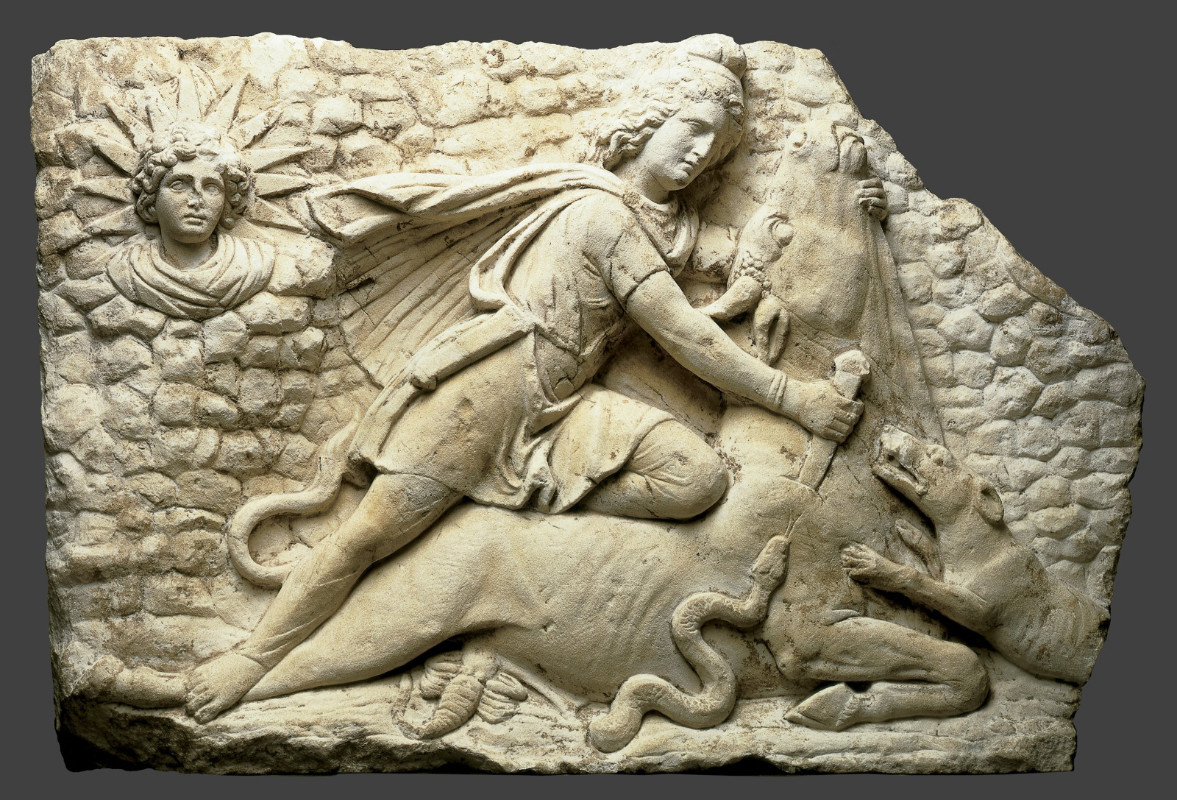
In the tauroctonic relief on display at the Cincinnati Art Museum, Mithras slaughters the bull over a rocky background.
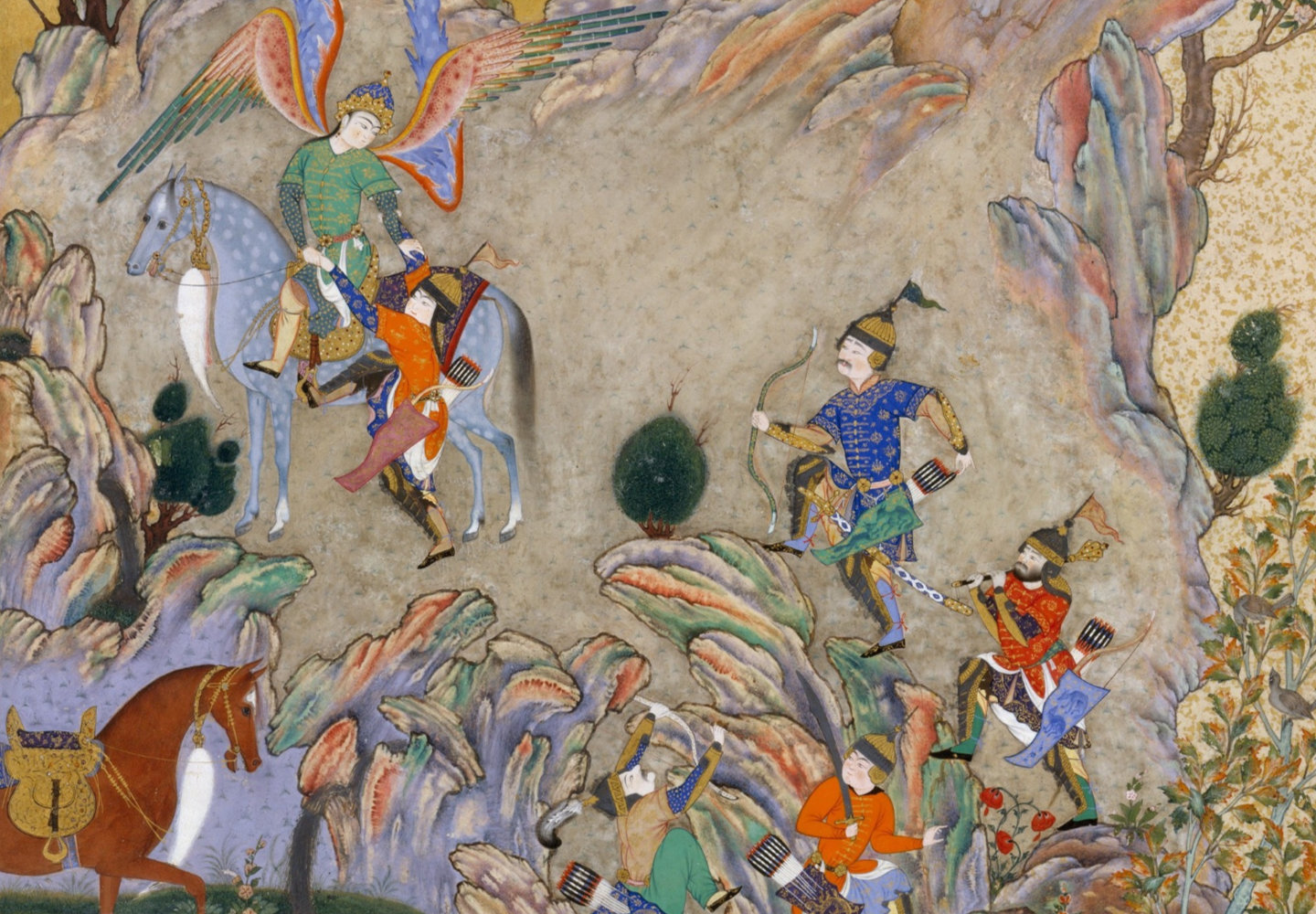
We propose to revisit a passage by the prolific author Marteen Vermaseren that highlights correspondences today forgotten between the Roman Mithras and its Eastern counterparts.

Mithra et ses actualités - Journée d'études (17 décembre 2021) au Musée royal de Mariemont.

The dedicator of this marble basin could be the same person who offered the sculpture of Mithras slaying the bull in the Mitreo delle Terme di Mitra.
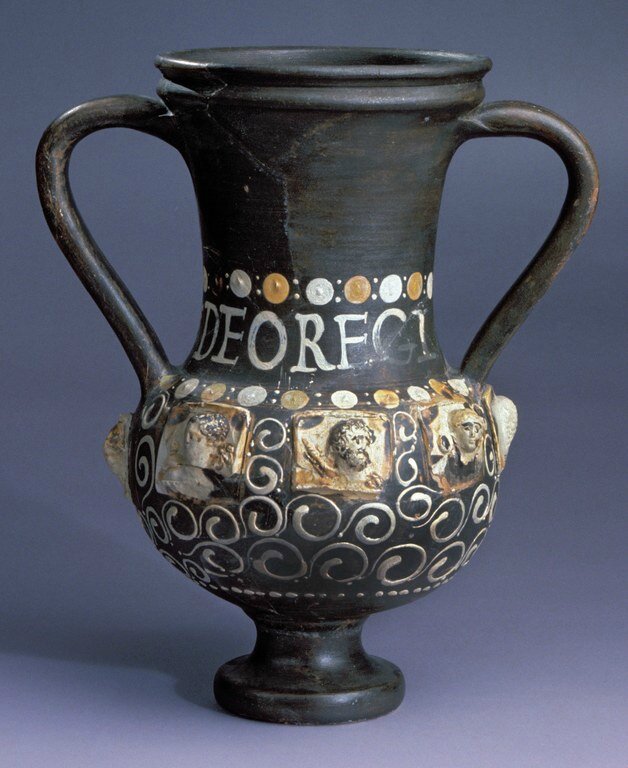
The vase bears an inscription to the god but also 'king' Mithras.
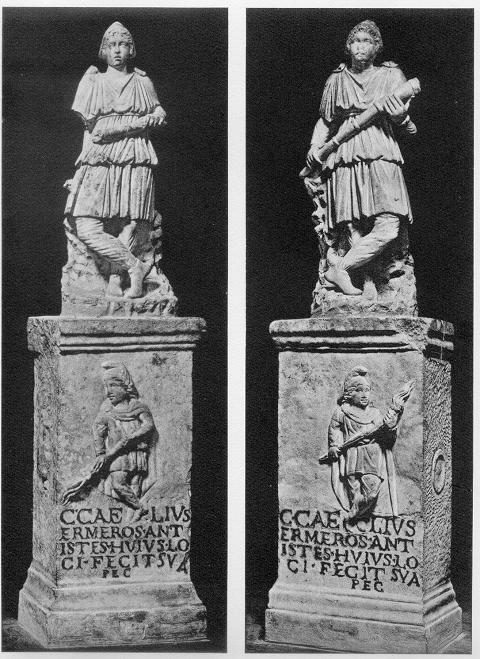
The sculptures of Cautes and Cautopates from the Mitreo del Palazzo Imperiale may have been reused from an older mithraeum in Ostia.
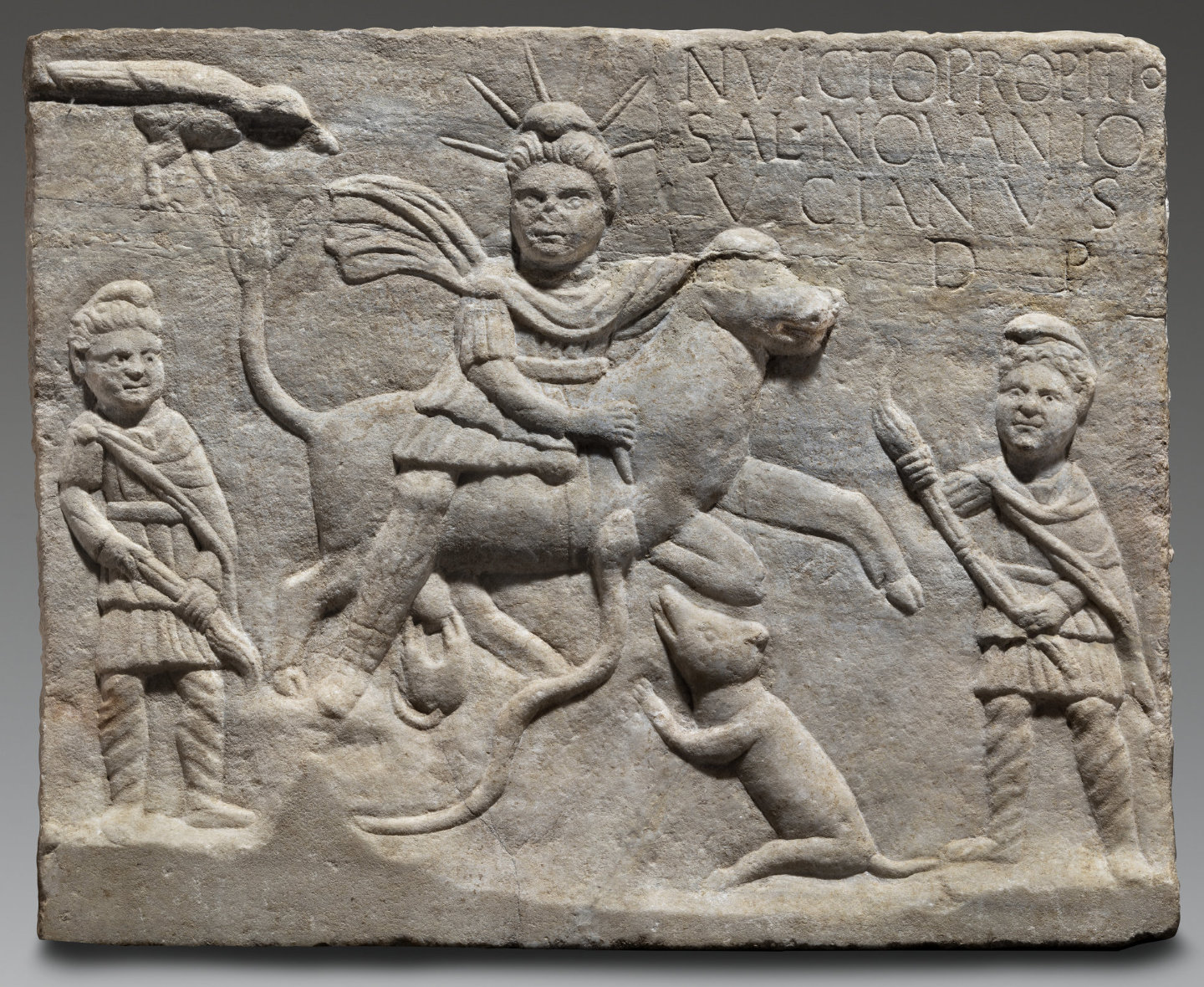
The Macerata Tauroctony shows Mithra slaying the bull with the usual Pyrigian cap and six rays around his head.
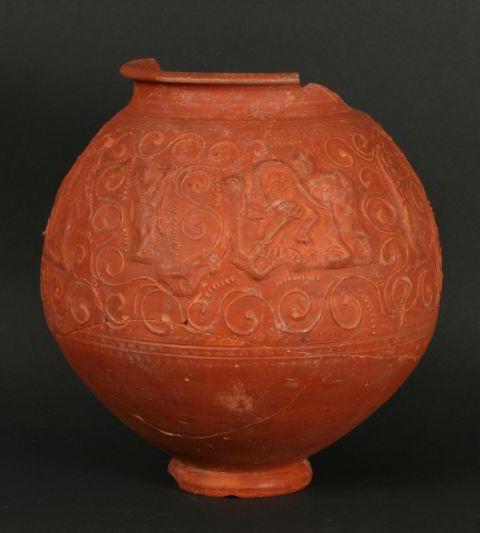
This terracotta vase features prolific decoration, including Mithras Tauroctonos, Fortuna, Cautes, a dog and Pan playing a syrinx.
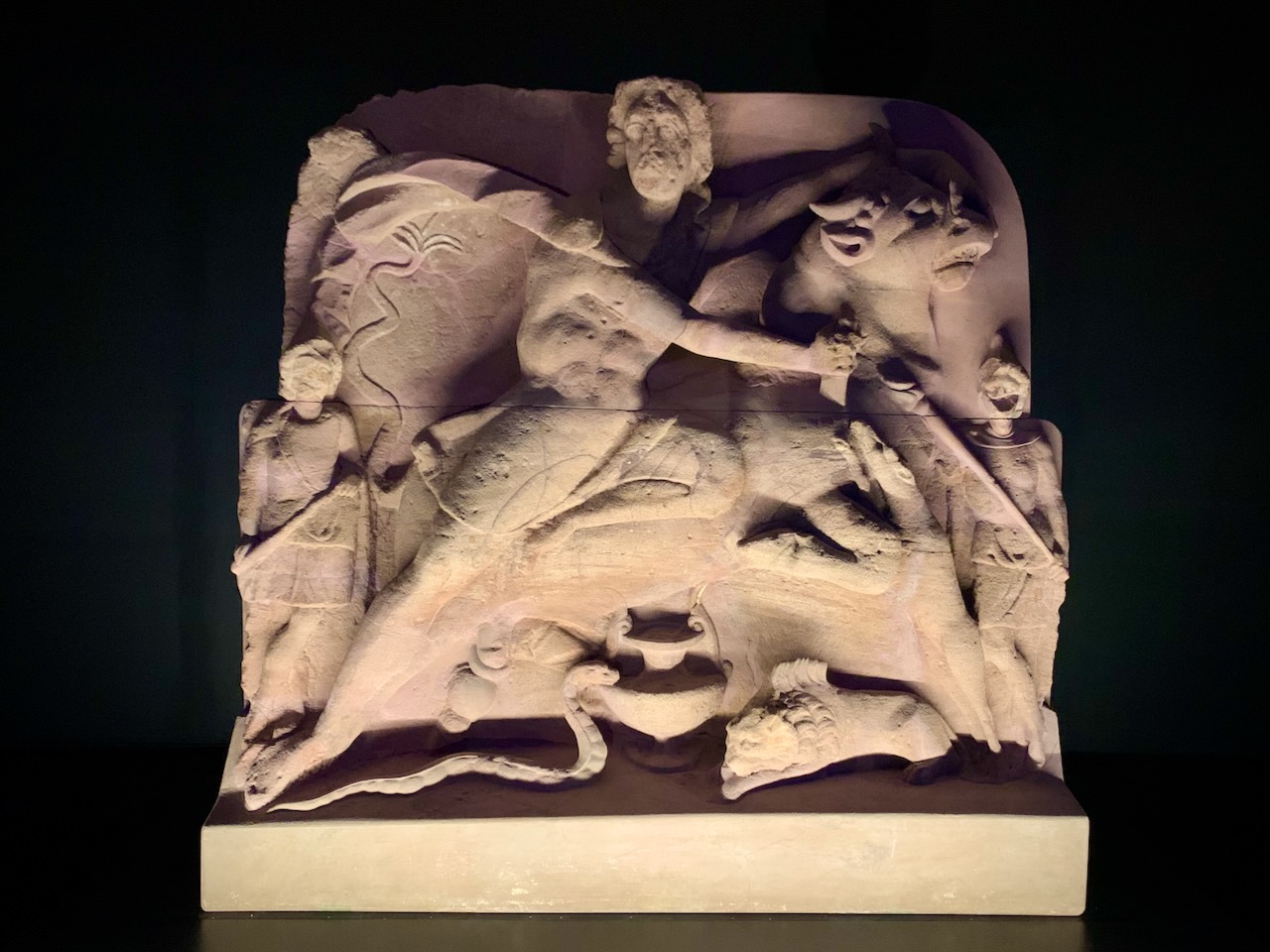
Maarten Vermaseren acquired this rosso antico marble of Mithras slaying the bull in 1961.
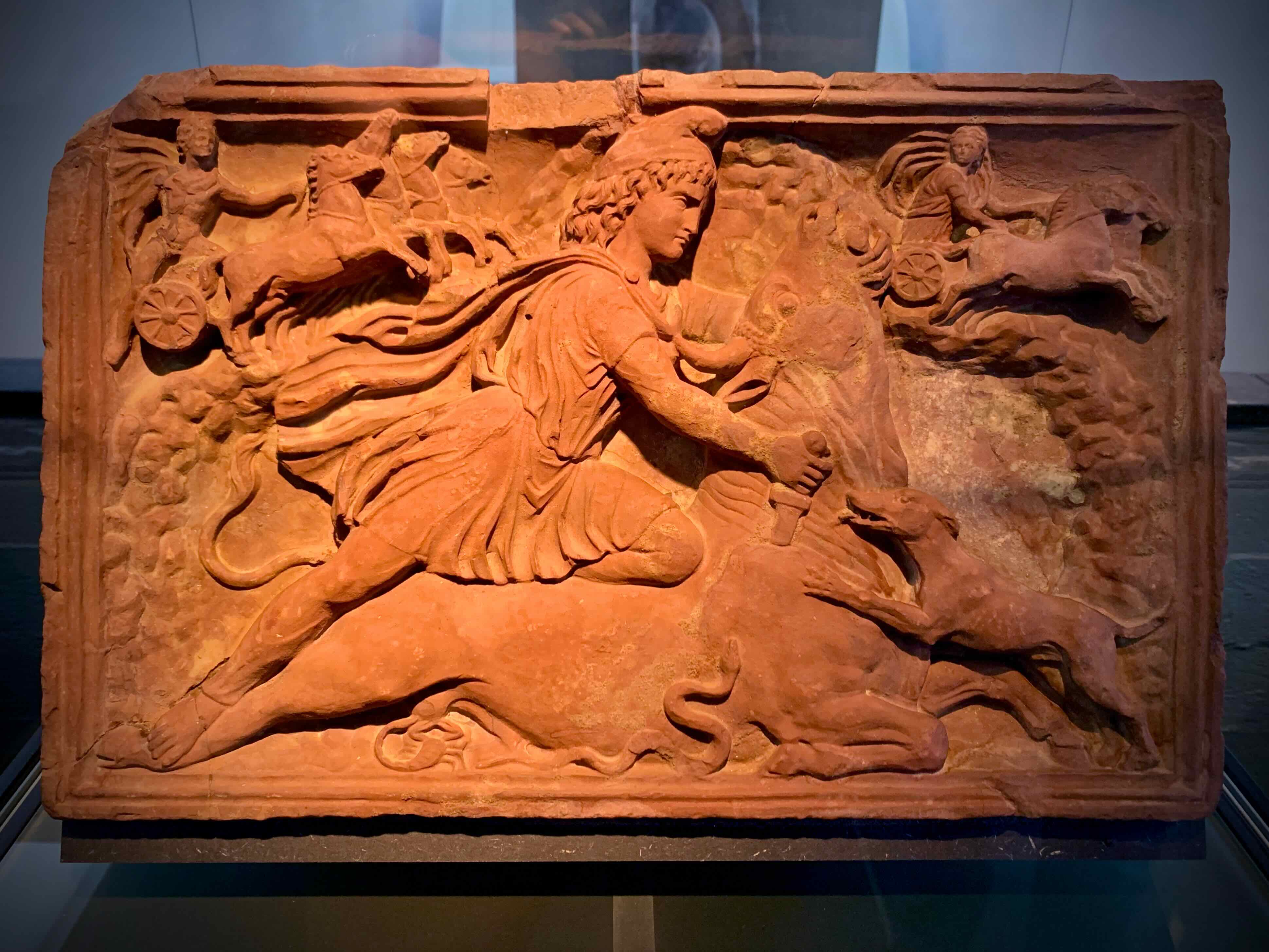
The relief of Mithras slaying the bull from Nida's Mithraeum III was found in two pieces in 1887, destroyed during an air raid on Frankfurt in 1944, and restored in 1986.
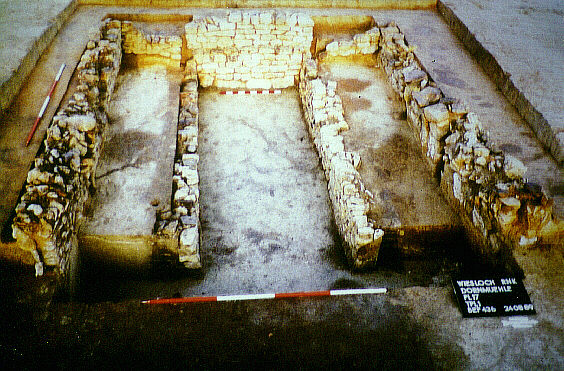
The first members of the Wiesloch Mithraeum may have been veterans from Ladenburg and Heidelberg.
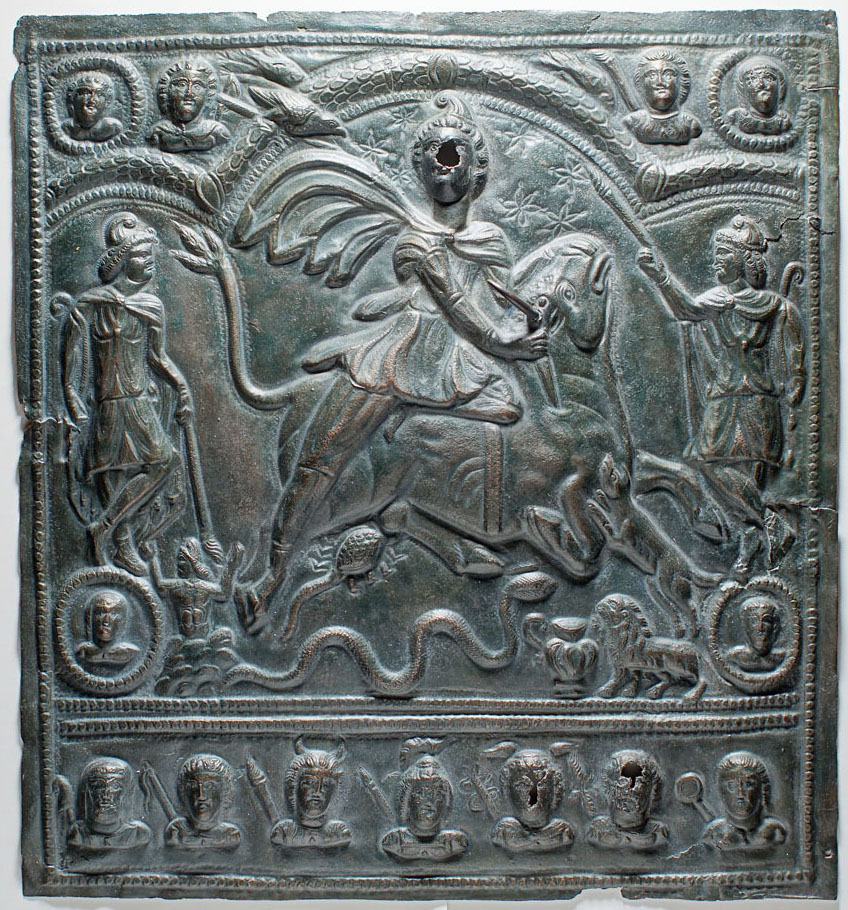
Szony's bronze plate shows Mithra slaying the bull and the seven planets with attributes at the bottom of the composition.
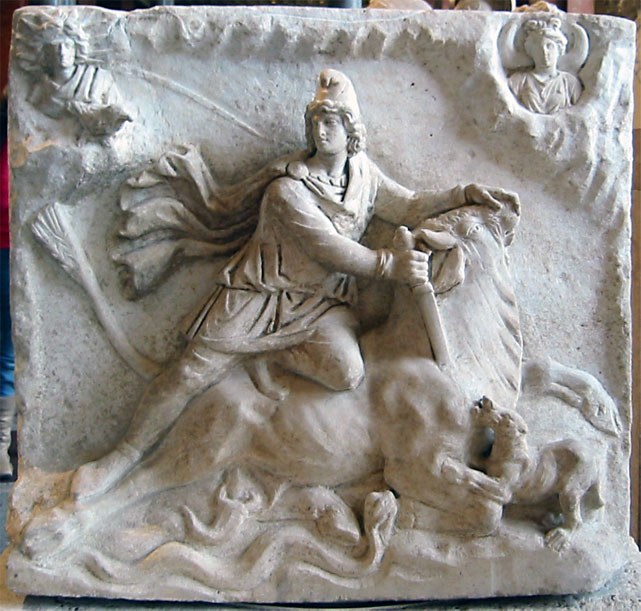
The marble shows Mithras slaying the bull, on one side, and Sol and Mithras feasting on a bull skin, on the other.
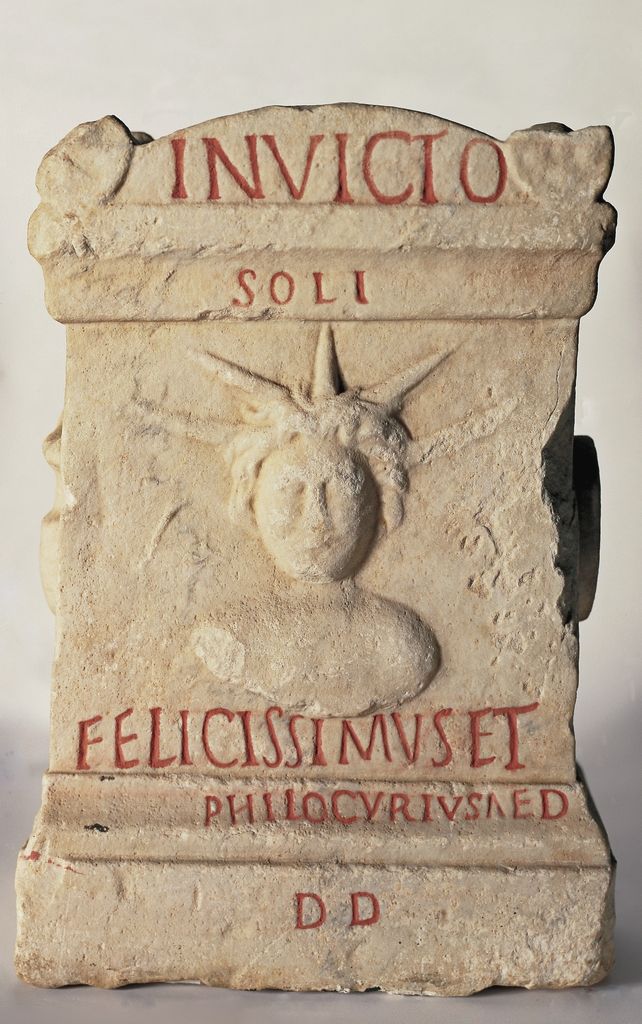
This small altar found in Rome depicts the god Sol with five rays around his head.
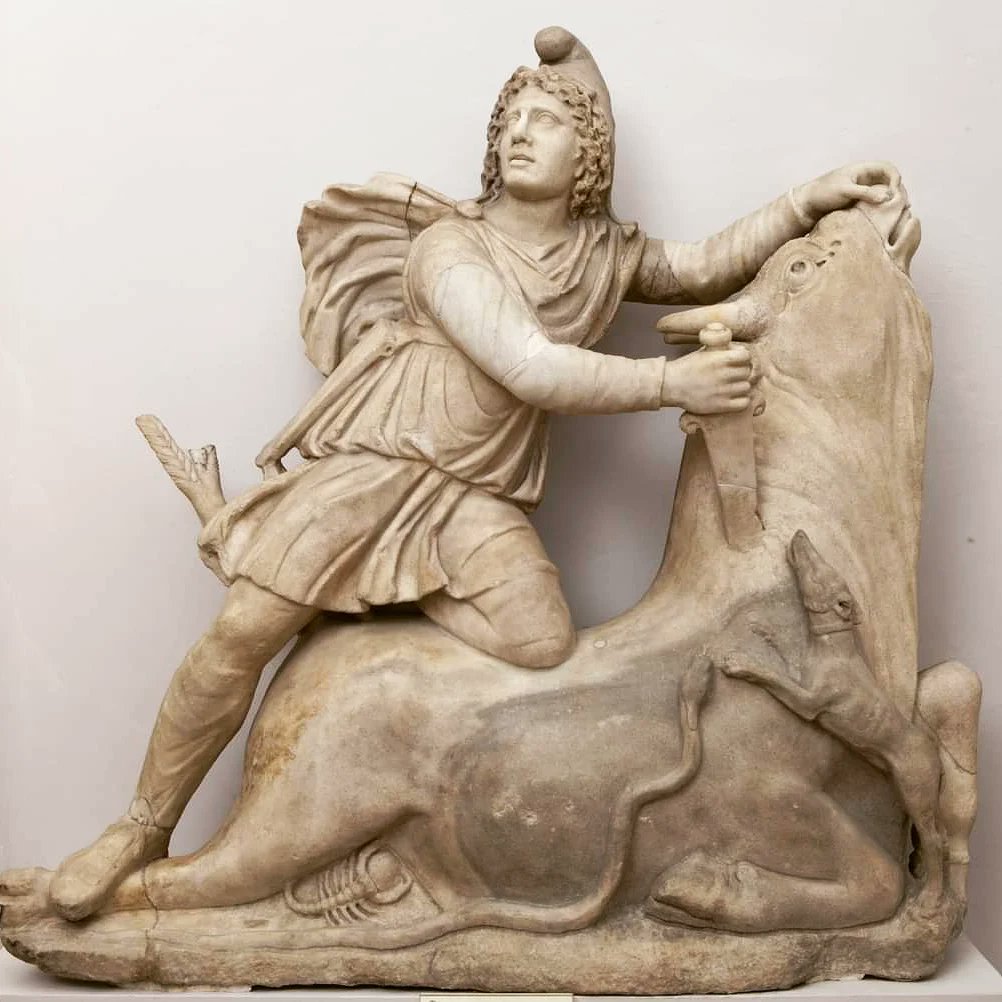
This sculpture of Mithras slaying the bull was bequeathed to the Republic of Venice in 1793 by Ambassador Girolamo Zulian.
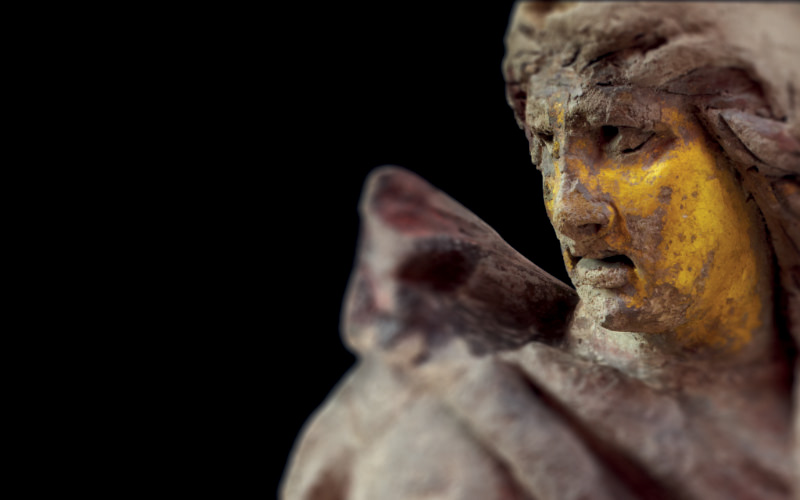
Three European museums celebrate Mithras with a continental exhibition featuring more than 200 works of art from Roman times to the present day.

Jason Reza Jorjani, PhD, is a philosopher and author of Prometheus and Atlas, World State of Emergency, Lovers of Sophia, Novel Folklore: The Blind Owl of Sadegh Hedayat, and Iranian Leviathan: A Monumental History of Mithra's Abode.
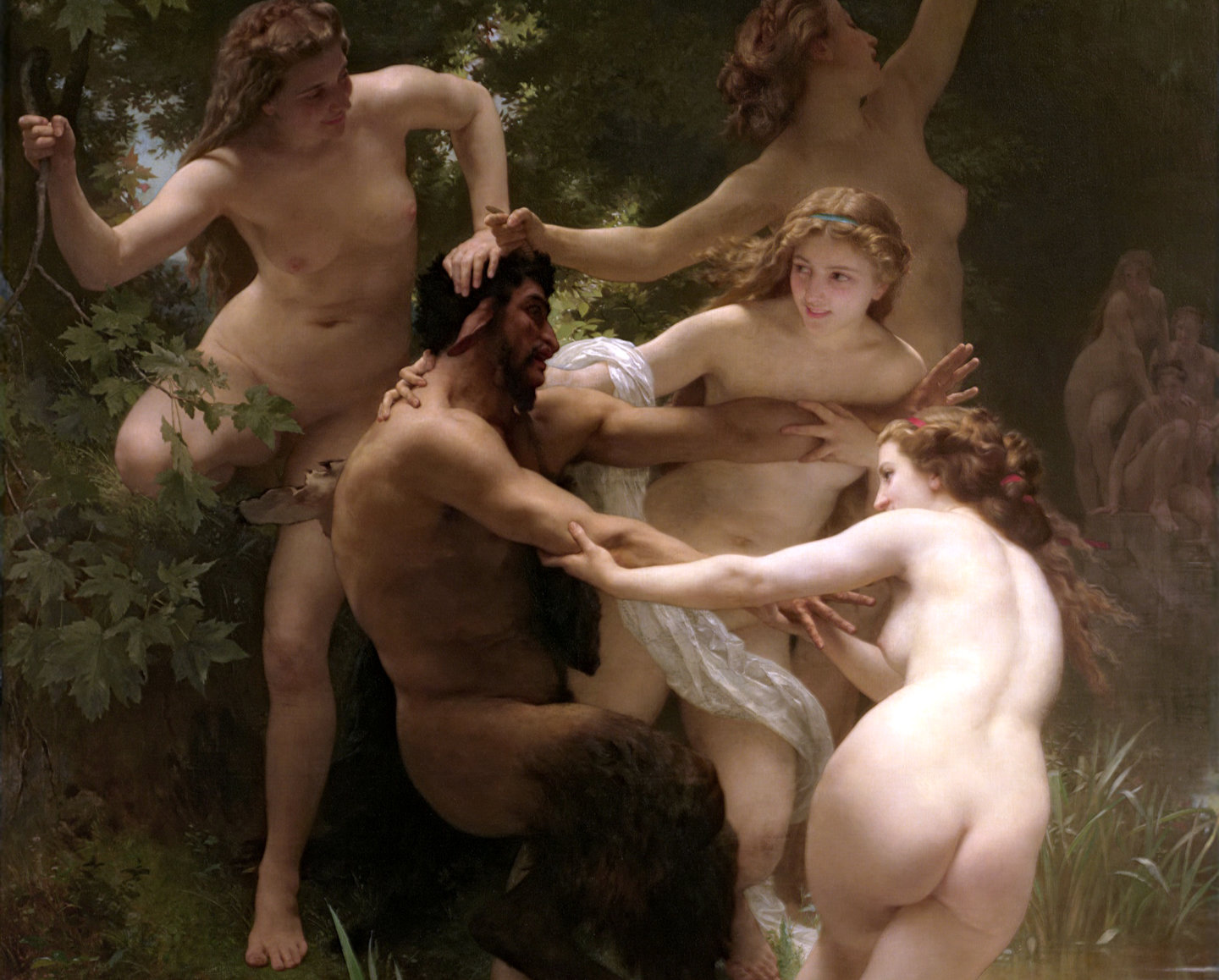
Between the 1st and 4th centuries, Mithraism developed throughout the Roman world. Much material exists, but textual evidence is scarce. The only ancient work that fills this gap is Porphyry’s intense and complex essay.
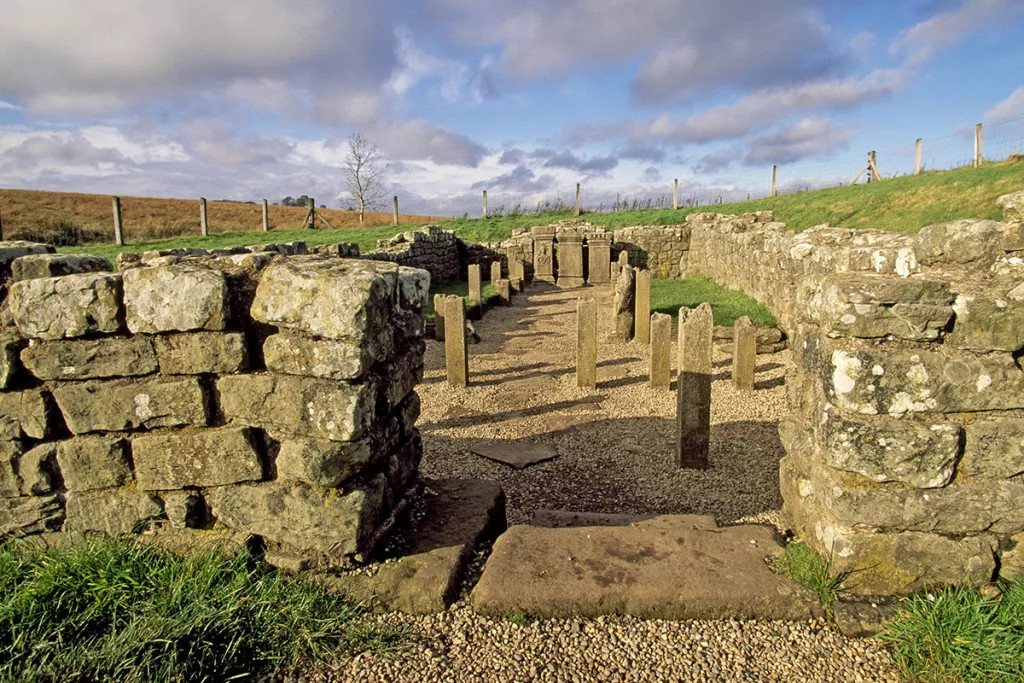
The temple of Mithras disclosed three main stages of development, the second exhibiting two reconstructions.
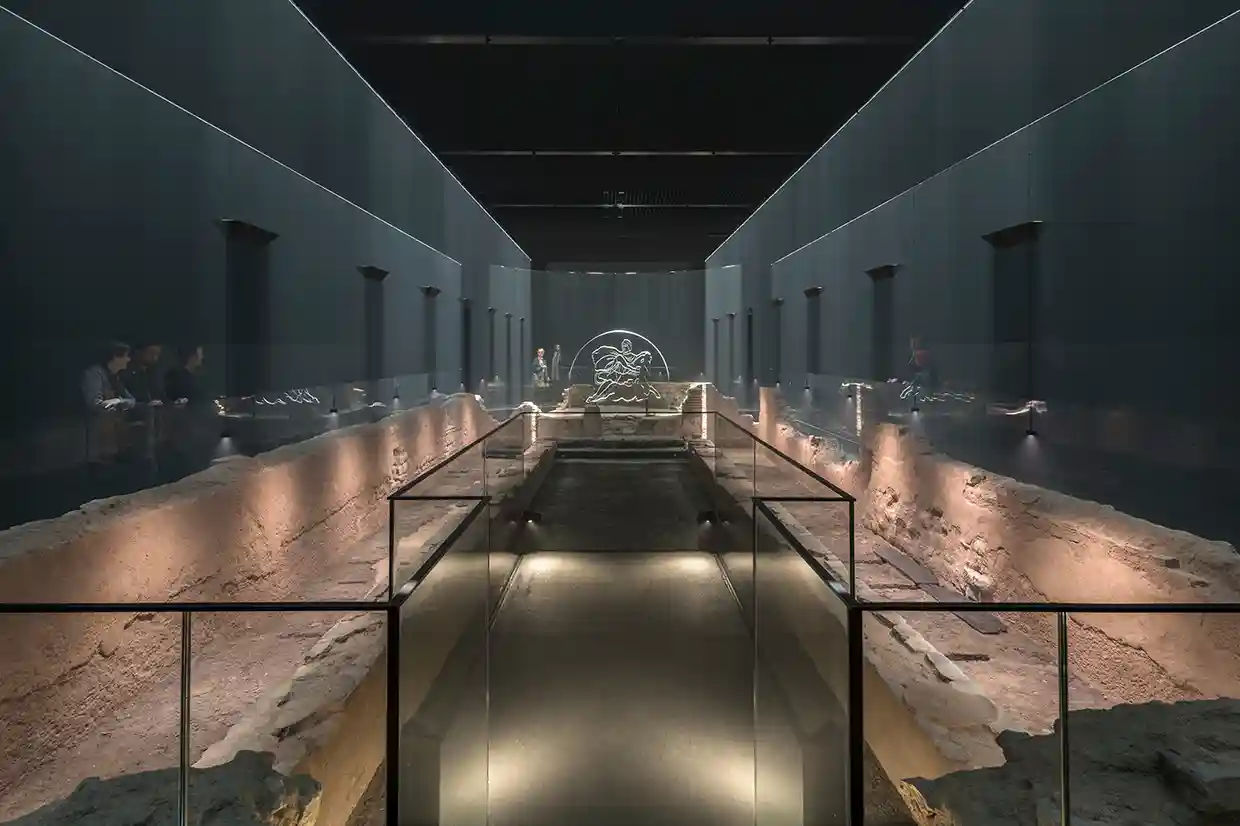
Visitors to new museum will uncover mystery cult of Mithras the bull slayer in multi-sensory experience.
