Your search Ay-Todor gave 1062 results.
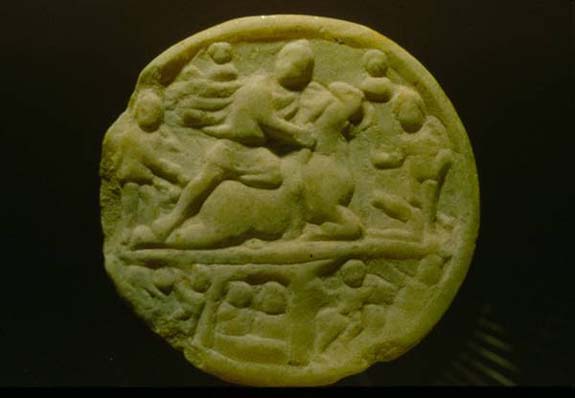
The small medallion depicts three scenes from the life of Mithras, including the Tauroctony. It may come from the Danube area.
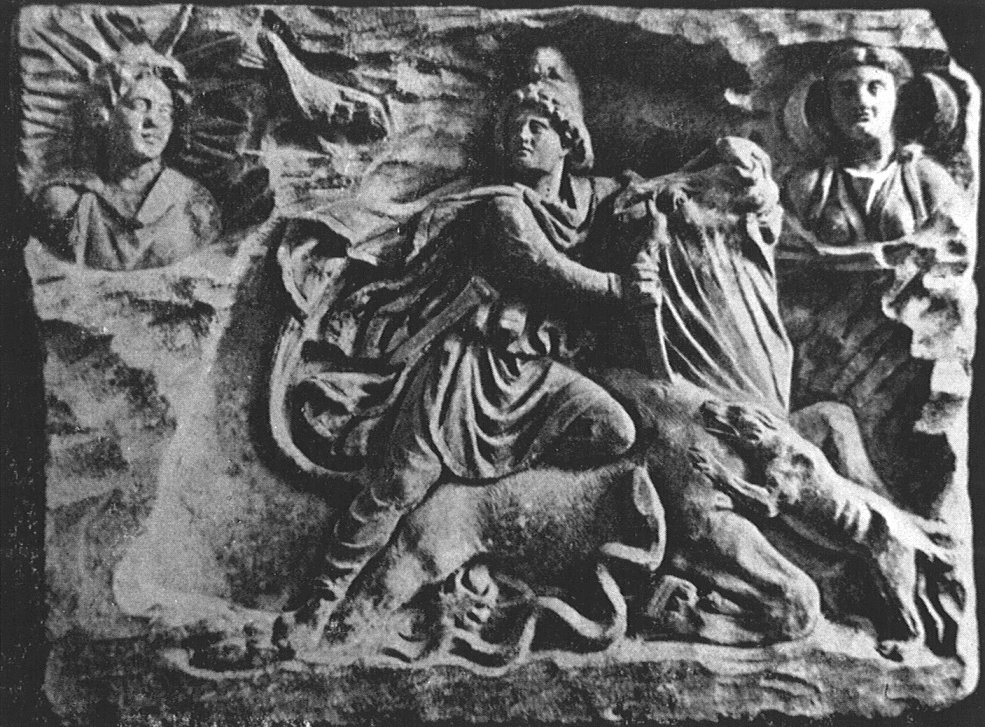
This marble relief depicting Mithras as a bull slayer was found in the back room of the Mithraeum of the Circus Maximus.
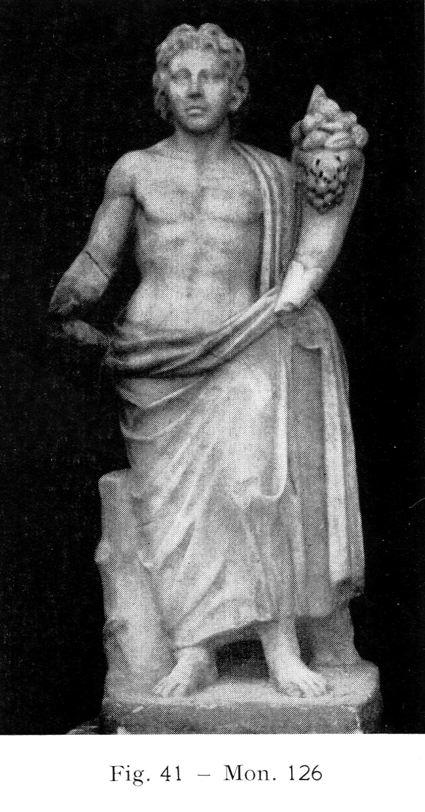
The statue of Skikda has seven holes in his hair for fastening rays.

Roman stone low-relief depicting Mithras as a bull-slayer, with the upper part of his head missing.
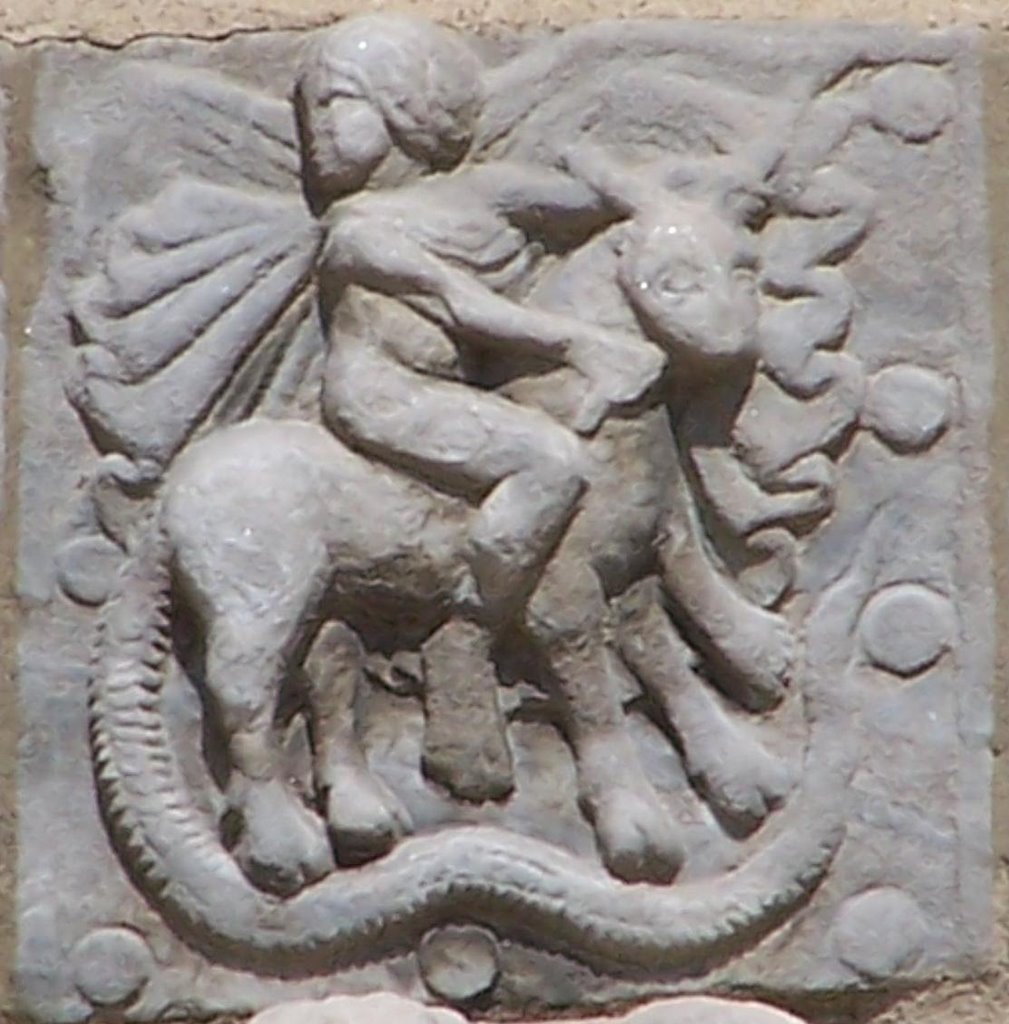
Mithras slaying the bull appears as the sign of Capricorn in a zodiacal sequence on the Pórtico del Cordero of the Abbey de Santo Domingo de Silos, Burgos, Spain.
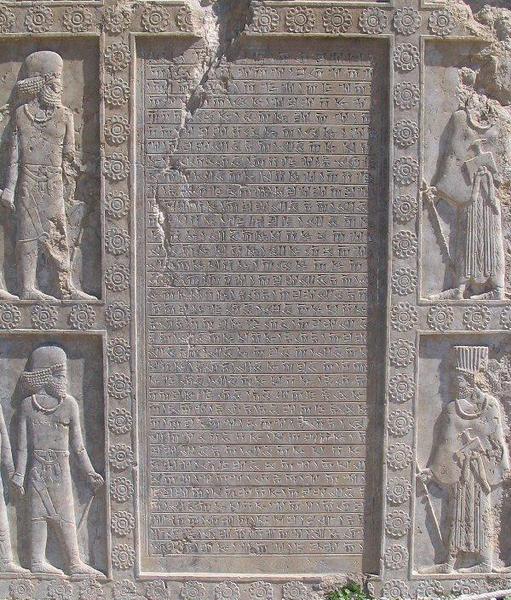
Located at the western entrance to the Palace of Darius in Persepolis, this tablet bears an inscription mentioning Ahuramazda and Mithra.
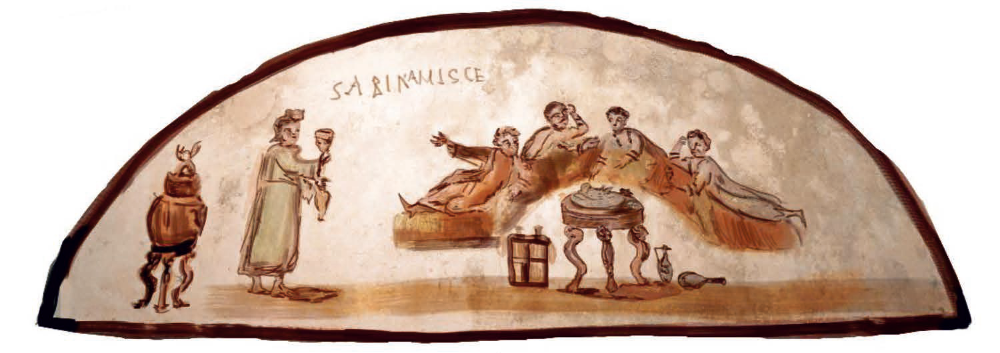
A dinner scene with Sabina from the Catacombe dei Santi Marcellino e Pietro, near Rome, may have been commissioned by a follower of Mithras.

White marble relief, found near Aix "a la Torse dans un enclos ayant appartenu à la famille de Colonia".

The importance of the Mithraeum of Marino lies in its frescoes, the most significant of which is that of Mithras slaying the bull, surrounded by mythological scenes.
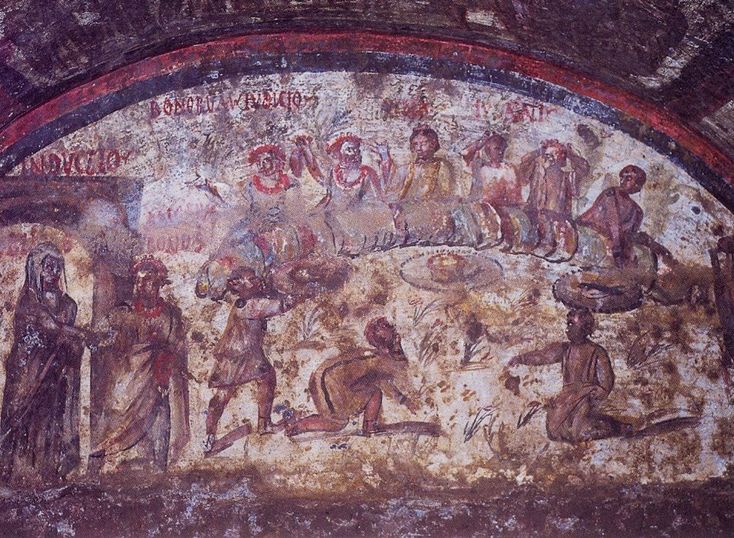
The epigrahy includes a mention of Marcus Aurelius, a priest of the god Sol Mithras, who bestowed joy and pleasure on his students.
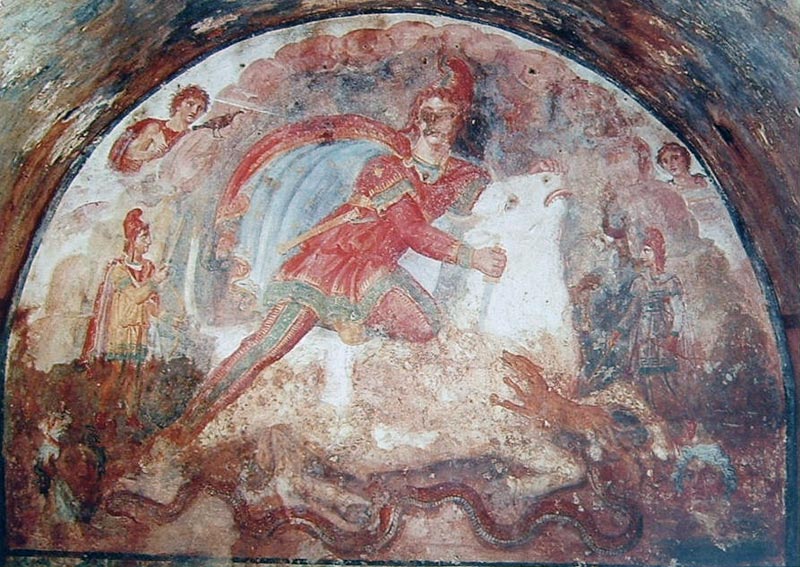
The main fresco of the Mithraeum of Santa Maria Capua Vetere portrays Mithras slaughtering a white bull.
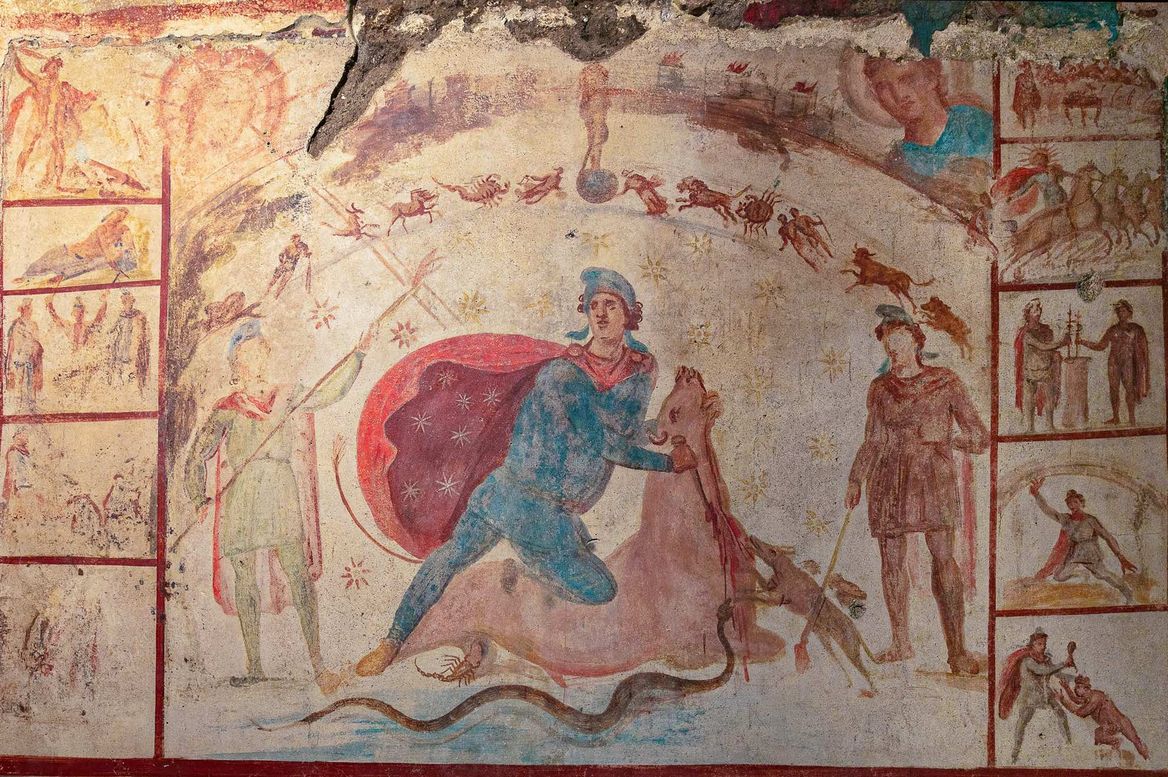
The votive fresco from the Mithraeum Barberini displays several scenes from Mithras’s myth.
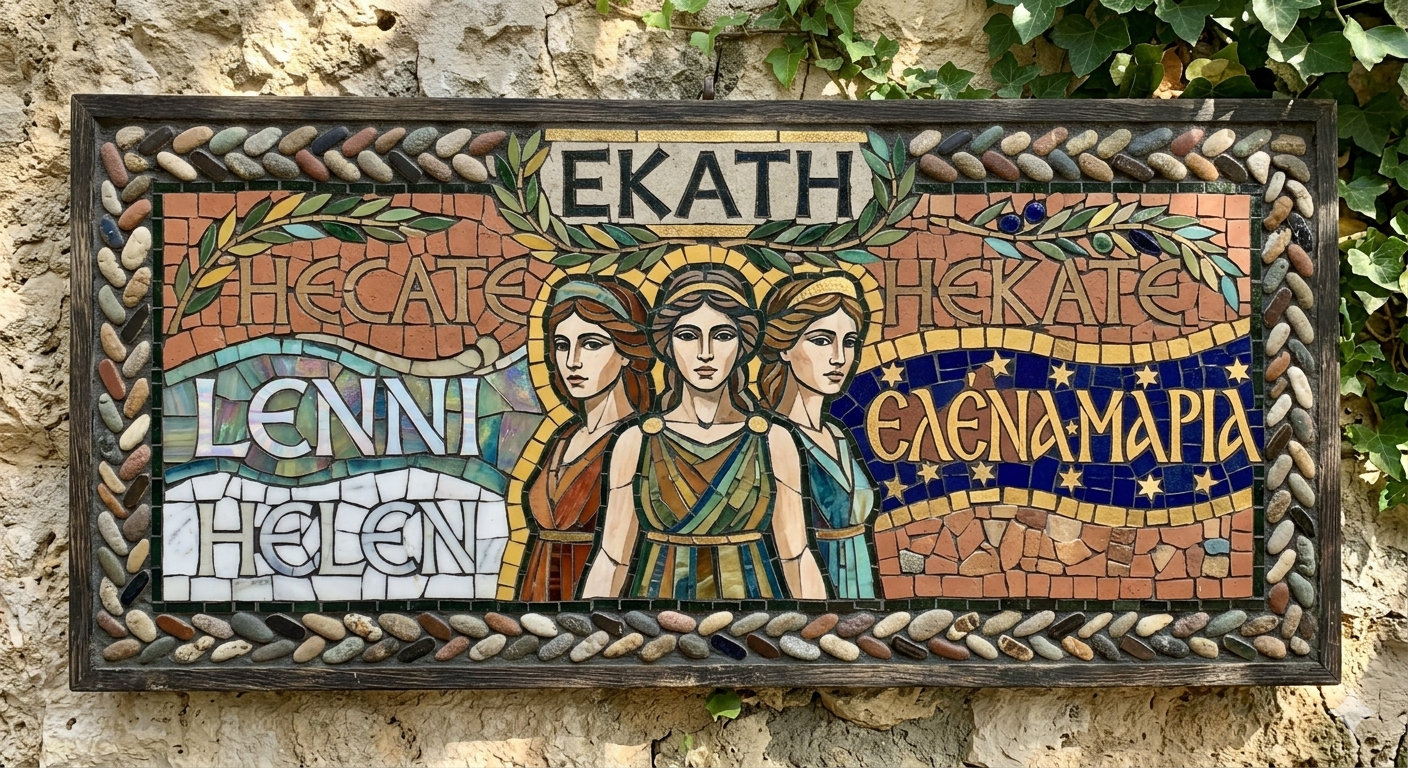
On what Hekate’s name may or may not tell us, and why the uncertainty matters.
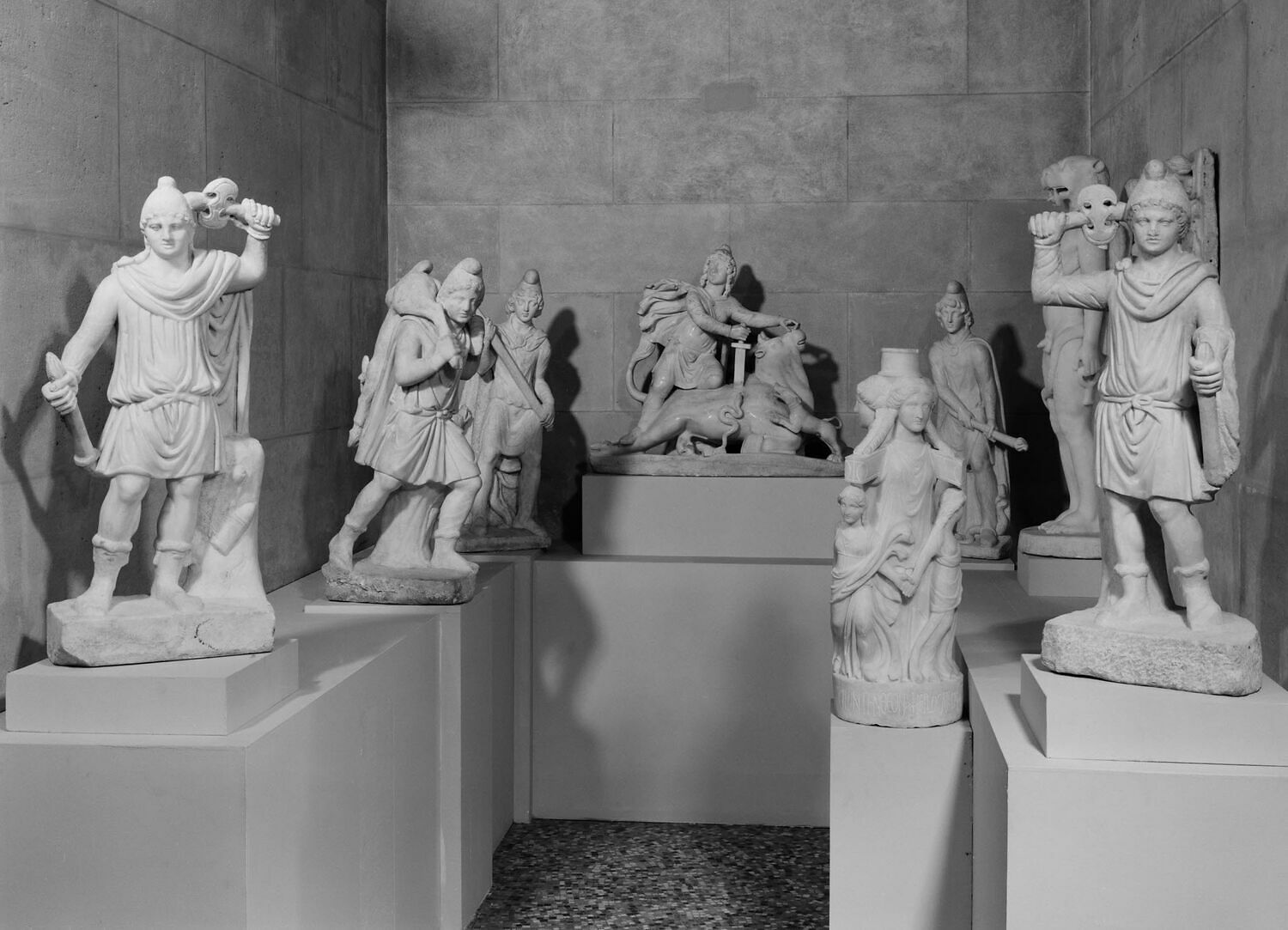
The Mithraeum of Sidon may have escaped destruction because the Mithras worshippers walled up the entrance to the underground sanctuary.
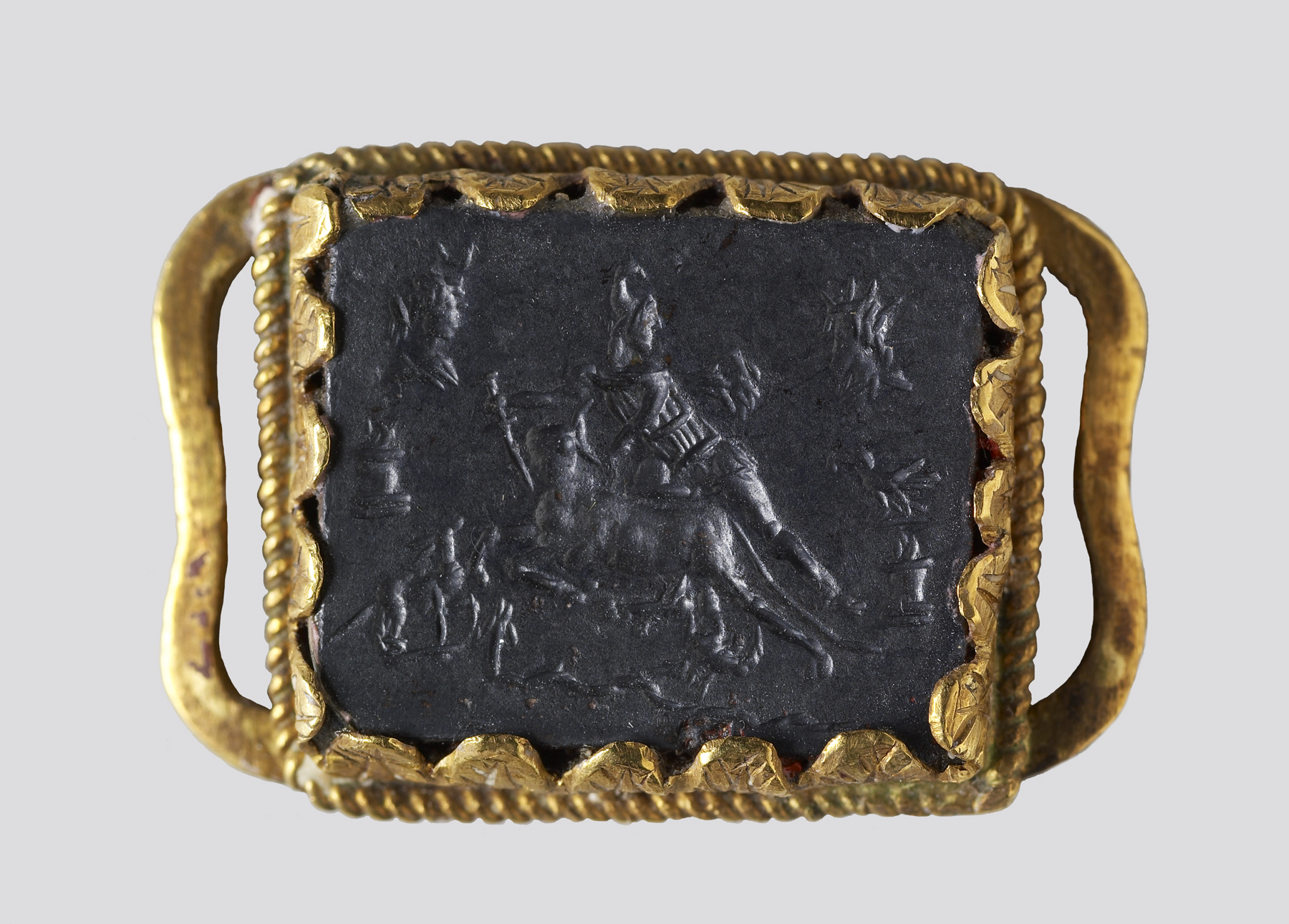
This unusual piece depicts Mithras slaying the bull on one side and the Gnostic god Abraxas on the other.

The Mithraeum of Stix-Neusiedl was discovered in the summer of 1816. Although the structure of the sanctuary is unknown, several associated monuments are preserved today in Vienna.
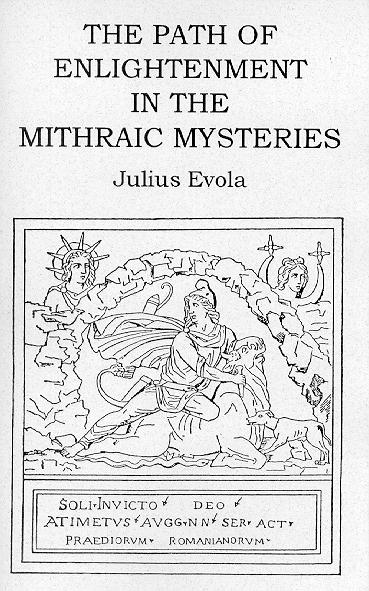
The first and the third of the following essays written by Julius Evola are dedicated to the mysteries of Mithras, while the second essay concerns itself with the Roman Emperor, Julian.
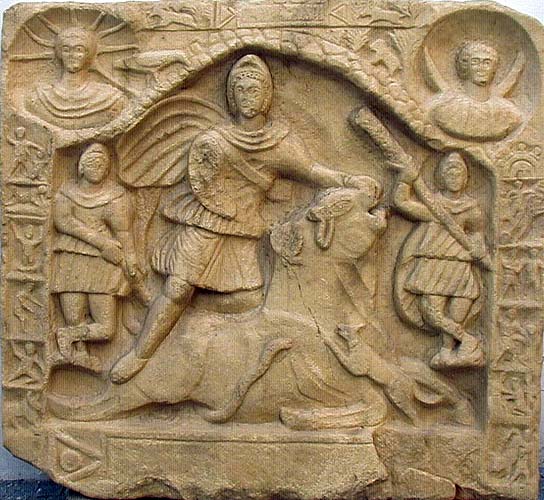
The relief of Mithras slaying the bull at Mauls in Gallia cisalpina is a paradigmatic example of the so-called Rhine-type Tauroctony.
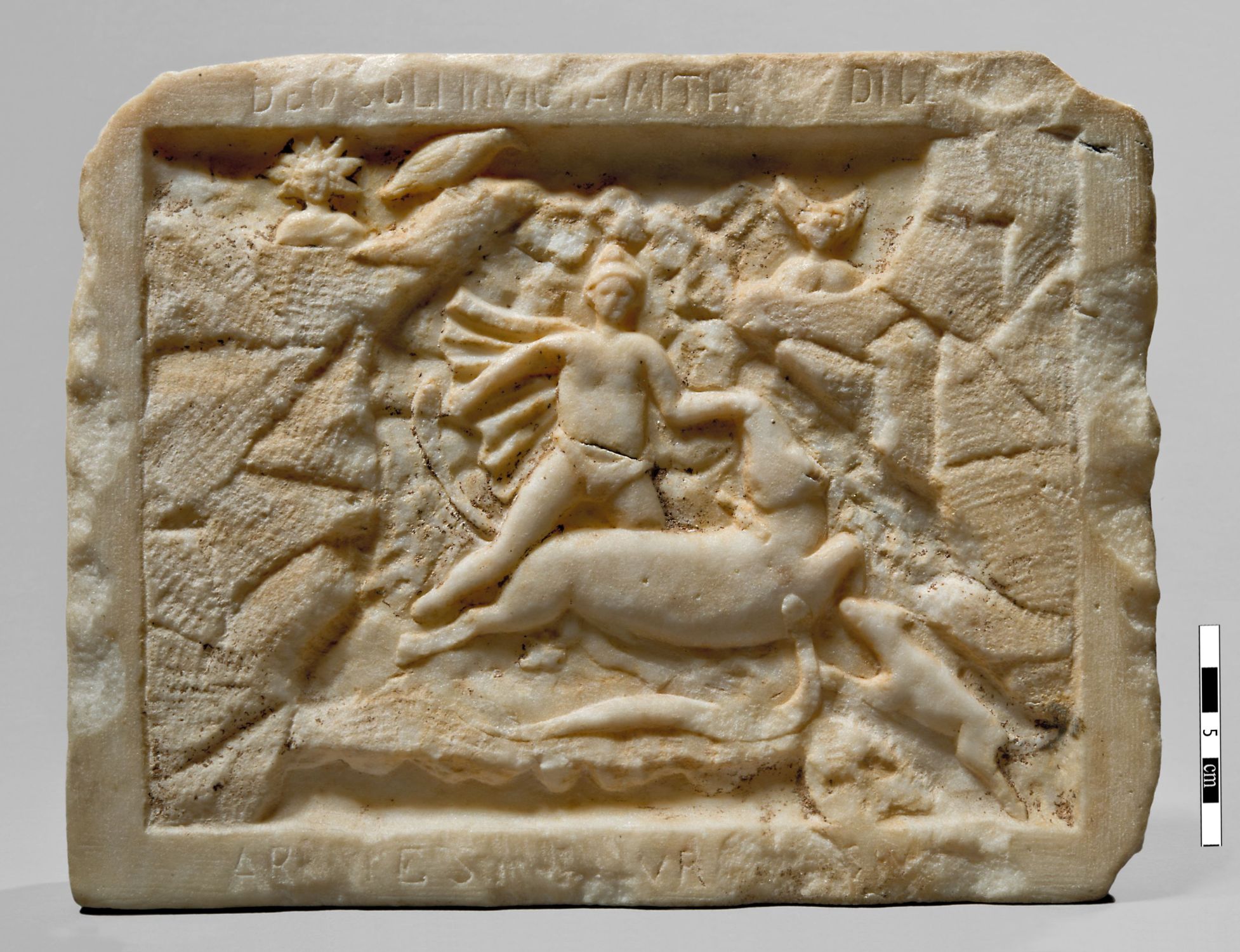
White marble relief depicting Mithras as bull-slayer in a grotto from the Froehner collection, now in the Cabinet des Médailles, Paris.
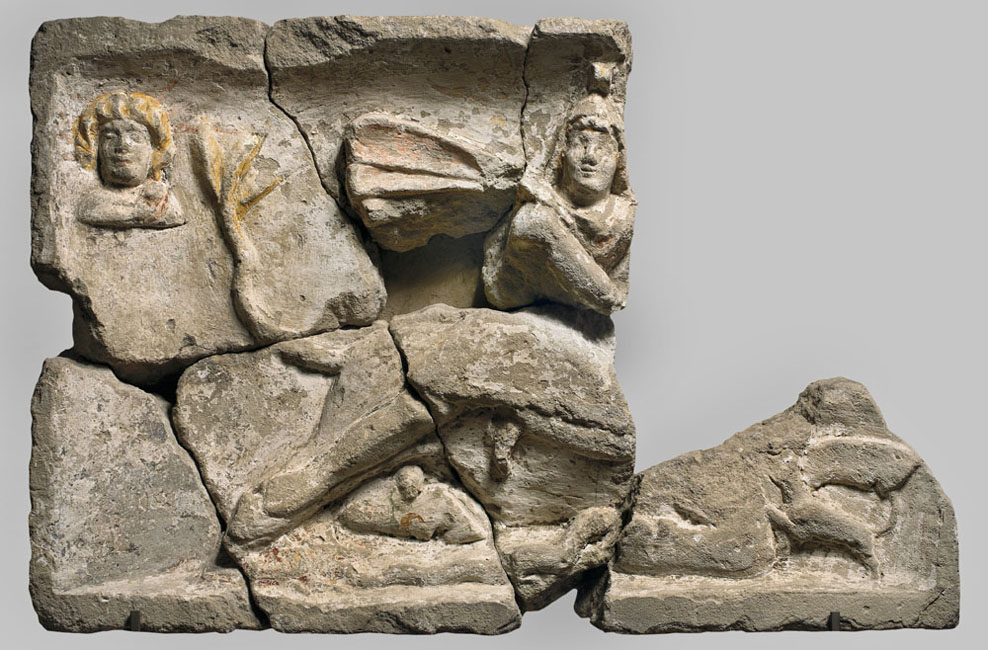
Sandstone relief of Mithras as bull-slayer, found at Petronell in 1932, with dog, serpent and scorpion, traces of polychromy preserved, now in the Museum Carnuntinum.
