Your search Bad Ischl im Salzkammergut gave 1088 results.

The Bad Ischl area has been inhabited since the time of the prehistoric Hallstatt culture. Documentary evidence of the settlement dates back to 1262, when it was referred to as Iselen.

A certain Secundinus, steward of the emperor, dedicated this altar to Mithras in Noricum, today Austria.


Tercera entrega de la trilogía de Jaime Alvar dedicada al estudio de los cultos a dioses procedentes de Oriente en la Península Ibérica.
This small inscription from Termini Himeraeae in Sicily was dedicated to Sol Invictus as protector of the emperor Antoninus Augustus.
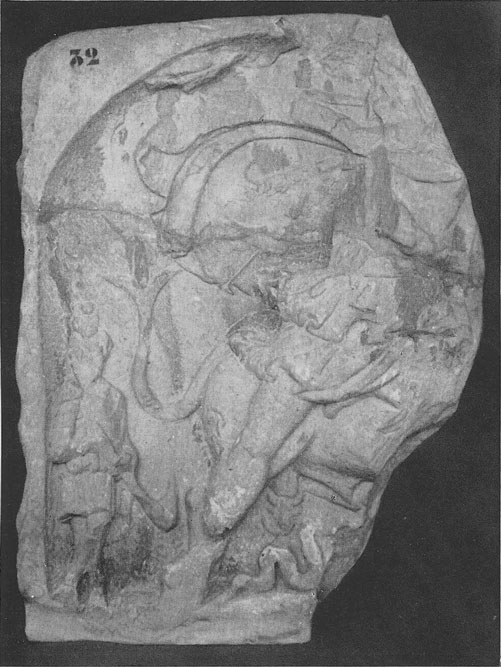
This fragmentary tauroctony relief from Timziouin near Saïda depicts Mithras slaying the bull within a cave-like frame, accompanied by the raven, serpent, scorpion, and Cautopates.
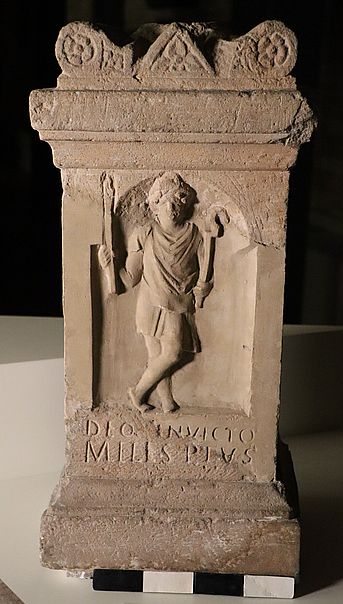
Small votive altar in white limestone from Aquae Mattiacae, dedicated to Deo Invicto by a miles pius. The top preserves the head of Cautes with his raised torch.
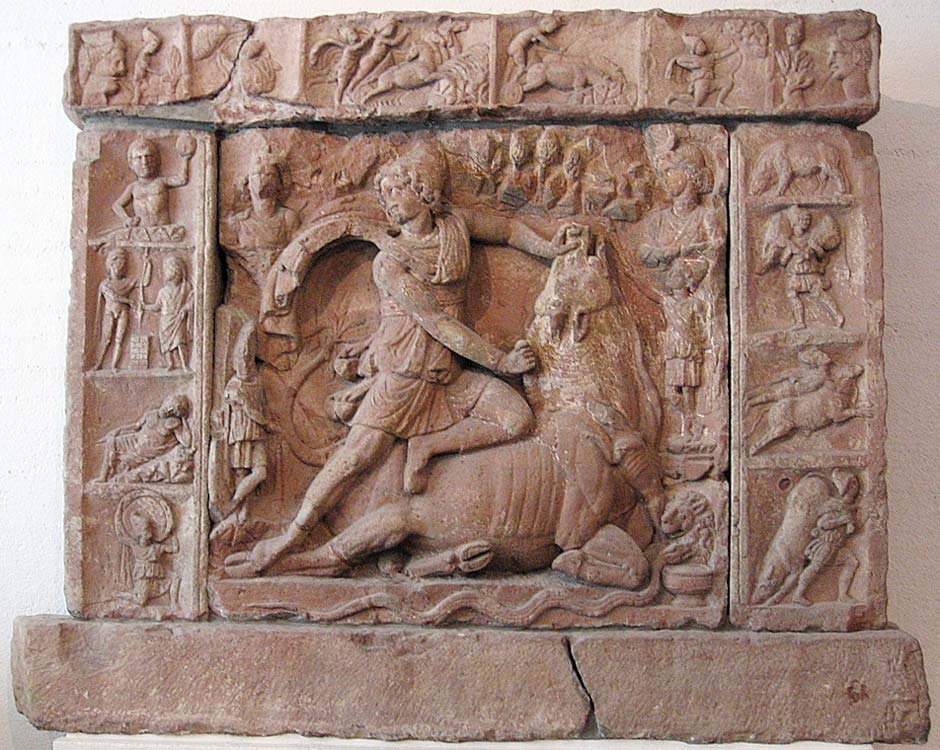
The Tauroctony relief of Neuenheim, Heidelberg, includes several scenes from the deeds of Mithras and other gods.
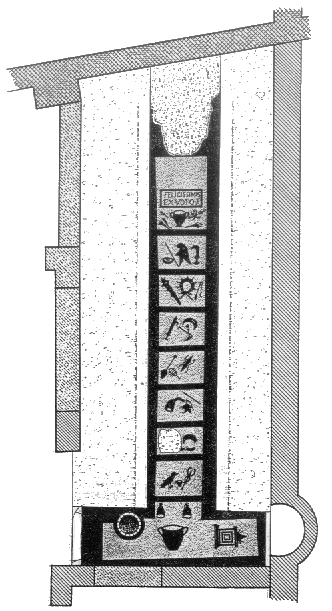
The Mithraeum Felicissimus has a floor mosaic depicting the seven mithraic grades.
Wahlheim lies within the Upper Germanic frontier zone and has produced material from the Roman period.
The Hasloch area near Rüsselsheim has yielded archaeological material linked to the Rhine frontier region.
Rohr im Kremstal belongs to the Alpine hinterland associated with Roman Noricum.
Kindenheim lies within the Rhine frontier region of Germania Superior.
Besigheim stands at the confluence of the Enz and Neckar rivers in the frontier region of southwestern Germania.
Aquae Helveticae developed around important thermal springs in the territory of modern Baden in Switzerland.
Fragment of a limestone altar from Wiesbaden, ancient Aquae Mattiacae, preserving the crossed legs of a torchbearer
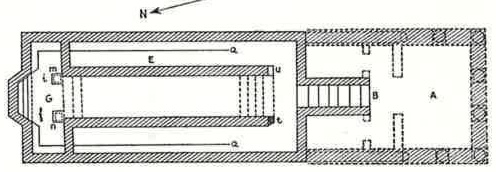
Second Mithraic sanctuary discovered in 1826 some 150 metres west of Mithraeum I at Heddernheim, ancient Nida, with finds in the Wiesbaden museum.
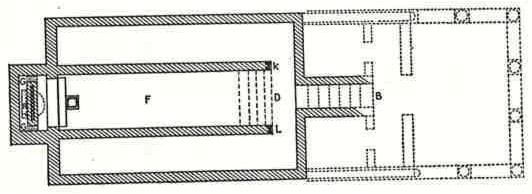
First Mithraic sanctuary discovered at Heddernheim (ancient Nida) in 1826, with finds preserved in the Städtisches Museum at Wiesbaden.
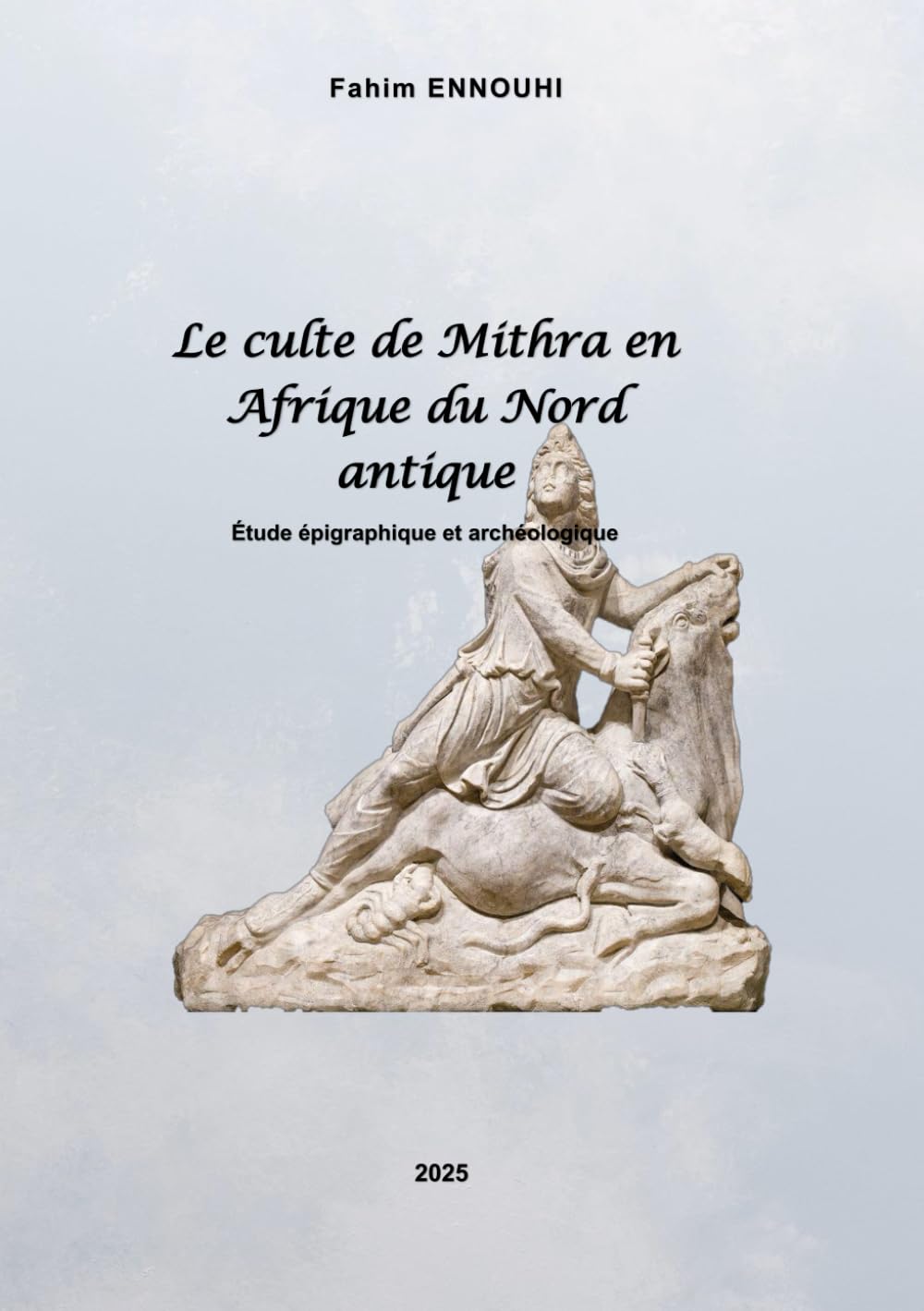
Cet ouvrage propose une étude d’ensemble du culte de Mithra en Afrique romaine. S’appuyant sur un rigoureux examen croisé des sources épigraphiques, archéologiques et littéraires, il restitue l’histoire et les spécificités de ce culte à mystères sur le sol africain…

India, beyond all other countries on the face of the earth, is preeminently the home of the worship of the Phallus—Linga puja. It has been so for ages and remains so still.
