Your search for Bingen am Rhein gave 328 results.

The Celts are the first known to have settled in this place, which they called Binge, meaning rift. Roman troops stationed here in the first century AD rendered the local name as Bingium in Latin.
The settlement of Bingerbrück formed part of the Rhine crossing zone opposite the lower Nahe valley.
Bingen occupied a strategic position at the confluence of the Rhine and Nahe rivers.
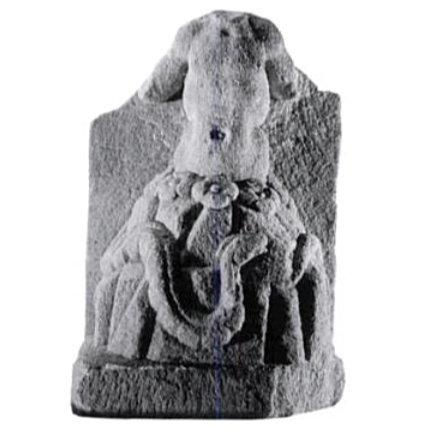
This sculpture of Mithras born from a rock was found in 1922 together with two altars in what was probably a mithraeum.
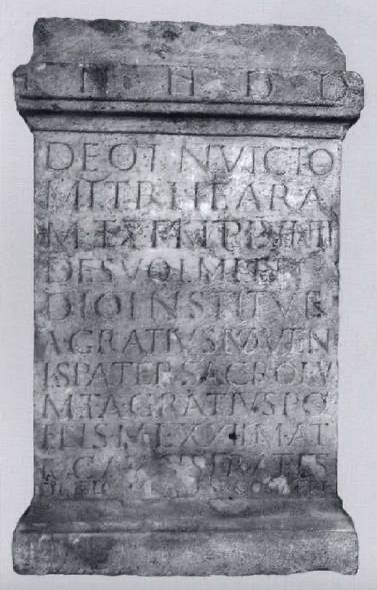
The monument was dedicated by two brothers, one of them being the Pater of his community.
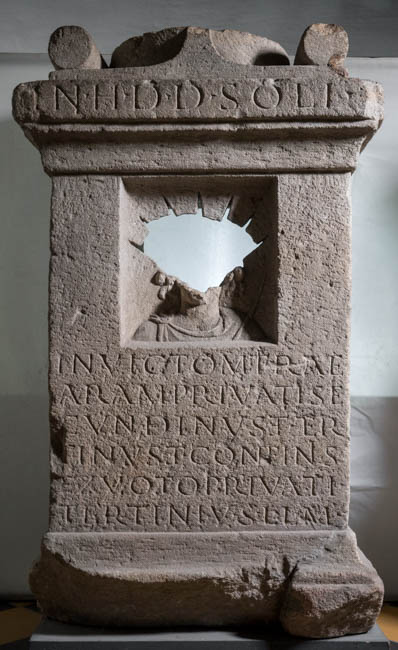
The altar of the Sun god belongs to the typology of the openwork altar to be illuminated from behind.

A possible Mithraeum II was found in Bingen, but the few remains are not sufficient to prove it.

Small bronze figure of the torchbearer Cautes fitted with attachment rivets.

This small monument without inscription was found in Bingem, Germany.
Stein am Rhein occupied a strategic position near the western limits of the Danubian frontier system.
Life-sized sandstone head with long curly hair and Phrygian cap, found at the foot of the Hohenklingen near Stein am Rhein, Raetia; probably belonging to a statue of Cautes or Cautopates.
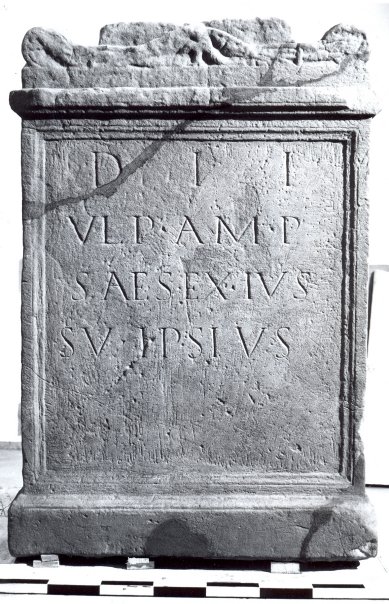
This altar found at ancient Burginatum is the northernmost in situ Mithraic find on the continent.
Nida was an ancient Roman town in the area today occupied by the northwestern suburbs of Frankfurt am Main, Germany, specifically Frankfurt-Heddernheim, on the edge of the Wetterau region.
Solicinium occupied an important position within the frontier region of southwestern Germania.
The Saalburg is a Roman fort located on the main ridge of the Taunus, northwest of Bad Homburg, Hesse, Germany.
Beihingen occupied a position within the Neckar frontier communications zone.
The Neusiedl lake region formed part of the western frontier landscape of Roman Pannonia.
Stockstadt am Main is a market municipality in the Aschaffenburg district in the Regierungsbezirk of Lower Franconia in Bavaria, Germany.
A coarse-grained yellowish-white marble tauroctony relief fragment found walled in at San Zeno am Nonsberg in the Trentino in 1911, now in the Museum Ferdinandeum at Innsbruck, showing part of Mithras slaying the bull and Cautes raising a flaming torch.
