Your search Catacombe dei Santi Marcellino e Pietro gave 242 results.

Upper fragment of a marble relief depicting Cautes, discovered in the Forum of Caesar in Rome.
Yellow jasper fragment of unknown provenance, formerly in the Museo Borgiano, with a tauroctony on the obverse and a Mithraic figure on the reverse.
The inscription on the decorated altar No. 839 from the Mithraeum at Vindobala (modern Rudchester), recording a gift to the Deity by L. Sentius Castus, a soldier of the Sixth Legion.
An altar in the shape of a mystic chest found at Aquileia in 1828, inscribed with a brief dedication to the Deity Mithras Sol.
A square base found with its companion piece at Trento, dedicated to the Genetrix of the god in thanks for a birth by Q. Muielius Iustus and his family.
An inscription recording the completion and dedication of the Temple of Sol at Como by T. Flavius Postumius Titianus, corrector of Italy, by order of the emperors Diocletian and Maximian, with Axilius the Younger as curator of the city of the Comenses.
A marble statue from Augusta Emerita (modern Mérida), depicting a standing dressed male person whose right leg leans against a tree-trunk and whose raised right arm once held a lance or trident, tentatively identified as Poseidon.

Alfius Severus was a prominent figure associated with the Mithraeum of Marino, probably acting as pater of a small Mithraic community connected with the nearby peperino stone quarries.
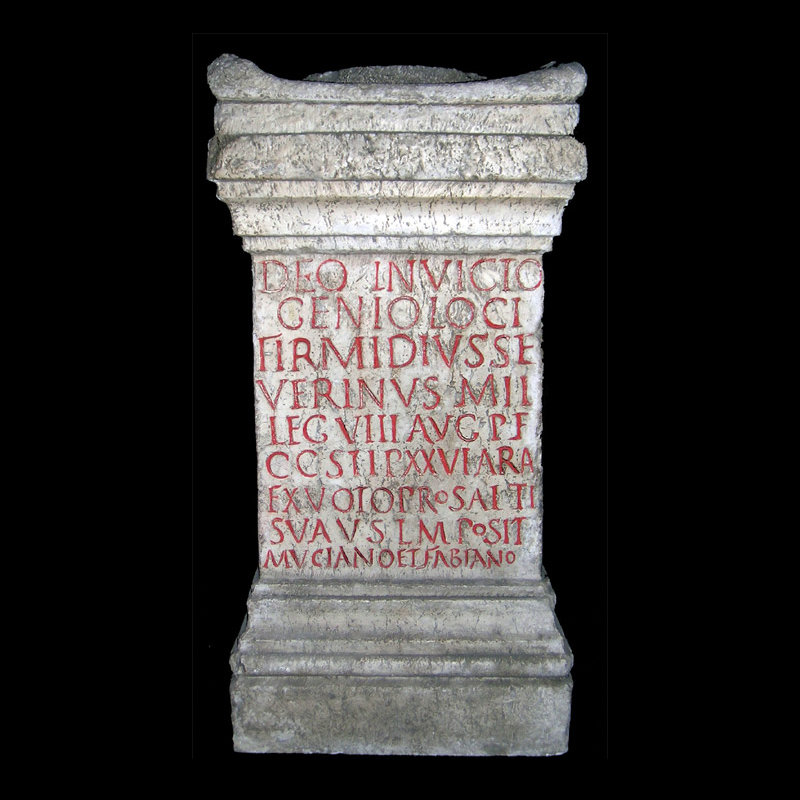
This limestone altar bears an inscription from its donor, Firmidius Severinus, in honour of Mithras after 26 years of service in the Legio VIII Augusta.
A subterranean room with a stucco depiction of Mithras slaying the bull, probably from the fourth century, discovered at Agurzano near Ponte Mammolo on the Via Tiburtina outside Rome.
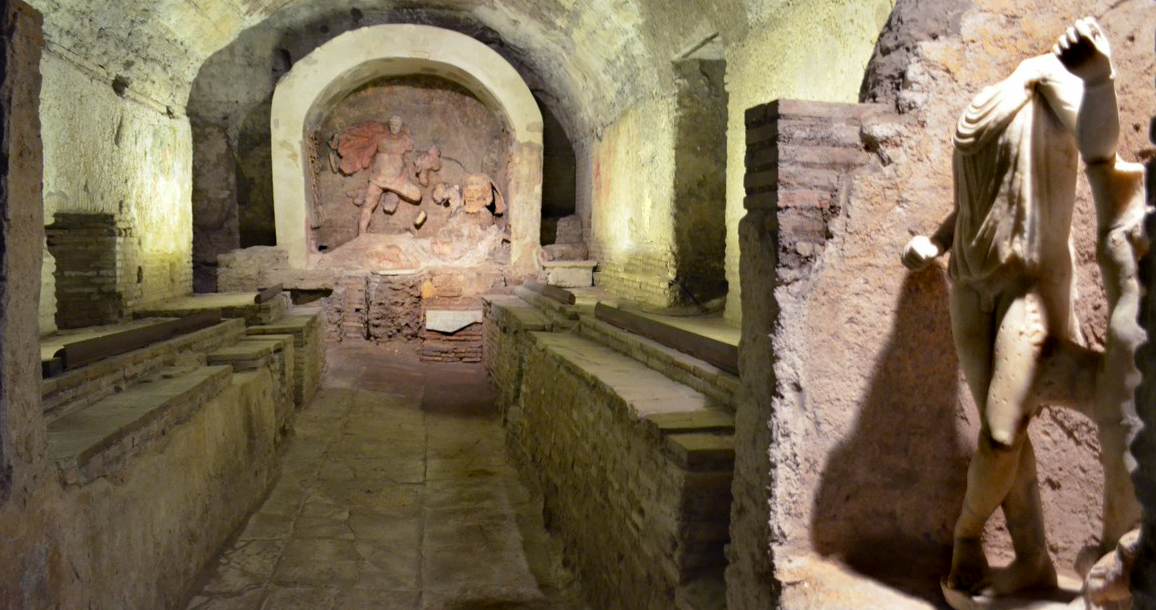
The Mithraeum of Santa Prisca houses remarkable frescoes showing the initiates in procession.
Marble base found in 1764 on the Aventine with a dedication to Sol by C. Rufus Volusianus, vir clarissimus, who held the offices of pater, hierophant, prophet of Isis and pontifex of the Sun, dated to the 4th century A.D.
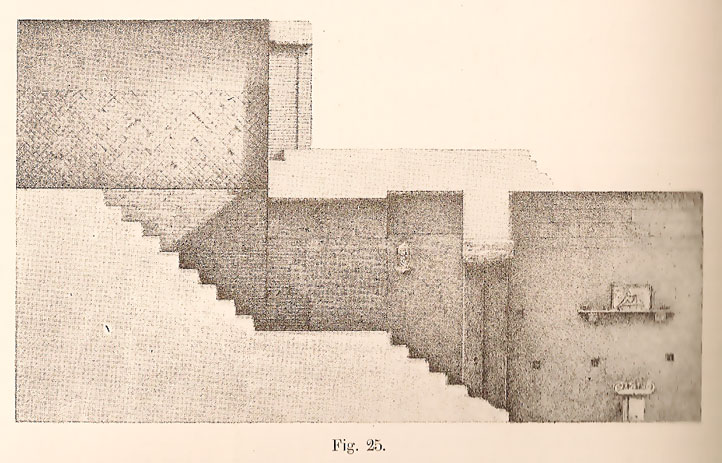
In a house from the time of Constantine, a Lararium was found with a statue of Isis-Fortuna. The Mithraeum was a door next to it, on a lower room.
Fragmentary inscription from Troesmis, Moesia Inferior, dedicating to Soli and a deity or epithet beginning Zo-.
Altar in poor-quality lettering from Burnum, Dalmatia, dedicated to Soli invicto by Caius Secundulus; the Mithraic interpretation is not entirely certain.
Inscription from Schwadorf, ancient Aequinoctium in Pannonia Superior, dedicated to Petrae genetrici dei — the rock that gives birth to the god — by Aurelius Statorius.
The six divine names inscribed on the bronze hatchets from Thun-Allmendingen — Iovi, Neptuni, Minervae, Mercurio, Matribus, Matroni — reflecting the polytheistic religious landscape of the Mithraic community at this site.
Set of six triangular bronze votive hatchets from Thun-Allmendingen, each inscribed with the name of a deity: Iovi, Neptuni, Minervae, Mercurio, Matribus, and Matroni; forming a unique ensemble of polytheistic dedications within a Mithraic context.
Two fragments of a sandstone inscription from Gran in the Vosges, dated to the late second century, recording a dedication to Soli deo invicto by a servant of the dedicant, with possible mention of a portico and columns.
Altar from the Mithraeum at Königshoffen, dedicated to Deo Cissonio — a Celtic god identified with Mercury — by Gittonius Pippausus; the dedicant's Celtic name may be etymologically connected to that of the deity.
