Your search Concetta Luna gave 78 results.

Large grey sandstone tauroctony relief from Fellbach near Cannstatt, depicting the bull-slaying in a vaulted grotto with torchbearers, Sol, Luna, and subsidiary Mithraic scenes along the border.

Tuff fragments including a knee, thigh and possible lunar head from a bull-slaying scene.
Marble relief showing Mithras slaying the bull inside a vaulted cave accompanied by Sol, Luna and the torchbearers.
A rectangular marble tauroctony relief found in Etruria, once in the Villa Martin at Settignano near Florence, showing Mithras slaying the bull with Cautes and Cautopates in Eastern attire cross-legged on either side and the busts of Sol and Luna in the upper corners;…
A marble tauroctony relief, broken in two pieces, found at Sutri in Etruria in 1896 and now in the Museo Nazionale delle Terme in Rome, with raven, dog, serpent and scorpion present, the upper part with the heads of Sol and Mithras broken off and Luna's bust alone preserved…
A bluish marble tauroctony relief once in the Villa Ludovisi in Rome, showing Mithras slaying the bull with the raven perched on his cloak holding a heart-shaped fruit, the bull's tail ending in ears of grain, and the dressed busts of Sol and Luna in the upper corners…
Tauroctony relief formerly in the house of the Alterii near S. Marco in Rome, now of unknown whereabouts, described by Gruterus as showing Mithras pressing both knees onto the bull and grasping its horns with the knife in the shoulder, with scorpion, serpent, raven, Sol and Luna…
Tauroctony relief in the Museo Torlonia, Rome, remarkable for having a large ant grasping the testicles in place of the scorpion, with the raven on Mithras' flying cloak, the dog and serpent near the wound, and the busts of Sol and Luna in the upper corners; no torchbearers represented…
Relief of bluish marble in the Casino of the Villa Doria Pamphili showing Mithras slaying the bull with the usual animals, cross-legged torchbearers, and Sol in a quadriga and Luna in a biga in the upper corners.
White marble relief from the Casino of the Villa Giustiniani showing Mithras slaying the bull, whose tail ends in ears, with the usual torchbearers, dog, serpent, scorpion and raven, and the busts of Sol and Luna in the upper corners.
Two Mithraic monuments discovered during the 1935 excavations of the Dolichenum on the Aventine, together with statues of Sol, Luna, Venus, Silvanus and Hercules, now in the Museo Capitolino; the only certain Mithraic finds from a Dolichenum.
Small marble relief from the Aventine showing a primitive representation of Mithras slaying the bull, without torchbearers or Sol and Luna, with a raven on the flying cloak, the dog and serpent near the wound, and a scorpion, now in the Museo Capitolino.
Two marble frieze fragments with incised busts of Sol, Luna, Mars, Jupiter, and Venus, one found in 1890 in the outer porticus of the Theatre and one found in 1938 near the Mithraeum at Ostia.
Relief depicting Mithras killing the bull in scaled armour, with Luna and Sol busts in the upper corners, found at the cavalry barracks of Sétif in 1861.
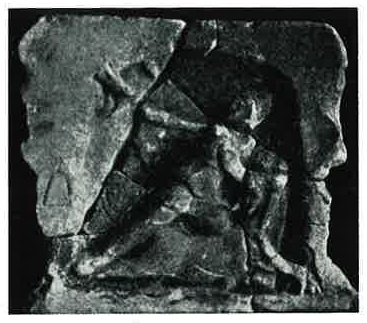
White marble tauroctony relief from the Mithraeum at Biljanovac, Moesia Superior, depicting the standard bull-slaying with torchbearers and Sol and Luna busts in the upper corners.
Sandstone altar from Romula, Dacia, dedicated to Deo invicto Mithrae by Aurelius Rufus ex voto, with the busts of Sol and Luna flanking the text.
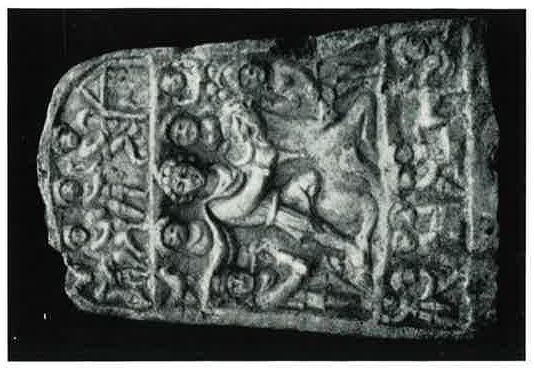
Yellow marble tauroctony relief from Romula, Dacia, found in 1912, depicting the standard bull-slaying with Sol and Luna in the upper corners.

Upper portion of a vaulted marble tauroctony from the Mithraeum at Sarmizegetusa, Dacia, with the bull-slaying and above Cautes a scene of Mithras's rock-birth; Sol and Luna busts appear in the upper corners.
Altar from Salona, Dalmatia, found in 1884, dedicated by Sextus Cornelius Antiochus to Soli deo, who donated both a star and a fructifera — interpreted as Sol and Luna — following a vision.
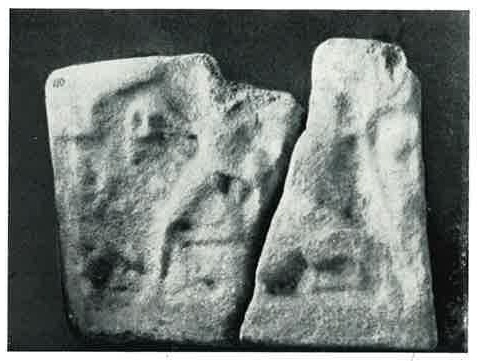
Weathered marble tauroctony relief in two fragments from Ruše, Noricum, depicting the bull-slaying with only the dog visible, flanked by two torchbearers both holding their torches upraised; no Sol or Luna.
