Your search Ernest Will gave 217 results.

Actes du 2e Congrès International, Téhéran, du 1er au 8 septembre 1975. (Actes du Congrès, 4). Éditions Brill, collection. Acta Iranica.

Le groupe caractéristique « lion, serpent, cratère » marque le rapport avec le culte mithriaque, car comme nous croyons l’avoir montré, ce groupe ne symbolise pas la lutte des éléments, terre, eau et feu, mais la participation des animaux-attributs au sacrifice, par Mithra…

Pater nominos in Sidon, he consecrated a number of sculptures, including a Hecataion.
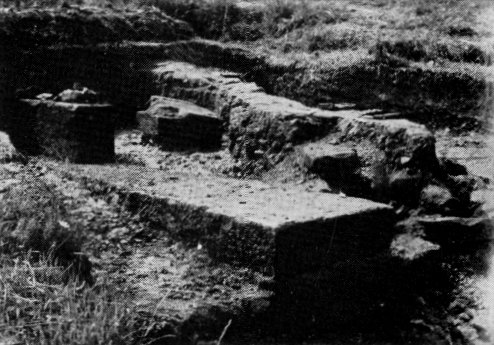
The Mackwiller Mithraeum was built in the middle of the 2nd century, during the reign of Antoninus the Pious, on the site of a spring already worshipped by the natives.

A selection of texts gathered by Ernesto Milá that reinterprets Mithraism as an initiatory, solar, and heroic cult. It includes the so-called Great Magical Papyrus of Paris, translated and commented by Julius Evola and the Ur Group.

Les monuments mithriaques sont rares en Syrie. Les sculptures de Sidon, datées de 188, constituent l’essentiel de la documentation malgré des incertitudes sur leur origine exacte.


Badly damaged sandstone statue of a togatus from the Mithraeum at Mackwiller, preserving only fragments of the head and garment.
Stone statue fragments from the Mithraeum at Mackwiller depicting Mithras's rock-birth, preserving the head in Phrygian cap, torso, and right hand holding part of a torch.
Reconstructed tauroctony relief from the Mithraeum at Mackwiller, assembled from multiple stone fragments and preserving Mithras's head, shoulders, dagger hand, flying cloak, and parts of the bull and torchbearers.
Lower-central fragment of the large cult relief from the Mithraeum at Mackwiller, preserving the forefeet of the dog, part of a serpent, and a cult vessel; the base bears a partially legible inscription mentioning an eques Romanus.

Mackwiller has yielded significant archaeological material connected with the religious landscape of Roman Germania.
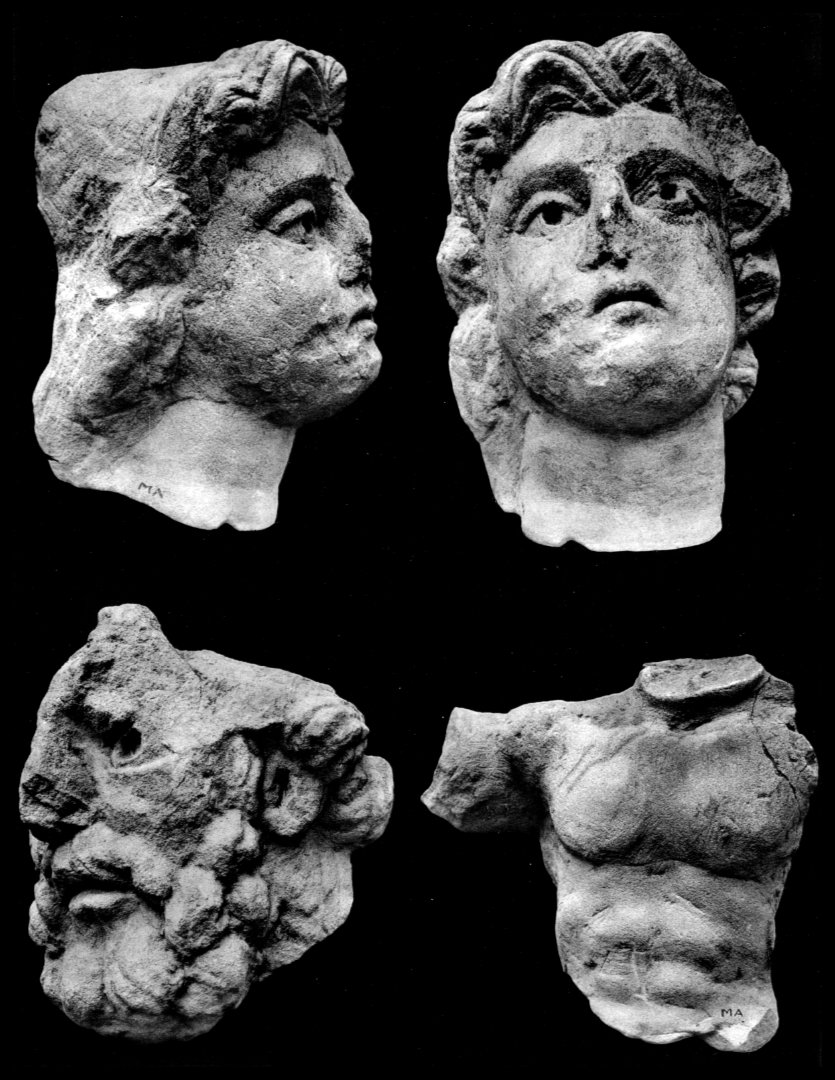
This fragment of the head of a young Mithras is one of the finds made during the excavations carried out by Jean-Jacques Hatt at Mackwiller, France, in 1955.