Your search Fürth gave 130 results.

Fürth is a city in northern Bavaria, Germany, in the administrative division of Middle Franconia.

This sandsotne head with a Phrygian, found in Fürth in 1730, probably belonged to a torach-bearer.
A small figure of Aion, said to have been found in the Auvergne region of Lugdunensis, resembling a similar piece in the Museum of Constantine, though no further details are known.
Monument from Almus, Moesia Superior, with a tauroctony representation and a dedication to Deo invicto above it; no further details are available.
A Sol statue headless and lacking arms and feet, mentioned by Martelli as existing at Nersae alongside a fragmentary inscription, with no further details obtainable by Vermaseren or Cumont.
Statues of a man and a woman from the same Mithraic context at Apulum, Dacia; no further details are known.
Limestone relief from Ragasch near Philippopolis, Thracia, cited in MMM without further details.
There are no further details about this Mithraic statue from Transylvania, the historical region of central Romania.
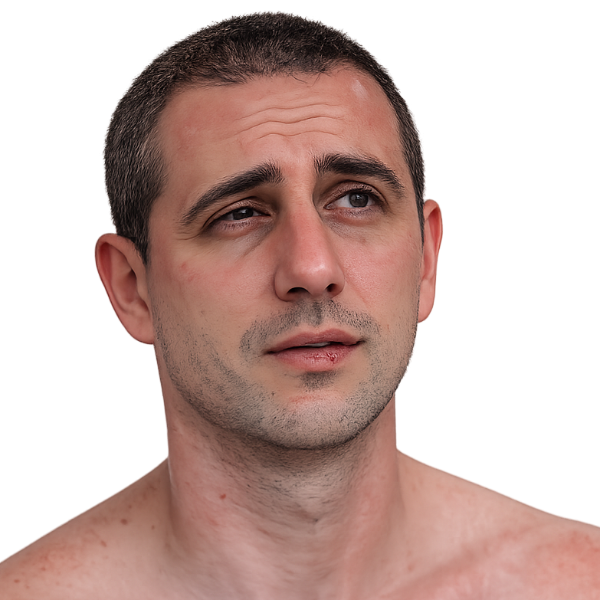
Pater and priest of the Mithraeum of the Seven Spheres at Ostia during the sanctuary’s restoration and flourishing.
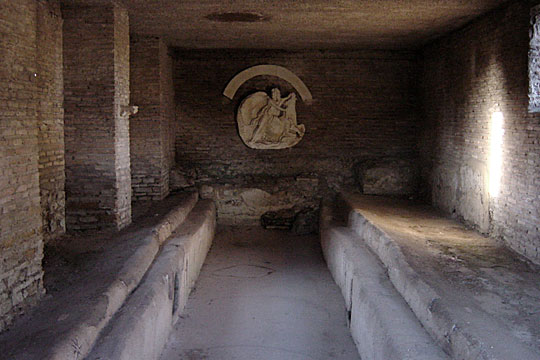
The Mithraeum of the Seven Spheres (Sette Sfere) is of great importance for the understanding of the cult, because of its black-and-white mosaics depicting the planets, the zodiac and related elements.

Known from an altar dedicated to Mithras at Ostia during the tenure of the pater Marcus Aemilius Epaphroditus.

Hermadio's inscriptions have been found in Dacian Tibiscum and Sarmizegetusa, as well as in Rome.

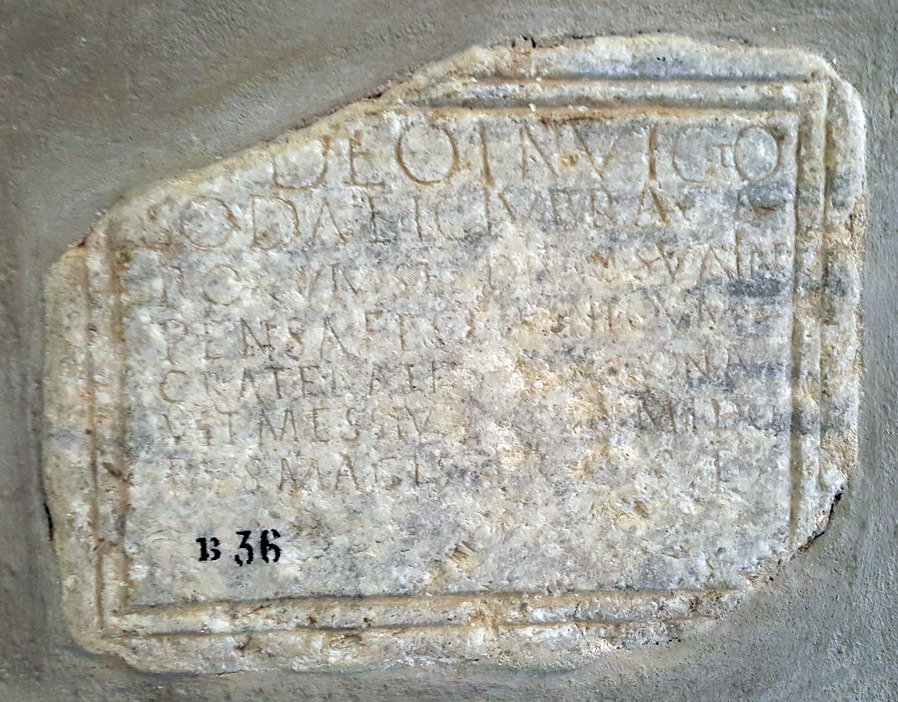
Marble inscription recording the construction of a Mithraic meeting place and the donation of a crater by Titus Flavius Artemidorus.
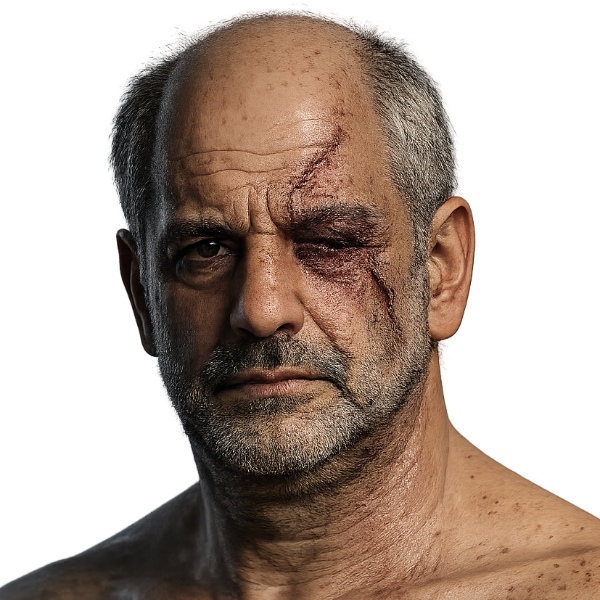
Veteran recalled to imperial service and sole named devotee of Mithras currently attested at Grumentum.
This altar from Grumentum in Lucania was dedicated to Sol Invictus Mithras by Titus Flavius Saturninus, an evocatus in imperial service.

Pater sacrorum attested in a funerary inscription from Murviel-lès-Montpellier, probably connected with the Mithraic community of Nemausus.
A vase or plate bearing a representation of Mithras, reported to be in the Archaeological Seminary of the University of Vienne (ancient Colonia Iulia Vienna Allobrogum) in Narbonensis, but unpublished at the time of Vermaseren's catalogue.
Alfius Severus was a prominent figure associated with the Mithraeum of Marino, probably acting as pater of a small Mithraic community connected with the nearby peperino stone quarries.
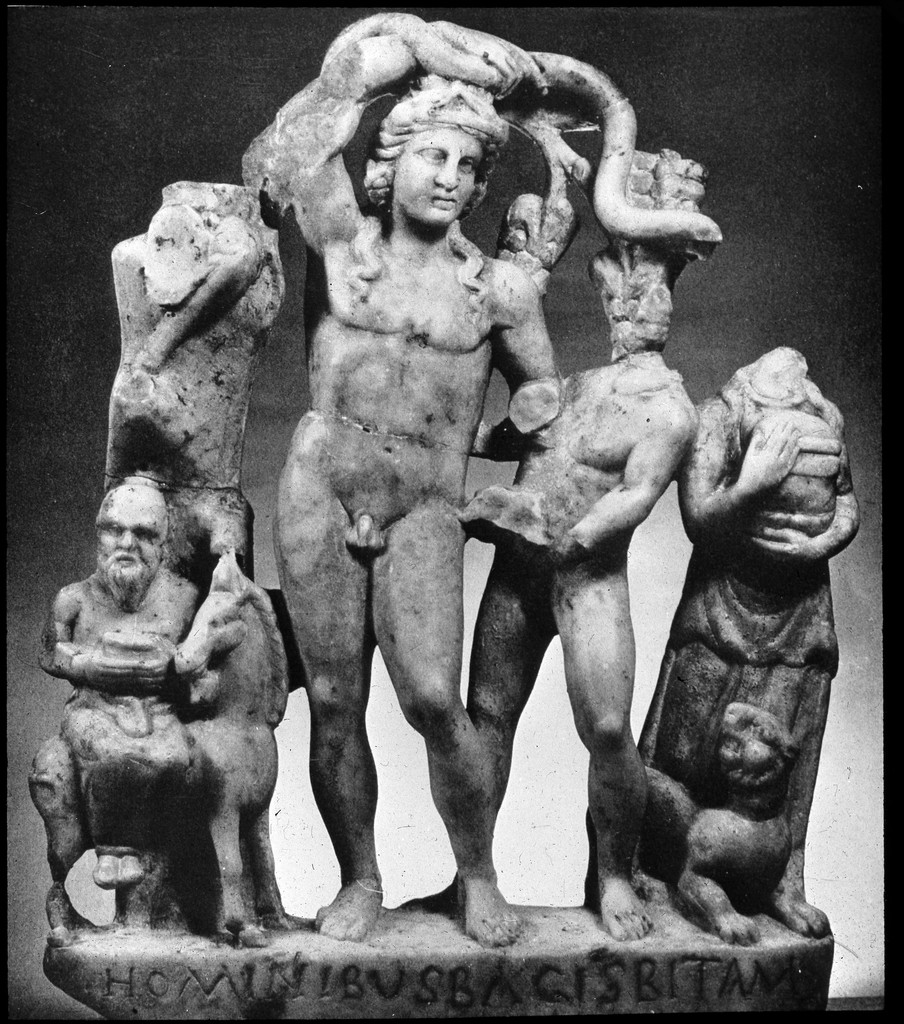
Marble group of Dionysus accompanied by a Silenus on a donkey, a satyr and a menead.
