Your search for Frankfurt am Main gave 1338 results.

Nida was an ancient Roman town in the area today occupied by the northwestern suburbs of Frankfurt am Main, Germany, specifically Frankfurt-Heddernheim, on the edge of the Wetterau region.

Wiesbaden is the capital of the German state of Hesse, and the second-largest Hessian city after Frankfurt am Main.
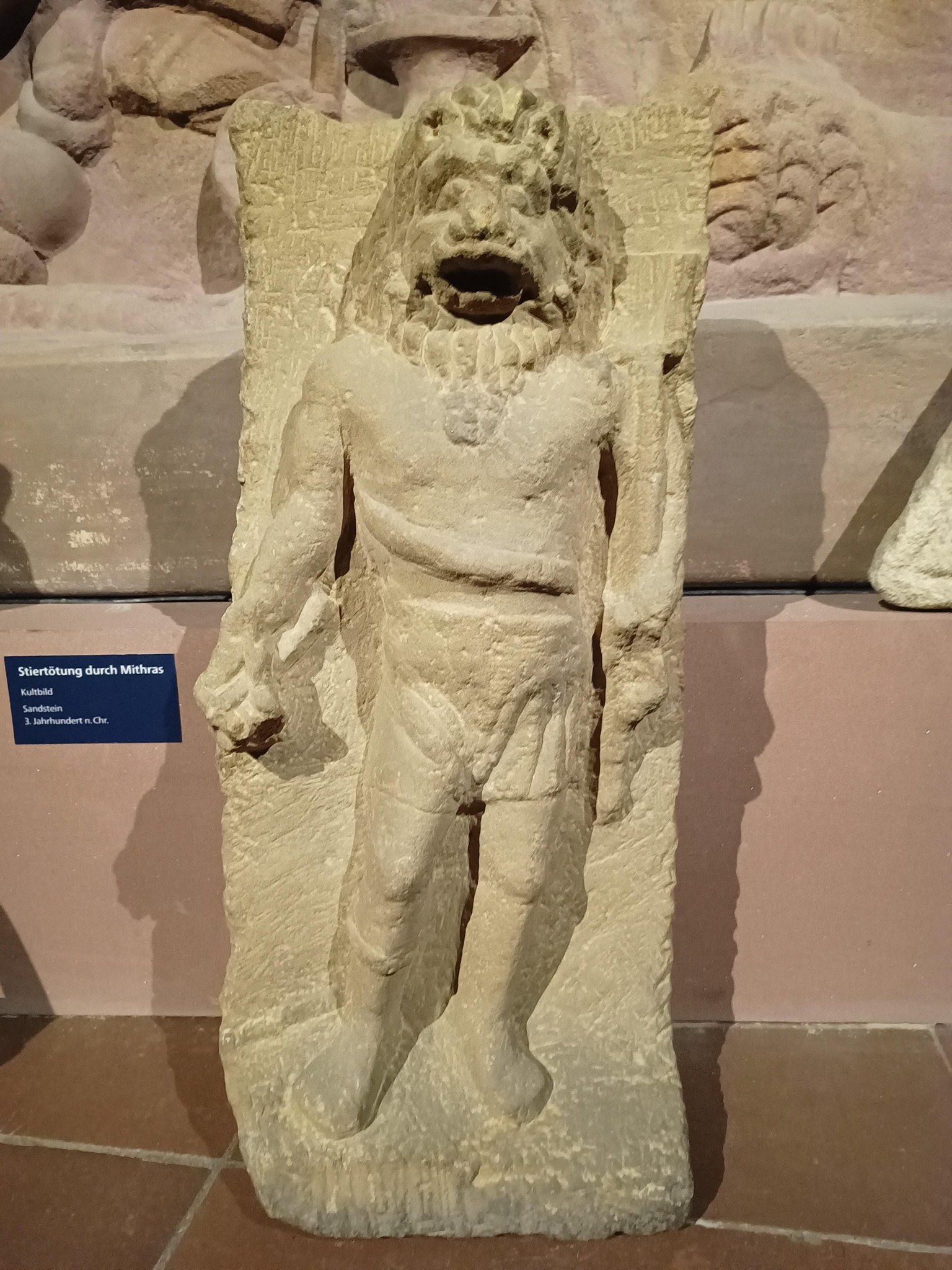
This lion-headed figure from Nida, present-day Frankfurt-Heddernheim, holds a key and a shovel in his hands.
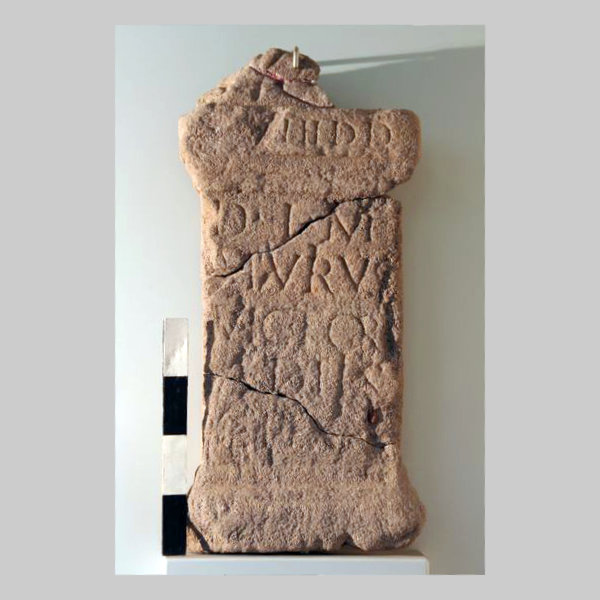
Marius Victor, according to the inscription on the monument, erected this monument to Mithras ’when Philip and Titianus were consuls’.
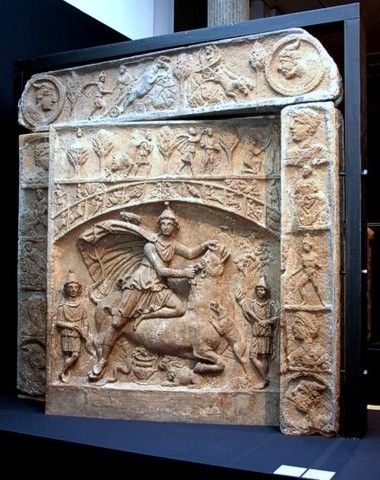
This relief is so well-known that it has been reproduced in nearly every handbook of archaeology and of history of religions.

Fragment of a sandstone relief from Nida-Heddernheim depicting the torchbearer Cautopates.
Animal bones, principally of birds, found in pit g at Mithraeum III, Heddernheim, ancient Nida, evidence of ritual feasting
Assemblage of lamps, keys, torches, an iron knife, pottery, glass fragments, and five coins from Mithraeum III at Heddernheim, ancient Nida
Iron ritual bell from Mithraeum III at Heddernheim, ancient Nida, likely used during cult ceremonies
Small iron box with hinges and bronze nails from Mithraeum III at Heddernheim, ancient Nida
Square bronze plate from Mithraeum III at Heddernheim, ancient Nida, probably a cult tessera bearing barely legible engraved letters
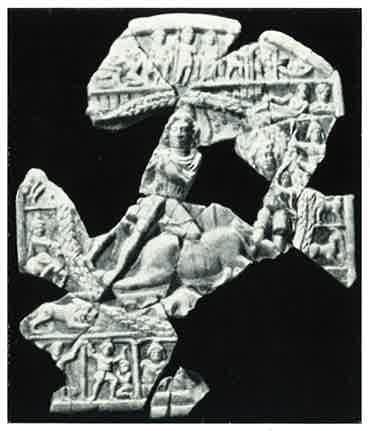
Fragments of a white marble arched tauroctony from Mithraeum III at Heddernheim, ancient Nida, showing Mithras killing the bull in a leaf wreath
Three basalt fragments of a standing figure in jack-boots from Mithraeum III at Heddernheim, ancient Nida, with traces of red paint on the loin-cloth

Fragment of a statuette on a sandstone base found in Mithraeum III at Heddernheim, ancient Nida, formerly in the Häberlin collection
Two basalt blocks walled into the podium of Mithraeum III at Heddernheim, ancient Nida, which supported decorative sandstone bases
Two basalt altars set into the corners of the west podium at Mithraeum III, Heddernheim, ancient Nida, one now lost
Two sandstone altars with voluted tops from Mithraeum III at Heddernheim, ancient Nida, possibly used to support a partition bar across the cult niche
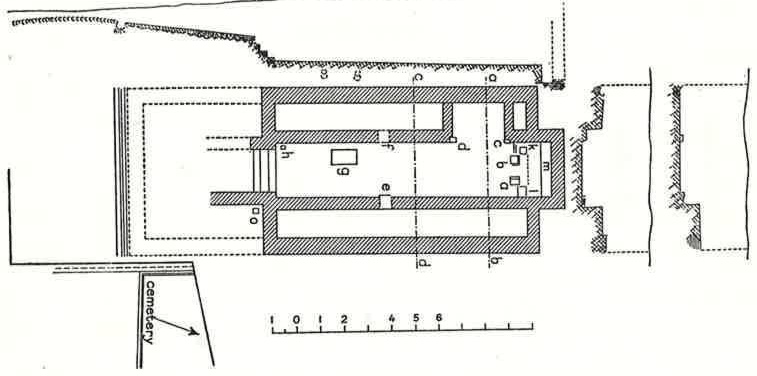
Third Mithraic sanctuary found north-west of the cemetery at Heddernheim, ancient Nida, in 1887 and fully excavated by G. Wolff in 1890
Two sandstone reliefs from Vibbel, found in a pit at Heddernheim, ancient Nida, in 1884, probably lost during the Second World War
