Your search From Rome, Mithreum of Castra Peregrinorum under Santo Stefano Rotondo. gave 548 results.
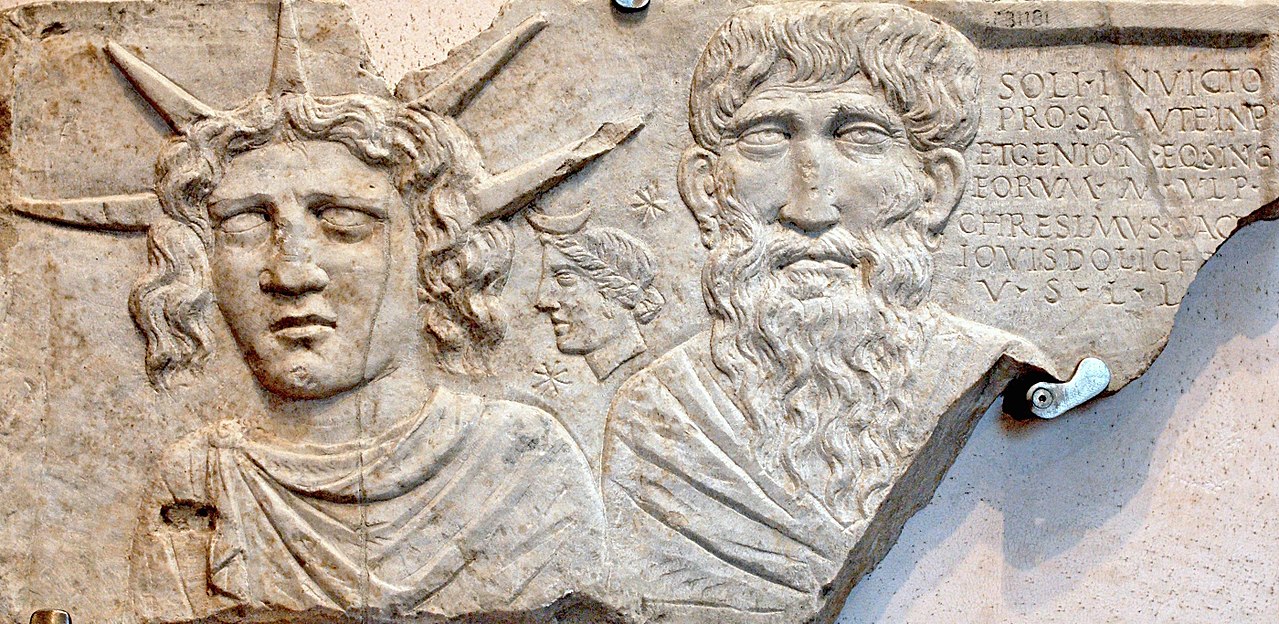
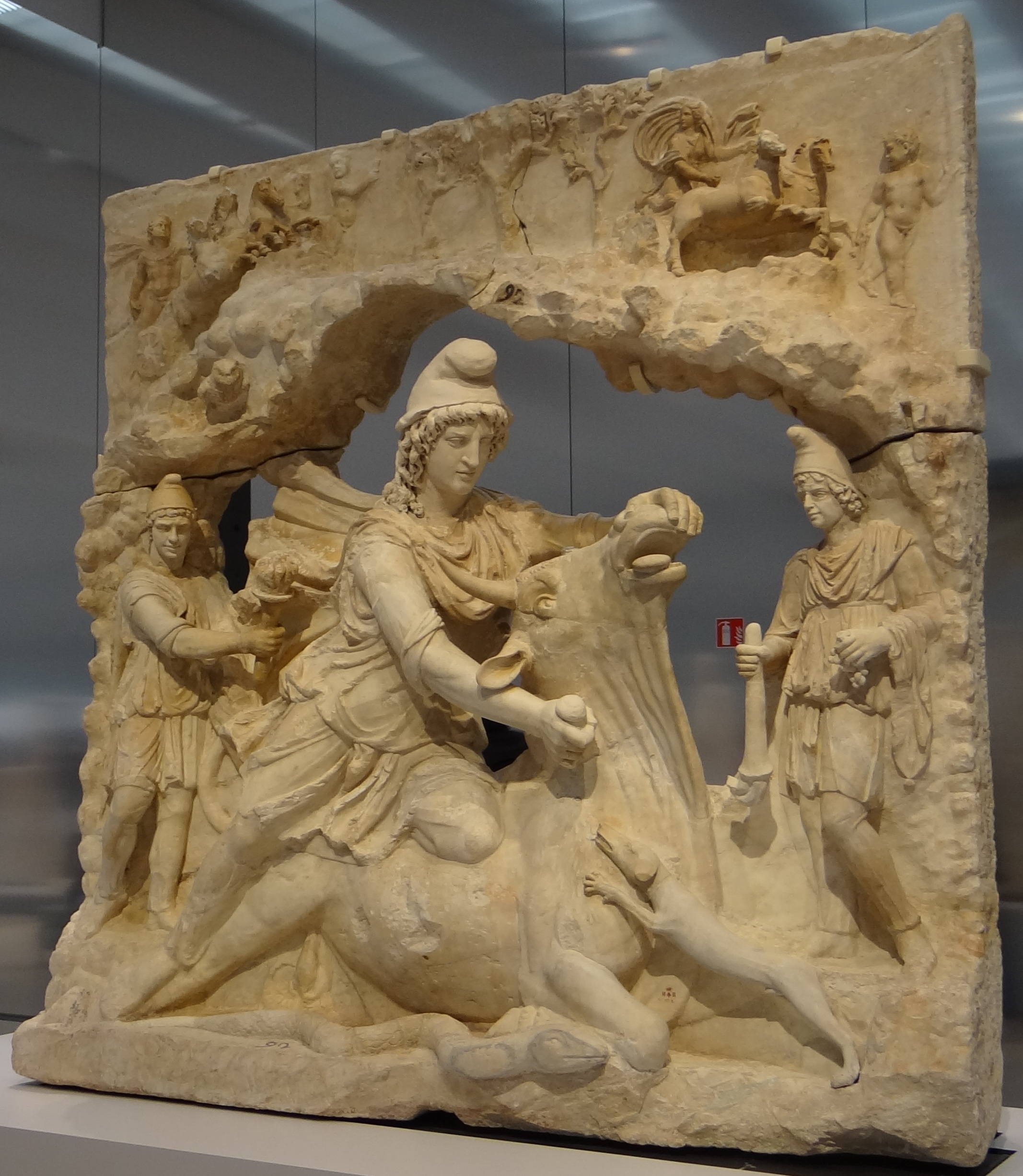
This relief of Mithras slaying the bull was erected in Piazza del Campidoglio, moved to Villa Borghese and is now in the Louvre Museum.
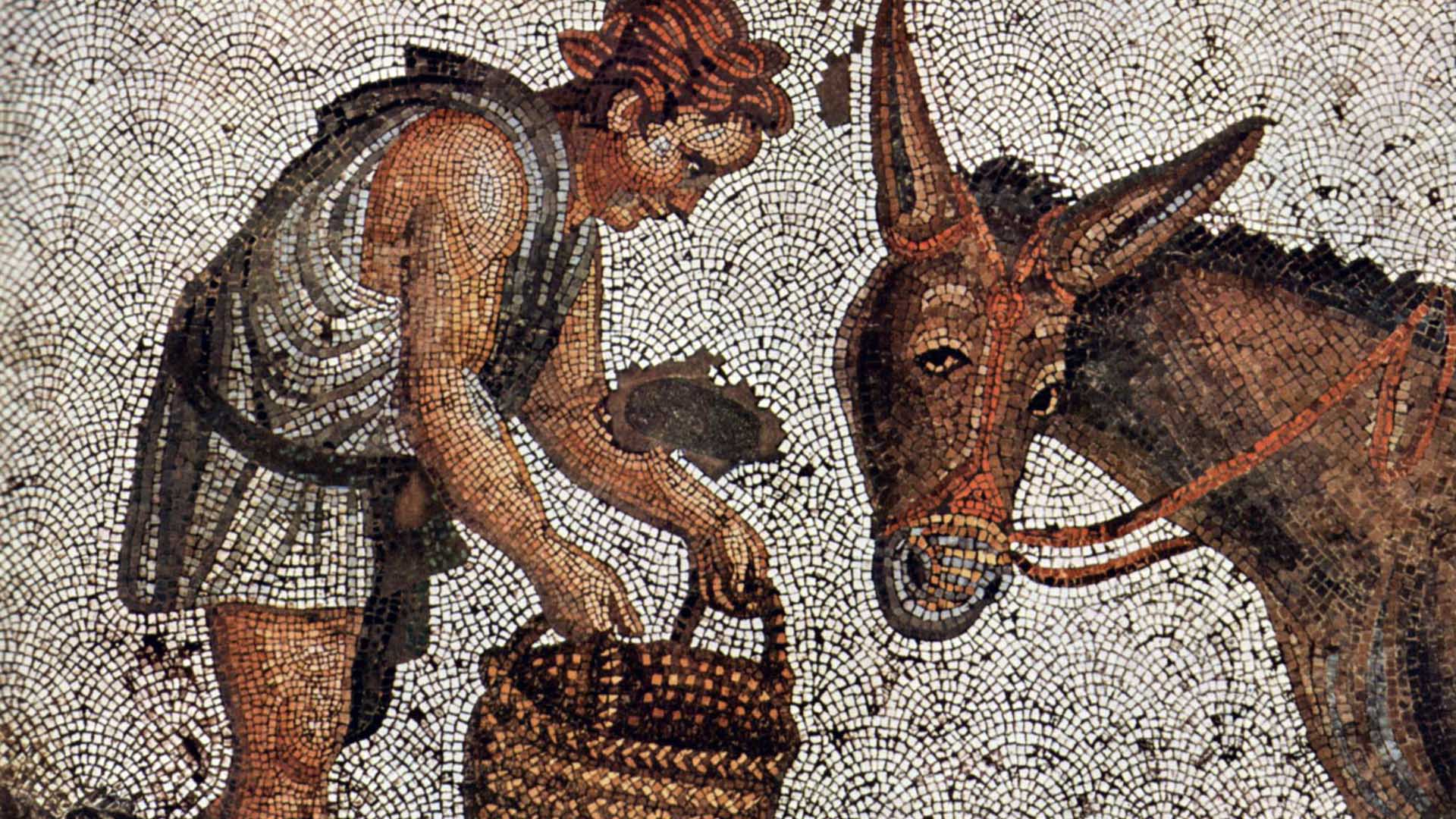
The concluding book of Apuleius’ Golden Ass (or Metamorphoses), where Lucius, the story’s protagonist, undergoes initiation into the mysteries of Isis and Osiris.
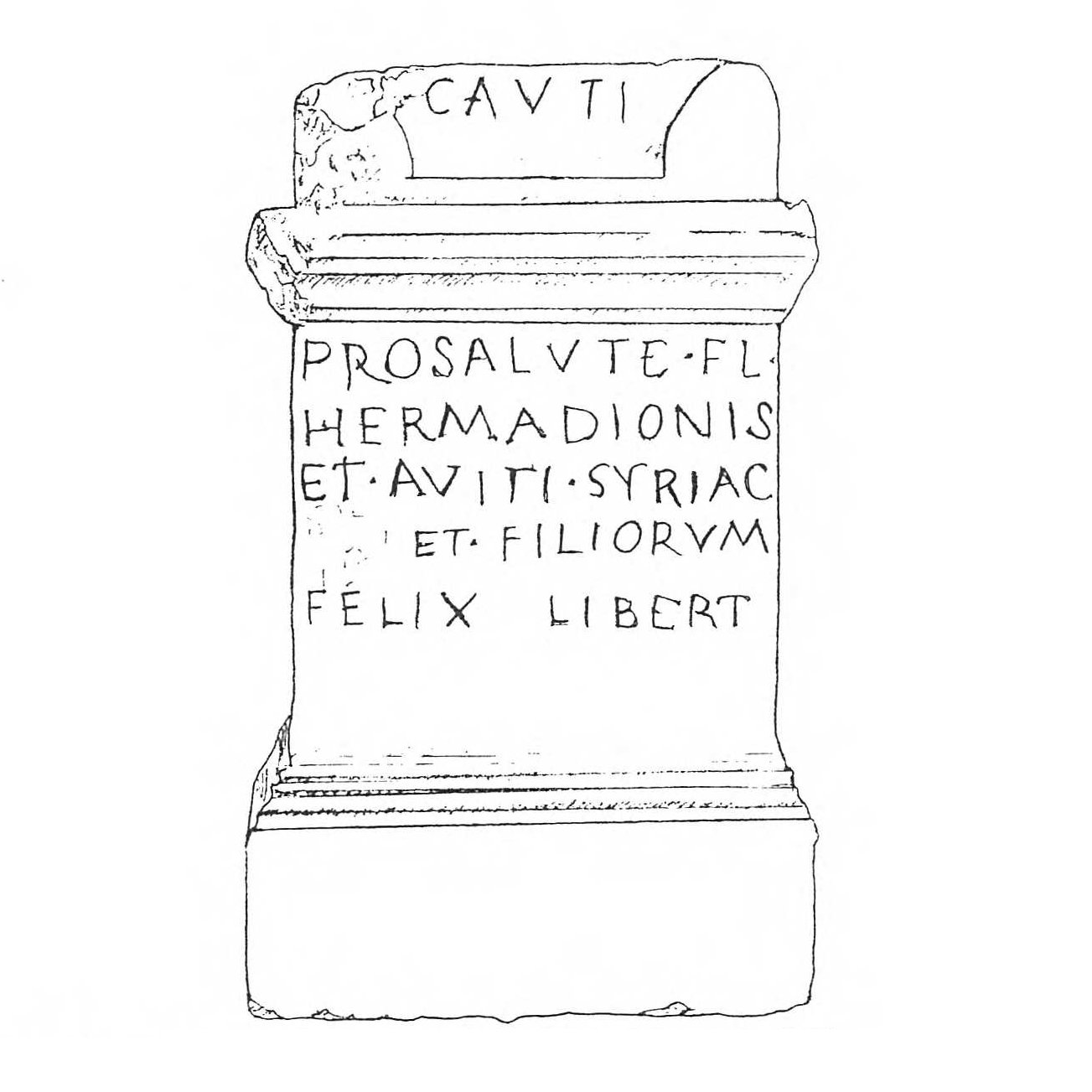
A certain Hermanio has been identified in the dedication of several monuments in different cities in Dacia and even in Rome.


This tabula marmorea was consecrated by a certain slave Vitorinus in Tibur, nowadays Tivoli, near Rome.
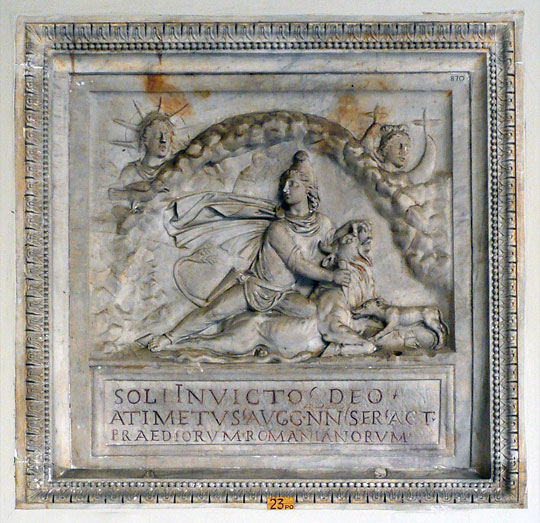
White marble relief depicting Mithras slaying the bull, dedicated by Atimetus.

The inscription explains the transmission of the fourth Mithraic degree through the Paters of the Mitraeum of San Silvestro.
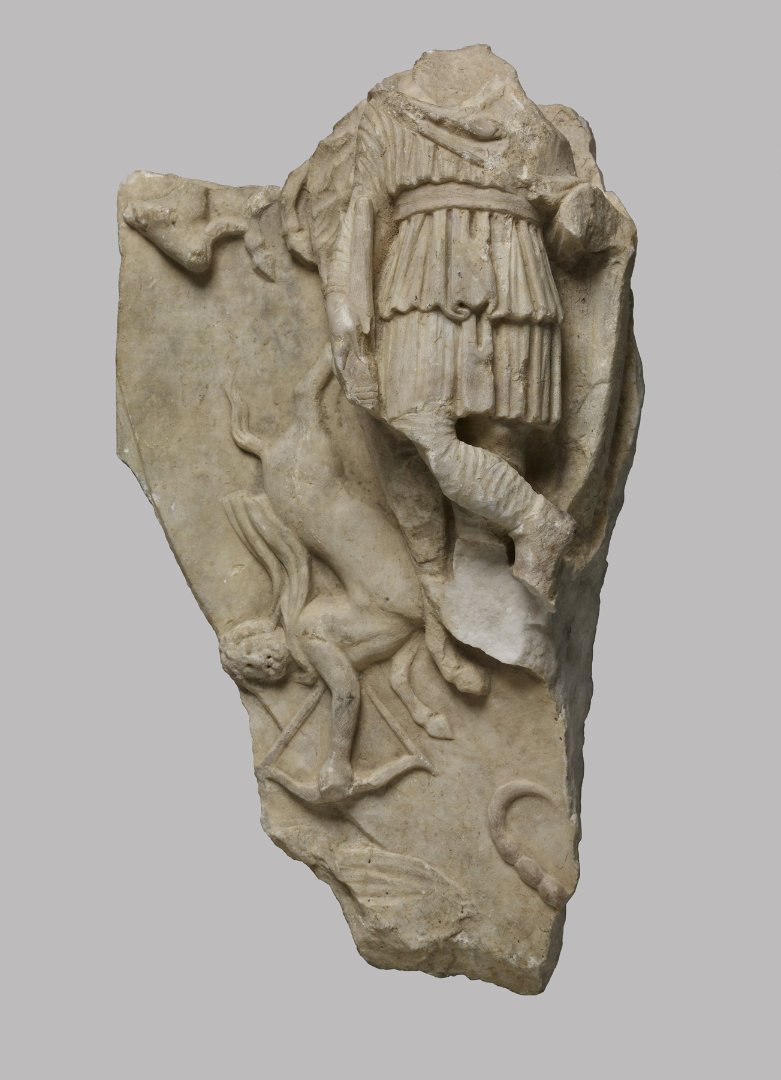
This fragmentary relief shows Cautopates bordered by three of the six zodiacal signs with which He is associated: Capricorn, Sagittarius and Scorpio.
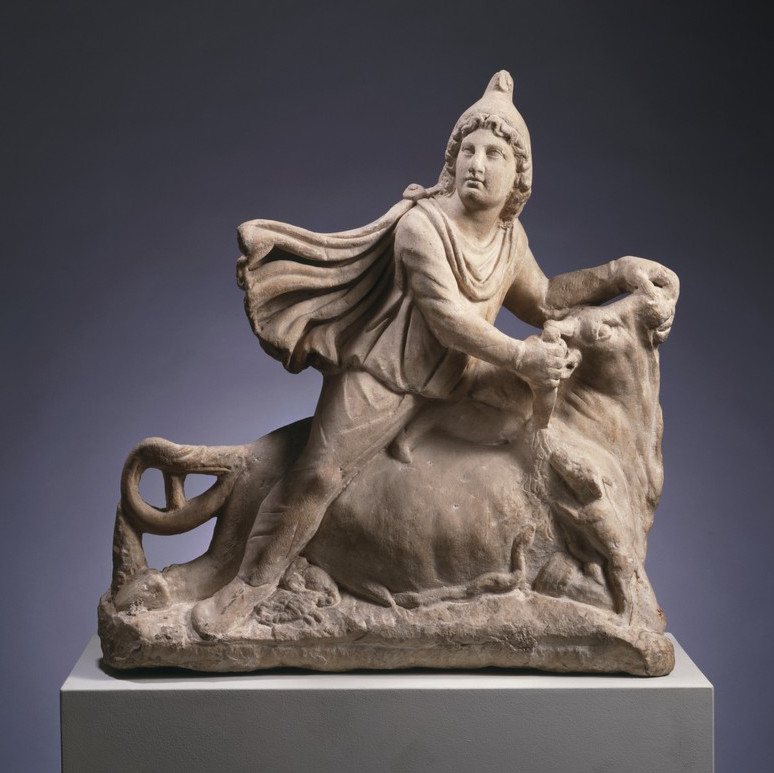
This sculpture of Mithras killing the bull may come from Rome, probably found in 1919.
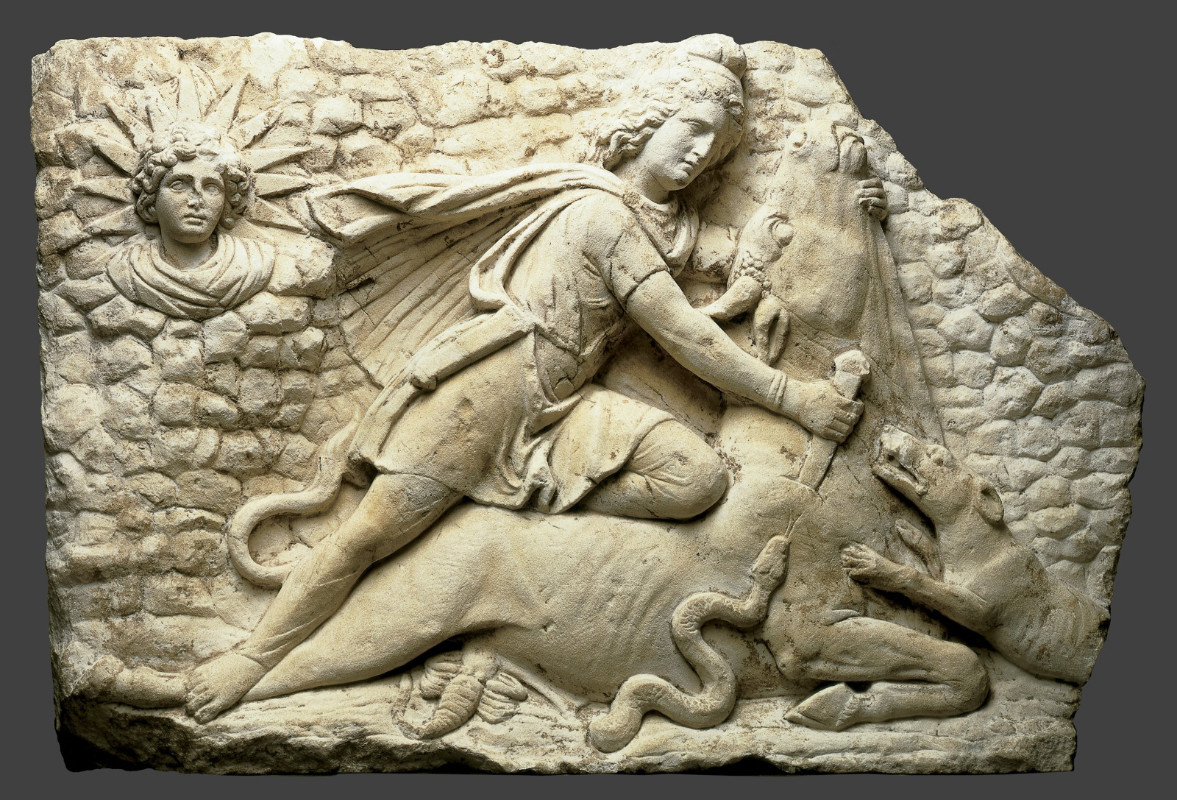
In the tauroctonic relief on display at the Cincinnati Art Museum, Mithras slaughters the bull over a rocky background.
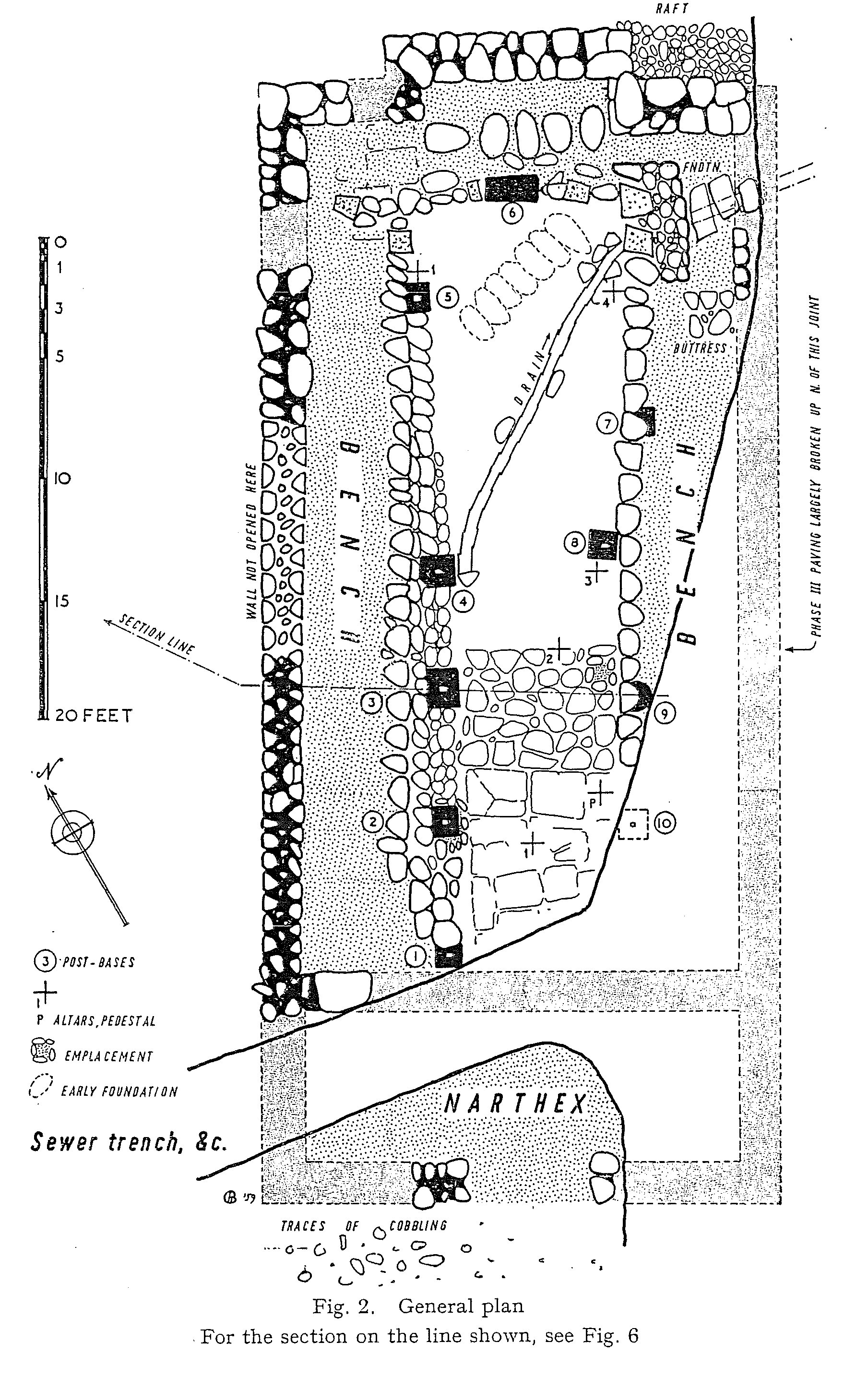
The Mithraeum of Caernarfon, in Walles, was built in three phases during the 3rd century, and destroyed at the end of the 4th.
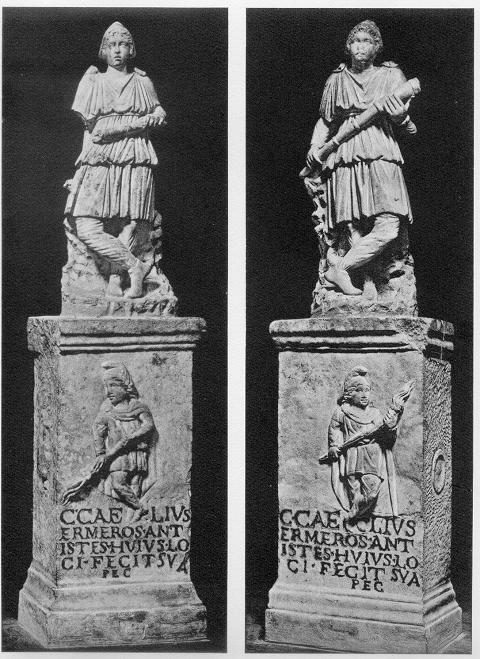
The sculptures of Cautes and Cautopates from the Mitreo del Palazzo Imperiale may have been reused from an older mithraeum in Ostia.
This altar, now lost, mentions that the Pater Patrum passed on the attributes of the sacred Corax to his son.

The Mithras temple of Prilep is in a small grotto under the castle of Markovi-Kuli.
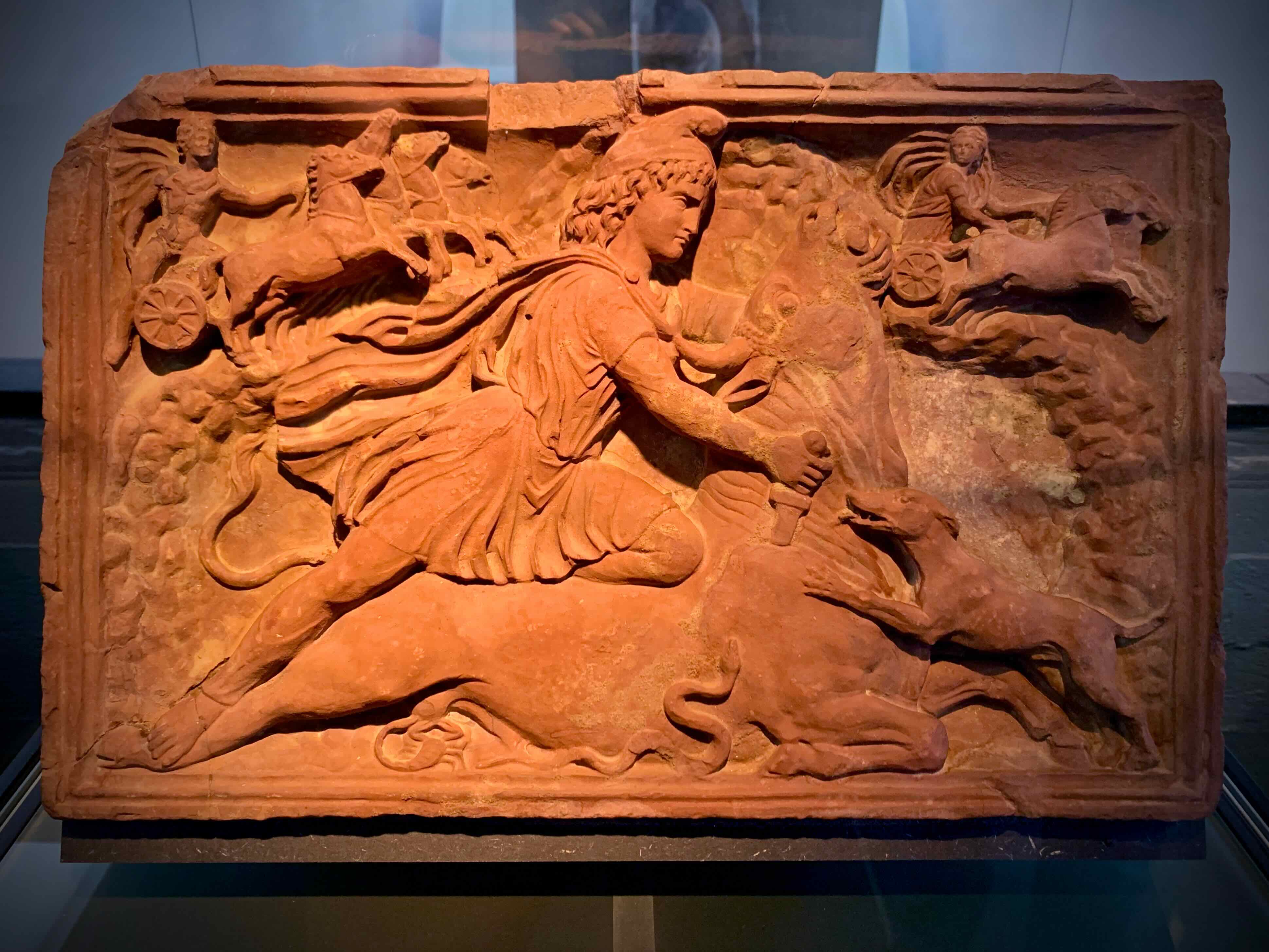
Maarten Vermaseren acquired this rosso antico marble of Mithras slaying the bull in 1961.
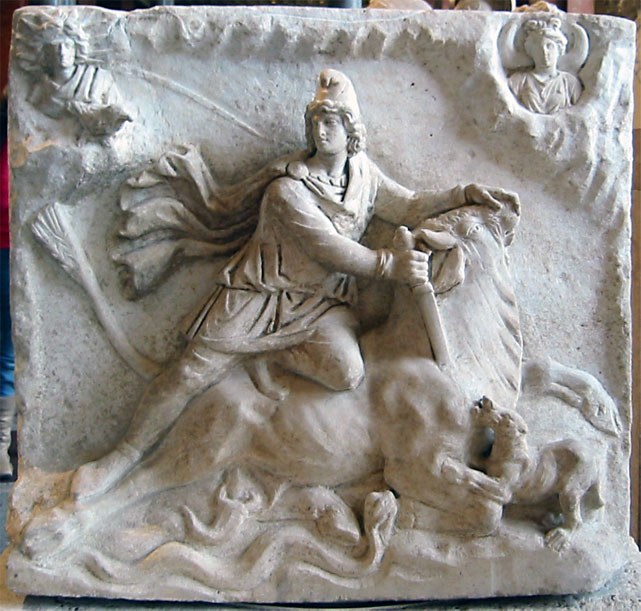
The marble shows Mithras slaying the bull, on one side, and Sol and Mithras feasting on a bull skin, on the other.
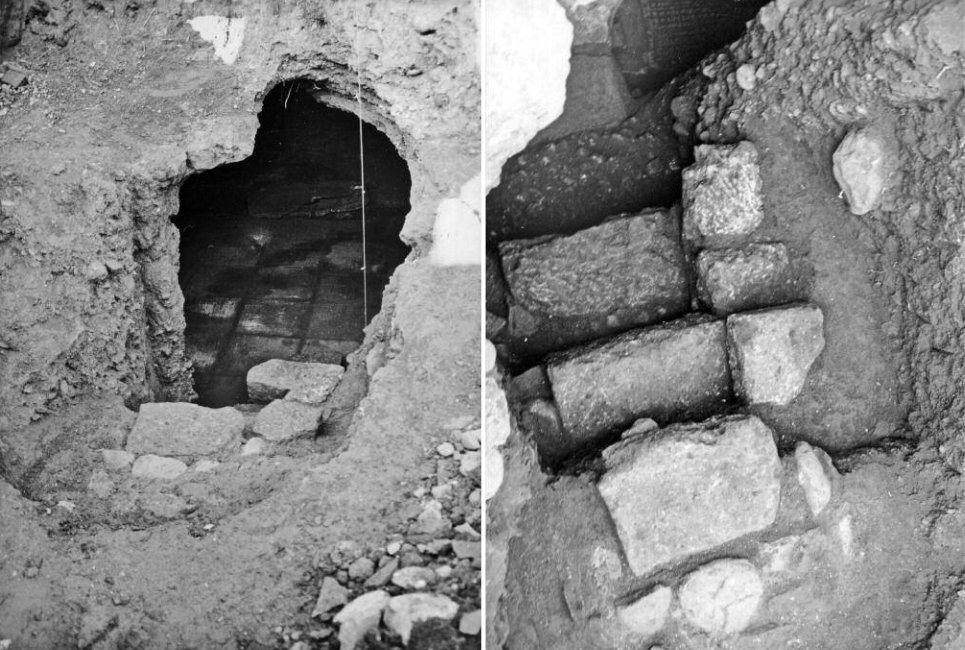
The underground cave which served as temple was cut into the conglomerate rock of the area, and a flight of eight steps of stone slabs led to it.
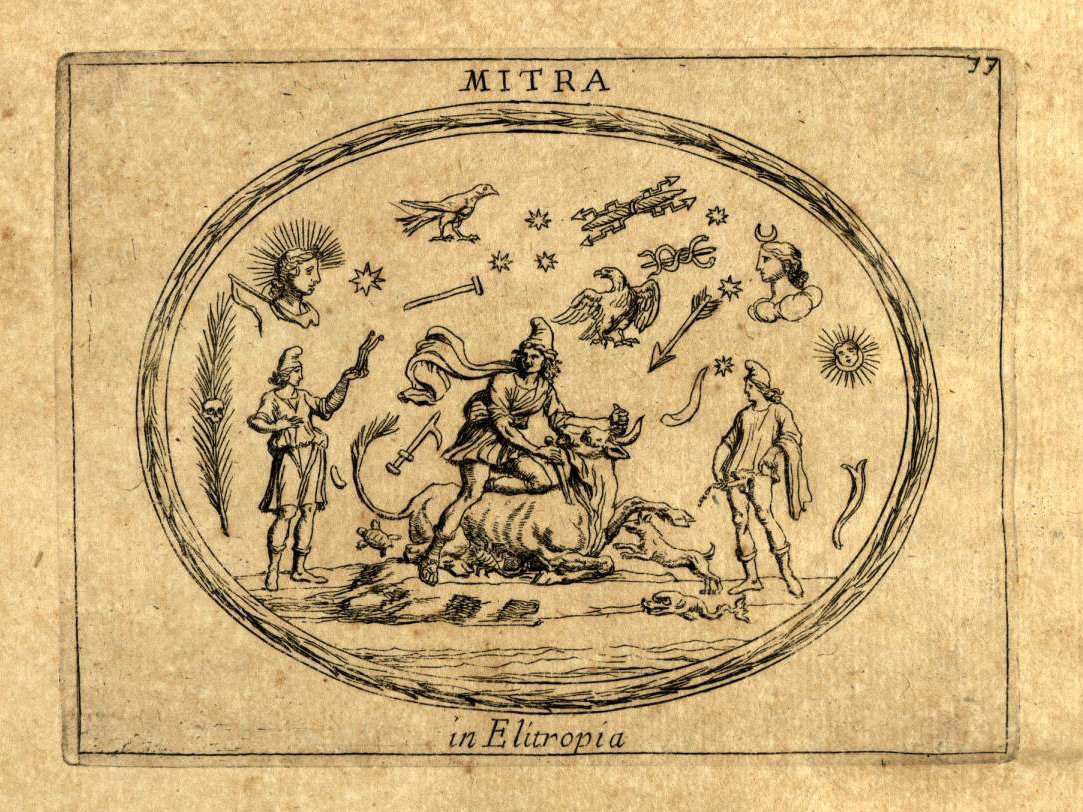
Tauroctony from a gemme, printed on Le gemme antiche figurate di Leonardo Agostini.
