Your search Germania inferior gave 183 results.
The monument was dedicated by two brothers, one of them being the Pater of his community.
The dedicant of this altar to the god Arimanius was probably a slave who held the grade of Leo.
These two inscriptions by a certain Titus Martialius Candidus are dedicated to Cautes and Cautopates.
The altar of the Sun god belongs to the typology of the openwork altar to be illuminated from behind.
This stone in basso relief of Mithras killing the bull was found 10 foot underground in Micklegate York in 1747.

Praeses of the Noric Mediterranean province, of equestrian rank, restaured the Mithraeum of Virunum in 311.


Clarissimus knight and legate born in Poetovio that helped to disseminate the cult of Mithras in the African provinces.

Emperor Caracalla ordered one of Rome’s largest temples to the god Mithras to be built in the baths bearing his name.

Gladiator to whom his companions Cimber and Pietas erected a monument in Colonia, Germania.
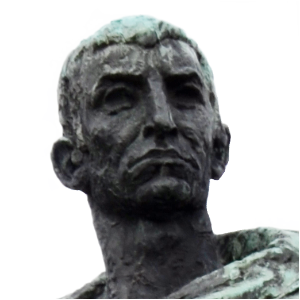
Danube region can be traced back to the legions that fought under his command in Armenia.

A powerful and wealthy man, founder of a mithraeum in the city of Aquincum of which he was the mayor.

Veteran and ex duplicarius of ala I civum Romanorum who dedicated an altar to Mithras in Teutoburgium.

Freedman and administrator of the country estate of a certain Flavius Macedo in Moesia.

The son of an eponymous person, he consecrated an altar to Helios Mithras in Kreta, Moesia inferior.
At Rome’s twilight, amid political upheaval and Christian ascendancy, Vettius Agorius Praetextatus embodied pagan intellect, virtue, and authority across senatorial, military, and mystical spheres.
Settlement of prehistoric origin that developed into the Roman Vicus Vetonianus, modern Dieburg, incorporated into the civitas Auderiensium in Germania Superior and attested as an active centre during the Roman period.
Pons Aelius, or Newcastle Roman Fort, was an auxiliary castra and small Roman settlement on Hadrian's Wall in the Roman province of Britannia Inferior, situated on the north bank of the River Tyne close to the centre of present-day Newcastle upon Tyn
Dion Chrysostom, c. 100 A.D., a philosophical writer under the emperors Nerva and Trajan, composed a series of discourses or essays (λόγοι) on various subjects, in one of which he reports concerning the doctrines and practices of the magi.
