Your search Grotta di Pozzuoli a Posillipo gave 2088 results.
In this relief of Mithras as bull slayer, recorded in 1562 in the collection of A. Magarozzi, Cautes and Cautopates have been replaced by trees still bearing the torches.
The Pontiae islands, including modern Ponza, formed part of the Roman maritime landscape of Latium and preserve one of the most remarkable Mithraic sanctuaries of Roman Italy, renowned for its rare stucco zodiac and astral symbolism.
Roman Britannia preserves one of the most strongly militarised corpora of Mithraic evidence in the western empire.
Roman Gallia preserves one of the largest and most geographically diverse corpora of Mithraic evidence in the western empire.
Roman Italia preserves a central and exceptionally influential corpus within the development of Mithraic cults.
Roman Hispania preserves a relatively modest but strongly urban body of Mithraic evidence, centred above all on Mérida.
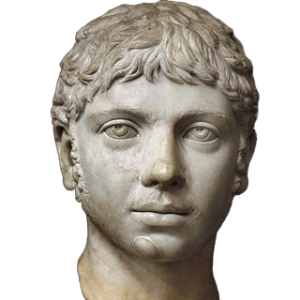
Roman emperor at the age of 14, from 218 to his death in 222, Elagabalus was a main priest of the sun god Elagabal in Emesa.

Emperor Caracalla ordered one of Rome’s largest temples to the god Mithras to be built in the baths bearing his name.
One of the largest known Mithraea in Pannonia, the sanctuary of Sárkeszi stood near the Roman road linking Herculia and Aquincum.
Arabia connected the Roman Near East to caravan routes, desert frontiers and the commercial networks of the southern Levant.
Al-Ankawi is a Syrian town located in the Ziyarah Subdistrict of the al-Suqaylabiyah District in Hama Governorate.
Septeuil has been known in Mithriacism since 1984, when a sanctuary dedicated to Mithras was discovered in the 4th century. It was located in a spring sanctuary (nymphaeum) of the 1st century.
Sibiu is a middle-sized well preserved fortified medieval town in central Romania, situated in the historical region of Transylvania. In 2004, its historical center began the process of becoming a UNESCO World Heritage Site.
Madauros was a Roman-Berber city in Numidia, in present-day Algeria, renowned in antiquity as an important intellectual and educational centre of Roman North Africa.
Stockstadt am Main is a market municipality in the Aschaffenburg district in the Regierungsbezirk of Lower Franconia in Bavaria, Germany.
Peltuinum was a Roman town of the Vestini on the Via Claudia Nova, founded in the mid-1st century BC. It developed into a regional centre with city walls, a sanctuary, a theatre and an amphitheatre, and was monumentalised in the early Imperial period
Leptis or Lepcis Magna, also known by other names in antiquity, was a prominent city of the Carthaginian Empire and Roman Libya at the mouth of the Wadi Lebda in the Mediterranean.
