Your search Jabal al-Druze gave 3542 results.


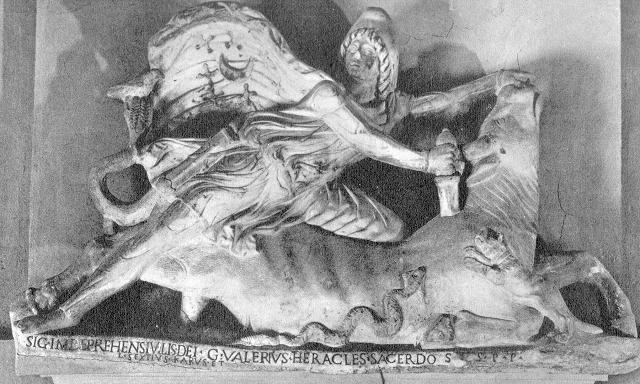
This sculpture of Mithras killing the bull was dedicated to the ’incomprehensible god’ by a certain priest called Gaius Valerius Heracles.

This cylindrical marble altar was dedicated by the same Pater Proficentius as the slab, both monuments found in the Mithraeum beneath the Basilica of San Lorenzo.
This inscription found in the Mithraeum Aldobrandini informs us of certain restorations carried out in the temple during a second phase of development.
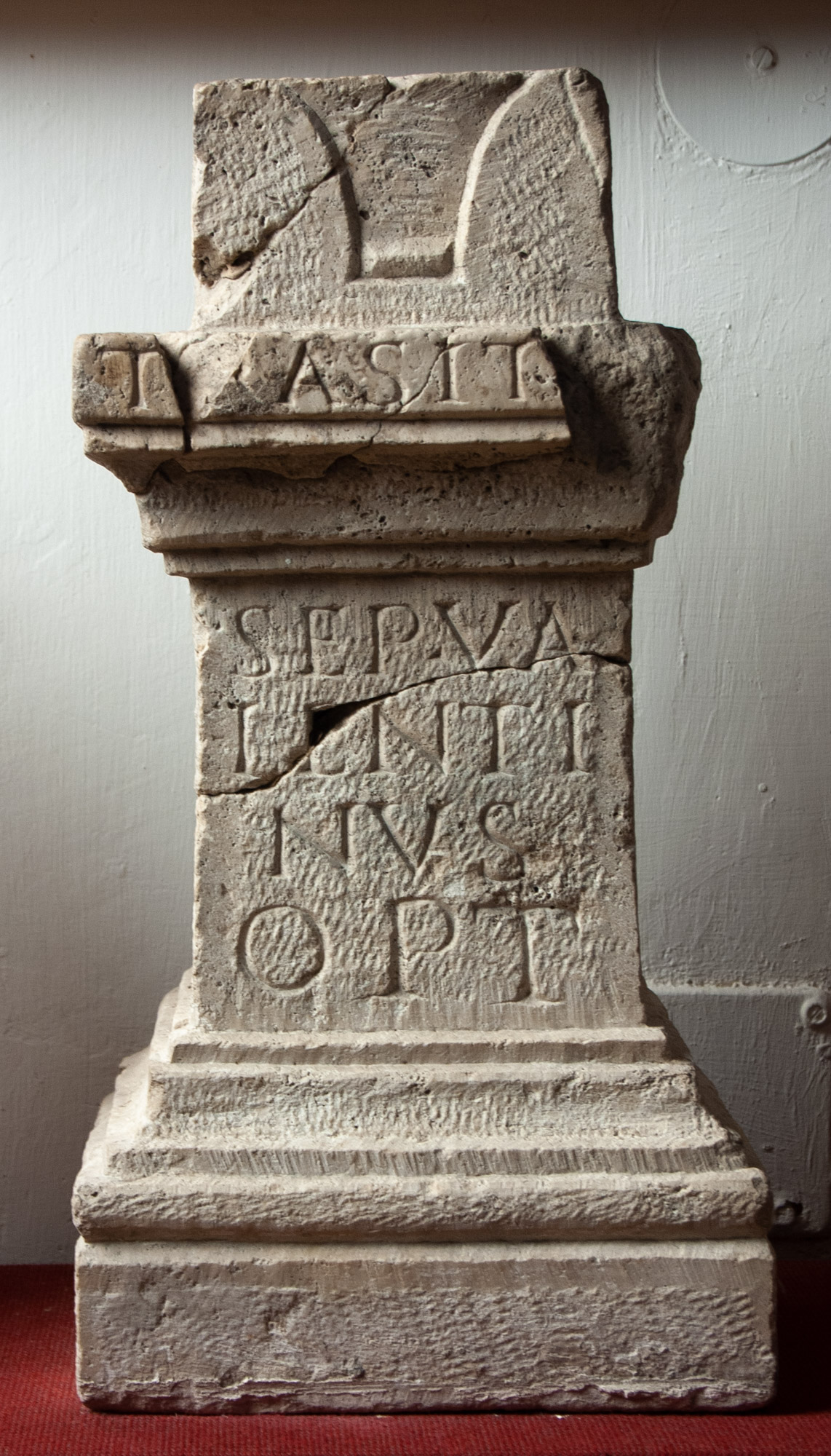
This is one of the altars erected by Septimius Valentinus, in this case, to the transitus of Mithras.
This limestone altar dedicated to Mithras by a certain Veturius Dubitatus was found in Dalj, Croatia, in 1910.
This marble slab, found in the Mithraeum of San Clemente, bears an inscription by a certain Aelius Sabinus for the health of the Emperor Antoninus Pius and his sons.
In this inscription, found in Angera in Lombardy, Mithras is referred to by the unicum 'adiutor'.
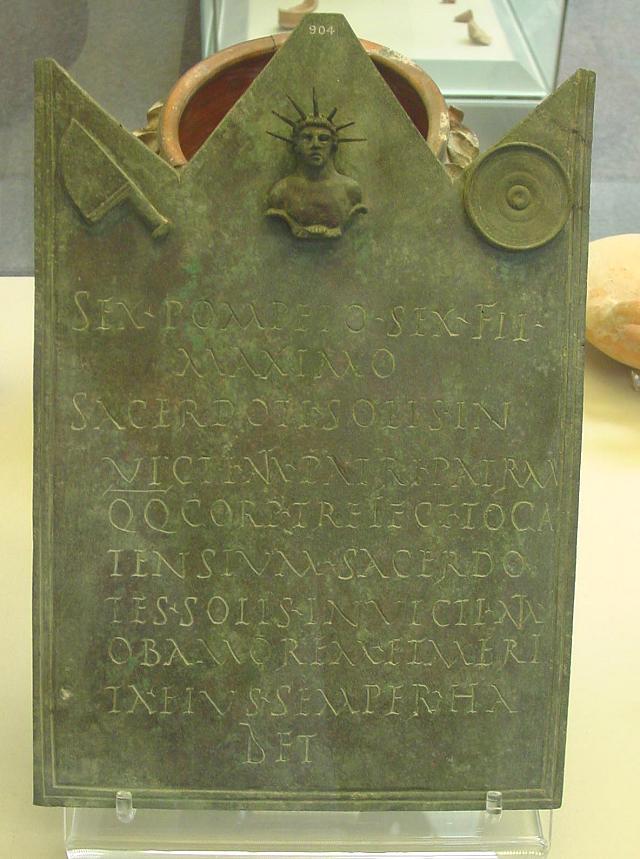
This plaque, now on display in the British Museum, may have come from the Aldobrandini Mithraeum in Ostia.
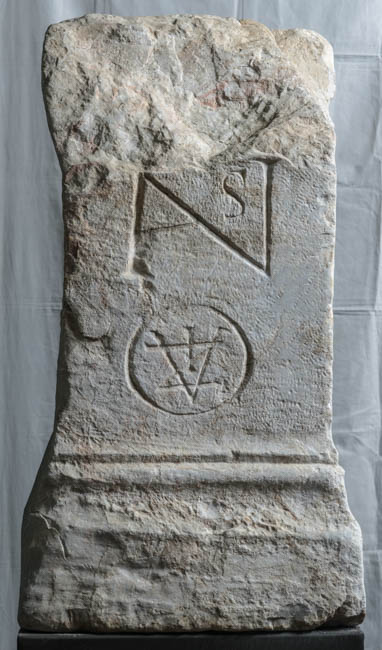
The limestone altar at Klechovtse in North Macedonia bears an inscription to the invincible Mithras.
This marble slab found near the Casa de Diana in Ostia bears two inscription with several names of brothers of a same community
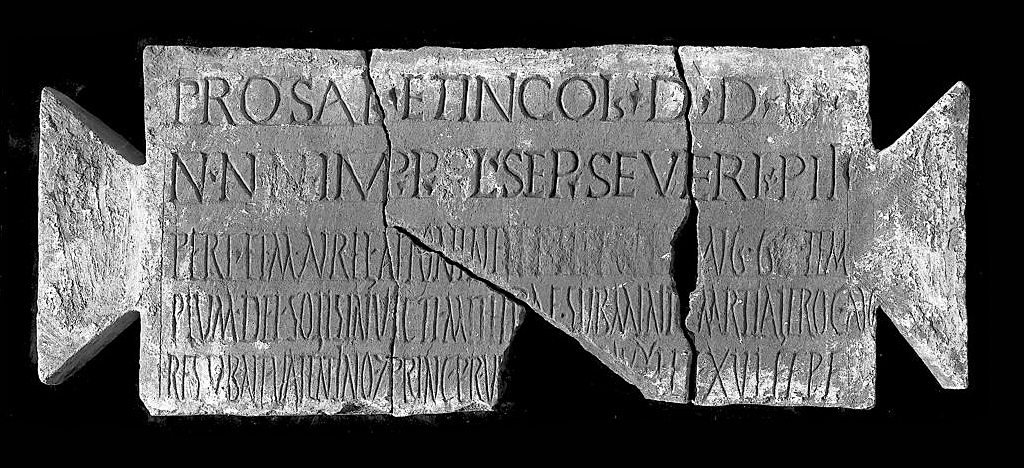
Antonius Valentinus, centurio, made this plaque for the salut des empereurs Septimus Severus and Marcus Aurelius.
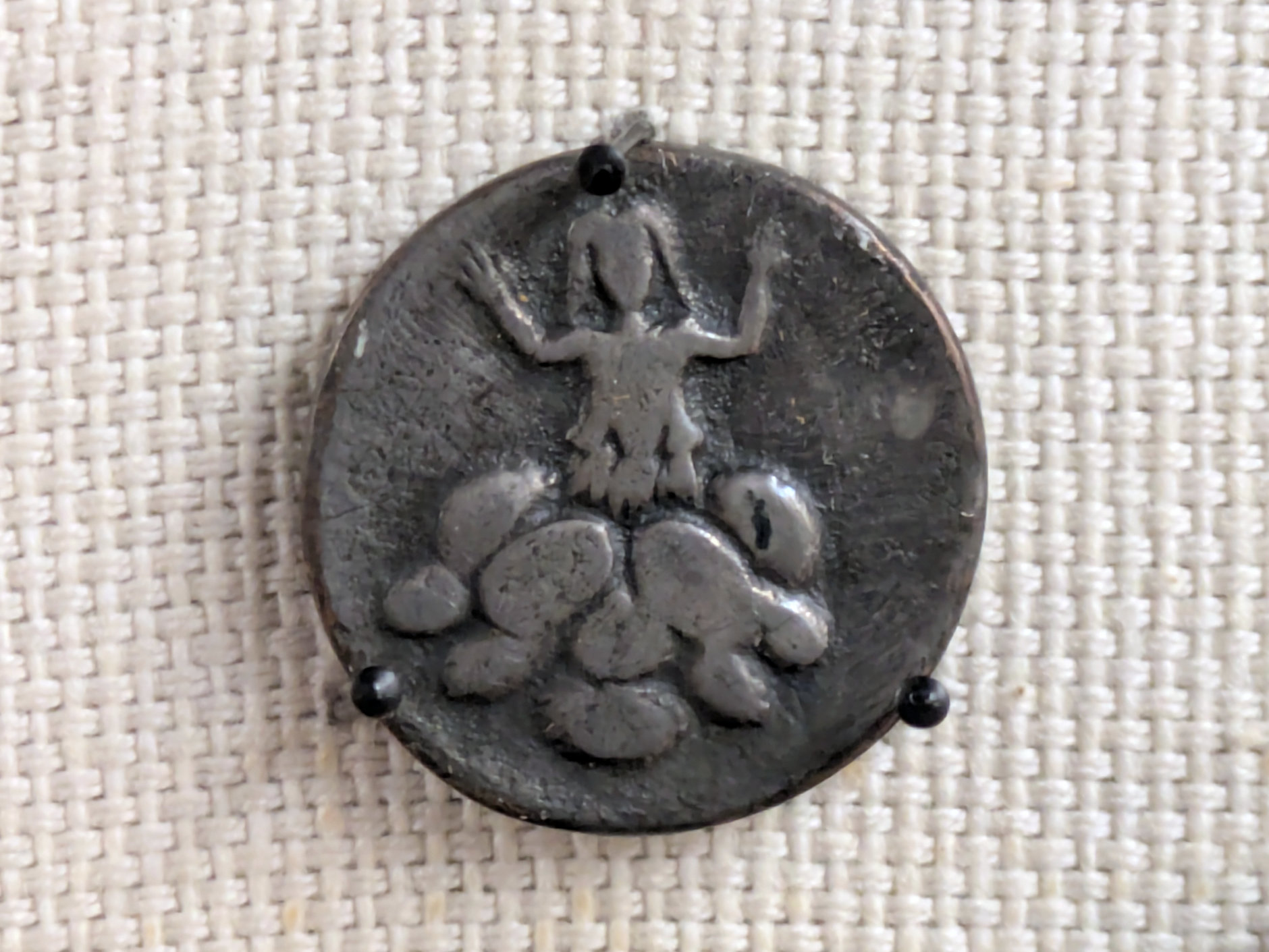
The mithraic denarius of St. Albans dates from the 2nd century.
Small bronze statuette in Oriental dress from the Walters Art Gallery, Baltimore, depicting a figure no longer considered a Mithraic object.
Sandstone altar from the Mithraeum of Vindobala bearing a dedication to Sol Invictus and Mithras by the prefect Aponius Rogatianus.
A black marble cippus from Val Camonica with clear but inelegant lettering, dedicated to Cautopates by G. Munatius Tiro, a duovir iure dicundo, and his son G. Munatius Fronto.
An inscription from the place called La Oneda near Breno in Val Camonica, dedicated to Sol Divinus by L. Apisocius Successus for himself and his four patrons Marcus, Gaius, Lucius and Quintus, with a dagger with ribbons carved below.
A cylindrical bronze peg with a lion's head in the middle, the groove-shaped mouth fitted with a small tube from the back, from the Mithraic sanctuary at Angleur near Liège in Belgica.

