Your search Jean-Baptiste Félix Lajard gave 136 results.


Syndexios in Ostia, his name Marsus suggests that he was a snake-charmer.

Fragment of yellowish chalcedony in the Cabinet des Médailles, Paris, formerly in the Millingen collection, depicting the standard tauroctony.

Rock-crystal gem in the Cabinet des Médailles, Paris, depicting Mithras as bull-slayer with the standard iconographic programme.
Altar from Apulum, Dacia, found in 1715, dedicated to Soli by Quintus Marcius Victor Felix Maximillianus, legatus Augusti of Legio XIII Gemina, together with his wife Pullaiena Caeliana and his son.
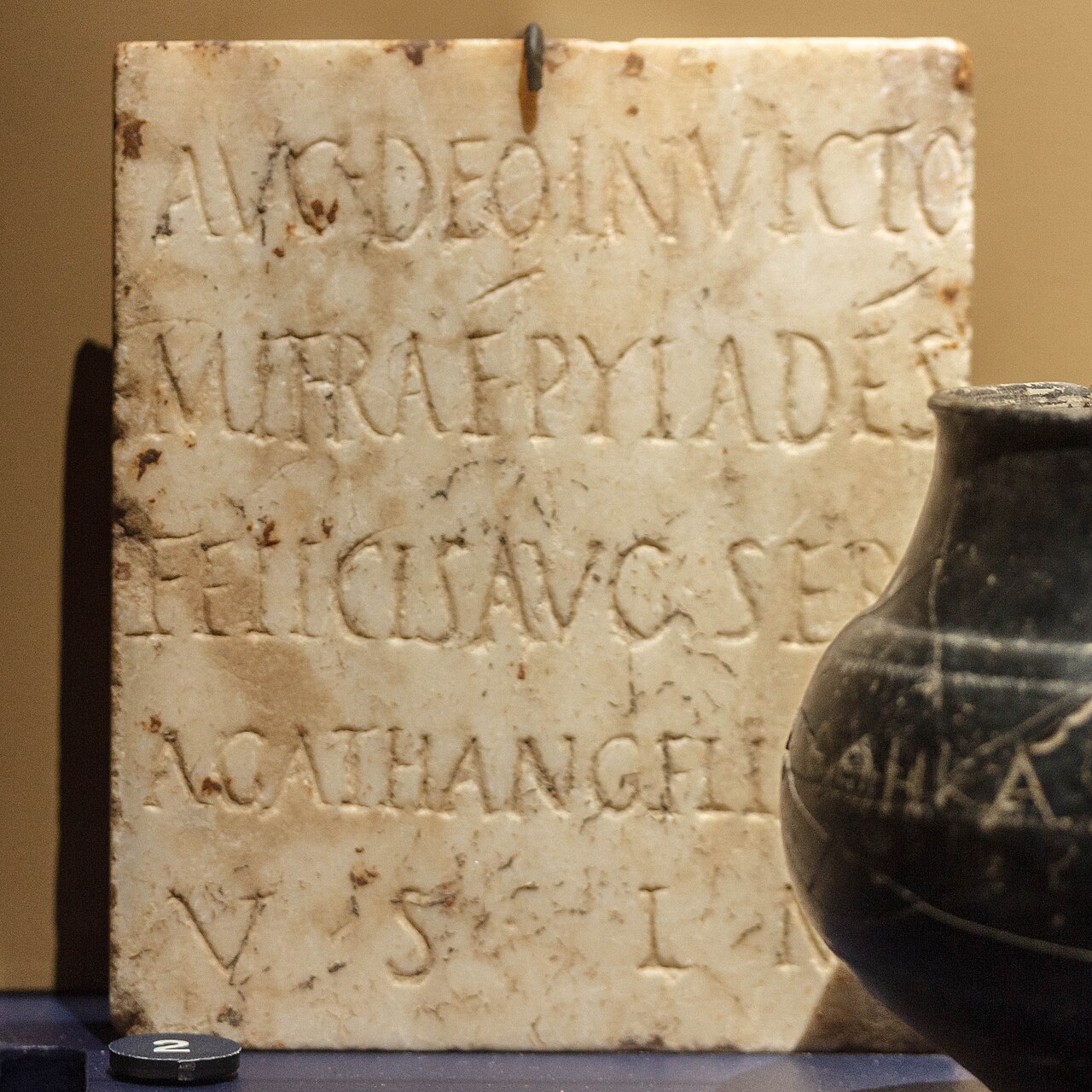
This marble plaque from Iuliomagus, Roman Angers, bears a rare dedication to Mithras by Pylades, a slave of an imperial slave connected to the Roman administration in Gaul.
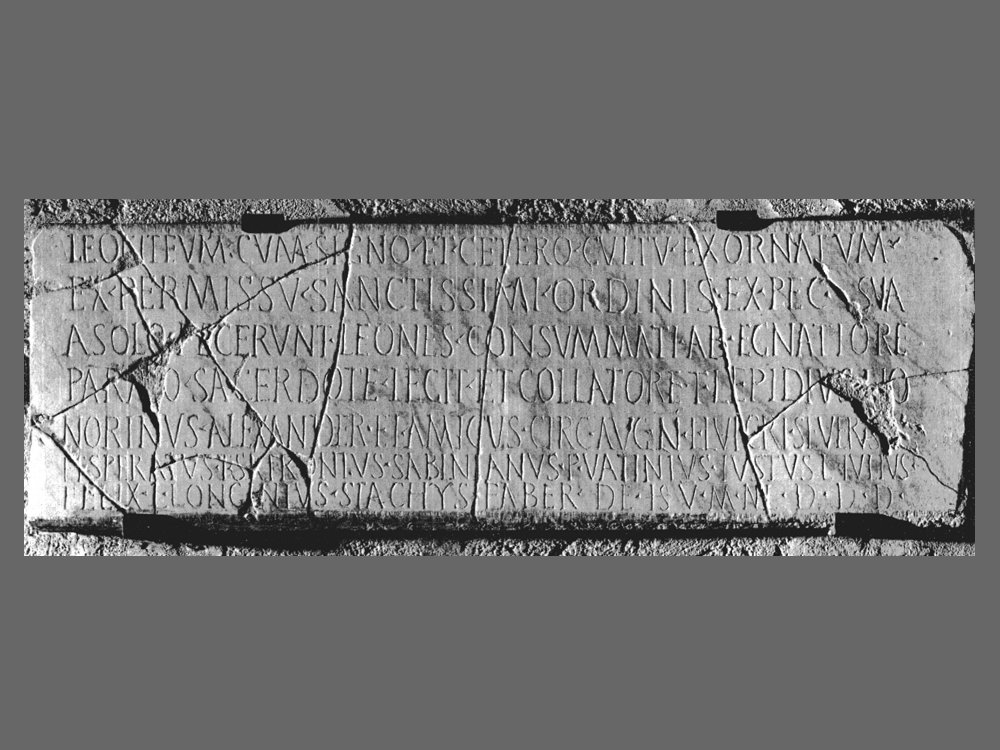
This plaque from Carsulae, in Umbria, refers to the creation of a leonteum erected by the lions at their own expense.
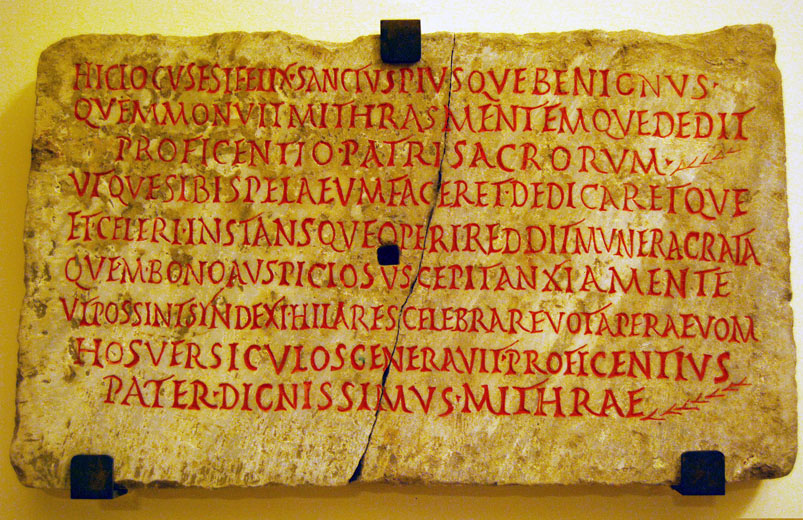
This marble slab bears an inception be the Pater Proficentius to whom Mithras has suggested to build and devote a temple.

Jean Suttman’s study trip in Rome turns nightmarish when she discovers a murdered student in the Temple of Mithra and realizes someone is out to harm her.

This altar, dedicated to Sol Invictus Mithras by a certain Eutyches for the health of the Emperor Caracalla, was found in Sisak, Croatia, in 1899.

Ernest Renan suggested that without the rise of Christianity, we might all have embraced the cult of Mithras. Nevertheless, it has had a lasting influence on secret societies, religious movements and popular culture.
In this 4th-century Roman altar, the senator Rufius Caeionius Sabinus defines himself as Pater of the sacred rites of the unconquered Mithras, having undergone the taurobolium.
In the altar that Titus Tettius Plotus dedicated to the invincible God, he called himself pater sacrorum.
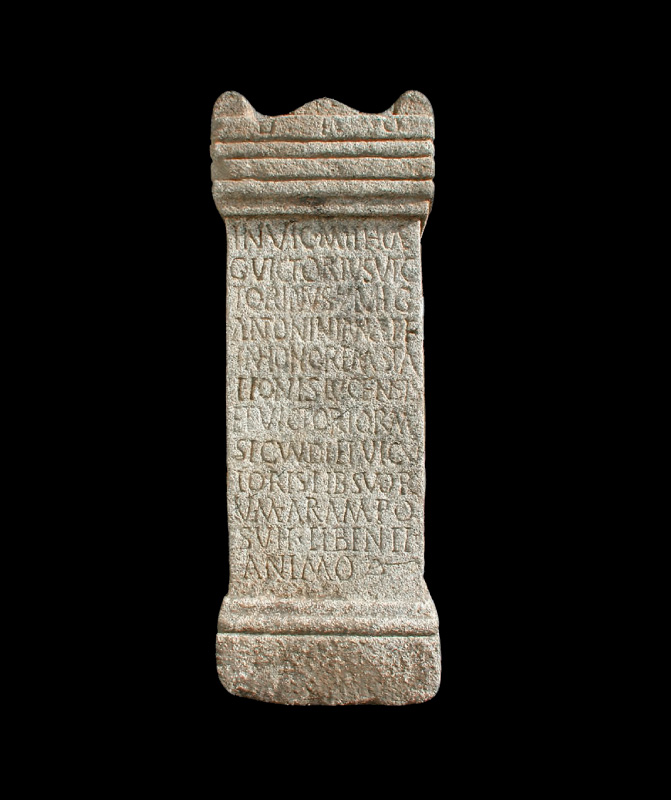
Victorius Victorious, centurion of the Legio VII, erected the altar in honour of the Lugo garrison and of the Victorius Secundus and Victor, his freedmen.
