Your search Lucciana (Mariana site) gave 296 results.

A white marble relief fragment found with its companion piece near Nomento on the Via Nomentana, showing only the lower body of a cross-legged torchbearer in a short tunic, now in the storerooms of the Museo Nazionale in Rome.
Marble tablet in the Vatican Musea, Galleria Lapidaria, with a dedication to the Invictus and Urania by two initiates of the Leo grade, the text divided by four feet pointing in opposite directions as a pro itu et reditu formula.
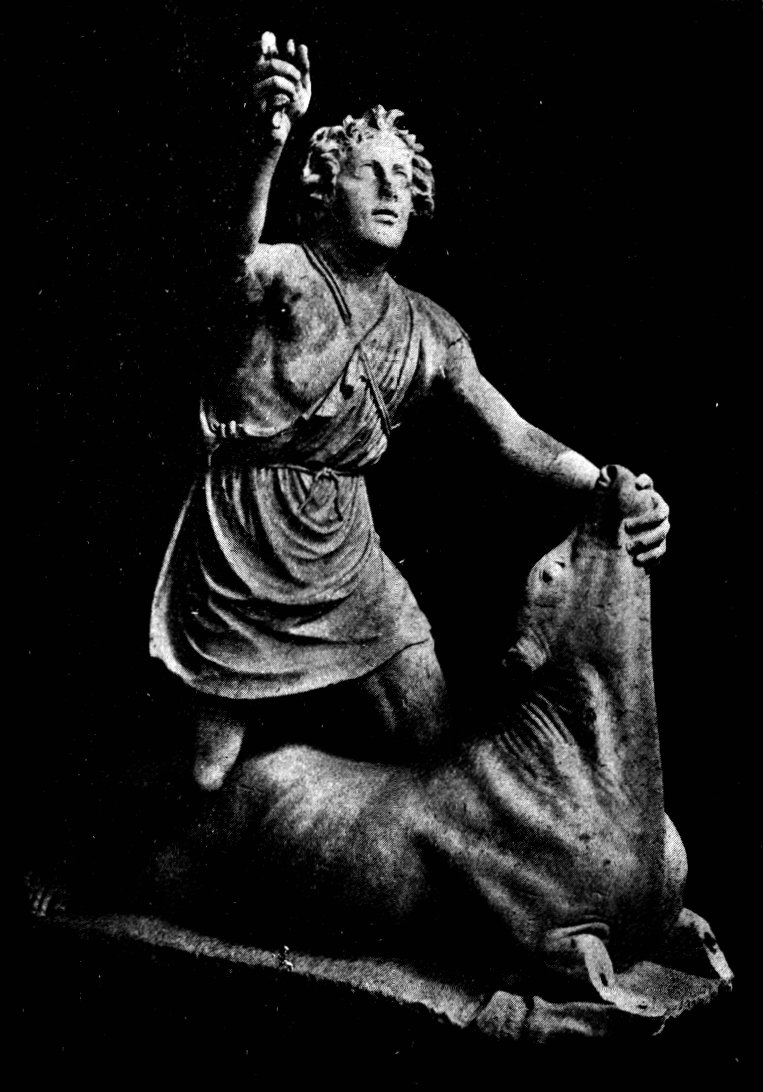
The person who commanded the sculpture may have been M. Umbilius Criton, documented in the Mitreo della Planta Pedis.
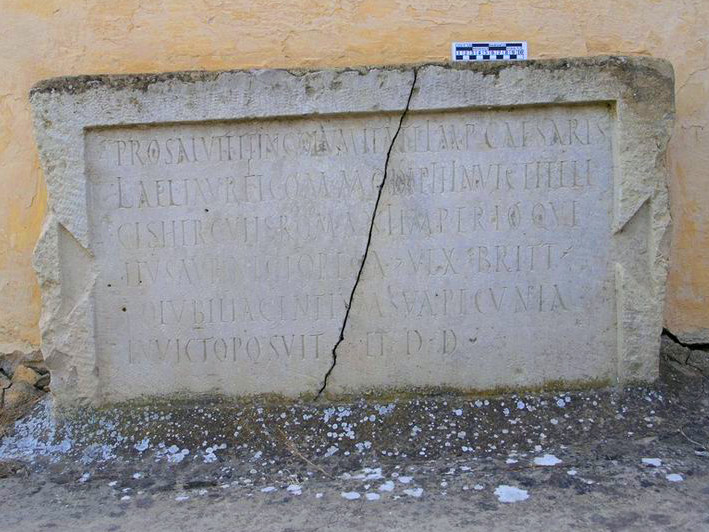
One of the two inscriptions by Aurelius Nectoreca, a follower of Mithras, found in Meknès, Morocco.
Architectural and numismatic finds from the Mithraeum at Serdica, Thracia, comprising a door cornice, a capital fragment, two pilaster pieces, a stone water-basin, and two coins of Arcadius deposited when the sanctuary was reused as a cellar.
Altar from Intercisa, Pannonia Inferior, found in the area of the castra.
Plate from Intercisa, Pannonia Inferior, with traces of red painting and an ivy-leaf in the middle line; bearing an inscription recording a Mithraic dedication.
Limestone relief of Silvanus found south of the Krempelmühle near Mithraeum III at Aquincum, Pannonia Inferior, in 1895; mentioned because similar representations of Silvanus are attested at other Mithraic sites.
Sandstone Mithras relief discovered in 1950 near Rückingen, proving the existence of a Mithraeum there from the late second to early third century AD
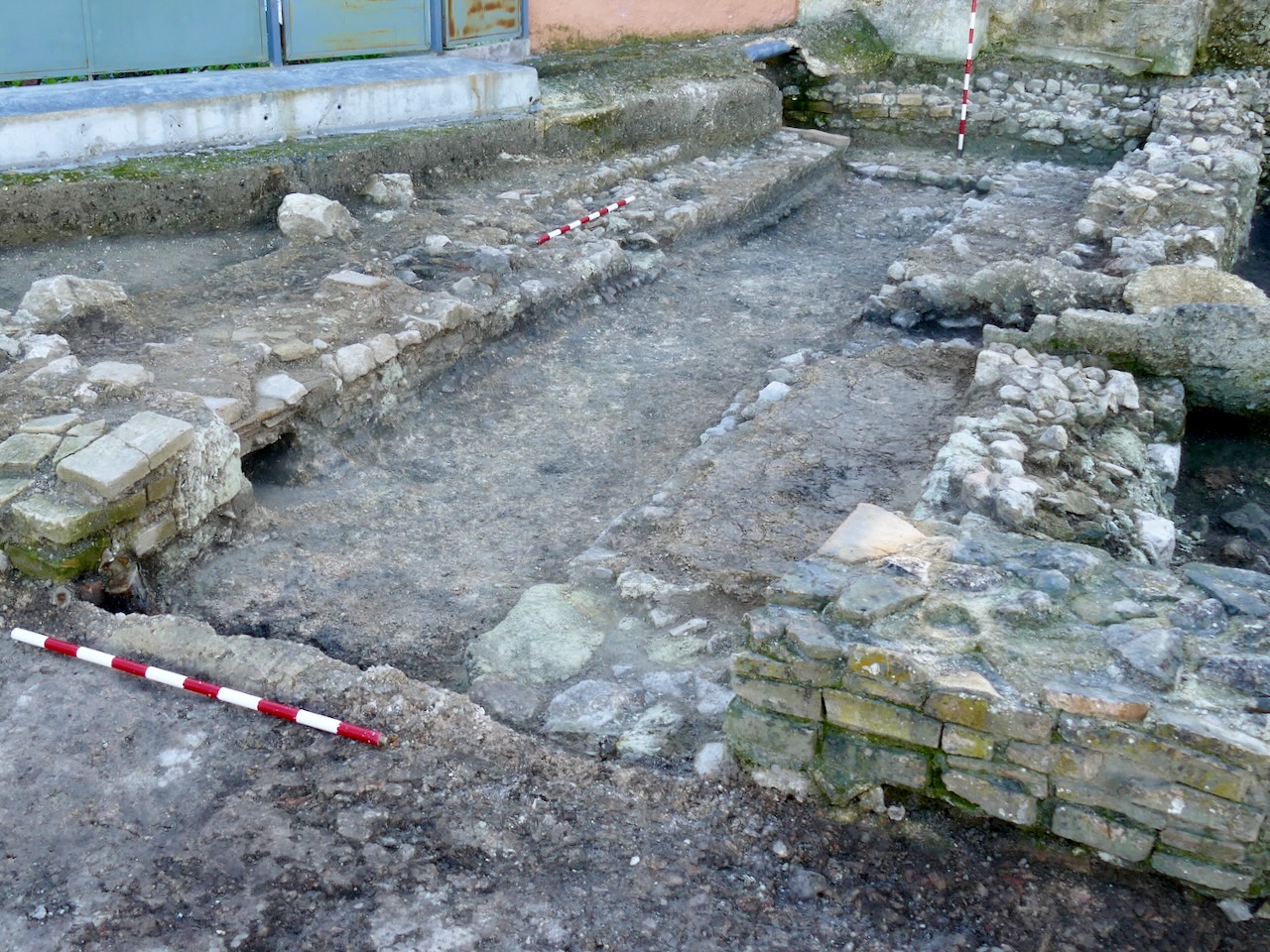
The Mithraeum of Cabra is located in the Villa del Mitra, which owes its name to the discovery in 1951 of a Mithras tauroctonus in the remains of the Roman villa.
Commagenean sanctuary preserving relief fragments of Mithras greeting royal figures at the hierothesion of Mithridates Kallinikos.
Subterranean sanctuary at ancient Atchana tentatively interpreted by Woolley as an early precursor to later Mithraic temples.
Many of the inscriptions and sculptures of the site were kept in a museum which has been destroyed.
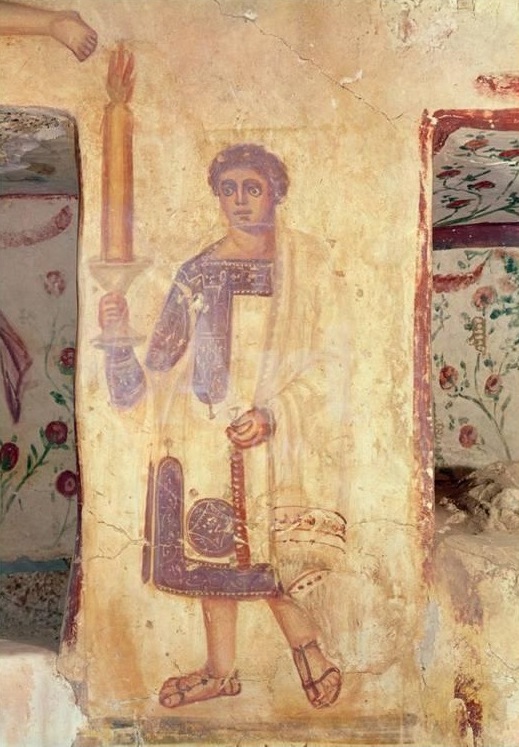
The Mithraic nature of the frescoes of Oea, according to the scholars Cumont and Vermaseren, is now questioned.

Roman military and religious settlement in Chersonesus Taurica occupied between the 1st and 4th centuries CE, associated with the castellum of Characis.
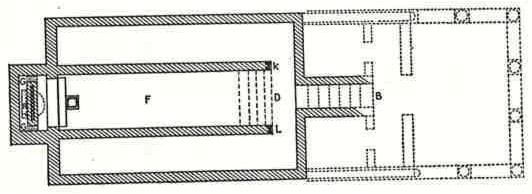
First Mithraic sanctuary discovered at Heddernheim (ancient Nida) in 1826, with finds preserved in the Städtisches Museum at Wiesbaden.
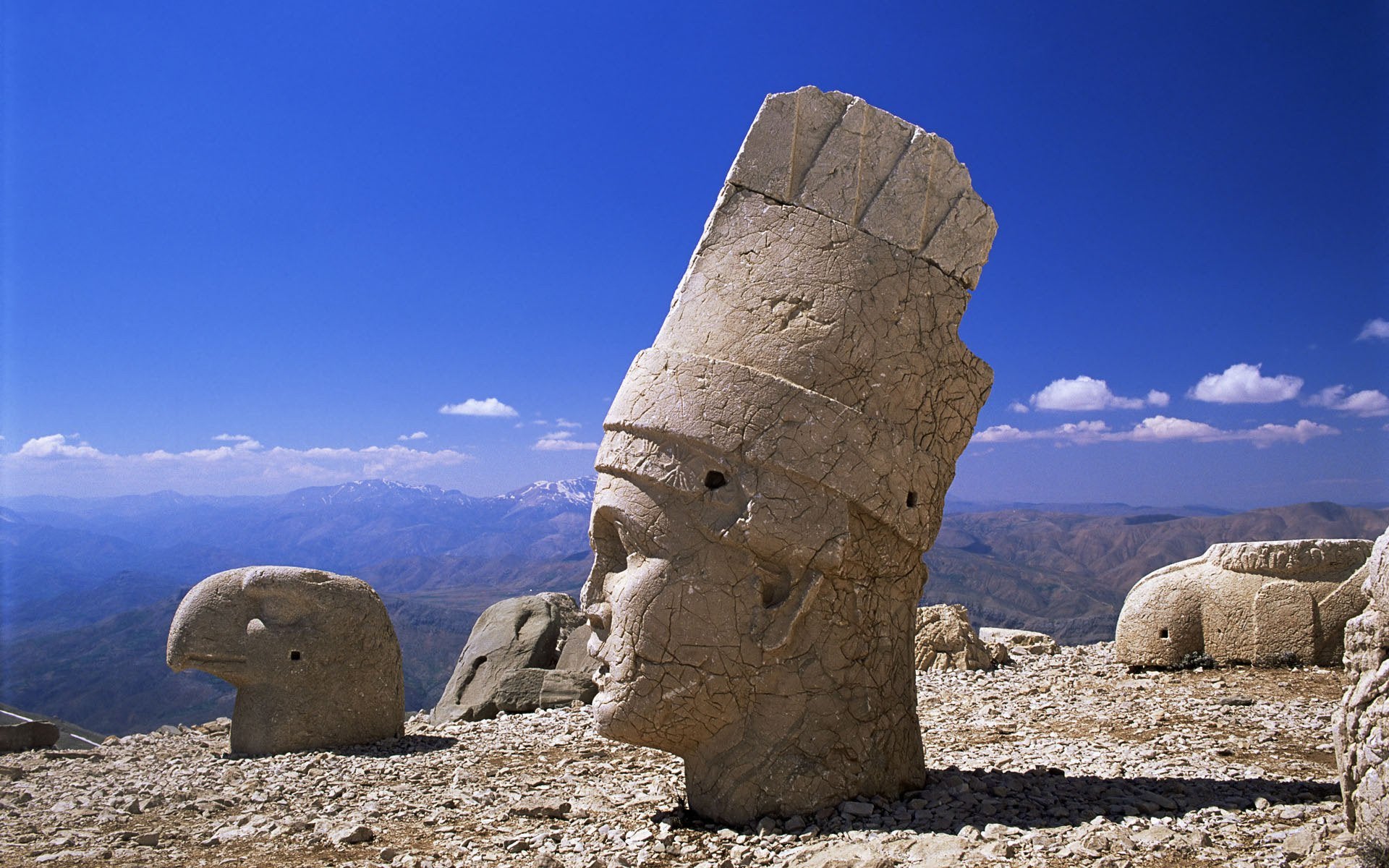
The colossal head has been identified as a solar god, Apollo-Mihr-Mithras-Helios-Hermes.
Uruk, the archeological site known today as Warka, was an ancient city in the Near-East or West-Asia, located east of the current bed of the Euphrates River, on an ancient, now-dried channel of the river in Muthanna Governorate, Iraq.
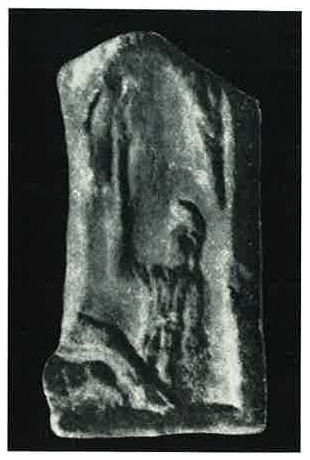
The site of Ay-Todor in Crimea revealed a Roman camp, a temple with votive offerings, and a Mithraeum.

This votive silver plaque depicting Mithras was found at the site of Pessinus, Ballıhisar, in Turkey.
