Your search for Mainz gave 14 results.

The Roman castrum Mogontiacum, the forerunner of Mainz, was founded by the Roman general Drusus around 10 BC. It was an important military town throughout the Roman period. The town of Mogontiacum grew up between the fort and the Rhine.

Tabella aenea ansata from Mainz, ancient Mogontiacum, dedicated to Deo invicto Mithrae by Catia, lost during the Second World War
Ara litteris rubricatis from Mainz, ancient Mogontiacum, dedicated to Deo invicto Mithrae, with the dedicant's name only partly legible
Two sandstone altar fragments from Mainz, ancient Mogontiacum, with a partially preserved dedication to Deo invicto Mithrae
Fragmentary inscription from Mainz, ancient Mogontiacum, possibly dedicated to Deo invicto, with most of the text lost

Fragment of a white sandstone tauroctony relief from Mainz, ancient Mogontiacum, found reused in the wall of a house in 1864
Fragmentary sandstone altar from Mainz, ancient Mogontiacum, dedicated to Deo invicto Mithrae by Marcus A., a duplicarius of an ala
Yellow sandstone altar from Mainz, ancient Mogontiacum, dedicated to Deo invicto Mithrae on behalf of the salus of soldiers of Cohors I Ituraeorum
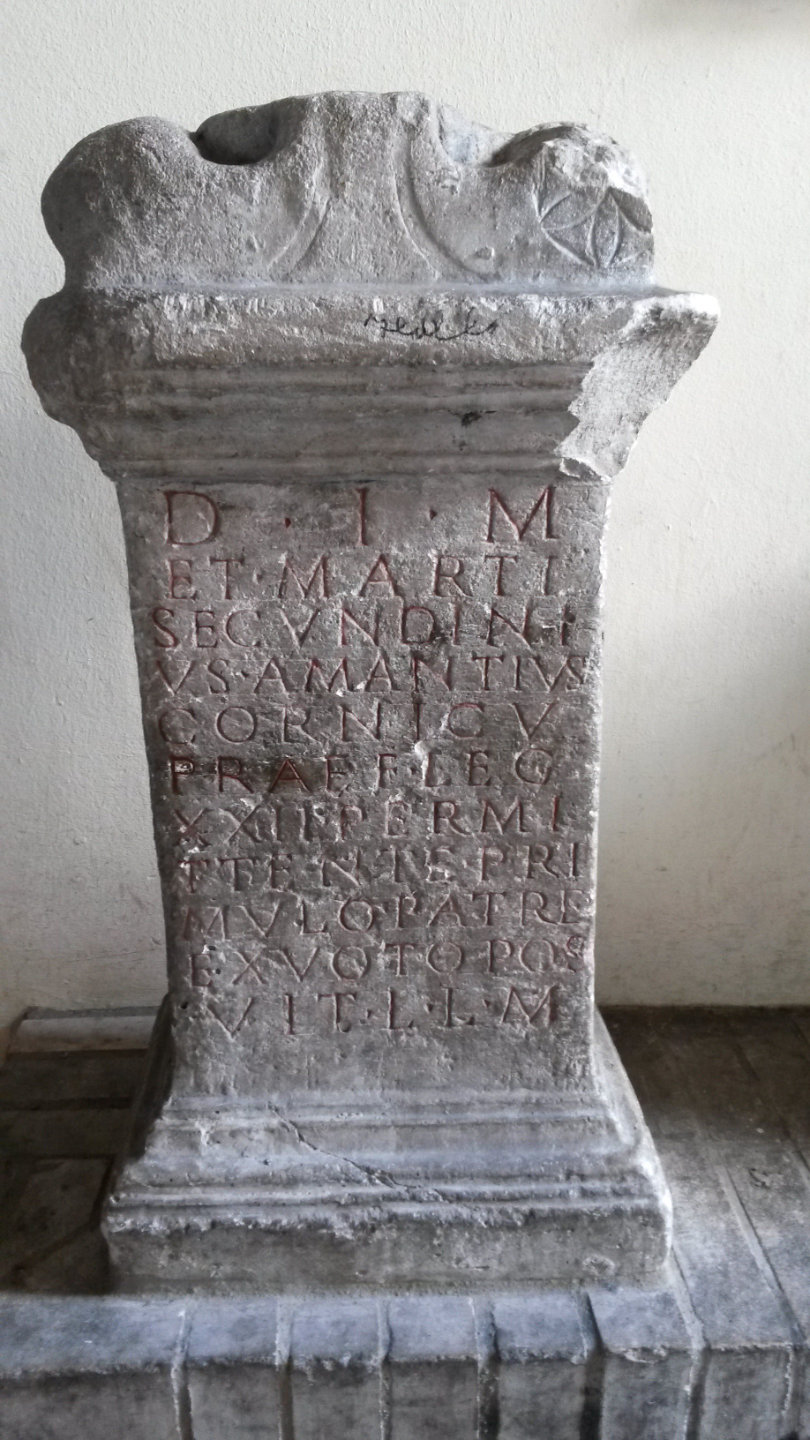
This altar has been unusually dedicated to both gods Mithras and Mars at Mogontiacum, present-day Mainz.
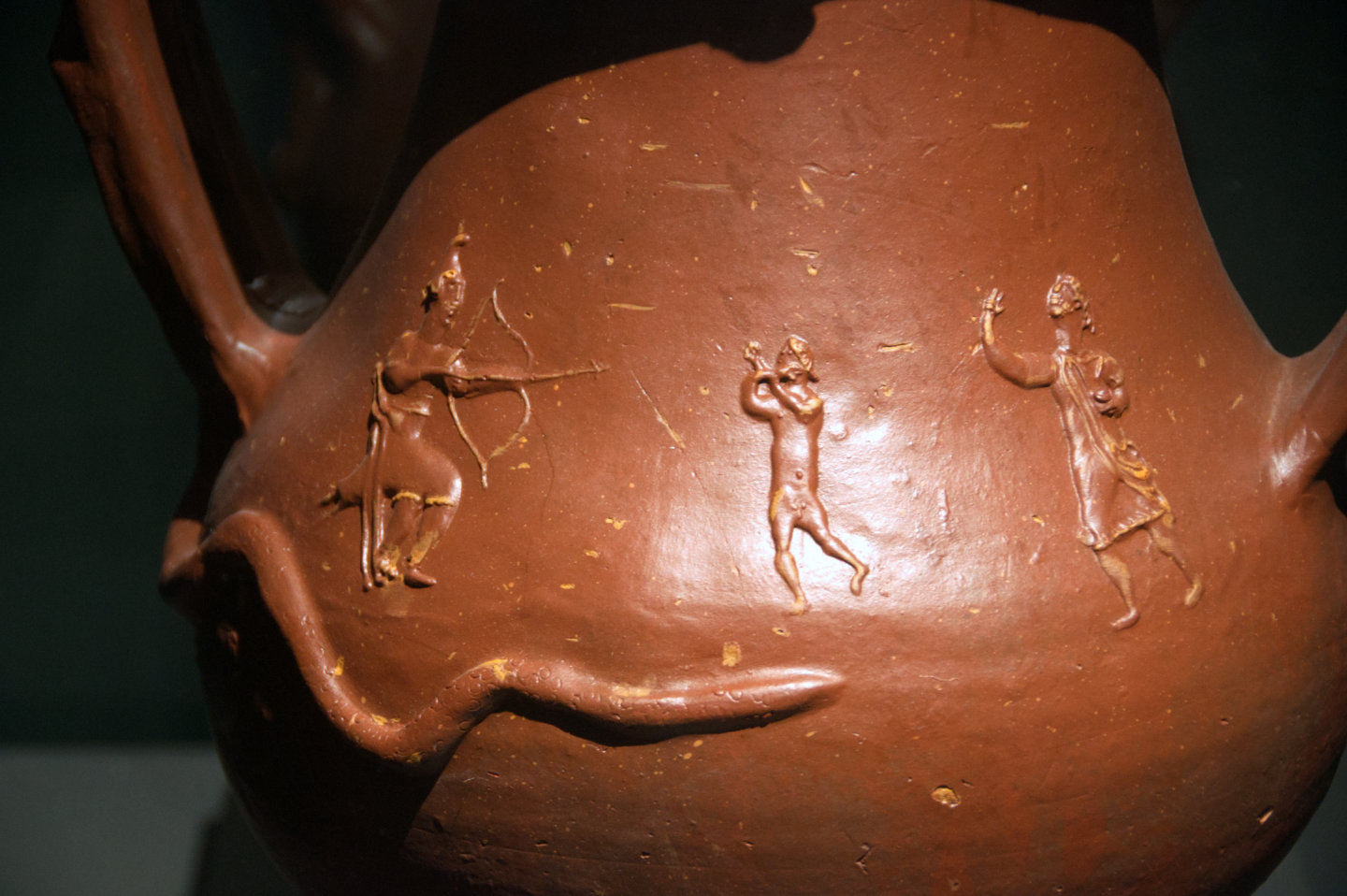
The Mithraic vase from Ballplatz in Mainz depicts seven figures arranged in two narrative sequences, commonly interpreted in relation to initiation rites.

The Mithraeum of Mainz, was discovered outside the Roman legionary fortress. Unfortunately the site was destroyed without being recorded.

Soldier of the XXII Legio Primigenia Pia Fidelis stationed in Mainz that erected an altar to Mithras in Sumelocenna.
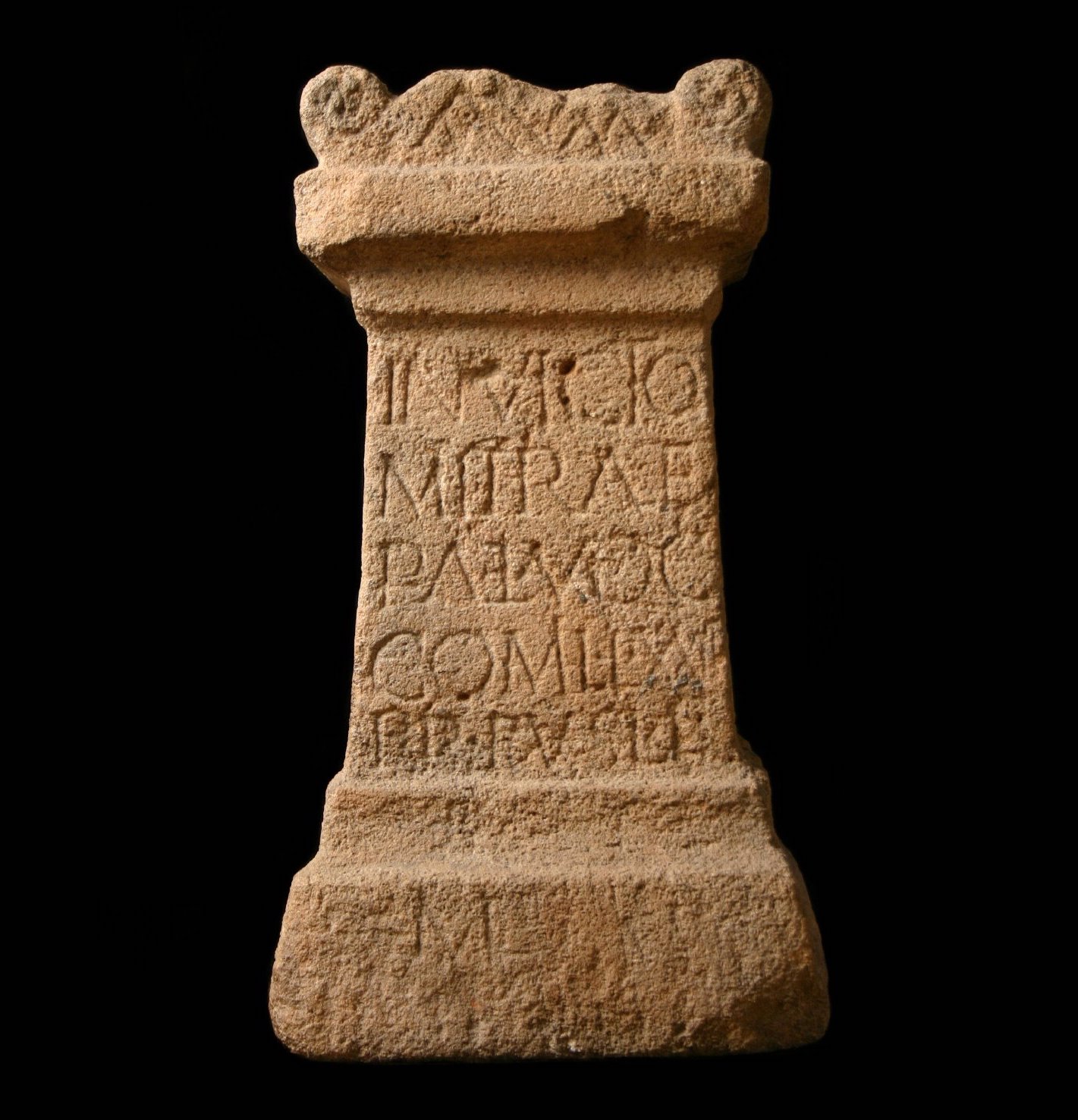
This monument was erected by a certain Publius Aelius Vocco, a solider of the Legio XXII Primigenia Pia Fidelis stationed in Mainz.