Your search Mit Rahina gave 2640 results.
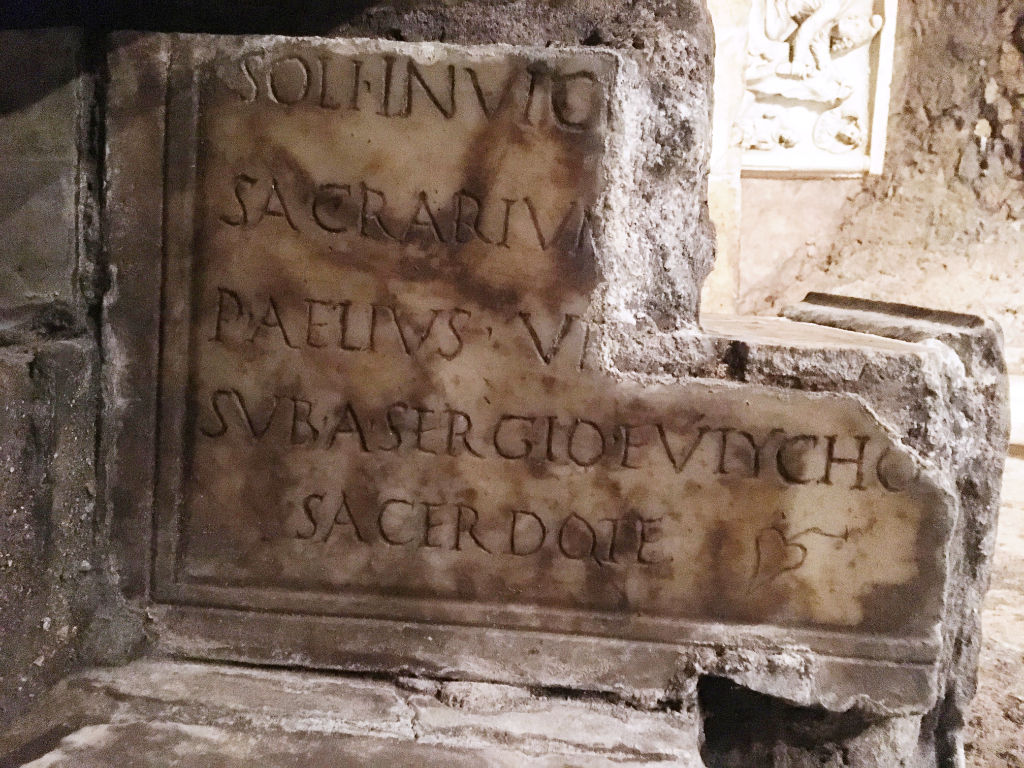
The Mithraic fellow P. Aelius Urbanus mentions that he built the sacred area of the Mithraeum Circo Massimo.
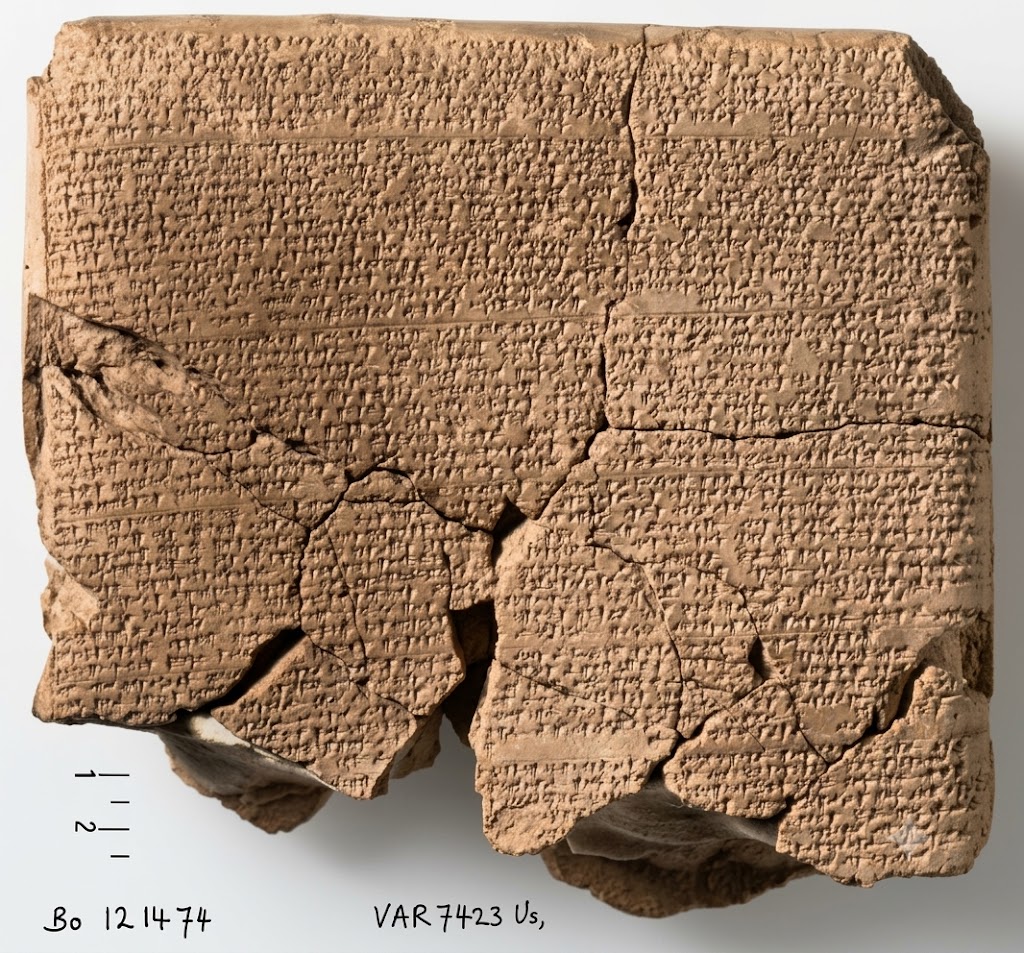
Late Bronze Age treaty from Ḫattuša invoking Mitra, Varuna, Indra and the Nāsatyas among the divine witnesses of the Hittite-Mitanni oath.
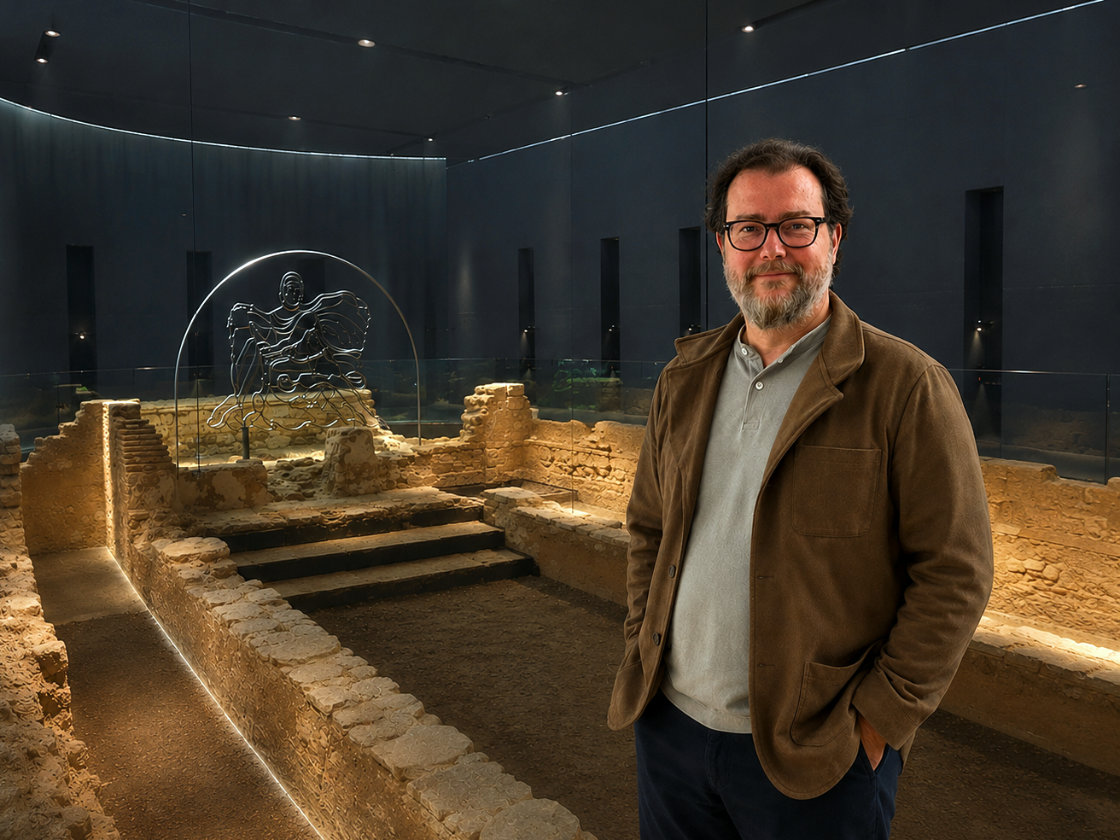
We speak with Israel Campos Méndez about questions that continue to divide scholars: what links the Indo-Iranian Mithra to the deity worshipped in the Roman Empire, and what do we really know about the origins of Roman Mithraism?
En esta vídeo entrevista, Israel Campos Méndez aborda las principales cuestiones que siguen dividiendo a los especialistas: los orígenes del culto de Mitra, su evolución desde las tradiciones indoiranias hasta el Imperio romano y el legado de Franz…
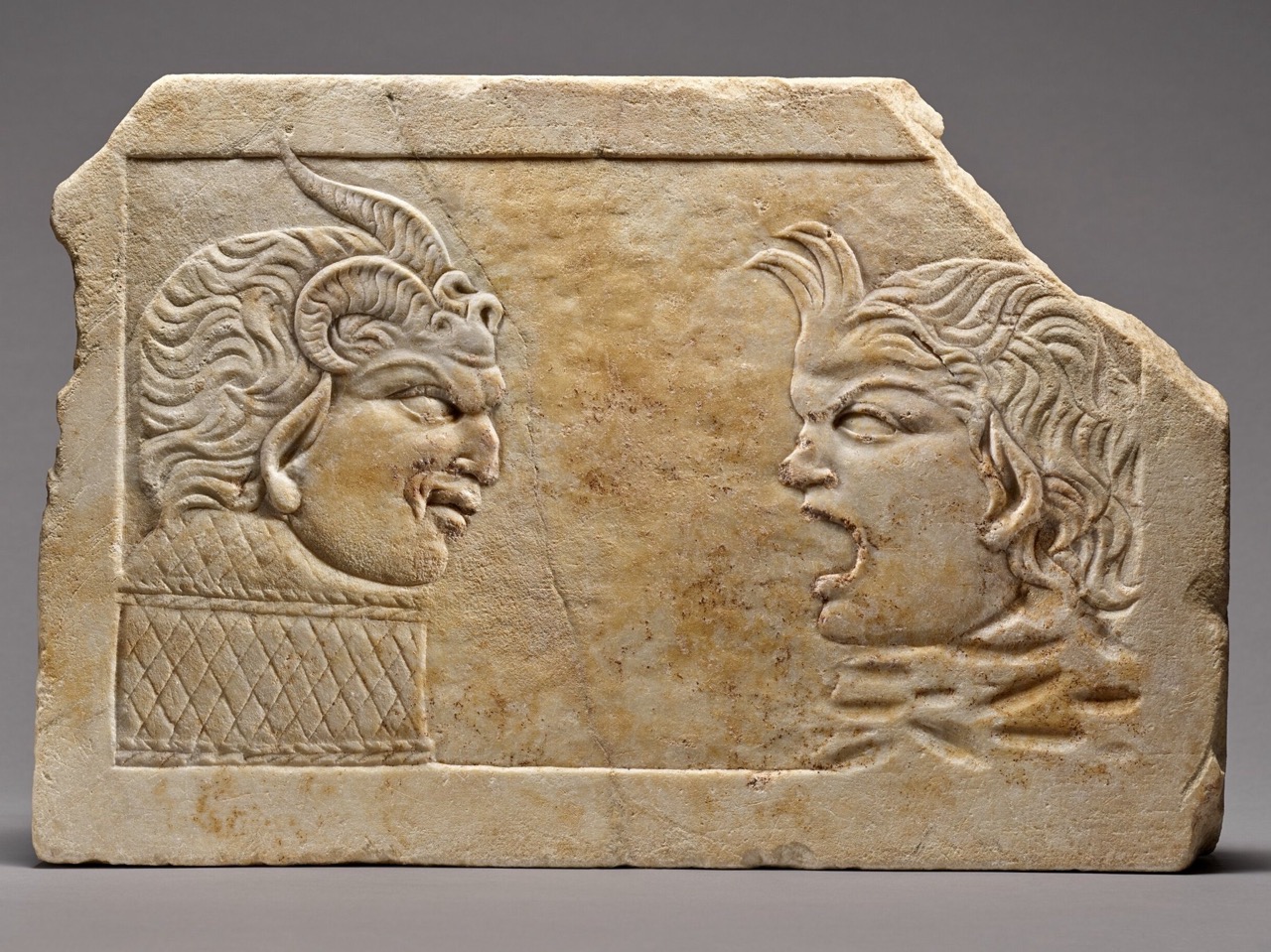
Campos Méndez’s seminal study examining the continuity and transformation of Mithra from his Indo-Iranian origins to the development of the Roman mystery cult.

This catalogue proposes, thanks to the contributions of some 75 international experts, a new synthesis for a complex and fascinating cult that reflects the remarkable advances in our knowledge in recent decades.
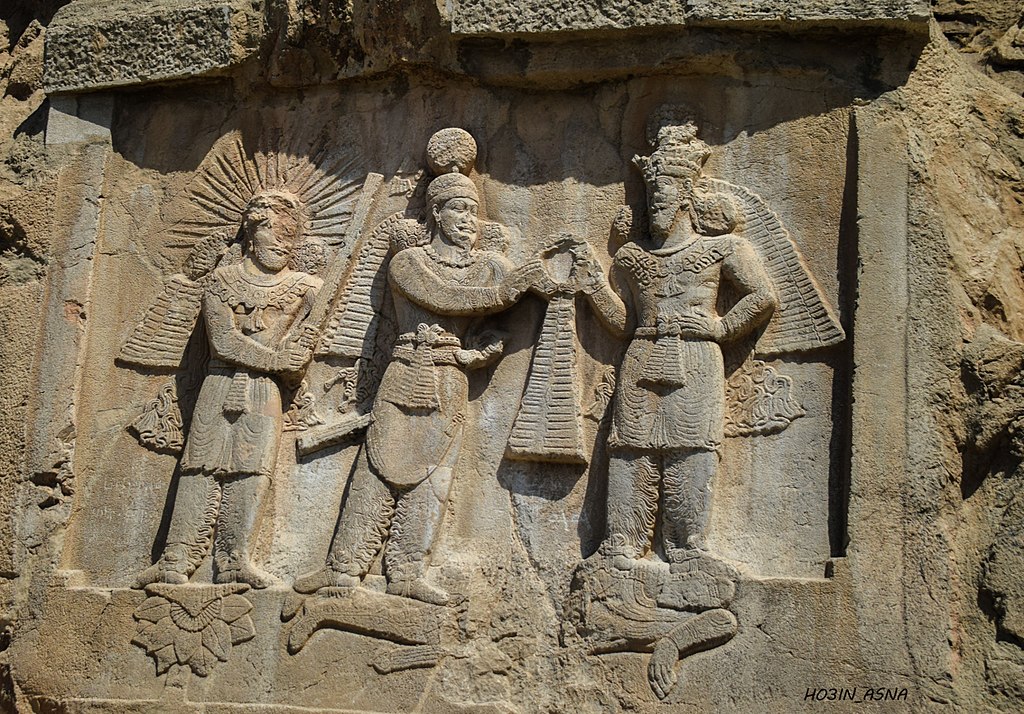
This monument depicts Mihr/Mithras watching over the transition of power from Shapur II to Ardashir II, which took place in 379.

Inscription CIL VI 750 recording the transmission of the Persica and Heliaca grades by Nonius Victor Olympius and Aurelius Victor Augentius at the Mithraeum of Piazza S. Silvestro in Capite, dated to 358 A.D.
Partial list of Mithraic initiatory grade titles attested in inscriptions from the Mithraeum of Dura-Europos.
Small marble relief from the Aventine showing a primitive representation of Mithras slaying the bull, without torchbearers or Sol and Luna.
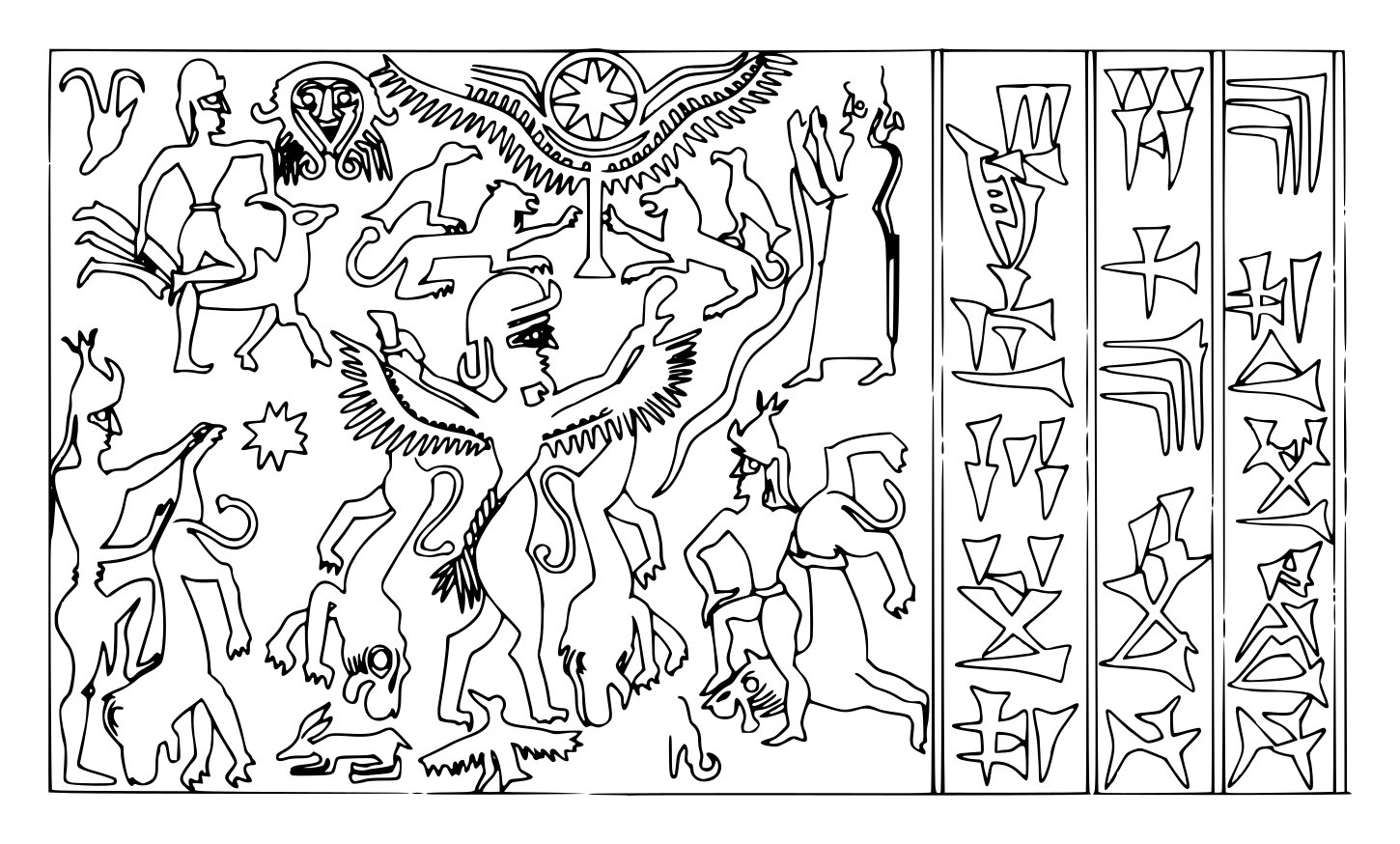
Royal Mitannian seal featuring a winged solar emblem and heroic combat scenes from the cultural milieu in which the earliest attestation of Mitra is found.
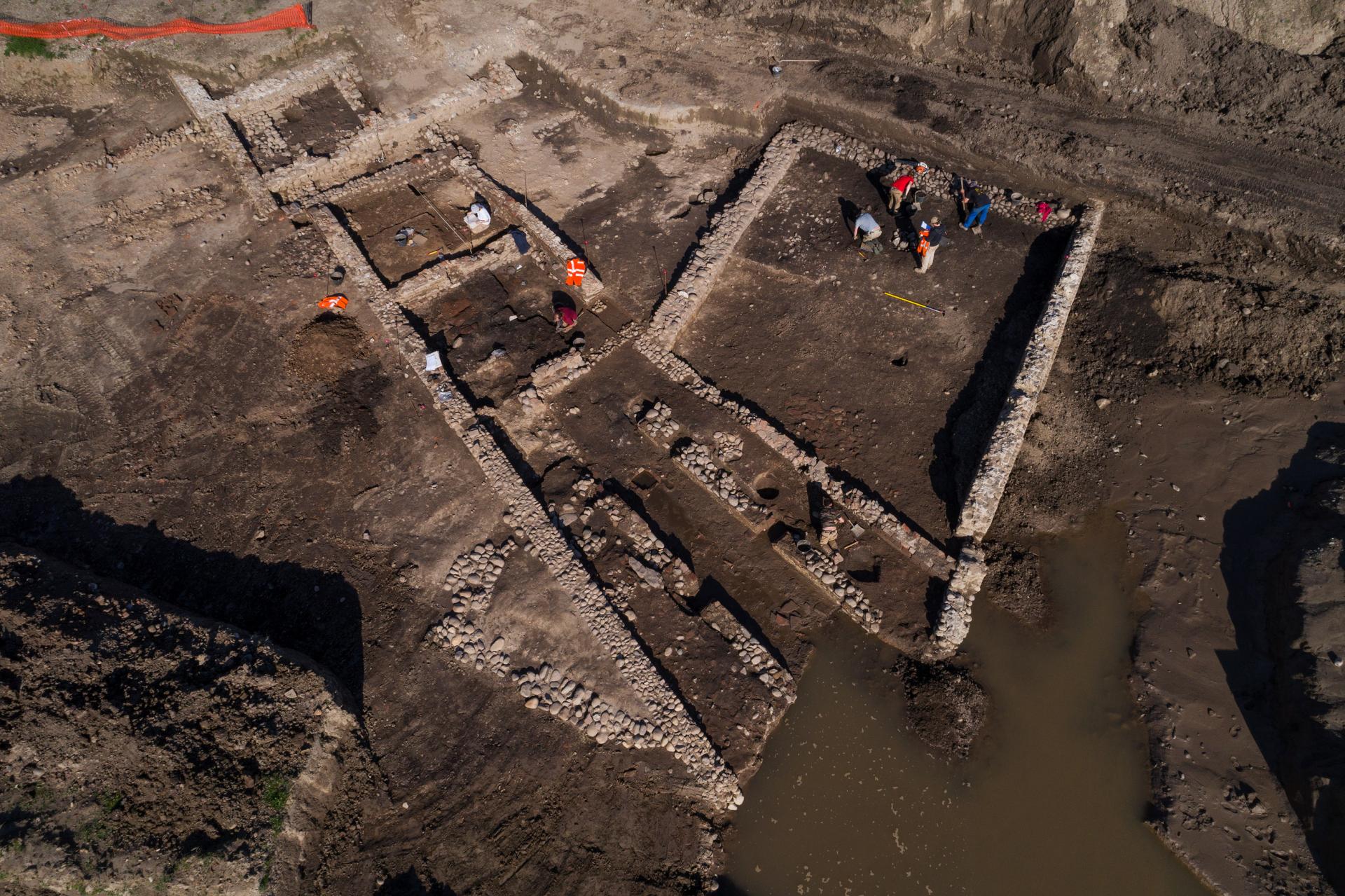
For the first time, a Mithraeum has been discovered in Corsica, at the site of Mariana, Lucciana (Haute-Corse).

Archaeological evidence for military Mithraism in north-western Roman Hispania.
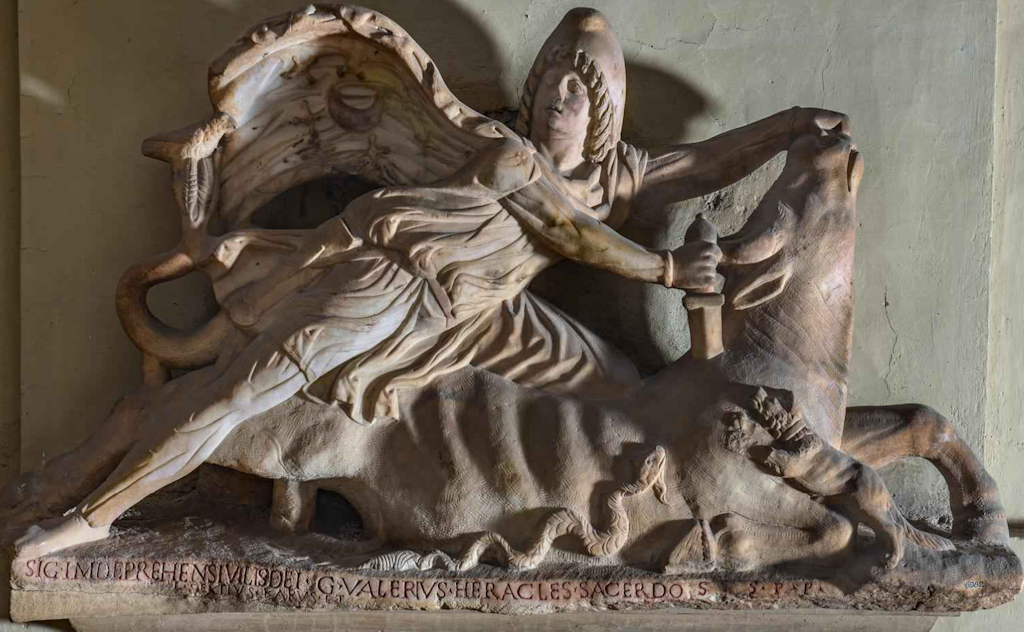
This sculpture of Mithras killing the bull was dedicated to the “incomprehensible god” by a certain priest called Gaius Valerius Heracles.
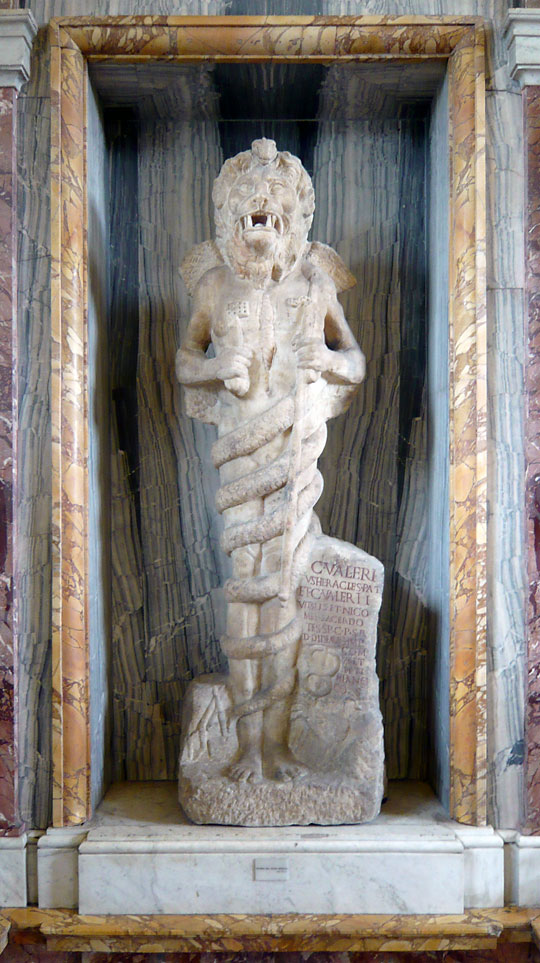
Marble leontocephalic Aion/Arimanus from the now-lost Fagan Mithraeum at Ostia, dedicated in AD 190 by three members of the local Mithraic priesthood.
Marble cap mentioned by Visconti, subsequently identified as certainly belonging to the finds of the Mitreo degli Animali rather than the Mitreo del Palazzo Imperiale, Ostia.
Marble slab with a fragmentary Latin inscription, walled into the right-hand side of the cult-niche in the Mitreo delle Pareti Dipinte at Ostia.

The Sacello delle Tre Navate near the Therms of the Sette Sapienti at Ostia, whose identification as a Mithraeum remains uncertain, with a decorated cult-niche but lacking typical Mithraic iconography.
Marble relief fragments from the cult niche of the Mitreo della Planta Pedis at Ostia, preserving the bust of Sol in radiate crown, the raven's tail, the bust of Luna in crescent, and parts of the rocky border.
Marble head of Helios-Mithras with curly hair and seven holes for fastening rays, from the Mitreo degli Animali at Ostia, Lateran Museum.
