Your search Podersdorf am See gave 2325 results.
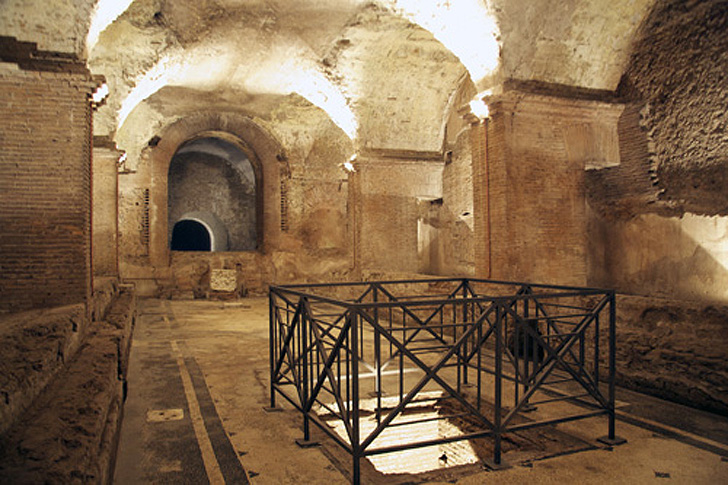
The Mitreo delle terme di Caracalla is one of the largest temples dedicated to Mithras ever found in Rome.

This remarkable Greek marble relief of Mithras killing the bull was discovered in 1705 and remained in private collections until it was bought by the Louvre.

Large marble slab found in 1648 near S. Silvestro in Capite, inscribed with a Latin dedicatory poem forming a cypher-acrostic for TAMESIUS and AUGENTIUS, with records of leontica and chrysos initiations, dated to 362 A.D.
Small semi-round base found on the Monte Quirinale in Via Mazzarini, from a small Mithraeum, with a dedication to Mithras by T. Camurenus Philadelfus through Nonius Firmus pater.

This white marble relief of Mithras killing the bull was found on the Esquilino near the Church of Saint Lucy in Selci in Rome.
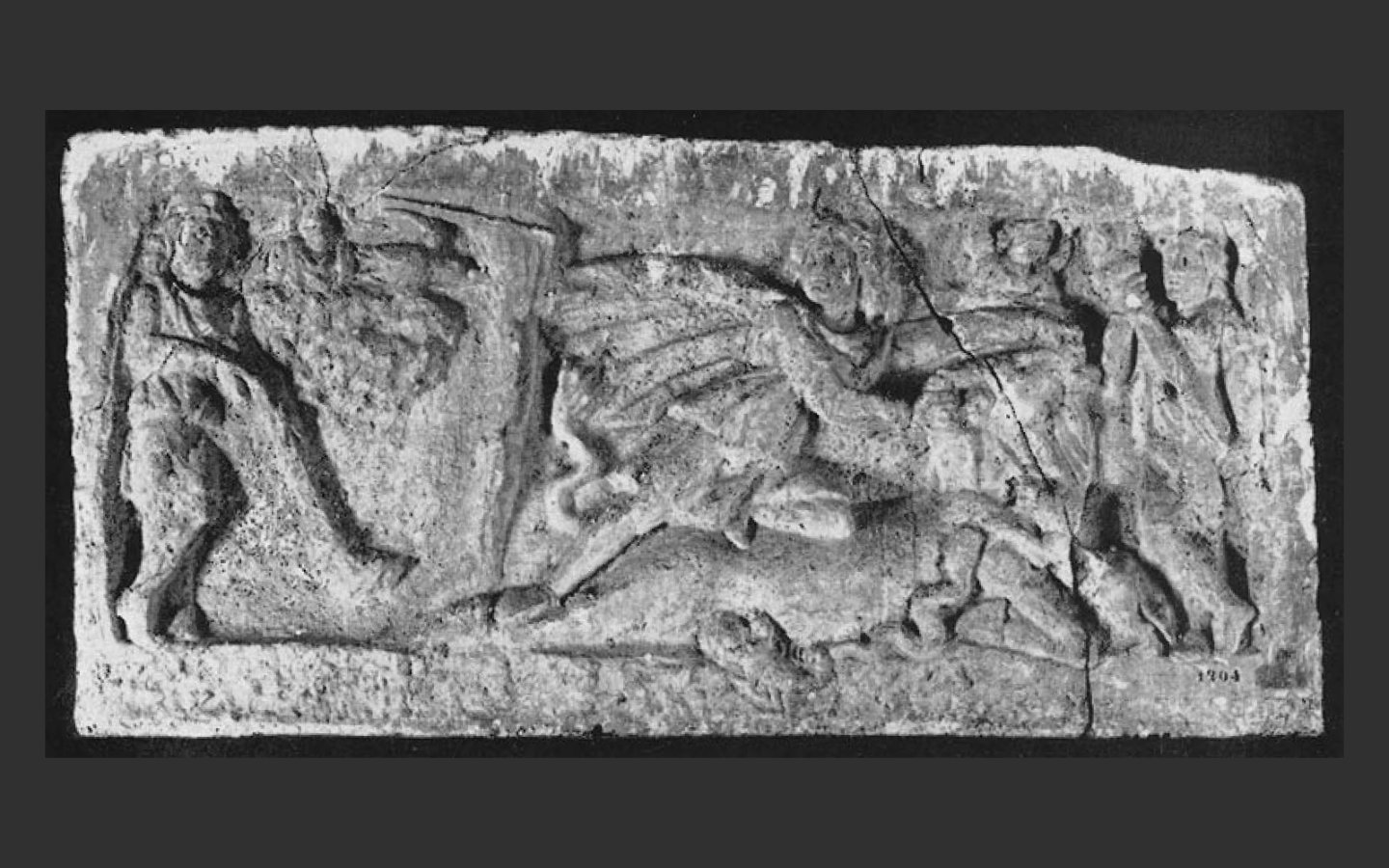
This relief of Mithras Tauroctonos from Rome bears the inscription of three brothers, two of them lions.
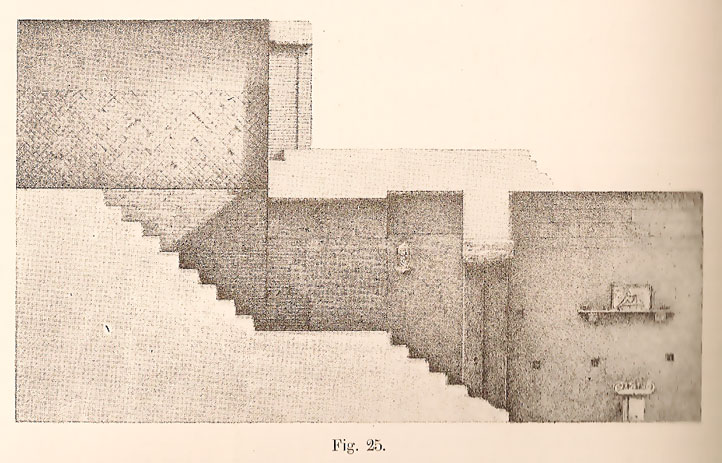
In a house from the time of Constantine, a Lararium was found with a statue of Isis-Fortuna. The Mithraeum was a door next to it, on a lower room.

This unusual mural depicting Mithras killing the bull was found near the Colosseum in 1668.
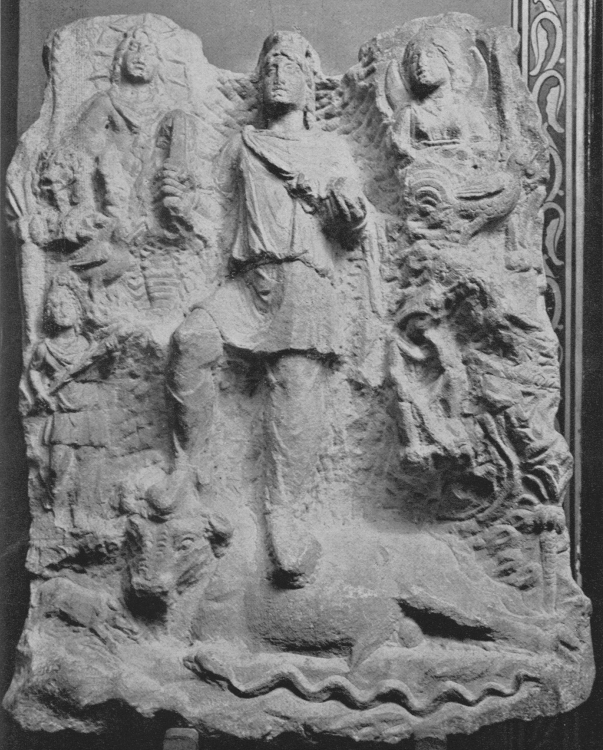
This unusual representation of Mithras standing on a bull was kept in the Casino di Villa Altieri sul Monte Esquilino until the 19th century.
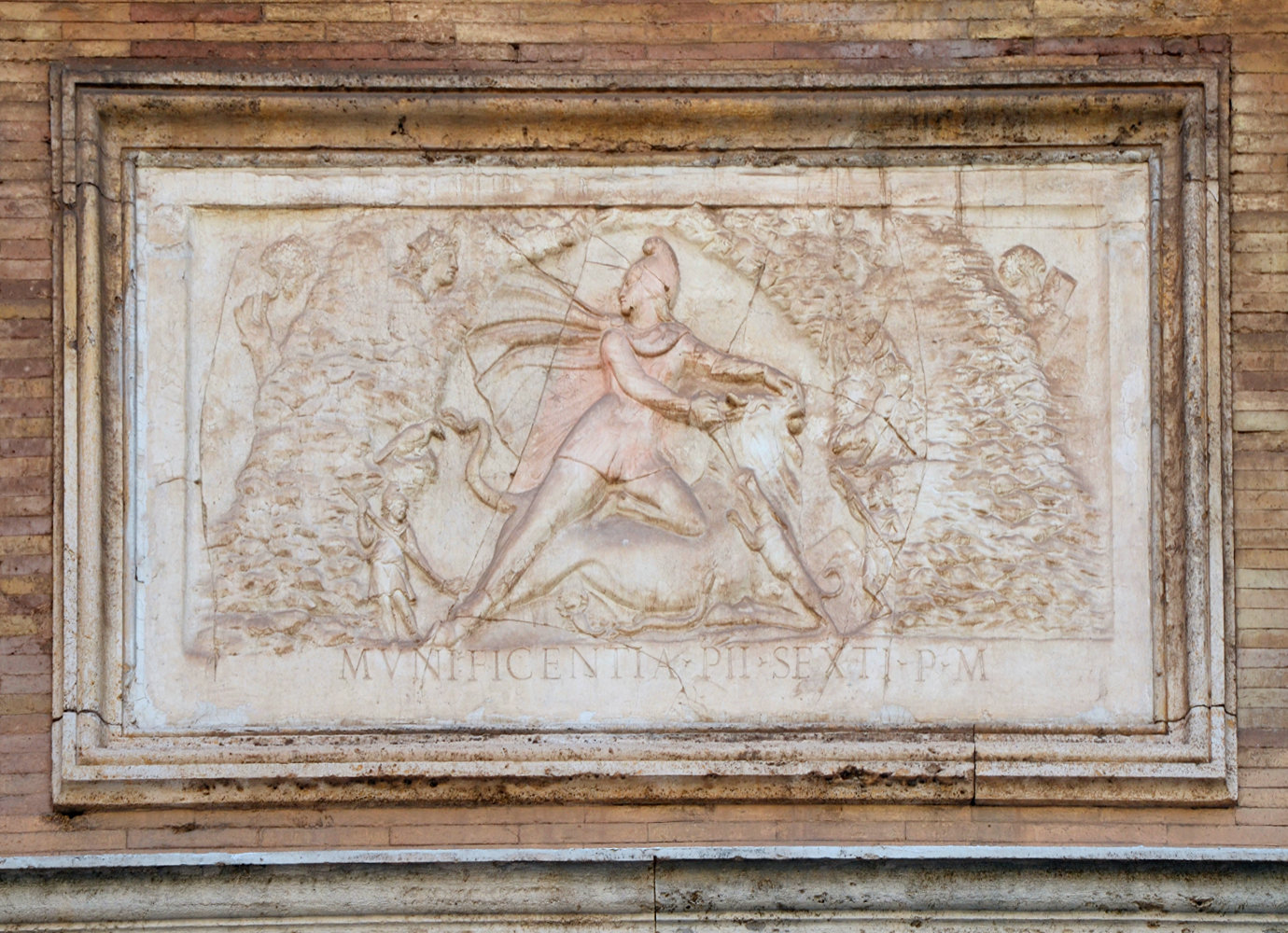
The Tauroctony relief of Mithras killing the bull walled in the Cortile of the Belvedered, Vatican City, was found by Fagan near Ostia.
Fragment of a bull-killing relief showing Mithras, the torchbearer Cautes with upraised torch, and the bust of Luna, found at Labicum in the ruins of a Roman villa.
Inscription of the cohorts of Legion II Herculiae dedicated to Deus Invictus Mithras, dated after 285 A.D., from the Ager Sitifensis.
Statuettes of eastern deities including Mithras, found in a walled compartment near a Punic cemetery at Duimes, Carthage.
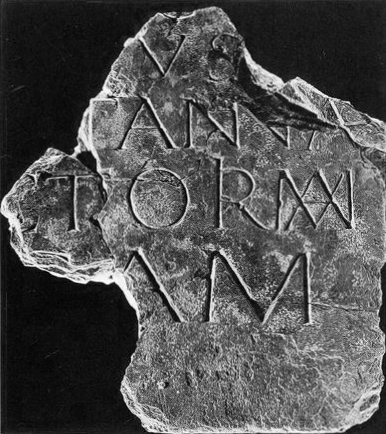
Archaeological material from the Mithraeum of Londinium discussed in Hill’s study of Roman London.
.jpg)
This limestone statue of Cautes is now exposed at Great North Museum of Newcastle.
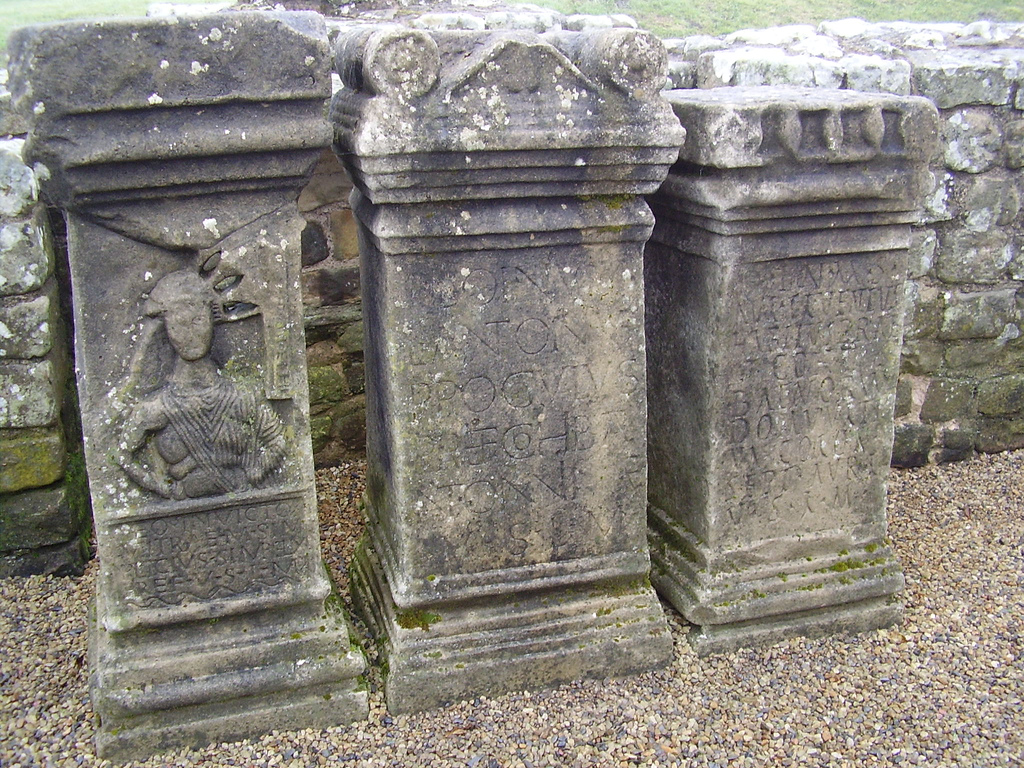
One of the altars from the Carrawburgh Mithraeum depicts the bust of Mithras or Sol.
One of the rooms in a sustantive masonry building in Hollytrees Meadow was considered to be a Mithreum, a theory that has now been discarded.
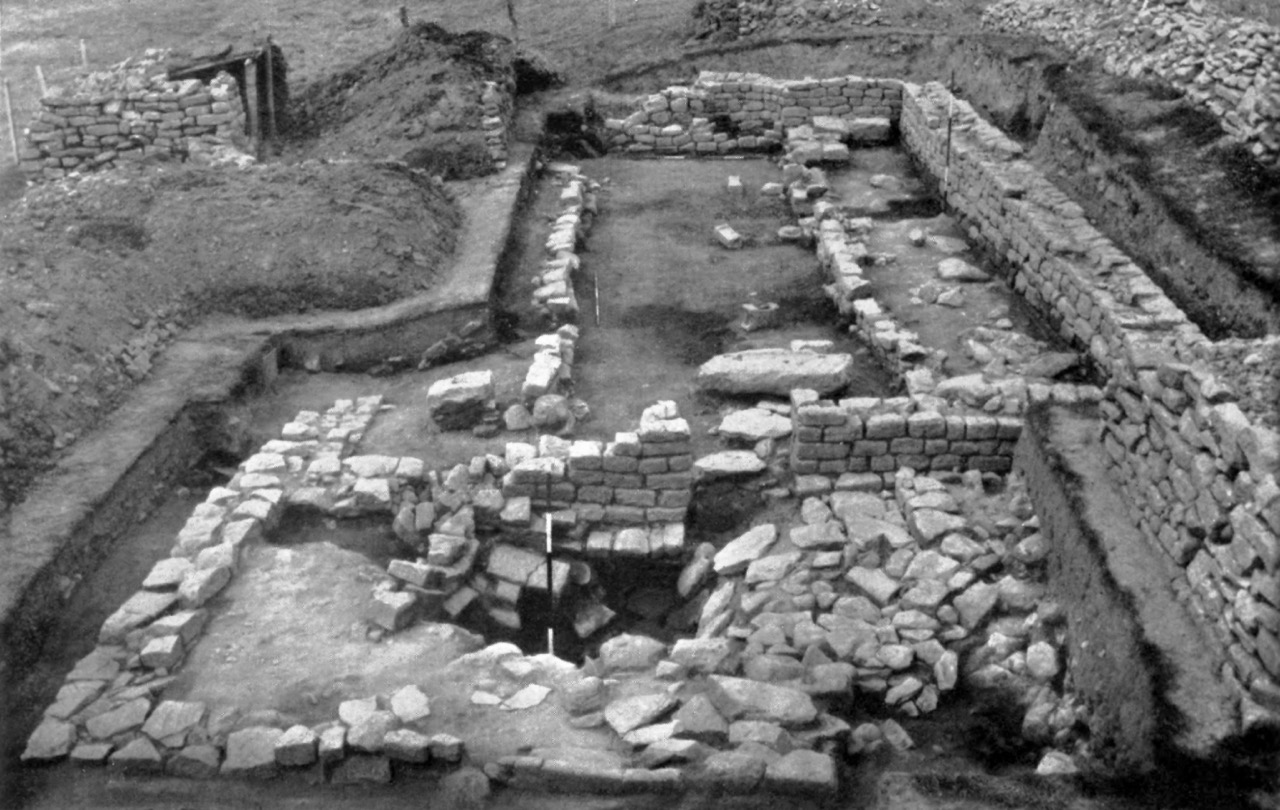
The Mithraeum of Rudchester was discovered in 1844 on the brow of the hill outside the roman station.
Lower part of a white marble cinerary casket decorated with a relief of Mithras killing the bull, from the necropolis area near the amphitheatre of Sabratha.
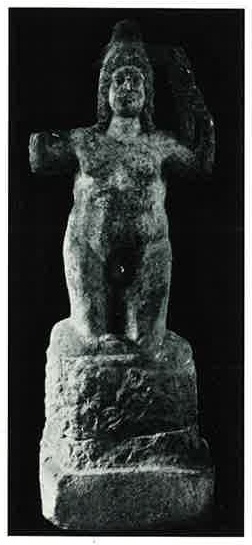
This white marble statue of the rock-birth from Cibinium in Roman Dacia is one of the largest known Mithraic sculptures from the Danubian provinces.
