Your search Roger Jehu Bull gave 454 results.
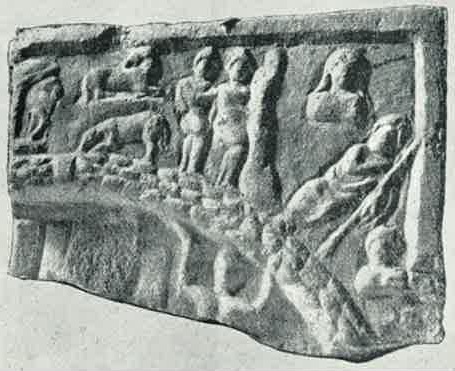
White marble statuette from Budapest, ancient Aquincum or vicinity, depicting a badly damaged Mithras killing the bull with dog and serpent; the god's head is lost.
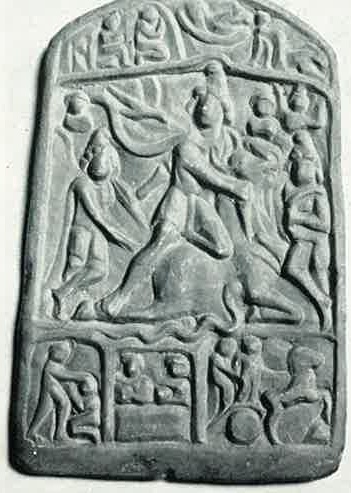
Limestone tauroctony relief found in a grotto at Nagy-Kovácsi, Pannonia Inferior, depicting the standard bull-slaying with flanking torchbearers and divine busts in the upper register.
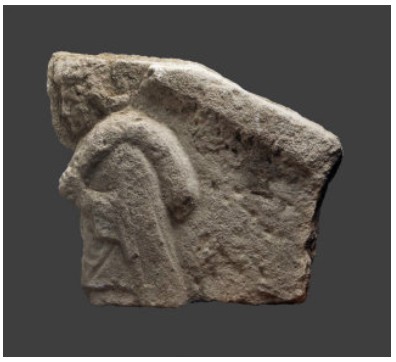
Fragment of a relief from Potz Neusiedl near Stix-Neusiedl, Pannonia Superior, brought to Eisenstadt in 1926, depicting part of a Mithraic bull-slaying scene.
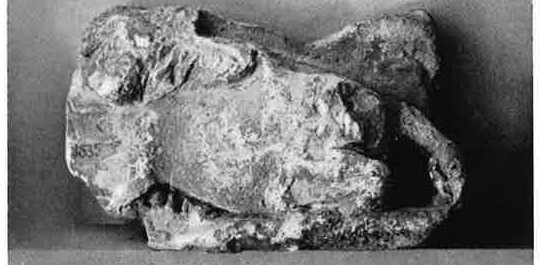
Fragment of a sandstone tauroctony relief from Schwadorf area, ancient Aequinoctium in Pannonia Superior, depicting Mithras killing the bull; the upper part of Mithras's body, the head, and parts of the bull are lost.
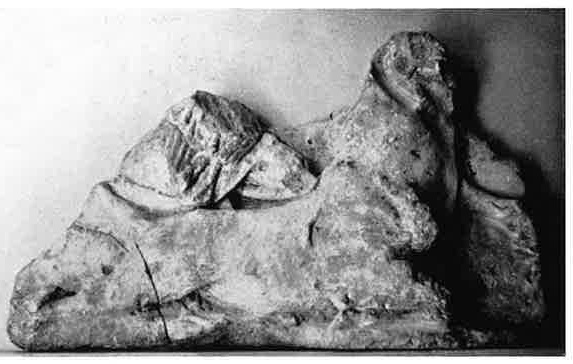
Fragment of a large sandstone tauroctony relief from Schwadorf, ancient Aequinoctium, depicting Mithras killing the bull; the upper part of the god's body, his head, the end of the tail, and the scorpion are lost.
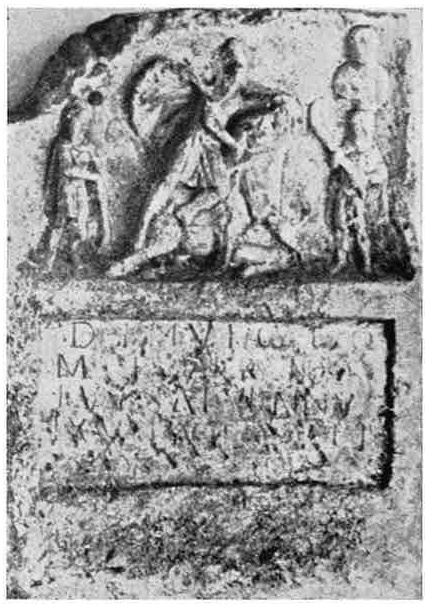
Marble tauroctony relief from the Mithraeum at Sopron, ancient Scarabantia, depicting the standard bull-slaying scene with raven, dog, serpent, scorpion, and torchbearers.
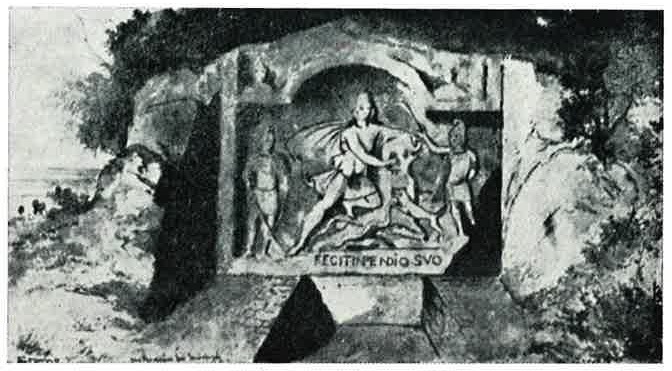
Marble tauroctony relief from the Mithraeum at Sopron, ancient Scarabantia, depicting the standard bull-slaying with raven, dog, scorpion, and cross-legged torchbearers.

Large marble tauroctony relief from the Mithraeum at Sopron, ancient Scarabantia, depicting the standard bull-slaying with raven, dog, serpent, and scorpion, flanked by cross-legged torchbearers.
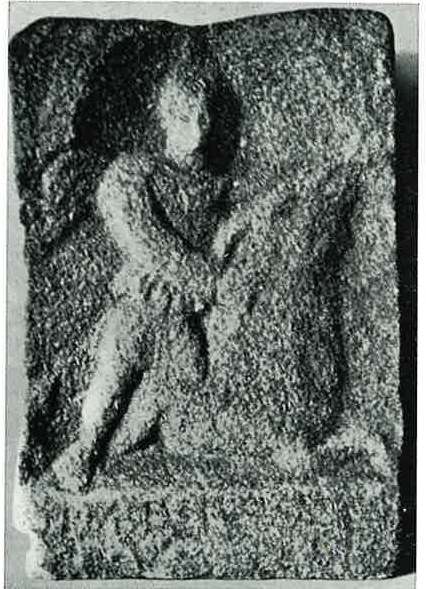
Marble tauroctony relief from the Mithraeum at Modrič, Pannonia Superior, with Cautopates and Cautes flanking the bull-slaying scene and a dedication inscribed in the lower border.
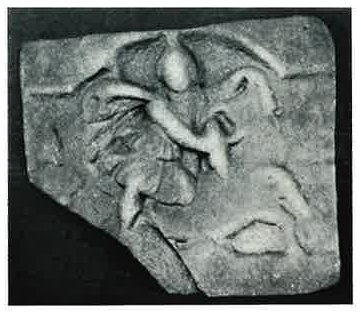
Marble tauroctony relief from the Mithraeum at Modrič, Pannonia Superior, depicting the standard bull-slaying with raven, dog, scorpion, and cross-legged torchbearers.
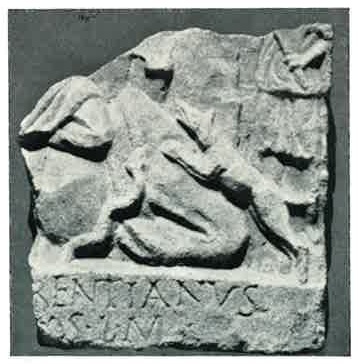
Right portion of a marble tauroctony relief from near Pregrade, Pannonia Superior, preserving Mithras killing the bull with dog, serpent, and scorpion; the greater part of the god and the bull's head are lost.
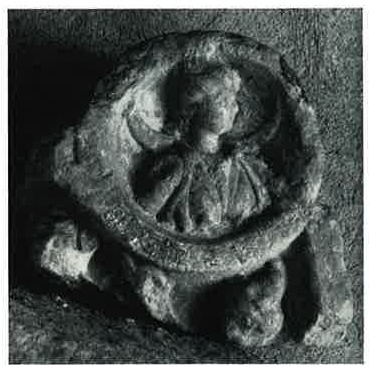
White marble relief fragment from near Klein-Wagna, ancient Flavia Solva in Noricum, preserving part of a tauroctony scene including the bull, Mithras's dagger, and the torchbearers.
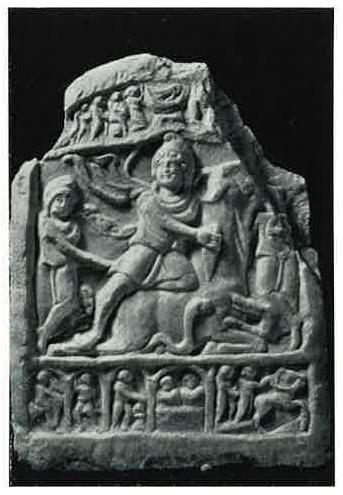
Small limestone tauroctony relief from Enns, ancient Lauriacum in Noricum, found about 100 metres east of the north-east corner of the castra, depicting Mithras killing the bull with dog and serpent and flanking torchbearers.
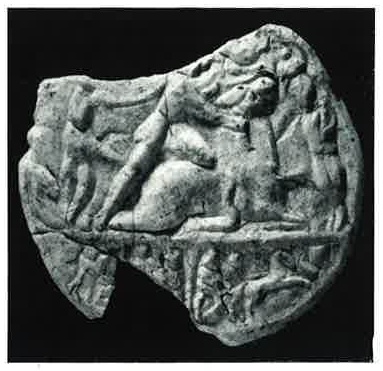
Small circular marble tauroctony relief from the Mithraeum at Linz, ancient Lentia, depicting Mithras killing the bull with dog, serpent, and scorpion, flanked by cross-legged torchbearers with a lion behind Cautopates; the lower section is divided into three subsidiary scenes…
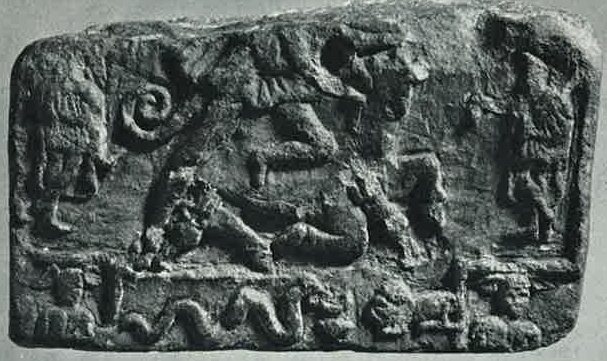
Small limestone tauroctony relief from Augst, ancient Augusta Rauricorum, depicting the bull-slaying with dog and scorpion, flanked by cross-legged torchbearers in Oriental dress; Cautes holds a pedum alongside the upraised torch.
Fragmentary limestone relief from Thun-Allmendingen of the same dimensions as the bull relief, depicting a swine; both may have formed part of the sanctuary's ritual décor.
Grey sandstone tauroctony relief from the Mithraeum at Königshoffen, heavily restored, depicting Mithras killing the bull with Cautes and Cautopates and the busts of Sol and Luna; only the lower part of Cautopates and the crossed legs are original.
Reconstructed tauroctony relief from the Mithraeum at Mackwiller, assembled from multiple stone fragments and preserving Mithras's head, shoulders, dagger hand, flying cloak, and parts of the bull and torchbearers.

Large grey sandstone tauroctony relief from Fellbach near Cannstatt, depicting the bull-slaying in a vaulted grotto with torchbearers, Sol, Luna, and subsidiary Mithraic scenes along the border.
Small bronze statuette recovered from the river Saale near Burg Giebichenstein in 1900, depicting Mithras as bull-slayer without a Phrygian cap; the left leg is lost.
