Your search Roger Jehu Bull gave 454 results.

Lost limestone altar from Apulum, Dacia, decorated on the sides with a rose and serpent, on the reverse with a bull's head; the front bears a Mithraic inscription.
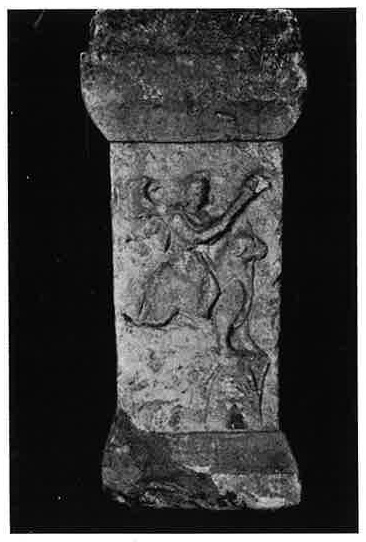
Limestone base from Apulum, Dacia, decorated on the front with Mithras riding the bull to the right while holding an upraised torch — the tauriphoros riding type, distinct from the tauroctony.
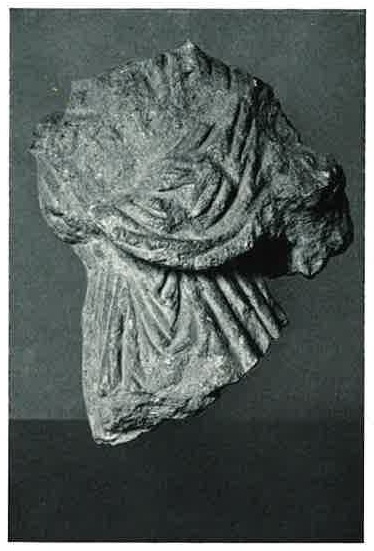
Limestone statue torso from the Mithraeum at Apulum, Dacia, found with the preceding piece, depicting a person in Oriental dress carrying a bull's head in his left hand; head, arms, and legs are lost.
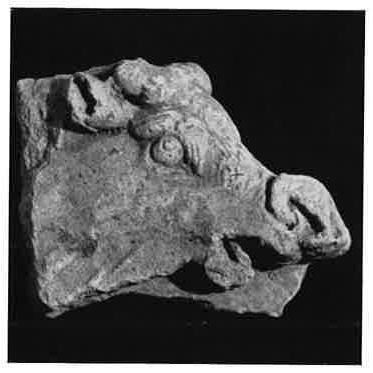
Limestone relief fragment from Salona or its surroundings, Dalmatia, preserving a very fine bull's head and the left hand of Mithras.

Limestone tauroctony relief from the Mithraeum at Sárkeszi, Pannonia Inferior, depicting Mithras killing the bull with a broad belt, dog, serpent, raven, and torchbearers; the grotto is indicated by rough soil.
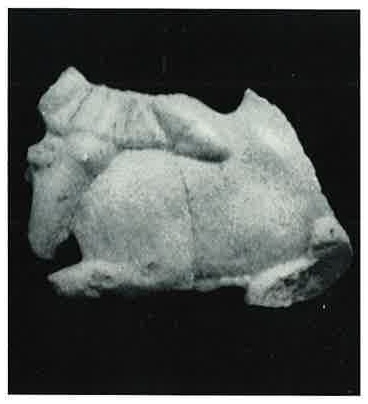
White marble tauroctony relief fragment from Carnuntum, Pannonia Superior, preserving the bull and the lower part of Mithras's tunic.
Sandstone statue from Mithraeum I at Carnuntum, Pannonia Superior, depicting a lying lion with a bull's head before its forefeet; a large opening at the back of the head communicated with a channel below, suggesting use as a cult water outlet.
Marble torso from Mithraeum II at Ptuj, ancient Poetovio, probably representing a winged, reclining bull with two vertical attachment ligaments on the reverse.
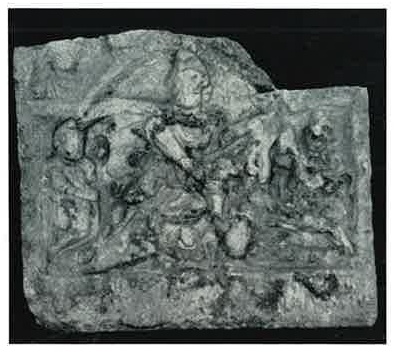
Marble tauroctony relief from Mithraeum II at Ptuj, ancient Poetovio, distinguished by the bull represented with fully stretched legs; Cautopates is shown resting his head on his hand in a pensive posture.
Marble relief fragment from Mithraeum II at Ptuj, ancient Poetovio, preserving the hindmost part of the bull and the right leg of Mithras with the scorpion in its usual position.
Fragment of a large marble relief from Mithraeum II at Ptuj, ancient Poetovio, preserving the forepart of the bull, the leaping dog, and the serpent approaching the wound.
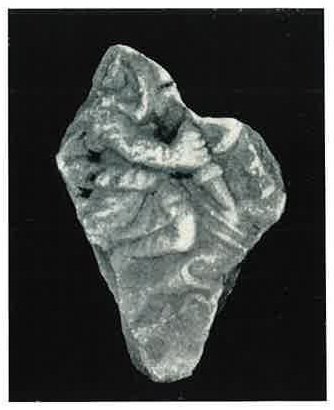
Marble tauroctony relief fragment from Mithraeum II at Ptuj, ancient Poetovio, preserving the central scene with the leaping dog, serpent, and scorpion; the bull's body is encircled by two girdles.
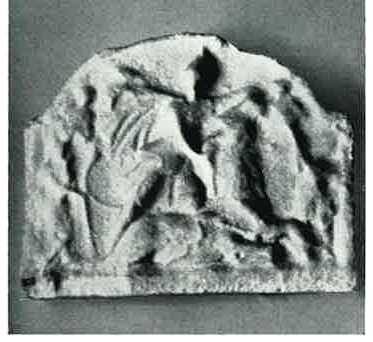
Small marble tauroctony relief from Ruše, Noricum, depicting Mithras killing the bull in a grotto, notable for the unusually elongated neck of the bull; dog and serpent approach the wound, and the raven perches above.
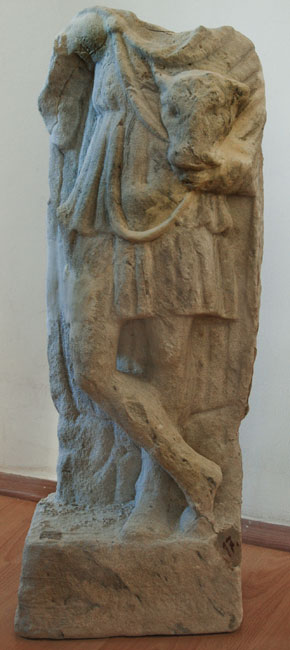
This sculpture of Cautes holding a bull’s head was found in 1882 in Sarmizegetusa, Romania.
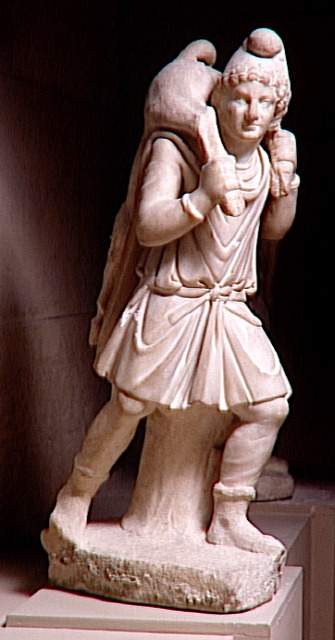
Sculpture depicting Mithras carrying a young bull on his shoulders.
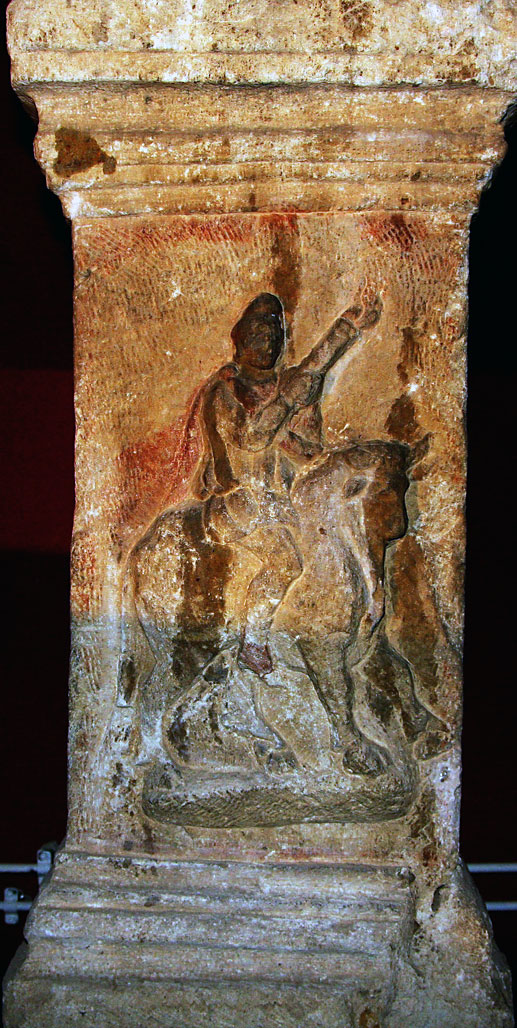
Fragmentary relief from the area of the Porticus of Pompey once interpreted as Mithraic but later identified as a representation of Victoria.
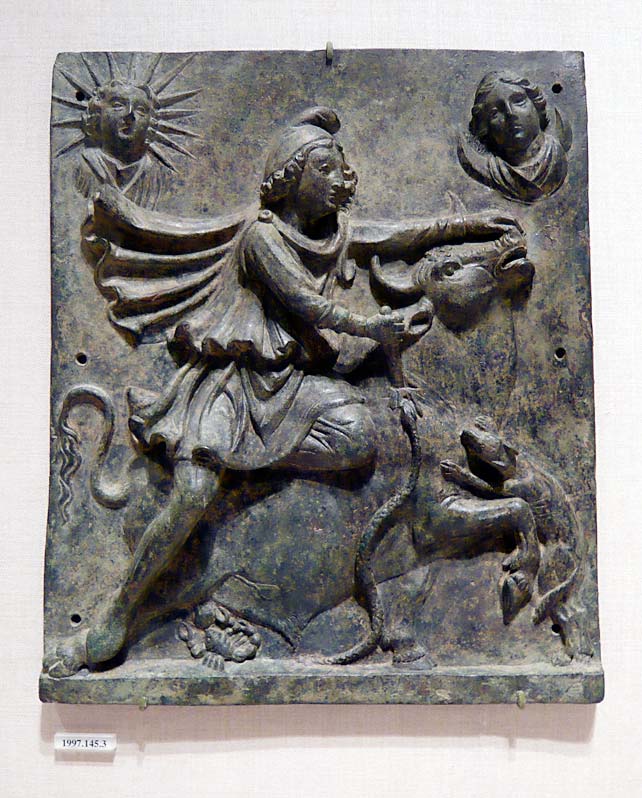
Mithras Tauroctony on bronze exposed at the Metropolitan Museum of New York.
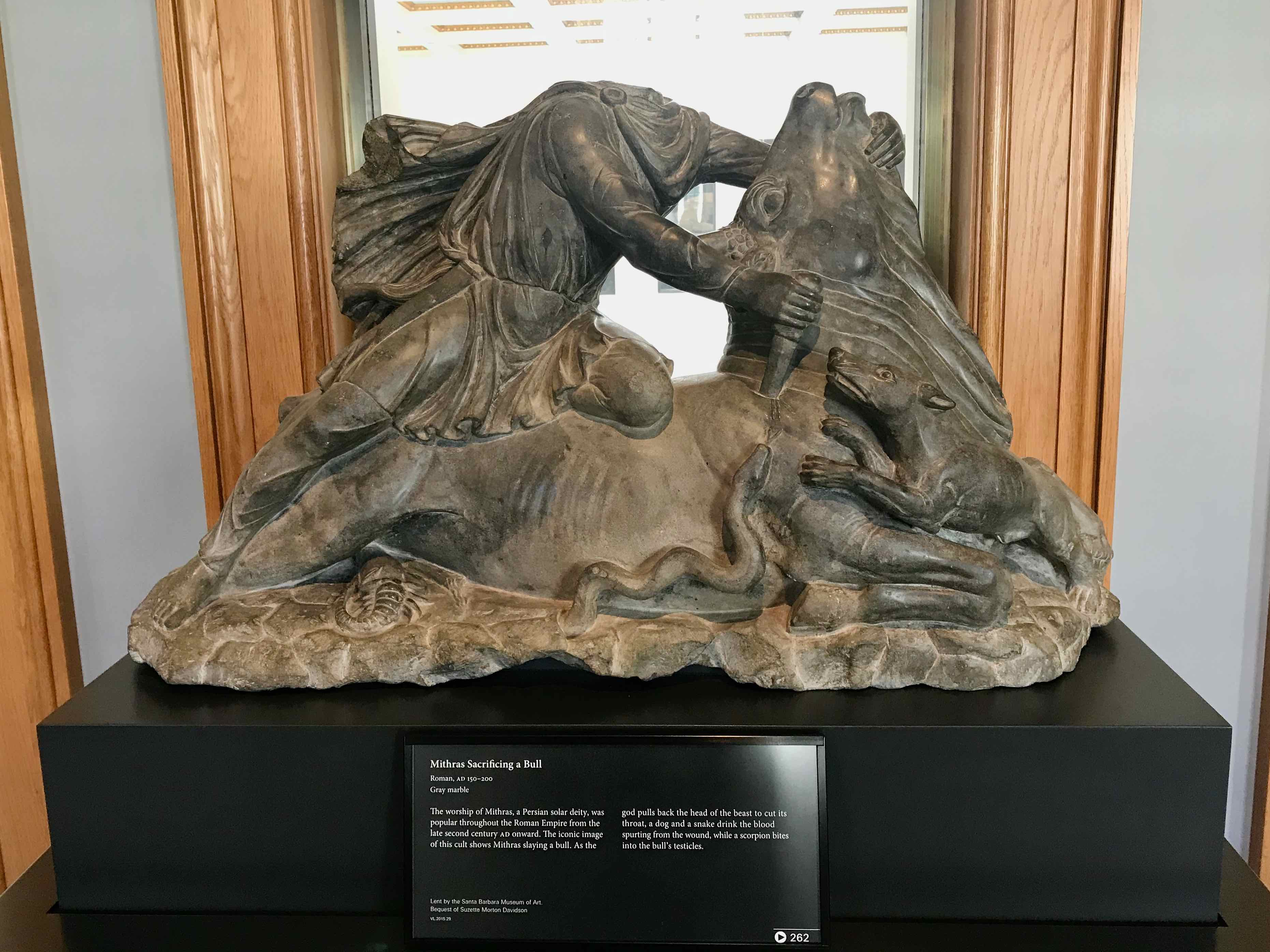
Tauroctony in black marble on display at the Santa Barbara Museum of Art, California.
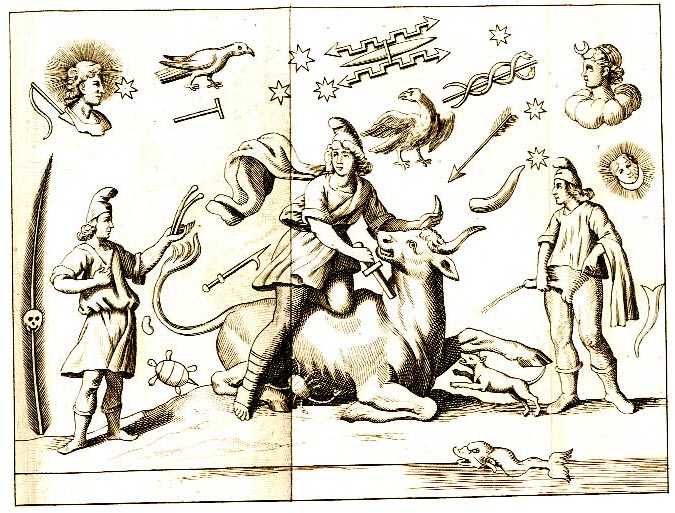
Engraving with cosmological and symbolic mithraic elements.
